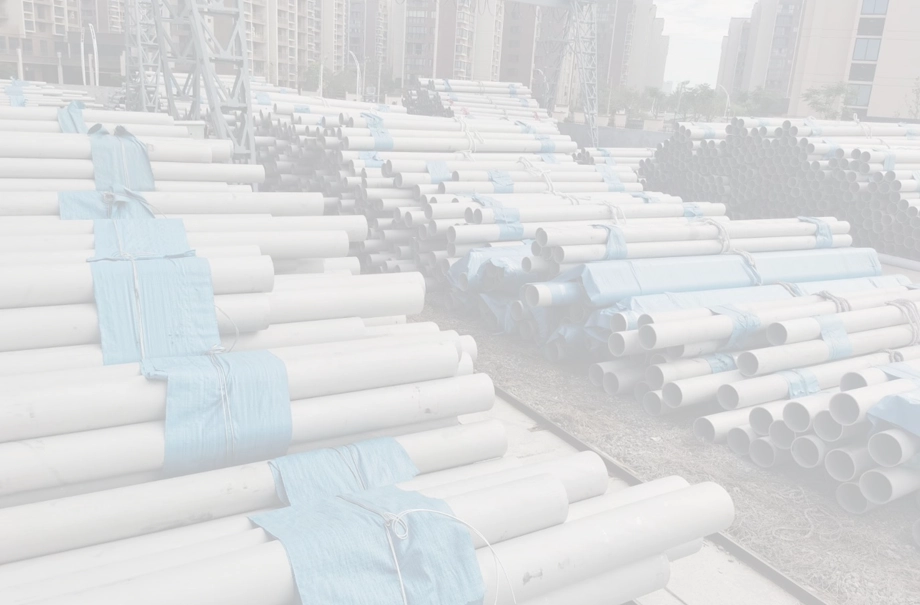
316L Seamless Pipe for Offshore Equipment and Corrosive Fluid Transport Systems
When offshore systems fail, the consequences go far beyond repair costs. A single corroded pipe joint in a chemical reactor or seawater desalination loop can trigger unplanned shutdowns, safety incidents, and regulatory violations. That is why engineers and procurement managers in marine, petrochemical, and industrial sectors consistently specify 316l seamless pipe as their first-choice material. With its extra-low carbon content, molybdenum-bearing chemistry, and weld-free construction, this grade delivers the structural consistency and corrosion performance that aggressive service environments demand — without compromise.
Understanding 316L Seamless Pipe: Composition, Properties, and Performance
Chemical Composition That Drives Performance
Grade 316L (UNS S31603 / 1.4404) has around 16% to 18% chromium, 11% to 14% nickel, and 2% to 3% molybdenum. This steel is different from regular 316 because the carbon content stays at or below 0.03%. Because of the low carbon ceiling, chromium carbide doesn't form at the edges of grains. This keeps welding from becoming sensitive. When molybdenum is added to pipe, it makes it stronger against chloride-induced pitting. 304-grade pipe is often not suitable for use in chemical and marine settings because of this type of failure.
Seamless Construction and Mechanical Strength
Stainless steel pipe that doesn't have a lengthwise weld gap is made by hot extrusion or cold drawing. The walls are always the same thickness, and the metal frame is all one piece. ASTM A312 says that this building has a yield strength of at least 170 MPa and a tensile strength of at least 485 MPa. The resistance to rust is the same across the whole pipe cross-section because there is no heat-affected zone (HAZ). When the load is high or changes over time, welded options can't match this feature.
Heat Treatment and Surface Standards
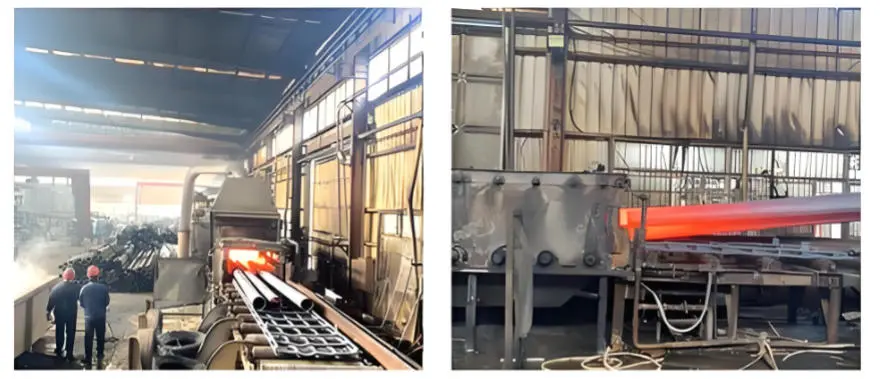
Solution annealing is the next step for each pipe after it has been shaped. This can be done in a vacuum or a controlled atmosphere. This makes the metal parts more even and lowers the stress inside the pipe. There are acid-pickled and passivated finishes on the surface that can be used in general manufacturing settings. For pharmaceutical and high-purity fluid systems, interior bores that have been hand-polished (Ra < 0.8 μm) are available. Following the rules set by ASTM A312, ASME SA312, and EN 10216-5, all the goods are made, and every batch has a full EN 10204 3.1 Mill Test Certificate.
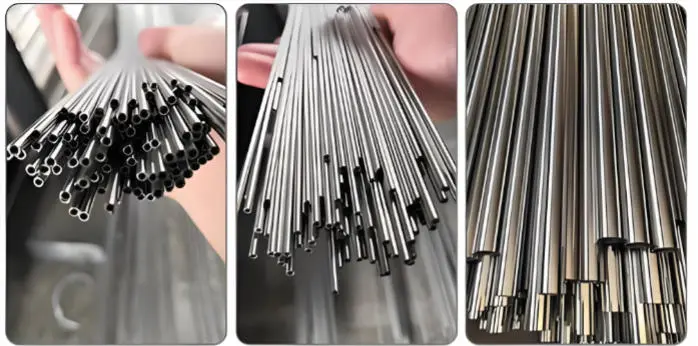
Comparing 316L Seamless Pipe with Other Stainless Steel Grades
316L vs. 304: Why Molybdenum Matters?
304-grade pipe is often used for many things, but it doesn't have molybdenum in it. It only takes a few months for 304 to pit and rust in places with a lot of chloride, like salty cooling loops, processing plants by the sea, or chemical dose lines. Because 316L has molybdenum in it, the pitting resistance equivalent number (PREN) is about 26. It's only about 18 in 304. There is a direct link between this difference and the safety and service life of work in chemicals and offshore.
316L vs. Standard 316: The Carbon Advantage
Standard 316 and 316l seamless pipe are almost the same in terms of how well they protect against chemicals and how well they work mechanically. They are different in how well they can be joined together. Standard 316 has a carbon level of 0.08%, which is the highest level. Heat from welding can make the metal more sensitive, which can raise the risk of corrosion along the weld zones. Because 316L has a carbon limit of only 0.03%, that risk is totally eliminated. This grade must be used whenever pipe sections are field-welded into process systems, which happens a lot when chemical plants and offshore platforms are being built.
Total Cost of Ownership vs. Initial Price
Pipe made of 316L stainless steel costs more than pipe made of carbon steel or 304-grade steel. But in toxic service, the idea of how long something will last is very different. When carbon steel pipe is used in acidic or salty environments, it needs to be protected with a coating, checked often, and changed often. Information from outside the company shows that austenitic stainless steel pipe systems in chemical plants last two to four times longer than carbon steel ones. With maintenance costs, downtime, and how often parts need to be changed taken into account, 316L costs less in the long run.
Applications of 316L Seamless Pipe in Offshore Equipment and Fluid Transport
Offshore Platforms and Marine Engineering
If you want to use 316l seamless pipe for things like firewater ring mains, chemical injection systems, and structural tubes that will be exposed to salt spray on offshore oil and gas sites, you can. The structure is continuous and seamless, which stops leak lines that aren't allowed in safe sites on land or at sea. You can get marine pipes in sizes ranging from 1/4" NPS to 24" OD and wall schedules ranging from SCH 5S to SCH XXS.
Chemical Processing and Corrosive Fluid Transport
When hot organic acids, phosphoric acid solutions, or high-concentration chloride streams are used in chemical reactions, the pipe materials need to be able to keep their passive film stability at high temperatures. When it comes to oxidizing environments, 316L stays corrosion-proof up to about 870°C. ASTM A213 heat exchanger tubes, condenser systems, and process lines all use it. This is because fluid chemistry would quickly wear down carbon steel or lower-grade stainless steel in these places.
Desalination, Water Treatment, and Municipal Systems
316L is needed for brine concentrate lines, high-pressure membrane housings, and distribution heads in desalination plants that use feedwater with a lot of salt. The grade doesn't react with chloramine disinfectants and has small amounts of chloride, which makes it good for water treatment systems in cities and factories. 316L continuous tubing is also used by OEMs that make food machines because it meets standards for clean surfaces, chemical cleaning processes, and pure fluids all at the same time.
Procurement Insights: How to Source Quality 316L Seamless Pipes?
It's not enough to know how much something costs to find the right 316l seamless pipe stuff. It is very important that the paperwork for export sales or projects that will be checked by a third party is real and meets all the requirements. To make sure everything is okay, every buying manager should do these simple things:
- EN 10204 3.1 Mill Test Certificate (MTC): The MTC must state the heat number, chemical analysis results, mechanical test results, and applicable standard. Any supplier unable to produce traceable 3.1 documentation should be disqualified.
- PMI (Positive Material Identification) Testing: On-piece PMI using X-ray fluorescence confirms actual chromium, nickel, and molybdenum content matches the certified grade. Every piece should carry PMI verification for ASTM A312 export orders.
- Wall Thickness Tolerance Compliance: ASTM A999 and ASME B36.19M govern allowable wall thickness deviation. Excessive negative deviation — a known issue with lower-grade suppliers — reduces pressure capacity and can void system design calculations.
- Third-Party Inspection Acceptance: Suppliers who accept SGS, BV, TUV, DNV, or ABS inspection without restriction demonstrate confidence in their product quality. Reluctance to accept independent inspection is a reliable warning signal.
- Packaging for Ocean Freight: Pipes should arrive in heavy-duty plywood crates or hexagonal steel bundles with plastic end caps and waterproof wrapping. Surface dents, scratches, and transit rust directly affect acceptance at job sites and customer facilities.
This is the Mill Test Certificate (MTC) for EN 10204 3.1: In the MTC, you need to write down the heat number, the chemical analysis results, the mechanical test results, and the standard that applies. Providers who can't show records that can be followed under 3.1 should be thrown out.
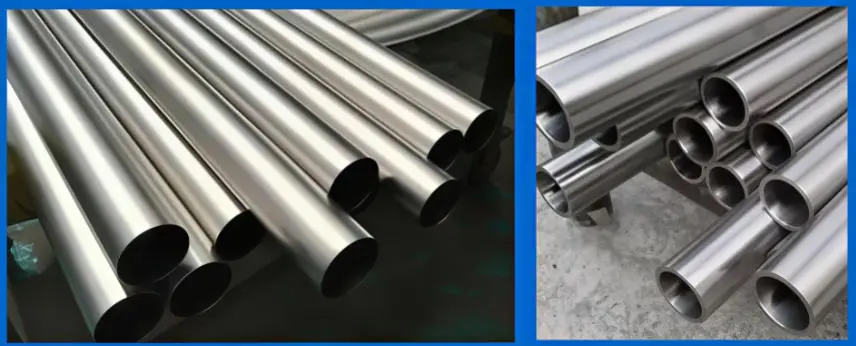
Why Choose All Trust 316L Seamless Pipes for Your Offshore and Corrosive Fluid Systems?
Hebei All Trust Steel Co., Ltd has been selling stainless steel pipes and parts to companies in the Middle East, Southeast Asia, and East Asia since 2006. The company keeps more than 5,000 tons of moving goods in stores near Tianjin, Shanghai, Qingdao, and Shenzhen. This includes 316L on a daily basis. It takes 3–5 days to get an order in stock, and 15–20 days to get a unique order.
All Trust uses a four-step independent quality system: a vendor audit with spectrographic billet analysis, production monitoring with real-time dimensional checks, independent NDT (eddy current, ultrasonic, and hydrostatic), and a final handover of documents that includes EN 10204 3.1/3.2 MTC, PMI reports, and all shipping paperwork. SGS, BV, TUV, DNV, or ABS can look over any sale as a third party. There aren't any rules.
The ODs range from 13.7 mm to 609.6 mm, and the lengths range from 5.8 m fixed to double mixed. Walls can be anywhere from 0.5 mm to 50 mm thick. Ends come in four types: plain, angled, NPT, and BSPT threaded. With a flexible MOQ, you can buy things in medium-sized groups without having to set aside extra cash.
Conclusion
316l seamless pipe is used a lot by people who design equipment for offshore platforms and work in chemical plants. This isn't because it's the cheapest option, but because it always works, even when other pieces break. Its weld-free design, extra-low carbon chemistry, and molybdenum-enhanced pitting resistance all work together to stop the specific failure modes that cause fluid transport systems to rust, crack, and get dirty in the hardest service conditions. Getting 316L stainless steel pipe from the right place is more than just a line item on a bill of materials; it's an investment in consistent operation. It comes with full approval and testing by a third party.
FAQ
What is the difference between 316 and 316L seamless pipe?
The letter "L" means that there is 0.03% carbon at its highest point. In standard 316, the highest carbon is 0.08%. It stops intergranular corrosion in weld-affected zones because it has less carbon. This makes 316L the best standard for field welding.
What standards govern 316L seamless pipe?
This is what ASTM A312 and ASME SA312 say should be done for general acid work. The standard for heat exchanger and condenser tubes is ASTM A213, and the standard for pressure equipment in Europe is EN 10216-5. For measurements, ASME B36.19M is used to set the tolerances.
Does 316L seamless pipe require post-weld heat treatment?
No, most of the time. Because it has a low carbon content, it is less likely to form carbides, so it is usually not necessary to cool the metal after welding. When there is a lot of pressure or the temperature is very low, the engineer can ask for stress relief.
What non-destructive tests are performed?
NDT tests usually include hydraulic pressure tests, eddy current tests for cracks on and below the surface, sound tests to make sure the walls are level, and X-ray checks when needed. Tests for intergranular corrosion are done with ASTM A262 Practice E.
What sizes are available?
In NPS, the OD ranges from 1/4" to 24" (13.7 mm to 609.6 mm), and the wall plans go from SCH 5S to SCH XXS. You can pick between set lengths of 6 m and 12 m or random lengths of one or two meters.
Get a Certified 316L Seamless Pipe Quote from All Trust Today
It is true that All Trust sells 316l seamless pipe. There are full EN 10204 3.1 MTC tests, PMI tests, and a third-party review of each piece to make sure it is acceptable. Our team gets back to you within an hour during business hours, whether you need a medium-batch restocking or a custom-sized order for an export project. Send us an email at info@hballtrust.com or visit hballtrust.com to get an MTC sample, learn about the sizes, and get a good deal. It's important to get your output plan right the first time.
References
1. ASTM International. ASTM A312/A312M: Standard Specification for Seamless, Welded, and Heavily Cold Worked Austenitic Stainless Steel Pipes. 2022.
2. ASME. ASME B36.19M: Stainless Steel Pipe. American Society of Mechanical Engineers, 2018.
3. European Committee for Standardization. EN 10216-5: Seamless Steel Tubes for Pressure Purposes — Stainless Steel Tubes. 2021.
4. ASTM International. ASTM A262: Standard Practices for Detecting Susceptibility to Intergranular Attack in Austenitic Stainless Steels. 2021.
5. Sedriks, A. J. Corrosion of Stainless Steels. 2nd ed. John Wiley & Sons, 1996.
6. Outokumpu Stainless. Corrosion Handbook: Stainless Steels in Offshore and Chemical Processing Environments. Outokumpu, 2019.