321 Seamless Pipe Supplier for Power Generation and Heat-Exposed Process Equipment
When sourcing high-temperature piping for boiler overhauls, superheater replacements, or new construction in thermal power plants, the material specification you choose carries long-term consequences. A grade 321 seamless pipe — titanium-stabilized austenitic stainless steel per UNS S32100 / 1.4541 — is the established solution for service environments between 427°C and 816°C. Manufactured to ASTM A312, ASTM A213, and ASME SA312, it provides genuine immunity to intergranular corrosion in the sensitization range where standard 304 routinely fails. This guide walks procurement directors through the technical fundamentals, application scope, grade comparisons, and supplier evaluation criteria they need before placing a large project order.
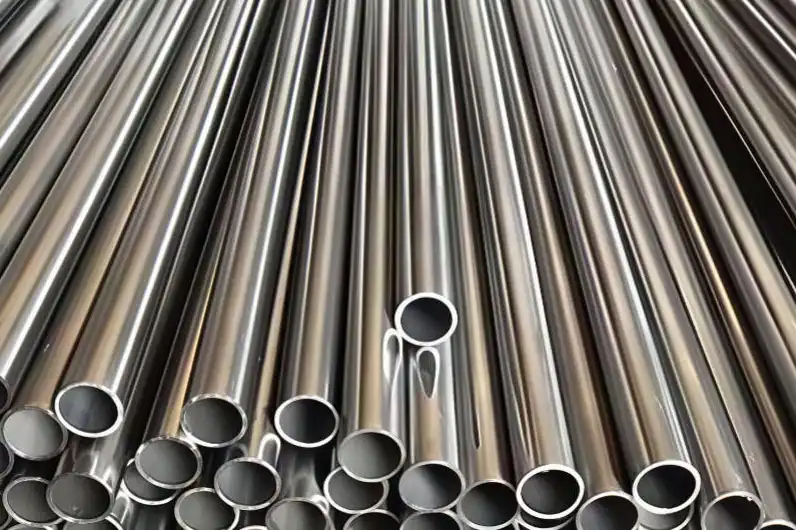
Understanding 321 Seamless Pipe and Its Key Properties
Chemical Composition and the Role of Titanium Stabilization
Grade 321 (UNS S32100) is a type of austenitic stainless steel that has titanium added at a minimum of 5 times (C+N). That titanium prefers to combine with carbon at high temperatures, which stops chromium from being used up at the edges of grains, which is what makes them sensitive. This makes a pipe that doesn't rust even after a lot of use in the 427–816°C range, which is where grades that aren't stable start to break down, like 304.
Mechanical Properties and Heat Treatment Protocol
At room temperature, the material has a minimum tensile strength of 515 MPa and a yield strength of 205 MPa. It also has measurable creep resistance throughout the full service range. After solution annealing, our pipes go through a special heat treatment that fixes the titanium carbides into the matrix. This makes sure that the pipe works perfectly before it even gets to your facility. The surface is industrially pickled and passivated, so it is free of iron contamination and residual oxide scale.
Dimensional Range and Manufacturing Process
We make these pipes using advanced multi-pass precision cold drawing, which makes sure that the walls are all the same size and shape across the whole size range. Outside sizes range from 1/4′′ to 24′′ (13.7 mm to 609.6 mm), and wall schedules range from SCH 5S to SCH XXS (0.5 mm to 50 mm). Standard lengths are 5.8 m, 6 m, 11.8 m, and 12 m, but you can ask for custom lengths to be cut. There are three different kinds of ends: plain, curved, and threaded.
Applications of 321 Seamless Pipe in Power Generation and Heat-Exposed Equipment
Boiler Superheater and Reheater Tubes
In coal-fired and gas-fired power plants, the superheater and reheater circuits keep the tubing under high pressure steam at temperatures that are usually higher than 540°C. Titanium-stabilized stainless steel tube that meets ASTM A213 standards is the usual material for these circuits because it doesn't crack during intergranular stress corrosion cracking (IGSCC) and doesn't need to be annealed after every weld. Large companies that make power tools often ask procurement engineers to use this grade for both new building projects and boiler overhauls.
Refinery Heating Furnaces and Cracking Furnaces
In refining, the temperature of the process furnace radiant coils and transfer lines changes a lot every day. In this climate, chromium carbide formation in unstabilized grades greatly reduces the life of tubes. Because it can handle these temperature changes and still be resistant to sulfidation and oxidation, grade 321 Seamless Pipe titanium-alloyed matrix is included in EPPEI technical standards for refining furnace pipes. The benefits of running chemical cracking kilns at high temperatures all the time are the same.
Heat Exchangers and CHP Equipment
Industrial heat exchangers and combined heat and power units need tubing that can handle thermal fatigue after decades of cycling. As per ASTM A262 Practice E (the weld decay test), properly stabilized 321 seamless tubes always pass the intergranular corrosion standard that design schools look for before accepting material for long-term use. The A262 Practice E score is part of our mill test certificates (MTC) and can't be added as an extra.
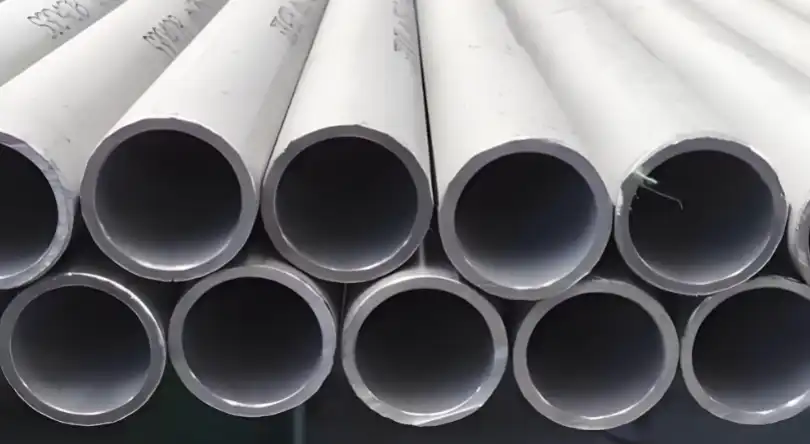
Comparison and Selection Guide: Grade 321 vs. Alternative Grades
321 vs. 304 and 304L
The austenitic stainless steel grade most often used is 304, but it doesn't have any stability. Above 427°C, carbon moves to the edges of grains and joins with chromium, leaving areas low in chromium that rust quickly. Grade 304L lowers the amount of carbon in the metal, which slows down this process but doesn't get rid of it. The 321 grade was made for situations like these where corrosion resistance must be maintained over a long period of time at temperatures above 427°C. Neither grade is suitable for these uses.
321 vs. 316 and 316Ti
Grade 316 has molybdenum added to it to make it more resistant to pitting and crevice corrosion in chloride-containing water, but it is just as prone to sensitization at high temperatures as Grade 304. The titanium-stabilized version of 316 is called 316Ti. It has both molybdenum and titanium stabilization, which is useful in places where high temperatures and chloride exposure happen at the same time. 321 is a cheaper metal than 316Ti that works well in thermal uses like boiler tubes.
Seamless vs. Welded Construction
For service at high temperatures and pressures, seamless construction gets rid of the longitudinal weld seam completely. That seam is where a lot of stress builds up in welded pipe, and it's also the first place where fatigue cracks show up after thermal cycling. When the wall width is the same, seamless tubes can handle more pressure, and the ASME boiler code uses these qualities to figure out how to build superheater circuits. All pressure-boundary tubes must be constructed in a way that is seamless, as required by procurement standards from both Dongfang Electric and Shanghai Electric.
Procurement Insights for Global B2B Buyers
Certifications That Must Appear in the Technical Bid
When purchasing directors look at technical bids, they should make sure that the following paperwork is included: an EN 10204 3.1 or 3.2 Mill Test Certificate, an ASTM A262 Practice E intergranular corrosion test result, ASME material certification (SA312 or SA213), and PED/CE certification if European end-user requirements apply for 321 Seamless Pipe. You can get a third-party inspection from SGS, BV, TÜV, DNV, or ABS, and you should. ISO 9001:2015 approval of the factory gives basic assurances about quality management.
Supply Continuity for Long-Cycle Projects
Building a power plant or expanding a factory usually takes three to ten years, with several rounds of bidding. You can't count on a provider that only has 304 and 316 grades in stock to be your long-term partner for 321-grade needs. Buyers should make sure that the supplier keeps a rolling stock of UNS S32100, has confirmed mill partnerships with ISO-certified producers, and can promise to make repeat deliveries based on a frame agreement, not just one spot order.
Logistics, Lead Time, and Packaging
If you order standard stock, it will be sent out in three to five days from warehouses near Tianjin, Shanghai, Qingdao, and Shenzhen. We need fifteen to twenty days to make custom-cut lengths and meet other timing needs. It takes 25 to 30 days to finish a large engineering project, and priority production capacity can cut down on wait times by up to 35%. Plastic end caps, waterproof woven bag wrapping, hexagonal bundles with steel strapping, and fumigation-free wooden crates are all used in export packaging to keep the surface from getting damaged and water from getting in during ocean transit.
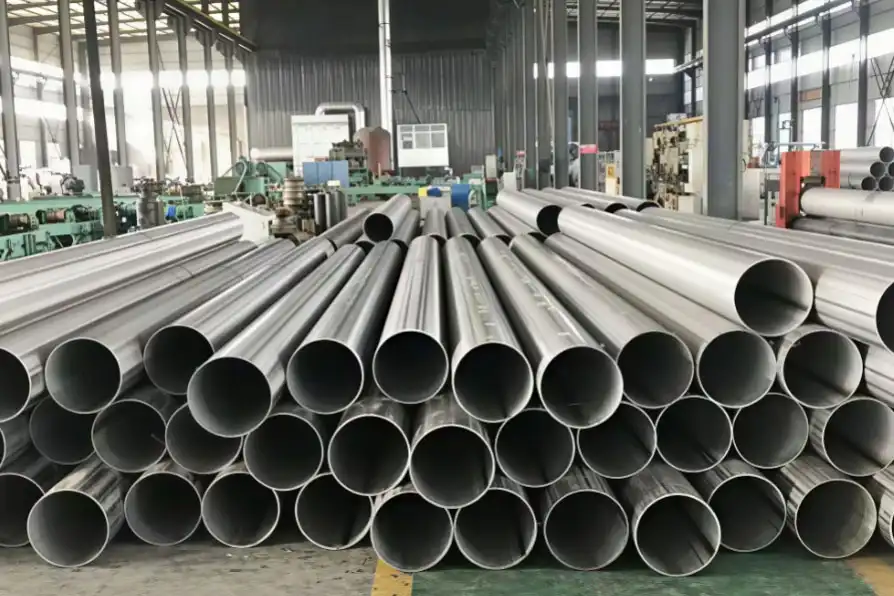
Why Choose All Trust for 321 Seamless Pipe Supply?
Since it opened in 2006, Hebei All Trust Steel Co., Ltd. has been building a supply network that includes resources from more than fifteen steel mills that are ISO-certified. The highest OD that can be made is 1,016 mm, and the annual production amount is more than 15,000 tons. Before being sent out, 100% hydraulic testing is done on every batch. Our quality control method has four steps: auditing and verifying the vendors and their spectrograms, keeping an eye on production, independent NDT (eddy current, ultrasound, and hydrostatic testing), and handing over all the paperwork at the end. This includes real 3.1/3.2 MTCs and PMI reports.
For procurement teams that have had problems with other suppliers' slow technical responses, our team responds within an hour during business hours and gives full quotes within eight hours. You can get services like custom size, fixed-length cutting, end beveling, and threading, and the minimum order quantity is adjustable. This means that it can be used for both short-term sales of overhauls and long-term plans for frame supply.
Conclusion
Grade 321 Seamless Pipe titanium-stabilized seamless pipe is still the best value for money when it comes to boiler superheater tubes, refinery furnace circuits, and heat exchanger bundles that work all the time at temperatures between 427°C and 816°C. As shown by ASTM A262 Practice E testing, its titanium stabilization mechanism addresses intergranular corrosion, the main type of failure that shortens tube life in grades that aren't stabilized. When paired with ASME and PED certifications, full-traceability MTCs, and a source that can deliver over multiple years, it lowers the risk for procurement chiefs who are in charge of big thermal power or petrochemical projects.
FAQ
Does grade 321 require post-weld heat treatment?
No. Because titanium stabilization prevents sensitization at weld heat-affected zones, post-weld annealing is generally not required. AWS ER321 or ER347 filler metal is recommended for welded joints to maintain stabilization at the weld deposit.
What is the maximum continuous service temperature?
Grade 321 maintains its corrosion resistance up to 816°C (1500°F) in continuous service. Oxidation resistance extends to approximately 900°C (1650°F), though mechanical strength decreases above 816°C.
Which ASTM standards govern this product?
The primary standards are ASTM A312 and ASME SA312 for seamless pipe, ASTM A213 for seamless boiler and heat exchanger tubes, and EN 10216-5 for European projects. All apply to UNS S32100.
How does 321 differ from 347?
Both are titanium- or niobium-stabilized. Grade 321 uses titanium; grade 347 uses niobium (columbium). Grade 347 shows slightly better performance in certain aqueous environments and nuclear service. For general thermal power and refining applications, 321 is more widely stocked and specified.
What NDT methods are applied before shipment?
Our standard NDT protocol covers hydrostatic pressure testing, eddy current testing for surface and subsurface flaws, and ultrasonic testing for wall thickness uniformity. Radiographic testing is available on request.
Request a Quote from All Trust — Your Verified 321 Seamless Pipe Manufacturer
All Trust has a lot of UNS S32100 titanium-stabilized seamless pipe in a lot of different sizes and schedules in stock. As standard, they can provide EN 10204 3.1 MTCs, ASTM A262 Practice E test reports, and 321 Seamless Pipe ASME certifications. You can get a full quote within eight hours if you send your technical specifications or RFQ directly to info@hballtrust.com. For engineering projects that last longer than ten years, long-term frame supply agreements are available.
References
1. ASTM International. ASTM A312/A312M: Standard Specification for Seamless, Welded, and Heavily Cold Worked Austenitic Stainless Steel Pipes. ASTM International, 2022.
2. ASTM International. ASTM A262: Standard Practices for Detecting Susceptibility to Intergranular Attack in Austenitic Stainless Steels. ASTM International, 2021.
3. ASME Boiler and Pressure Vessel Committee. ASME Boiler and Pressure Vessel Code, Section II, Part A: Ferrous Material Specifications. ASME, 2023.
4. Davis, J.R. Stainless Steels. ASM International, 1994.
5. Llewellyn, D.T., and Hudd, R.C. Steels: Metallurgy and Applications, 3rd ed. Butterworth-Heinemann, 1998.
6. Electric Power Planning and Engineering Institute (EPPEI). Technical Specification for High-Temperature Piping Materials in Thermal Power Plant Boilers. China Electric Power Press, 2019.

