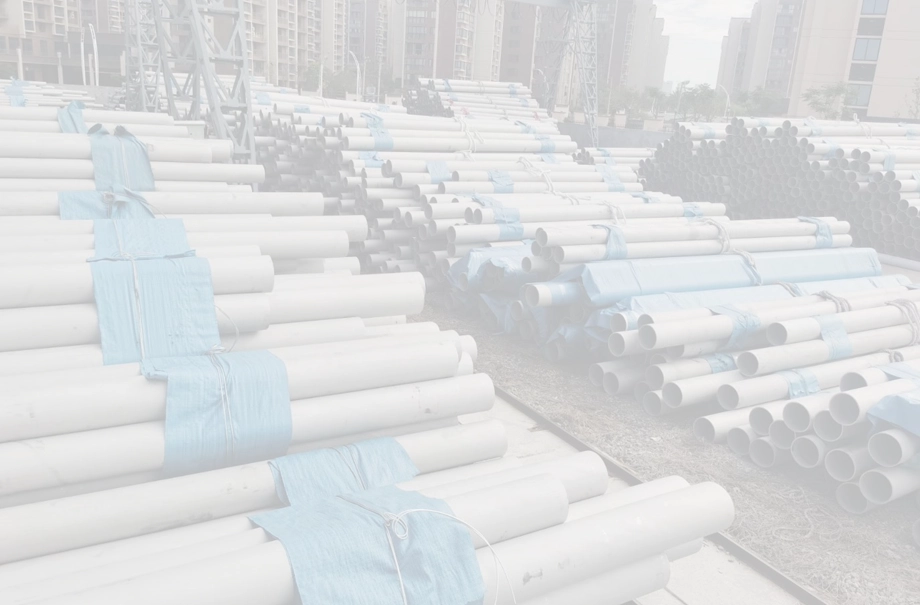
ASTM A213 TP304 Tube for Heat Exchangers and Boiler Systems
If you work in chemical equipment, power generation, or food machinery manufacturing, you already know how much the right tube grade matters. The ASTM A213 TP304 tube is one of the most specified seamless stainless steel tubes in industrial thermal systems worldwide. Manufactured under ASTM A213 / ASME SA213, this Grade TP304 (UNS S30400 / 1.4301) tube delivers a minimum tensile strength of 515 MPa and yield strength of 205 MPa, making it a dependable choice for boiler loops, superheater circuits, and shell-and-tube heat exchangers where pressure and temperature run high around the clock.
Understanding ASTM A213 TP304 Tube Specifications and Properties
It's cheaper to fix things later if you make sure the specs are correct before you buy. Below is what this tube is made of on a metallurgical level.
Chemical Composition That Counts
TP304 has between 18.0 and 20.0% chromium, 8.0 to 11.0% nickel, and no more than 0.08% carbon. This balance makes the tube very resistant to oxidation up to 1,600°F/870°C and keeps it from becoming sensitive in most bonded systems. Limits for phosphorus (0.045% max) and sulfur (0.030% max) keep grain boundaries from becoming weak after a long time of heat cycling.
Mechanical Performance Under Thermal Stress
As per ASTM A213, the tube's hardness ceiling of 192 HBW (90 HRB) keeps it flexible after solution heating. The material can handle thermal expansion without breaking because its elongation value is usually above 35%. This is something that carbon steel tubes can't do in long-term boiler service.
Manufacturing and Heat Treatment
Precision cold drawing or cold rolling is used to make tubes. This densifies the grain structure and gets rid of the risk of weld lines. After a homogeneous solution anneal and a quick quench, the austenitic structure is restored, and carbide precipitation is stopped. Solution annealed and pickled (matte), bright annealed (BA), and manually polished are some of the surface finishes that can be chosen.

Comparing ASTM A213 TP304 Tube with Alternative Grades and Materials
Picking between steel types is not a business choice, but a real scientific choice. The most common trade-offs that procurement teams have to make are shown below.
TP304 vs. TP304L — Weldability and Sensitization
The highest amount of carbon that can be in TP304L is 0.030%. This lowers the risk of intergranular corrosion in heavy multi-pass welds. If your fabrication shop welds a lot of tube headers and doesn't do heat treatment after the weld, TP304L is worth the extra cost. Standard TP304 works just as well and costs less for boiler tube runs that aren't welded.
TP304 vs. TP316 — When Molybdenum Pays Off
TP316 adds 2.0–3.0% molybdenum, which makes it much more resistant to pitting and rust caused by salt. TP316 is the right choice for condensers that are cooled by seawater or chemical streams that are high in chloride. Astm A213 TP304 tube offers enough security for basic steam service, freshwater heat exchangers, and food-grade evaporators at a lower metal cost—often 15–20% less per tonne than TP316.
TP304 vs. Carbon Steel and TP321
In acidic or steam-oxidizing environments, carbon steel tubes break quickly, which increases the number of repairs needed and the cost over their lifetime. Most of the time, TP304 lasts three to five times longer in moderately acidic environments. Compared to TP321, which has titanium stabilisation to keep its high-temperature creep strength above 425°C, TP304 is the cheaper choice for normal boiler and heat exchanger use that stays below that temperature. For tubes that are required by ASTM A312 (pipe service), keep in mind that A213 controls the tube measurements in terms of OD and BWG/minimum wall, not NPS Schedule. This is an important difference to know for correct purchase.
Applications of ASTM A213 TP304 Tubes in Heat Exchangers and Boiler Systems
How well a tube grade works year after year is what really matters. People who work in some tough fields have had good luck with TP304.
Heat Exchangers and Condensers
TP304 tubes move heat from one process stream to another in shell-and-tube heat exchangers. The walls of the tubes are always the same width, so they don't get jammed. The outside diameter (OD) can be anywhere from 3.18 mm (1/8" to 5", and the wall thickness can be anywhere from 0.38 mm to 12.7 mm. This range of sizes works with most cooler and condenser sets. Eddy current tests are done on each tube to make sure the surface is rigid before the parts are put together.
Boiler Systems and Superheaters
In factories and power plants, TP304 tubes are used in superheater circuits and economiser sections that need to work at low to medium temperatures. The tube is useful for boiler connection loops and thermal vapour transfer lines because it doesn't scale and can keep the pressure up during long heat cycles. The mill tests it for leaks using hydrostatic pressure before sending it out.
Food Processing, Chemical, and Municipal Sectors
TP304 boiler and heat exchanger tubes are used in more than just thermal systems. They are also found in chemical evaporators that work with organic acids, heat recovery systems for municipal waterworks, and sterilisation units in food and drug plants. The surface doesn't react with anything and is simple to clean. It also meets standards for cleanliness. It is possible for the 18/8 metal to work with light corrosives in CIP cleaning circuits.

Procurement Guide: How to Source ASTM A213 TP304 Tubes Efficiently?
To find the right ASTM A213 TP304 tube grade, you need to do more than just look at the price per kilogram. Buy managers with a lot of experience look at these things before they place an order.
Before buying something, everyone should make sure of these things:
- Mill Test Certificate (MTC) to EN 10204 3.1 or 3.2—confirms that the heat number, chemical analysis, and mechanical test data can be traced back to the melt that they came from. You can't check the Cr/Ni amount or make sure that ASTM A213 is followed without this paper.
- Eddy current, ultrasound, and hydraulic test results for every batch, not just sample lots. These are non-destructive testing records. Along with these, laser inspection data for OD and wall thickness limits should be sent.
- Accepting inspections from a third party—suppliers who allow on-site inspections by SGS, BV, TUV, DNV, or ABS adds an extra layer of security for procurement teams. This is very helpful for export orders going to the Middle East or Southeast Asia.
- Custom lengths of 5.8 m, 6 m, 11.8 m, 12 m, or cut-to-length should ship within 15–20 working days, and stock orders should ship within 3–5 days. Flexible low MOQ on custom dimensions keeps capital from being stuck in too much inventory.
- Seaworthy plywood crates or hexagonal bundles with heavy-duty metal strapping, waterproof wrap, and plastic end caps protect against dents, scratches, and surface corrosion during ocean freight.
These checks lower the chance of using the wrong material, having walls that aren't the same thickness, or damage happening during transport. In medium-batch buying, these three things slow down projects the most.
Why ASTM A213 TP304 Tube Is the Smart Choice for B2B Industrial Buyers?
It's easy to see how TP304 tubing saves money in the long run. When service intervals are longer, scheduled shutdowns happen less often. When the wall thickness stays within the ASTM standard, fewer units are rejected during the inspection step. And full paperwork from a licensed mill means that export packages are held up less at customs.
Lower Total Cost of Ownership
When a company changes its carbon steel boiler tubes every two years, it spends more on labour and downtime than the difference in price between carbon steel and TP304 ever makes up for. Industry maintenance data regularly shows that replacing stainless tubes in boiler systems happens three to five times less often than replacing carbon steel tubes in the same kind of service circumstances.
Trusted Supplier Criteria
The company you pick should be certified by ISO 9001:2015, keep a rolling stock of 304/304L, 316/316L, and other grades, and be able to offer OEM custom sizes and production records that can be checked. Companies that have more than one mill can provide backup production capacity that only comes from one factory can't. This is important when your production schedule has a set due date.
Emerging Standards and Alloy Developments
When buying things for projects that will be exported, procurement teams should keep an eye on ASTM A269, ASTM A244, and EN 10216-5, which are similar standards. This is because end customers in the U.S. and Europe are asking for these along with A213. Cross-standard certified suppliers cut down on the time and paperwork needed for re-qualification during the project engineering stage.
Conclusion
Astm a213 tp304 tube is still a good choice for industrial heat exchangers, boiler systems, superheaters, and condensers because it is both technically sound and affordable. It can be used in the power, chemical, food processing, and city sectors for pressurized thermal service because of its chemistry, mechanical qualities, and manufacturing process. When it comes to procurement professionals, the lowest price should never be more important than certified material quality and documentation that can be tracked. Your supply chain and the trust of your customers in every shipment are kept safe by verified Cr/Ni content, full MTC records, and accepted third-party inspection.
FAQ
What is the difference between ASTM A213 and ASTM A312 for TP304 tubes?
ASTM A213 governs seamless boiler, superheater, and heat exchanger tubes, dimensioned by outside diameter and minimum wall thickness (BWG/MW). ASTM A312 covers stainless steel pipes for general corrosive service, dimensioned by NPS and Schedule. They serve different engineering purposes and should not be interchanged on a specification sheet.
Can TP304 tubes handle sub-zero temperatures?
Yes. The austenitic structure of TP304 maintains impact toughness at cryogenic temperatures, which makes it suitable for liquefied gas transfer lines and cold utility systems.
How do I confirm the material is genuine TP304 and not a substituted grade?
Request an EN 10204 3.1 Mill Test Certificate tied to a specific heat number. Positive Material Identification (PMI) testing using optical emission spectrometry independently verifies chromium and nickel content against ASTM A213 limits.
What non-destructive tests are mandatory under ASTM A213?
The standard requires either hydrostatic testing or eddy current / ultrasonic testing. Reputable suppliers run both, along with dimensional laser inspection, flattening, and flaring tests as required by ASTM A1016 general requirements.
What packaging protects tubes during ocean freight?
Seaworthy plywood crates with waterproof wrap, plastic end caps, and heavy-duty steel strapping prevent surface dents, scratches, and moisture-related rust during long-haul sea transit.
Request a Quote from All Trust — Verified ASTM A213 TP304 Tube Supplier
All Trust (Hebei All Trust Steel Co., Ltd.) keeps more than 5,000 tons of approved stainless steel tubes in stock and lets SGS, BV, or TUV check every order. We offer EN 10204 3.1 MTCs, a variable MOQ, and 3–5-day delivery on stock sizes ranging from 3.18 mm to 127 mm as a reputable Astm a213 tp304 tube manufacturer. You can email our technical team at info@hballtrust.com or go to hballtrust.com to get prices and details within 8 working hours.
References
1. ASTM International. ASTM A213/A213M: Standard Specification for Seamless Ferritic and Austenitic Alloy-Steel Boiler, Superheater, and Heat-Exchanger Tubes. ASTM International, 2022.
2. ASME. ASME SA-213/SA-213M: Specification for Seamless Ferritic and Austenitic Alloy-Steel Boiler, Superheater, and Heat-Exchanger Tubes. ASME Boiler and Pressure Vessel Code, Section II, Part A, 2021.
3. Davis, J. R. Stainless Steels. ASM International, 1994.
4. Sedriks, A. J. Corrosion of Stainless Steels. 2nd ed. John Wiley & Sons, 1996.
5. Materials Performance (NACE International). "Service Life Comparison of Stainless Steel and Carbon Steel Tubes in Industrial Boiler Applications." Vol. 58, 2019.
6. European Committee for Standardization. EN 10216-5: Seamless Steel Tubes for Pressure Purposes — Technical Delivery Conditions — Stainless Steel Tubes. CEN, 2021.