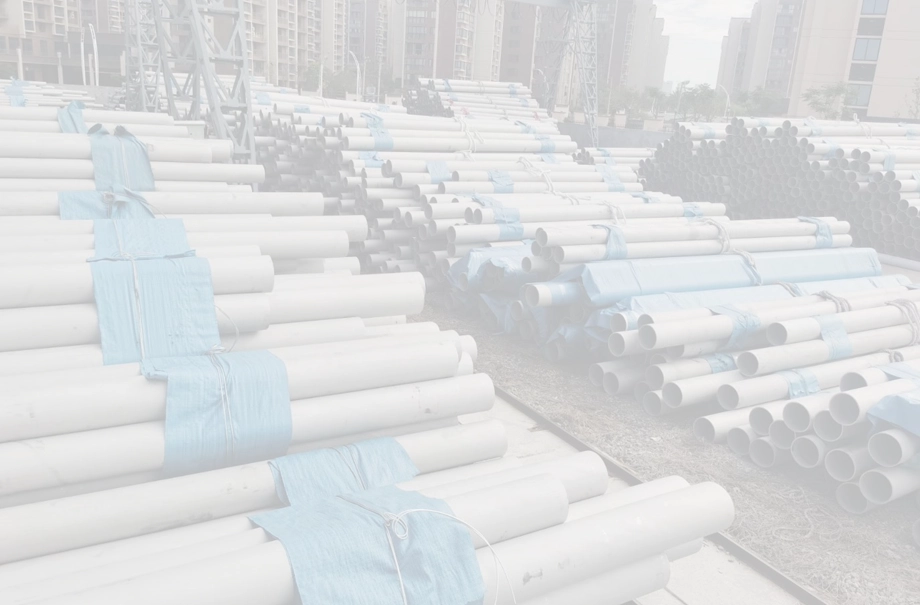
ASTM A358 TP304 Pipe for Large-Diameter Industrial Applications
As a trusted expert, you can count on the ASTM A358 TP304 pipe for projects that need large-diameter stainless steel pipes that can handle high pressure, acidic media, and long service cycles. This electric-fusion-welded (EFW) pipe meets the standards set by ASTM A358 and ASME SA358. It comes in nominal pipe sizes ranging from 8" to 60" and even larger. It is the best choice for municipal water mains, chemical distribution loops, and refinery networks where seamless pipe is not available or too expensive at large diameters.
Understanding ASTM A358 TP304 Pipe Specifications and Properties
Chemical Composition
With 18–20% Chromium and 8–11% Nickel, the TP304 grade (UNS S30400 / EN 1.4301) doesn't rust and doesn't break down easily in the weather. Cations don't form at the join zones because the carbon content stays at or below 0.08%. Percentages are exact because they are required by ASTM A358 mill tests and are shown by Positive Material Identification (PMI) tests done on every production heat.
Mechanical Performance
The pipe's tensile strength is at least 515 MPa (75 ksi), and its yield strength is at least 205 MPa (30 ksi). Plus, it can stretch at least 35%. A melting process at temperatures above 1040°C after the weld makes the parent metal strong again across the seam of the weld. This keeps the joint from getting weak while the pressure is changed. For each batch of parts, axial tension tests and guided-bend weld tests are done to make sure the mechanical values are correct.
Dimensional Standards and Operating Range
Sizes range from NPS 8" to NPS 100" (219.1 mm to 2540 mm OD), and wall plans range from SCH 5S to 80S (2.0 mm to 50 mm). You can cut it to any length you want, from 5.8 m to 12 m or more. As low as -196°C and as high as about 870°C, the alloy reliably works in continuous service. This is the full range of temperatures that are used in industrial processes.
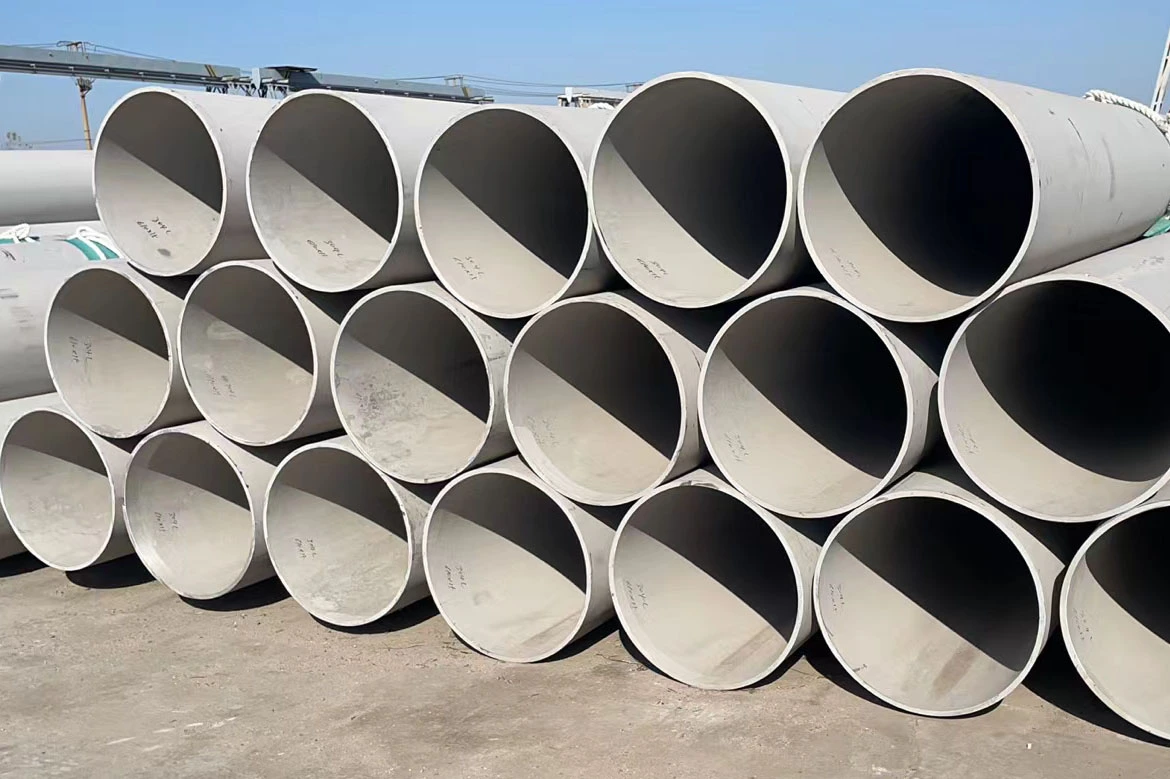
Comparative Analysis: ASTM A358 TP304 vs. Alternative Stainless Steel Pipes
Picking the right metal type and pipe standard has a direct effect on the cost of the job and how long it will last. This is how TP304 EFW pipe stacks up against the most popular options that buying teams see.
TP304 vs. TP316 and TP316L
TP316 and TP316L have 2–3% more molybdenum added, which makes them less likely to get chloride pits. Because of this, 316L is the best material for cooling loops in seawater or harsh acid service. But that extra alloying element makes the cost of the material about 20–30% higher. TP304 EFW pipe has the same structural performance as CP316 pipe but costs less per metre. It can be used in fresh water systems, general chemical loops and food-grade lines where chloride exposure is low.
TP304 vs. TP304L and TP321
Carbon can be cut down to 0.03% or less with TP304L, which is useful when post-weld heat treatment can't be done on-site. Titanium stabilises the metal so that it can be used at temperatures above 425°C for a long time. As part of the ASTM A358 EFW process, solution annealing is required. This returns the weld zone of standard TP304 to a state without sensitization. As a result, ASTM A358 TP304 pipe can be used instead of TP304L in most large-diameter welding situations without spending too much money.
EFW Pipe vs. Seamless Pipe for Large Diameters
Above NPS 24, seamless pipe is no longer technically or financially useful. Heavy-wall seamless pipe can't be made by hot extrusion presses for diameters bigger than a certain number, and wait times can reach 16–20 weeks. As required by ASME Section VIII, the EFW plate-formed method can be used for widths up to NPS 100". All weld joints must be fully inspected with a radiograph (RT/X-ray). This inspection standard gives EFW pipe a record of its structural integrity that can be checked. Many large project specifications now accept this instead of seamless pipe.
Procurement Guide: How to Source ASTM A358 TP304 Pipes Efficiently?
It's not enough to just compare prices to find large-diameter EFW pipe. Before they place an order, these are the most important things that good buying managers should check.
When thinking about how to buy something, these are the most important things to keep in mind:
- For certification, you need EN 10204 3.1 Mill Test Certificates that show the chemical make-up, mechanical test results, heat treatment records, and NDT reports. 3.2 documents signed by an authorized body may be needed for projects that follow the PED or ASME code.
- NDT scope: Make sure that 100% radiography testing (RT), hydrostatic testing, and ultrasonic testing (UT) are normal and not extras that can be added on. Dye penetrant (PT) testing on weld caps is a cheap way to add an extra integrity check.
- Third-party inspection: Suppliers who accept source inspection from SGS, BV, TÜV, DNV, or ABS get rid of any doubts about which metal types can be used instead. This is the best way to make sure that your production line doesn't get any Cr/Ni that isn't up to par.
- Lead time and stock: Orders that are in stock should be sent out within 3–5 days. It usually takes 15–20 days for standard custom production runs. Check to see how close the building is to export ports like Tianjin, Shanghai, or Qingdao so you can plan for reliable transport times.
- Flexibility in MOQ: Large-diameter pipe only comes in a few common lengths. When a seller offers mixed-size consolidation in one package, the minimum order requirement and the cost of goods per unit go down.
If you use a different material, the wall thickness changes, or something gets broken during shipping, these criteria will directly address the most common risks in procurement.
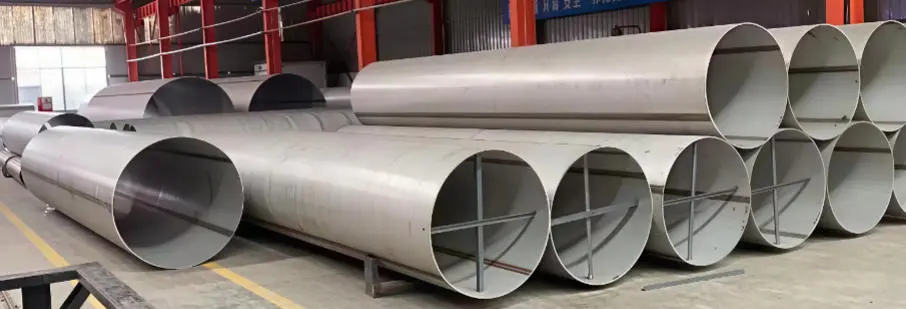
Practical Applications and Industry Use Cases of ASTM A358 TP304 Pipes
TP304 EFW pipe with a large diameter can be used in a lot of different industry settings. It can be used in many areas because it has good weld stability, a wide range of dimensions, and protection to rust.
Municipal Water Treatment and Distribution
Authorities in charge of treating water recommend ASTM A358 TP304 pipe for large-bore stainless steel mains in places where carbon steel would rust and pollute the water being treated. TP304 EFW pipe in NPS 24"–48" can handle high flow rates at normal city pressures without scaling or cracking, so it needs less upkeep than treated carbon steel pipes.
Chemical Process Piping and Distribution Loops
The austenitic texture of TP304 successfully blocks oxidising acids in the production of nitric acid and in the spread of chemicals in general. The solution-annealed weld seam stops intergranular corrosion at joints, which is where most welded chemical pipes fail. In this industry, plant engineers often use ASTM A358 Class 1 (100% RT) to show proof of weld quality for insurance purposes and to follow the rules.
Petrochemical Refineries and Power Generation
Cooling water lines in refineries and power plants move large fluid volumes at moderate pressures. Using TP304 EFW pipe in NPS 36"–60" at these facilities reduces the risk of internal corrosion that shortens carbon steel service life. Several refinery operators report service lives exceeding 25 years on austenitic stainless cooling headers, compared to 8–12 years for epoxy-lined carbon steel alternatives.
Trusted Suppliers and Brands: Ensuring Quality and Compliance
There are businesses that sell large-diameter EFW pipe but don't have the testing and approval tools that factory projects need. It's a good idea to make sure the source can do what you need before you place an order. It will save a lot of money not to have to wait.
What to Verify in a Supplier
A trustworthy company that makes ASTM A358 TP304 pipe should have ISO 9001:2015 certification and a written four-step quality system. These steps are auditing the suppliers, keeping an eye on production, getting independent tests done, and giving the final certification. Directly ask them if the spectrographic study of raw plate heats is part of their quality records. This is the best way to keep metal swapping from happening.
Hebei All Trust Steel Co., Ltd.
All Trust makes and sells stainless steel pipes. The company is based in Hebei, China, and has warehouses close to Tianjin, Shanghai, Qingdao, and Shenzhen. With a maximum OD capacity of 1016 mm, they can make more than 15,000 tons of goods every year. All Trust always provides EN 10204 3.1 MTCs and lets SGS, BV, TÜV, DNV, and ABS do third-party inspections. Their product line includes grades of seamless, welded, duplex, and super duplex steel, so buyers can combine different pipe types into a single shipment. Standard lead times are 15–20 days, and you can get custom-cut lengths, bevel ends, and surface finishes like solution annealed and pickled (SA&P).
Conclusion
For large-diameter industrial pipes, astm a358 tp304 pipe meets a real technical gap: seamless pipe isn't realistic, and normal ERW pipe doesn't have the inspection rigor that pressure-system engineers need. The chemical makeup has been checked, the weld quality has been solution-annealed, and the size range is from NPS 8" to NPS 100". This makes it a good choice for water treatment, chemical processes, and refineries that want to save money. Choosing suppliers based on their price alone will never lead to better project results than choosing suppliers who provide full MTCs, allow third-party inspections, and keep a flexible stock inventory.
FAQ
What is the difference between ASTM A358 Class 1 and Class 3?
Class 1 requires 100% radiographic examination of all weld seams and is used for pressure-critical piping. Class 3 permits spot radiography and is applied where full RT is not required by the design code. Most chemical and refinery specifications call for Class 1. If your project involves ASME B31.3 process piping, confirm the class requirement with your piping engineer before ordering.
Does ASTM A358 TP304 pipe require post-weld heat treatment?
Yes. The specification requires full-body solution annealing above 1040°C after welding. This step dissolves chromium carbides that form during welding and restores the base metal corrosion resistance across the entire pipe body, including the heat-affected zone.
Can this pipe be supplied with EN 10204 3.2 certification?
Yes. Suppliers who work with notified inspection bodies can provide 3.2 MTCs. This is typically required for PED-regulated projects in Europe. Confirm this requirement during your initial inquiry so the supplier can arrange third-party witness at the mill.
What wall thickness deviation is acceptable under ASTM A358?
The specification references ASTM A312 tolerances for wall thickness, which permit a negative deviation of no more than 12.5% of the nominal wall thickness. Buyers with tight pressure calculations should specify a tighter tolerance in their purchase order.
Partner with All Trust for Your Next Large-Diameter Pipe Project
All Trust sells Astm a358 tp304 pipe that has full EN 10204 3.1 MTC documentation, 100% weld RT records, and a standard third-party inspection. Whether you need a restocking order or a custom run of large-diameter EFW pipes, our engineering team gets back to you within an hour during business hours. To get a quote and an MTC sample right away, email us at info@hballtrust.com or go to hballtrust.com.
References
1. ASTM International. ASTM A358/A358M: Standard Specification for Electric-Fusion-Welded Austenitic Chromium-Nickel Stainless Steel Pipe for High-Temperature Service and General Applications. ASTM International, 2022.
2. ASME. ASME SA-358/SA-358M: Electric-Fusion-Welded Austenitic Chromium-Nickel Alloy Steel Pipe for High-Temperature Service. ASME Boiler and Pressure Vessel Code, Section II Part A, 2023.
3. ASTM International. ASTM A312/A312M: Standard Specification for Seamless, Welded, and Heavily Cold Worked Austenitic Stainless Steel Pipes. ASTM International, 2022.
4. Outokumpu. Corrosion Handbook: Stainless Steel Grades, Properties and Applications. Outokumpu Oyj, 2021.
5. ASME. ASME B31.3: Process Piping Code. American Society of Mechanical Engineers, 2022.
6. TWI Ltd. Welding of Austenitic Stainless Steels: Guidelines for Industrial Piping Applications. The Welding Institute, 2020.