Can A269 Tubing Improve Reliability in Industrial Instrumentation Systems?
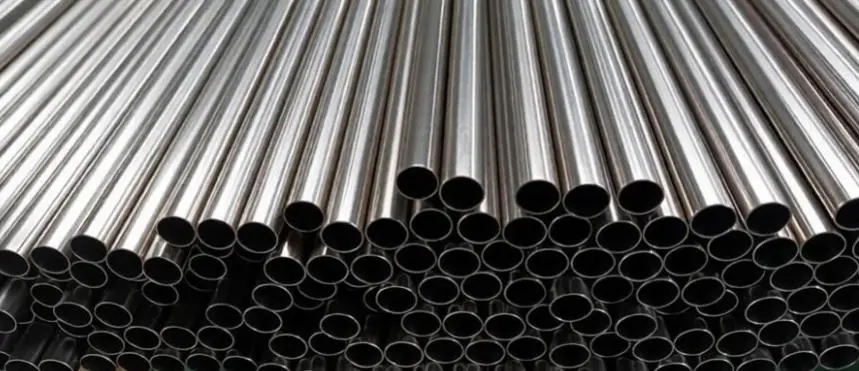
A269 tubing can meaningfully improve reliability in industrial instrumentation systems. Manufactured to ASTM A269 / ASME SA269, this precision stainless steel tubing is produced through cold-drawn or cold-rolled processes that deliver tight wall tolerances and a smooth inner bore. Available in TP304, TP304L, TP316, and TP316L grades, it resists intergranular corrosion, handles both low and high service temperatures, and maintains leak-free connections under vibration. For OEM procurement teams and design engineers specifying control lines, hydraulic loops, or heat exchanger circuits, A269 tubing offers a technically sound answer to long-term system integrity.
Understanding A269 Stainless Steel Tubing: Properties and Specifications
It saves a lot of money and time to get the specifications right from the start. ASTM A269 specifies the rules for both seamless and forged austenitic stainless steel tube that is meant to be used in general temperature- and corrosion-service situations. Regular pipe standards don't match the standard's exact outside diameter (OD) and wall thickness tolerances. This is why it is the best choice for compression fittings and precision instruments.
Grades and Chemical Composition
The standard includes more than one grade of austenitic steel. When stretched by 35%, TP304 has a minimum tensile strength of 515 MPa (75 ksi) and a yield strength of 205 MPa (30 ksi). The molybdenum (2–3%) added to TP316L stops chloride pitting, and the "L" in "low-carbon" keeps carbon below 0.03% to stop carbide precipitation during welding. Material that is dual-certified as TP304/304L and TP316/316L has both the mechanical strength of the normal grade and the weldability of the low-carbon version.
Dimensional Range and Wall Tolerances
OD ranges from 1/16′′ (1.59 mm) to 5′′ (127 mm), and wall thicknesses from 0.010′′ (0.25 mm) to 0.200′′ (5.08 mm). Under ASTM A269, the decimal wall tolerances are tighter than those for standard pipe. This makes sure that every tube fits correctly inside ferrule-type and compression fittings, without any gaps or too much compression.
Surface Finish Options
The surface finish has a direct effect on how clean the fluid is and how rust starts. The bright annealed (BA) finish, which is made in a hydrogen-protected gas furnace, has a surface roughness (Ra) that allows for clean-in-place procedures. There are different types of mechanical shine (180, 240, 320, and 400 grit) for situations where the outside look or cleanliness is important.
Why Material Choice Matters: Challenges in Industrial Instrumentation Systems?
Choosing the right materials is not just a technical matter; it's also a business choice. One leaking tube joint in a chemical process line or an offshore control system can stop work, cause the government to get involved, and cost a lot more to fix than the tube itself cost.
Corrosion as the Primary Failure Mode
Cracking and pitting caused by chloride stress corrosion have been found to be the main reasons why stainless steel instrumentation a269 tubing fails in studies published in Corrosion (NACE International). Standard carbon steel rusts quickly in salty, wet places, and even 304 stainless steel can get pits when chloride levels are above 200 ppm and temperatures are high. Choosing TP316L, which has molybdenum added to it, greatly increases service life in these conditions.
Mechanical Fatigue Under Vibration
Instrumentation tubes in compressor skids, offshore platforms, and HVAC systems are loaded with cycle vibrations. When the wall thickness of a tube isn't always the same, stress builds up and causes fatigue cracks to appear. Precision seamless tubing is made by cold-drawn manufacturing, which gets rid of wall eccentricity and spreads stress evenly across the cross-section.
Dimensional Incompatibility with Fittings
A hardness higher than 90 HRB stops a ferrule from properly biting into the tube wall, making a joint that looks put together but leaks when pressure is applied. ASTM A269 sets the maximum hardness at 90 HRB so that the tube is softer than the fitting component. This is a simple rule that keeps the whole system safe.
A269 Tubing in Action: Benefits for Industrial Instrumentation Systems
When you specify ASTM A269 stainless steel tubing, you get a lot of useful benefits, from the assembly floor to long-term maintenance records. Here are the main benefits of better performance that buying managers and design engineers always say they see:
- Zero-leakage under vibration: Exceptional ductility — elongation of 35% minimum — allows the tube to absorb mechanical movement without cracking at fittings or bends. Field installations on compressor skids have documented leak-free service exceeding 10 years when using properly specified A269 tubing.
- Effortless field bending and flaring: The annealed condition keeps the material soft enough for on-site bending with standard hand tools. Flaring tests mandated under ASTM A269 verify that the tube end expands without cracking, confirming batch-to-batch ductility consistency.
- BA surface finish for clean fluid passage: The bright annealed interior eliminates oxide scale that could shed particulates into sensitive measurement instruments, protecting pressure transmitters and flow meters from contamination.
- Broad application range: Approved for instrumentation systems, pneumatic control lines, hydraulic circuits, heat exchangers, condensers, gas chromatography lines, and automotive fuel systems — one qualified product covers multiple project needs.
These benefits directly lead to less upkeep and fewer shutdowns that weren't planned. It takes less time to inspect on-site and more parts are put together on the first try when the procurement team chooses tubing that passes eddy current testing, hydrostatic testing, and flaring/flattening tests at the mill.
Comparing A269 Tubing with Other Stainless Steel Standards: Which Is Right for Your Needs?
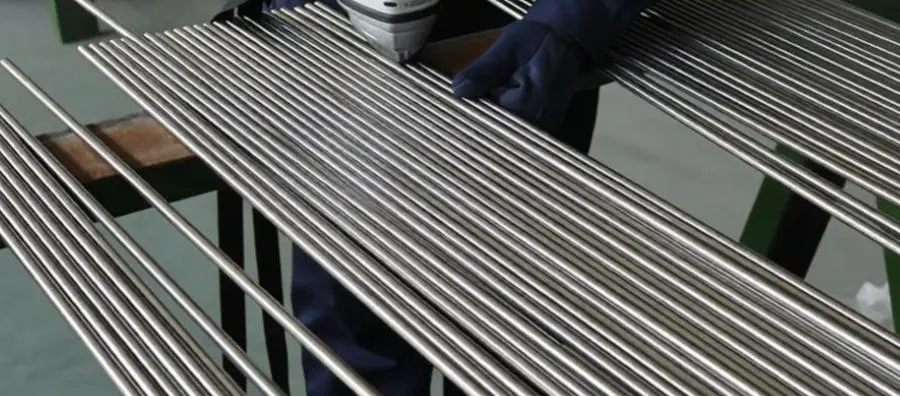
Buyers often want to know how ASTM A269 is different from A213, A270, or A312. Each standard was written for a different main purpose, and mixing them up either makes things too specific or doesn't work at all in the field.
A269 vs. ASTM A213
For boilers, superheaters, and heat exchangers, ASTM A213 sets the rules for seamless tubes made of ferritic and austenitic alloys. It sets a minimum width for the walls and makes the hydrostatic test forces stricter. a269 tubing uses an average wall width and focuses on OD clearance to make sure that fittings will work with each other. A213 is used when the application is a pressure-vessel heat exchanger bundle. A269 is the right choice if it's a sensor control line.
A269 vs. ASTM A270
ASTM A270 is a standard for sanitary stainless steel tube that was made for processing food, drinks, and medicines where the inner surface Ra values must meet 3-A hygienic requirements. With BA treatment, A269 can get similar internal finishes to A270, but A270 has standards for polished bores that A269 does not.
A269 vs. ASTM A312
A269 is good enough for straight monitoring service and is usually cheaper.
Procurement Guide: Sourcing A269 Tubing for Industrial Instrumentation Systems
It takes more than meeting a grade label to find the right product. Total project risk is affected by quality documentation, test certificates, and the supplier's ability to be flexible.
Key Quality Documents to Request
An EN 10204 3.1 Mill Test Certificate (MTC) should be sent with every order to prove the chemical make-up and mechanical qualities for the specific heat number. Third-party witness (EN 10204 3.2) certificates from SGS, BV, TÜV, DNV, or ABS add extra security for important uses. Positive Material Identification (PMI) analysis checks the alloy composition when it is received.
Non-Destructive Testing Requirements
Reliable suppliers test every tube with eddy current to find surface and subsurface flaws, hydrostatic or air-under-water testing to make sure there are no leaks, and ultrasonic testing to make sure the wall thickness is the same all the way through. By asking for test records instead of just certificates, you can see if testing was actually done.
Small-Batch and Custom Fabrication Flexibility
OEM companies that are making trial heat exchangers or new condenser bundles often need between a few meters and a few hundred meters. Six- to eight-week lead times that throw off project plans can be avoided if suppliers have low minimum order numbers (MOQ) and keep stock on hand. Custom lengths, wooden boxes with coiled tubes, and cut-to-length service all cut down on waste and handling time on-site.
Conclusion
A269 tubing stainless steel tubing meets the specific reliability needs of industrial instrumentation by having tight OD tolerances, proven ductility, alloy grades that don't rust, and clean interior surfaces. Choosing the right grade (TP304L or TP316L for most process environments), making sure of the heat treatment and surface finish, and asking for full mill documentation can turn a simple purchase into an asset that will last for a long time. If the tubing specification is right from the start, it takes less time and less risk for heat exchanger OEM manufacturers, design engineers, and procurement managers to go from drawing confirmation to mass production.
FAQ
Is A269 tubing suitable for high-pressure instrumentation service?
Yes, within published pressure-temperature ratings for the applicable grade and wall thickness. TP316L at 1/2″ OD × 0.065″ wall, for example, carries a working pressure exceeding 3,000 psi at ambient temperature with standard compression fittings. Always verify ratings against your specific fitting manufacturer's tables.
What is the difference between seamless and welded A269 tubing?
Seamless tubing has no longitudinal weld seam, making it preferred for high-pressure and high-purity applications. Welded A269 tubing is made from strip stock and automatically welded, then cold-drawn to produce a nearly equivalent product at lower cost for moderate-pressure instrumentation service.
Can A269 tubing be bent in the field without annealing?
In the annealed condition, TP304 and TP316L A269 tubing bends readily with standard tube benders for OD up to approximately 1″. Tighter bending radii or larger diameters may require mandrel bending and post-bend annealing to restore full ductility and avoid stress corrosion risks.
How does TP316L outperform TP304 in corrosive environments?
The 2–3% molybdenum content in TP316L raises the critical pitting temperature in chloride solutions significantly compared to TP304. In coastal, offshore, or chemical process environments where chloride concentration exceeds 100 ppm, TP316L is the standard choice.
What packaging protects A269 tubing during export shipping?
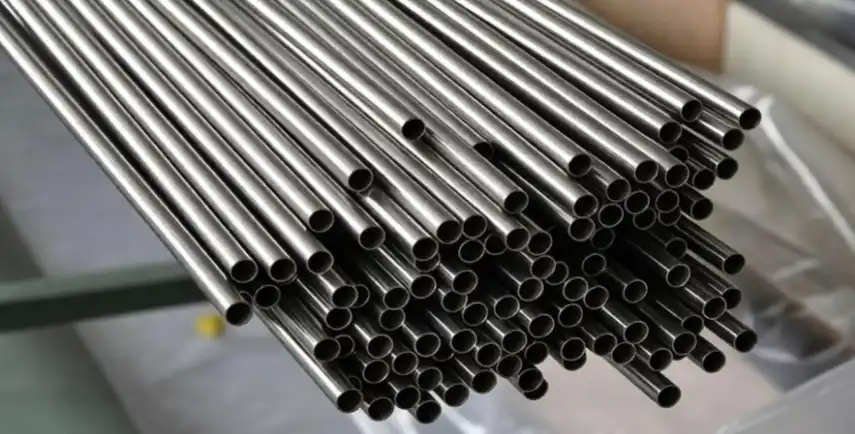
Straight lengths are typically bundled with plastic end caps, wrapped in heavy-duty plastic, steel-strapped, and loaded into fumigation-free plywood cases. Coiled tubing ships on wooden spools with plastic over-wrap to prevent deformation during transit.
Get A269 Tubing from All Trust — Your Trusted Stainless Steel Tube Supplier
Precision A269 tubing stainless steel tubing is made and sold by Hebei All Trust Co.,ltd. It comes in TP304, TP304L, TP316, and TP316L grades and is backed by EN 10204 3.1 MTC, full NDT records, and ISO 9001:2015 certification. Low MOQ orders are sent out from stock in 3–5 days. Get in touch with our technical team right away at info@hballtrust.com to ask for samples, prices, or specifics on how to make something.
References
1. ASTM International. ASTM A269/A269M: Standard Specification for Seamless and Welded Austenitic Stainless Steel Tubing for General Service. ASTM International, 2022.
2. ASTM International. ASTM A213/A213M: Standard Specification for Seamless Ferritic and Austenitic Alloy-Steel Boiler, Superheater, and Heat-Exchanger Tubes. ASTM International, 2022.
3. Sedriks, A. J. Corrosion of Stainless Steels. 2nd ed. John Wiley & Sons, 1996.
4. NACE International. Corrosion Costs and Preventive Strategies in the United States. NACE International Publication, 2002.
5. Swagelok Company. Tubing Data: Stainless Steel Tubing Pressure Ratings and Selection Guide. Swagelok Technical Reference, 2019.
6. American Society of Mechanical Engineers. ASME B31.3: Process Piping — Materials and Component Standards. ASME, 2022.

