Can TP316L Stainless Steel Pipe Handle Chloride-Rich Marine and Coastal Applications?
When a project is less than a mile from or right on the ocean, the choice of material is one of the most important ones a piping engineer has to make. Sprays of saltwater, flooding from the tides, and air full of chloride make corrosion happen at rates that would surprise even the most experienced teams. The short answer is yes, because TP316L stainless steel pipe is made to work in these circumstances. Its very low carbon content (0.03% max) and high molybdenum content (2–3%) make it better than normal austenitic grades in chloride-rich settings. This makes it a popular choice for chemical process lines, offshore platforms, and marine wastewater systems.
Understanding TP316L Stainless Steel Pipe Properties Relevant to Marine Environments
The chemistry of an alloy determines how well it works in salt water. The well-known TP316L (UNS S31603 / EN 1.4404) is made from a carefully engineered mix that is resistant to pitting and crevice attack, which are the two most common types of corrosion found near coastlines.
Chemical Composition and the Role of Molybdenum
There is 16–18% chromium, 10–14% nickel, and, most importantly, 2–3% molybdenum in TP316L. Adding molybdenum is what makes this grade different from other 304-series metals. It keeps the passive oxide film on the surface of the steel stable, even when chloride ions are trying hard to break it down. Based on ASTM A312, this grade meets the standard for severe acidic and chemical service. This is the exact type of service that ocean and coastal pipe falls into.
Mechanical Strength Across Temperature Ranges
The temperature rarely stays the same in marine and coastal areas. Pipes on remote sites move between process fluids that are hot and seawater that is cold. The minimum tensile strength of TP316L is 485 MPa (70 ksi), and the minimum yield strength is 170 MPa (25 ksi). It is also flexible enough to handle thermal expansion without cracking. Solution annealing at 1040°C–1150°C followed by fast, even cooling locks the structure of the alloy, so these mechanical traits stay the same from one production batch to the next.
Low Carbon Content and Weld Integrity
For welded assemblies, the "L" designation is very important. When carbon levels are set at 0.03%, carbide doesn't form at the edges of grains when welding. This means that post-weld heat treatment is not needed. This directly leads to lower fabrication costs and shorter project timelines, which is a big plus for piping contractors who are working on tight schedules on offshore or coastal infrastructure projects.
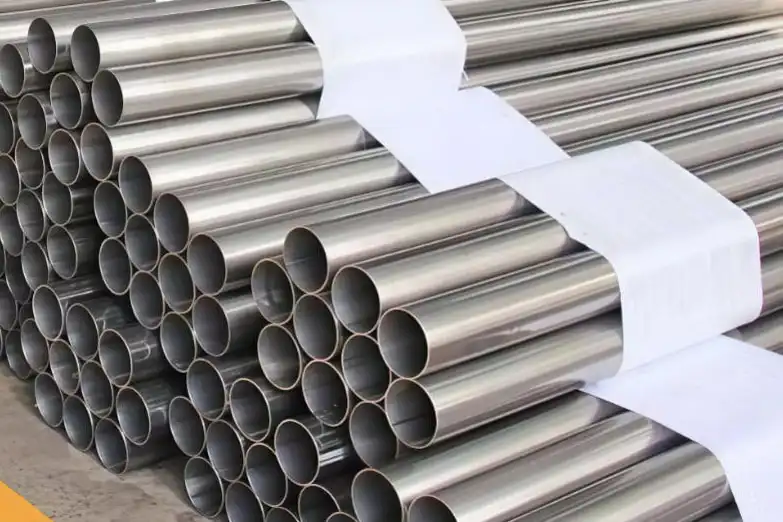
TP316L Stainless Steel Pipe vs. Other Grades in Chloride-Rich Conditions
To pick the right grade for a chloride-rich area, you have to compare how well it resists rust, how well it works mechanically, and how much it costs to buy.
TP316L vs. TP304 in Saltwater Service
TP304 doesn't have any molybdenum at all. When tested in the lab under ASTM G48 conditions (ferric chloride immersion), TP316L stainless steel pipe regularly does better than 304 because it has a much higher critical pitting temperature. Coastal chemical companies have confirmed that 304 piping gets surface pitting after 18 to 36 months of being exposed to saltwater, but 316L piping that was properly defined and used in the same climate doesn't get any pitting at all over the same service periods.
TP316L vs. Duplex and Carbon Steel
Duplex grades, like UNS S32205, have higher tensile strength and better resistance in high-chloride seawater that doesn't move. This means they can be used in harsher conditions. Duplex pipes, on the other hand, cost more and need stricter controls during fabrication. Long-term, carbon steel is not a good choice, even if it is coated. If the coating is damaged at any weld joint or mechanical contact point, under-film rust happens quickly. 316L stainless steel is a good choice for most marine and ocean pipe systems that handle process fluids or public water because it protects well and is cheap to buy.
Real-World Performance in Marine Applications
Austenitic 316L pipes have been used in seawater intake and brine handling circuits at offshore desalination plants in the Middle East for more than 20 years. This grade is always required for heat exchanger connections and process transfer lines in chemical processing plants in Southeast Asia's coastal industrial zones. When designed, installed, and maintained correctly, these examples show that 316L pipe can last a long time without needing to be replaced too soon.
Procurement Considerations for TP316L Stainless Steel Pipes in Marine Projects
On paper, getting the specs right is only half the job. The buying process needs to be just as organized so that there aren't any problems with substitutions, inconsistent batches, or missing paperwork that could come up during commissioning or third-party checks.
Certifications and Standards Compliance
As a general rule, marine and coastal projects need pipes that meet ASTM A312 or ASME SA312. In some foreign markets, EN 10216-5 or ASTM A249 are also needed for tube goods. An EN 10204 3.1 Mill Test Certificate (MTC) must be sent with every pipe. This certificate lists the heat number, chemical analysis, and mechanical test results. Pressure equipment regulations may also need to be met for projects that need CE marking and PED compliance. Third-party inspection by SGS, BV, TUV, DNV, or ABS adds an extra level of proof that keeps buying teams safe from the risk of material replacement.
Dimensional Specifications and Size Range
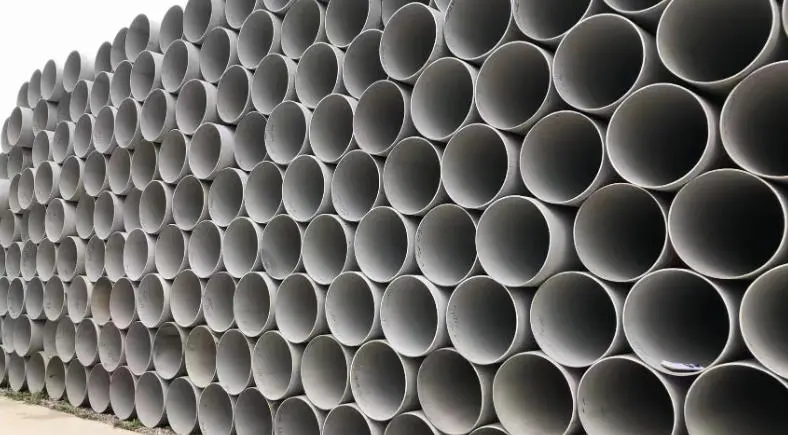
A good procurement package spells out exactly the outer diameter, wall schedule, end type, and surface finish. It comes in NPS sizes from 1/8" to 48" (OD range: 13.7 mm to 609.6 mm), wall thicknesses from SCH 5S to SCH XXS, and lengths of 5.8 m, 6 m, 11.8 m, or 12 m, either randomly or in pairs. There are five different kinds of ends: plain (PE), bevelled (BE) per ASME B16.25, threaded (NPT/BSPT), and flanged. If you need a surface finish for medical or sanitary reasons, you can choose from bright annealed (BA) or solution annealed and pickled (SA&P).
Packaging and Export Logistics
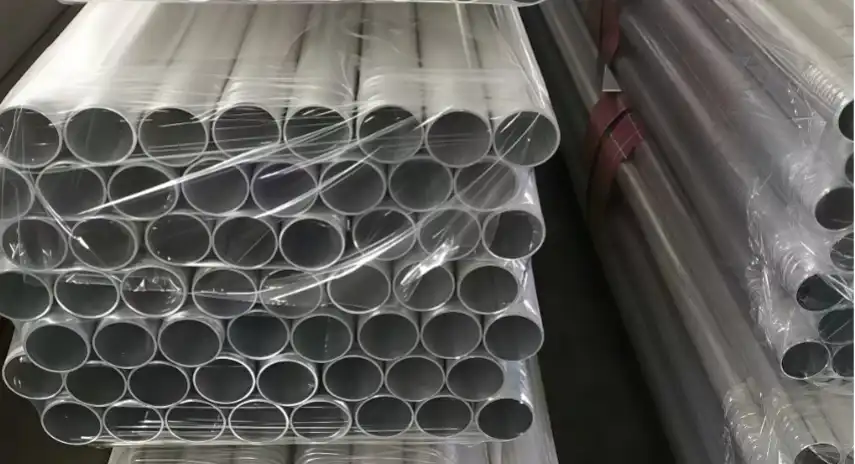
Pipes that are going to work areas on the coast or overseas have to go through wet, salty shipping conditions. The right packing covers the pipe surfaces directly before they are installed. Hexagonal steel packages are held together with high-tensile steel bands and have plastic end caps to protect the surfaces from damage and contamination. Smaller tubes or tubes with a smooth finish can also be kept safe in wooden cases or board boxes that are wrapped in waterproof weave bags. Projects that need to ship TP316L stainless steel pipe, fittings, flanges, and elbows all in one container benefit from suppliers who can do all the buying in one place.
Best Practices for Using TP316L Stainless Steel Pipes in Chloride-Rich Marine and Coastal Applications
Even if the elements are done right, they won't last if they aren't fixed and taken care of properly. To keep your money safe when you buy 316L pipe systems, do these things:
-- After welding: Use low-heat methods (TIG or GTAW are best) to join ER316L filler wire. To stop sensitization, you need to keep the interpass temperature in check.
- Welding process compliance: Use ER316L filler wire and low-heat welding methods (TIG or GTAW is best). To stop sensitization, you need to control the interpass temperature.
- Cleanliness of the surface after fabrication: Get rid of any iron contamination from cutting and grinding. Use citric or nitric acid passivation on the weld zones according to ASTM A380 before putting the system to use.
- Watching for corrosion while in service: For high-chloride duty services, ultrasonic thickness measurements should be done every 12 months. After a long pause, the weld joints should be looked at visually.
- Being aware of the limits: When there are more than 1,000 parts per million of salt in process fluids or cracks in seawater sumps that don't move, duplex or super duplex grades may be more valuable in the long run, even though they cost more at first.
But grades with more than two layers may be better in the long run, even if they cost more at first. This is because they might be able to handle cracks in ocean sumps that don't move or more salt in process fluids than 1,000 parts per million (ppm).
Why Choose TP316L Stainless Steel Pipe for Your Next Marine Project?
There are strict rules and due dates for some projects, and they won't stand for major problems to happen in the middle of the work. For these projects, we need a grade that has been tried and tested. TP316L stainless steel pipe is made in a way that meets ASTM A312 and ASME SA312, comes from top billet sources, and has full PMI proof. The quality management system used is ISO 9001:2015 approved. Most of the time, a standard grade of metal is fine for work. It can do its job on land or at sea.
Standards Alignment Simplifies Project Approval
Inspectors, technical experts, and end users all agree that both ASTM A312 and ASME SA312 are valid. It can handle anywhere from process lines on an offshore platform to wastewater treatment equipment on the coast. Name this grade, and the purchase papers will match what the project needs. Engineers won't have to look over any exceptions.
Verified Quality Reduces On-Site Risk
The items that show up on site meet the needs mentioned on the bill of materials (BOM) because they have been 100% PMI checked, tested for eddy currents and hydrostatics, and come with EN 10204 3.1 MTC notes. People who work with pipes always say that batch variation is the main reason why repair on-site costs so much. That risk is gone now.
One-Stop Supply Covers the Full Piping BOM
If you only buy approved pipes, elbows, tees, reducers, and flanges from one company, you won't have to worry about parts made by different companies not being the right size. People who work on pipe design and projects say this is the most important thing to look for when you buy.
Conclusion
Tp316l stainless steel pipe is a good choice for ocean and coastal pipe jobs where salt is present. Because it has molybdenum in it, it stops corrosion in pits and cracks. It also keeps weld joints safe from intergranular attack because it has little carbon in it. It also meets the paperwork needs of ASTM A312 and ASME SA312 for engineering projects in other countries. You can get this grade from official MTC sources and make sure it's put together using standard welding and passivation methods. It will last a long time in places where other grades would break down quickly.
FAQ
What makes TP316L better than standard 316 for marine service?
The key difference is carbon content. Standard 316 allows up to 0.08% carbon, which can precipitate as chromium carbide at grain boundaries during welding — a process called sensitization that creates localized corrosion paths. TP316L limits carbon to 0.03%, effectively eliminating this risk without requiring post-weld annealing. In continuous saltwater or chloride exposure, this distinction matters across years of service life.
What wall schedule should I specify for offshore piping?
Schedule selection depends on design pressure, pipe diameter, and fluid temperature. SCH 10S is common for low-pressure utility lines; SCH 40S suits most process piping; SCH 80S and heavier schedules apply to high-pressure or corrosion-allowance-critical circuits. Consult ASME B31.3 for process piping and ASME B31.4/B31.8 for pipeline systems to confirm the appropriate selection.
Can TP316L handle stagnant seawater?
Stagnant seawater creates aggressive crevice corrosion conditions where oxygen depletion allows chloride attack beneath deposits or at fitting contacts. While TP316L performs acceptably in flowing seawater, duplex grades (UNS S32205 or S32750) are generally preferred for stagnant or low-velocity seawater service.
How do I verify a genuine TP316L pipe upon delivery?
Perform positive material identification (PMI) using X-ray fluorescence (XRF) or optical emission spectroscopy on arrival. Cross-reference the measured molybdenum and nickel values against the heat number documented on the EN 10204 3.1 MTC supplied with the shipment.
Source Your TP316L Stainless Steel Pipe Through All Trust
You can buy Tp316l stainless steel pipe from All Trust Steel (Hebei All Trust Steel Co., Ltd.). This pipe meets ASTM A312 standards and has been approved by SGS, BV, TUV, DNV, and ABS. It also comes with 100% PMI proof and EN 10204 3.1 MTC paperwork. We help with marine, offshore, chemical, and power generation projects all over the world. Our inventory is always changing and exceeds 5,000 tons. We cover sizes from 1/8" to 48" and can ship the whole piping bill of materials at once. Send an email to info@hballtrust.com right away to get a quote or sample confirmation.
References
1. ASTM International. ASTM A312/A312M: Standard Specification for Seamless, Welded, and Heavily Cold Worked Austenitic Stainless Steel Pipes. 2022.
2. ASME. ASME B31.3: Process Piping Code. American Society of Mechanical Engineers, 2022.
3. Sedriks, A. J. Corrosion of Stainless Steels. 2nd ed. Wiley-Interscience, 1996.
4. Lula, R. A. Stainless Steel. American Society for Metals, 1993.
5. Oldfield, J. W., and Sutton, W. H. "Crevice Corrosion of Stainless Steels in Sea Water." British Corrosion Journal, 1978.
6. European Committee for Standardization. EN 10216-5: Seamless Steel Tubes for Pressure Purposes — Stainless Steel Tubes. 2021.

