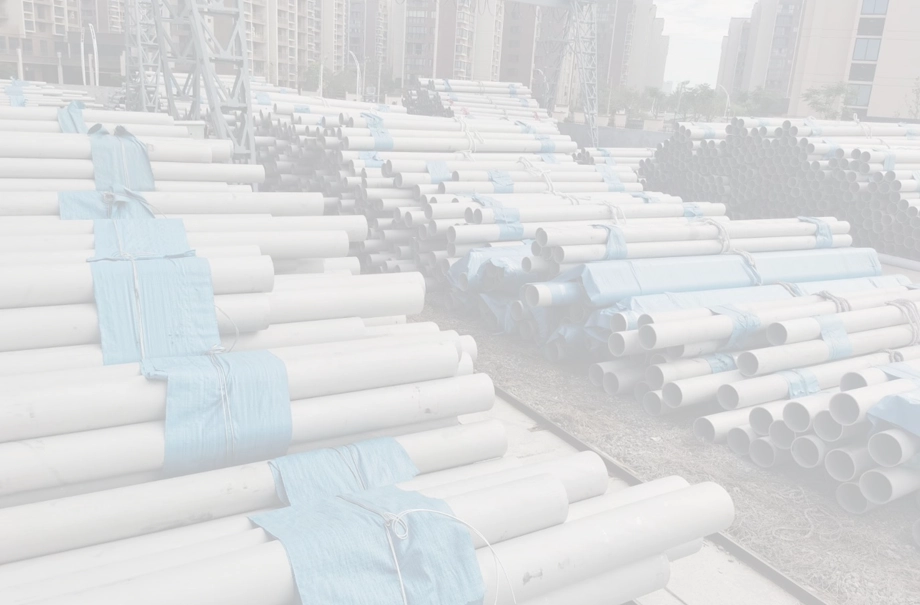
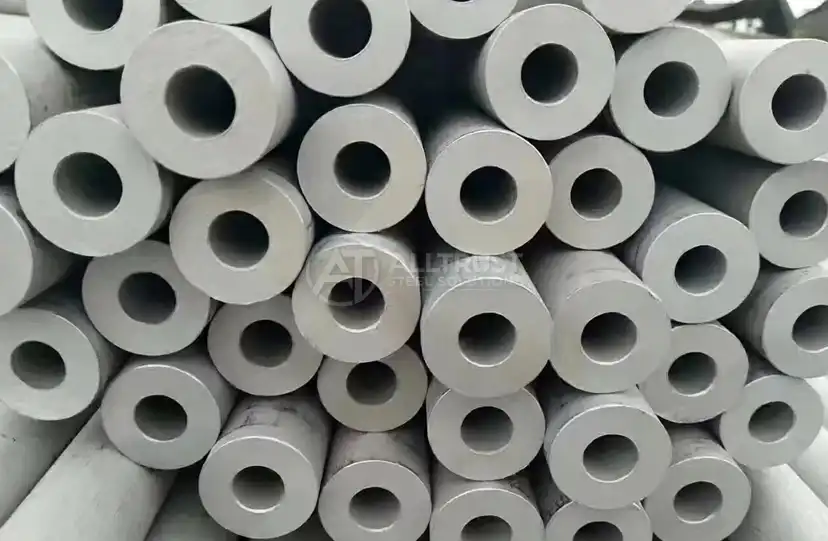
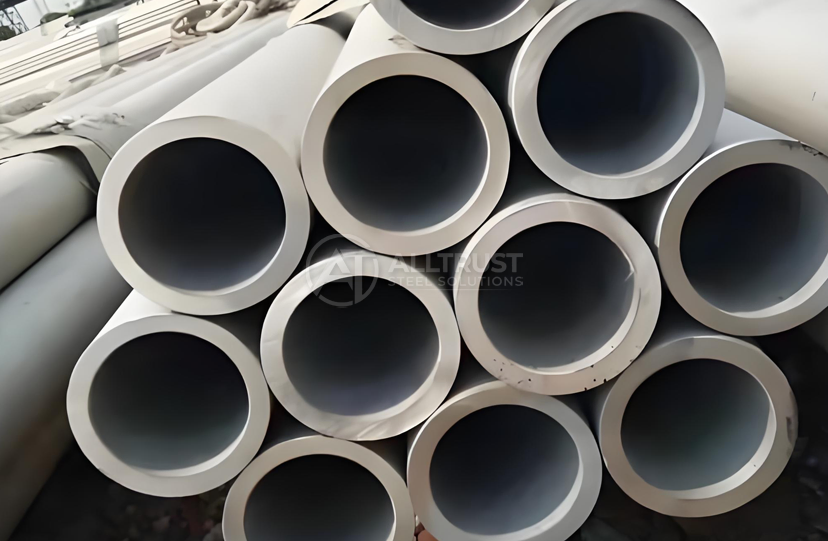
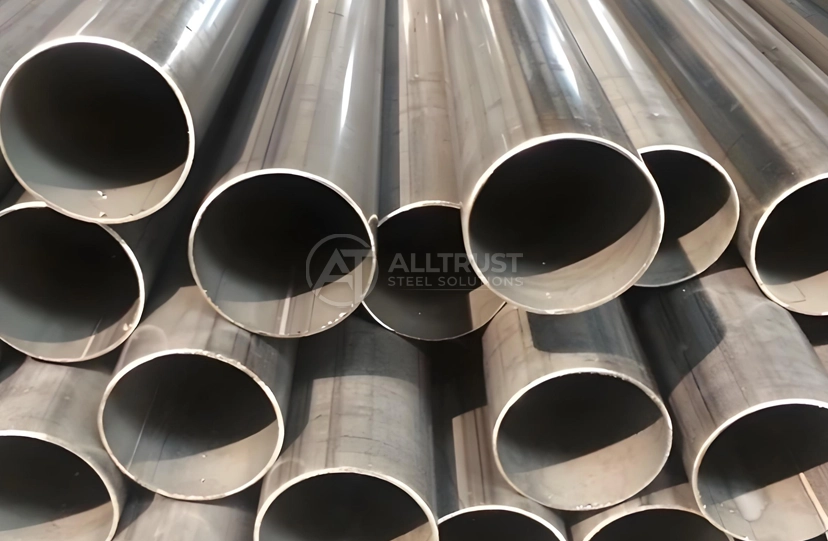
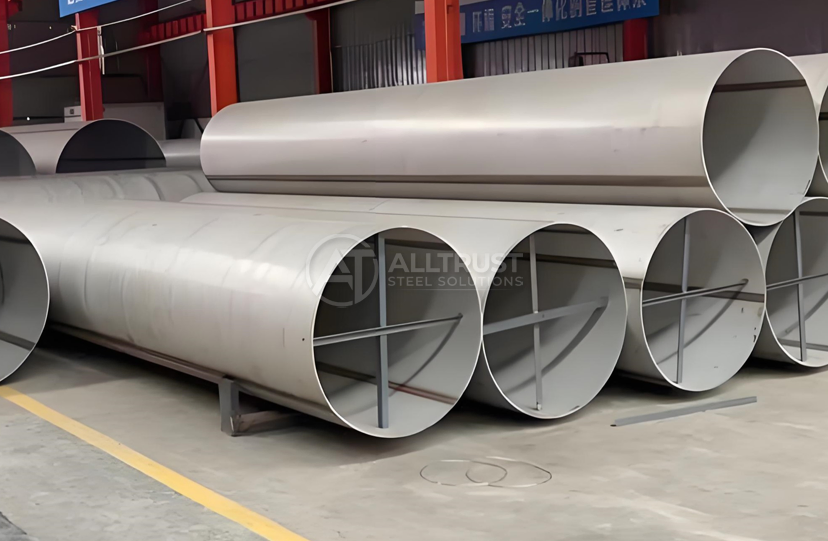
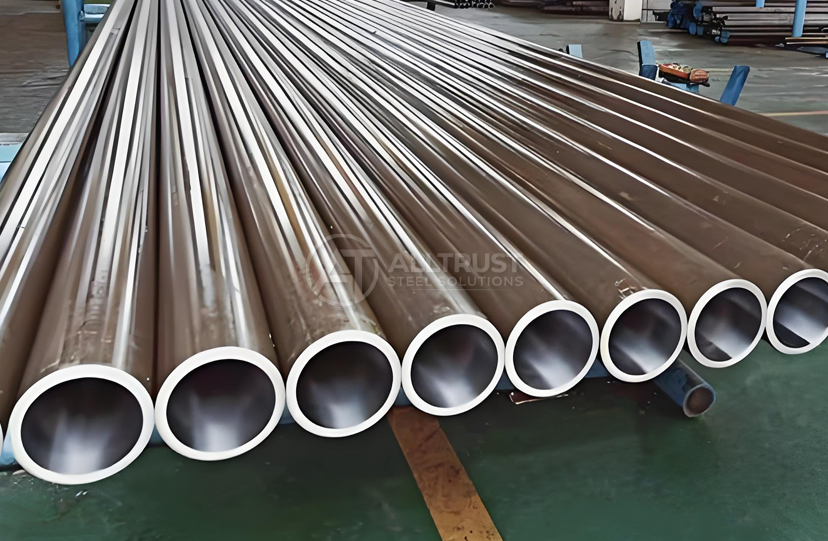
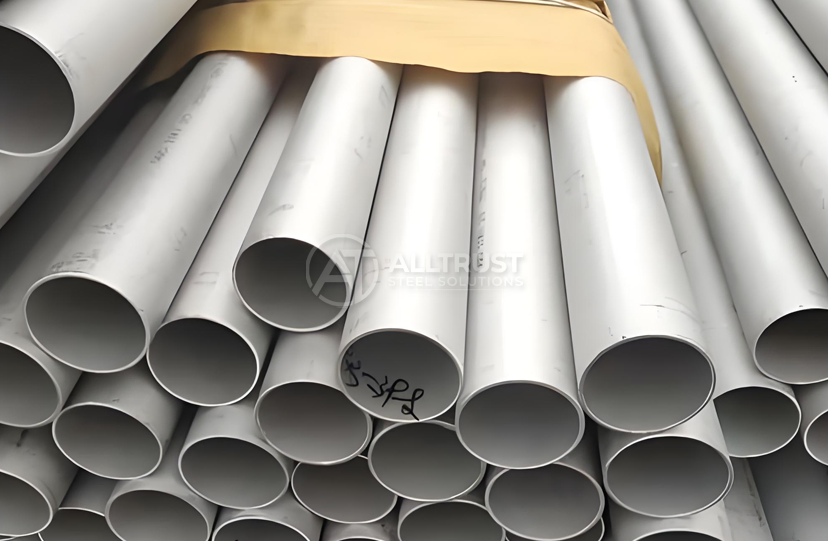
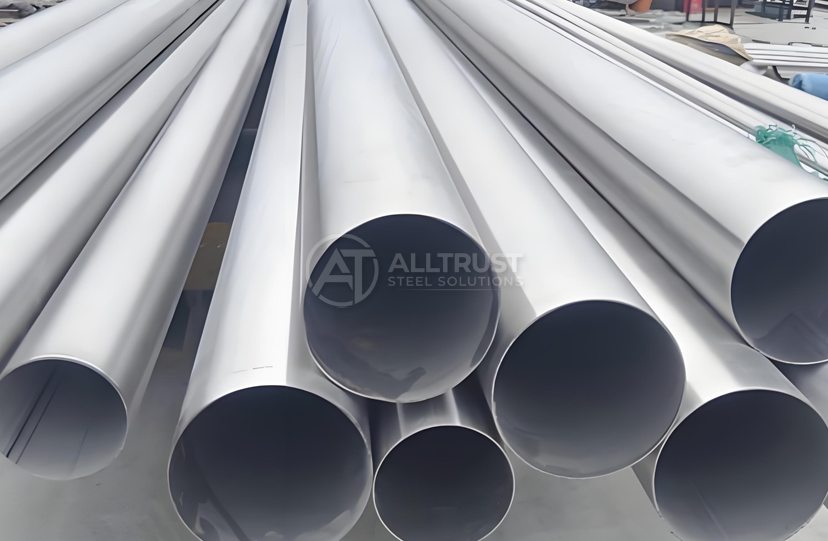
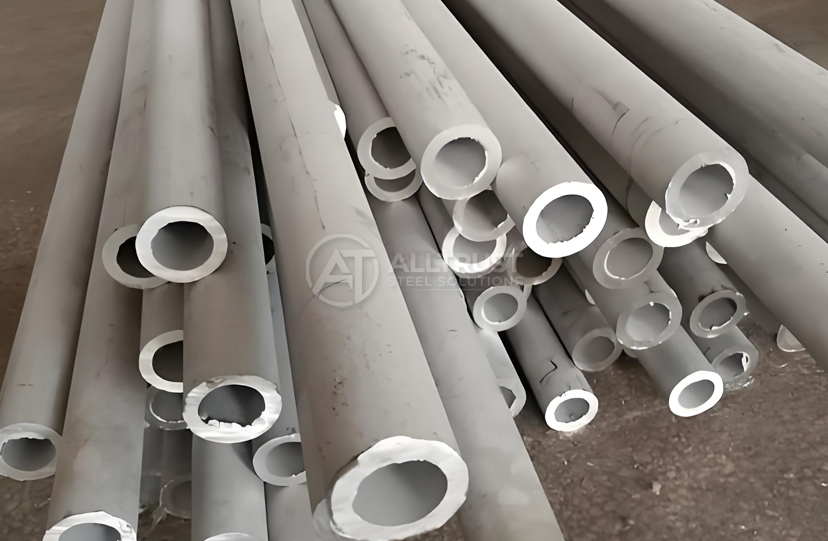
316L welded pipe
2. Standard: ASTM A312, ASTM A358, strictly compliant with international engineering pressure and corrosion norms
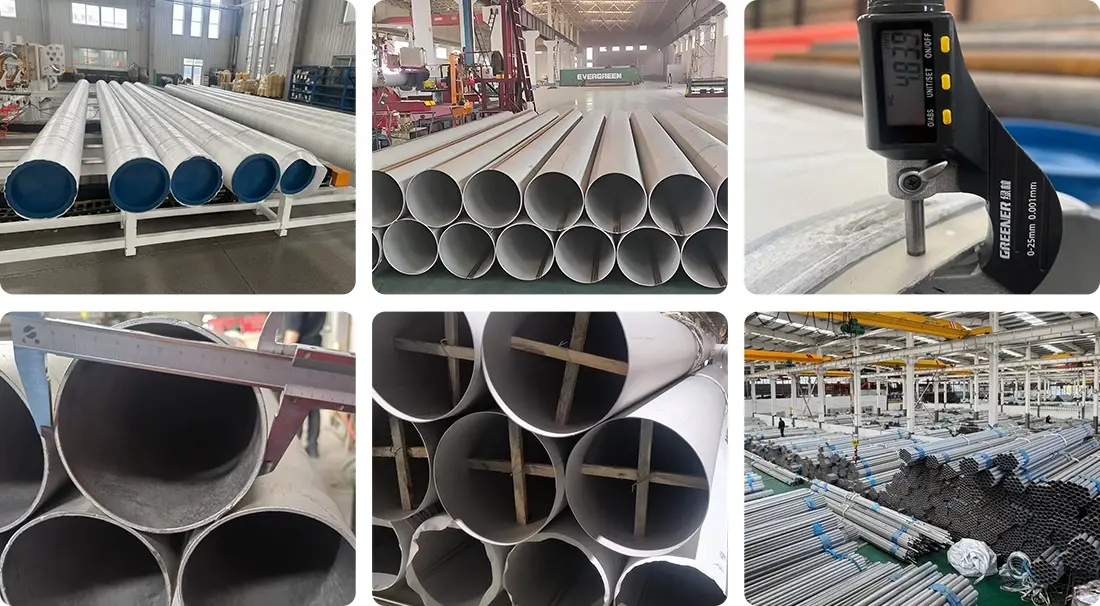
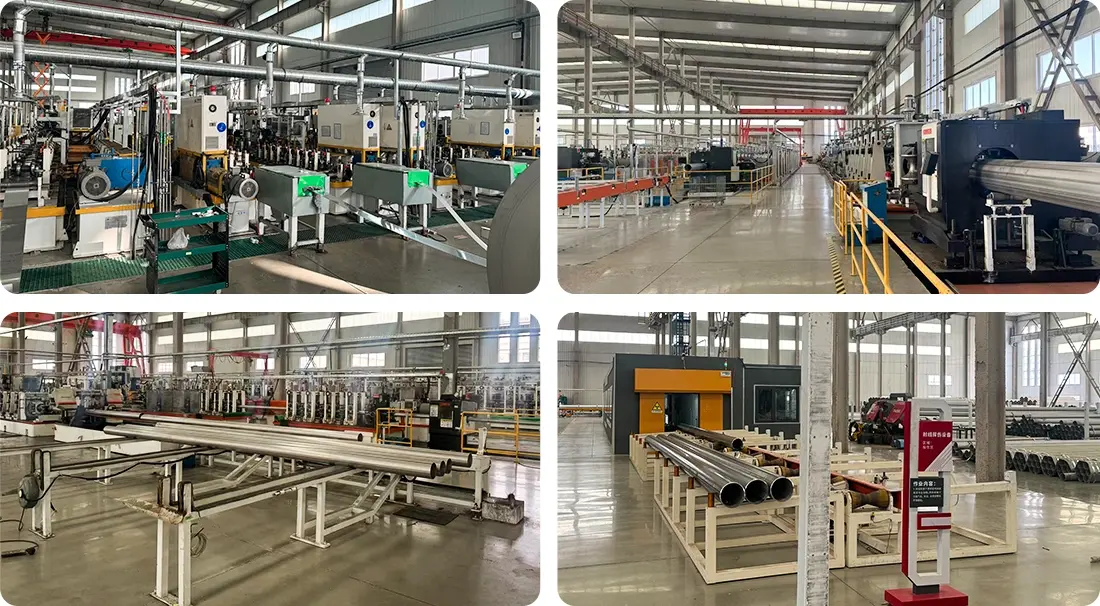
3. Process: Automatic continuous longitudinal welding (TIG/Plasma) utilizing premium steel plates, guaranteeing precise seam fusion
4. Size Range: Outside Diameter from 1/2" up to 60" with fully customizable wall thickness schedules (Sch 5S - Sch 80S)
5. Heat Treatment: Full post-weld solution annealing to completely recrystallize the weld line and fully homogenize molybdenum
6. Surface Finish: Clean uniform acid-pickled and passivated, with inside weld bead removed flush to prevent fluid turbulence
7. Application: Marine offshore piping, coastal sewage treatment, desalination plants, and chemical engineering fluid networks
8. Service Advantage: Support 100% X-ray radiography testing (RT), third-party inspections accepted, and custom beveling available
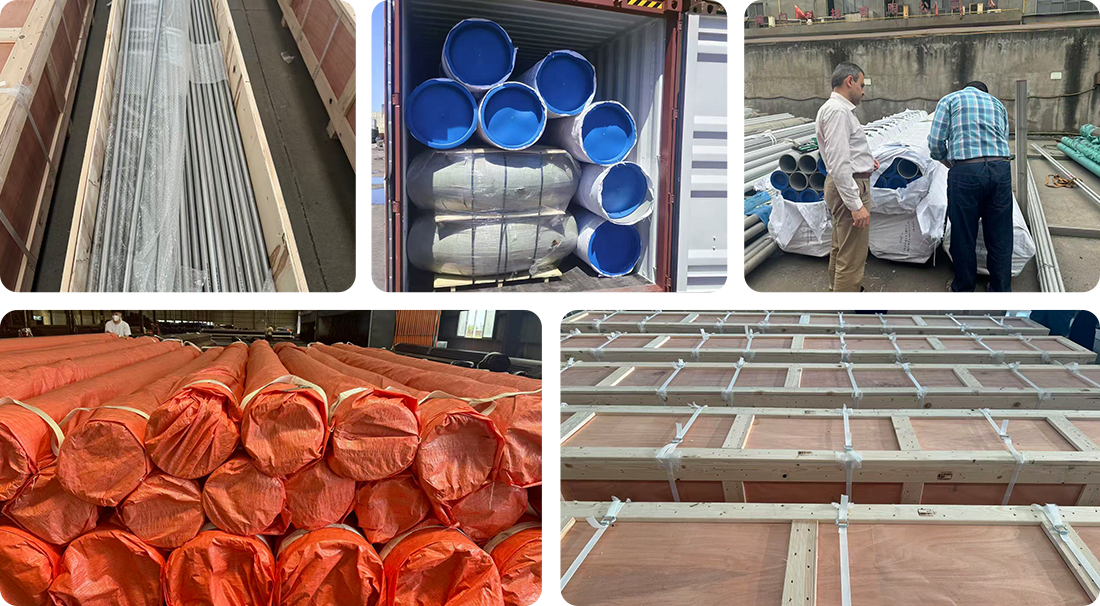
9. Packaging: Secure sea-freight packing with heavy plastic end-plugs, bundled or loaded with high-strength lifting slings
10. Key Advantage: Combines supreme immunity to post-weld intergranular decay with ultimate resistance to chloride-induced pitting
316L Welded Pipe - Premium Marine & Chemical Grade Stainless Steel Piping Solutions for Corrosive Environments
Hebei All Trust Steel Co., Ltd specializes in manufacturing precision-engineered 316L welded pipe that combines extra-low carbon technology with 2-3% molybdenum content, delivering superior resistance to intergranular corrosion and chloride-induced pitting. We use automated TIG and plasma welding technologies to assure the integrity of the weld seam on outside diameters from 1/2" to 60" all while being fully compliant to ASTM A312 and ASTM A358.
We provide marine grade pipe systems with 100% eddy current testing on each weld seam, to ensure the structural durability in coastal, chemical and pharmaceutical fluid networks. Our manufacturing capacity is over 15,000 tons per year. A post-weld solution annealing treatment is used to thoroughly recrystallize the weld zones, avoiding the possibility of sensitisation and keeping the high pitting resistance required for saltwater desalination and strong acid transport applications.
What Makes 316L Welded Pipe the Optimal Choice for Corrosive Service
The product is a premium low-carbon austenitic stainless steel tube fabricated using high-precision longitudinal welding techniques. This pipe is different from the normal 304 types in that it has a regulated low carbon content of less than 0.03% to avoid hazardous carbide precipitation during thermal cycling.
The production starts with high quality cold rolled stainless steel strips that are welded by automated TIG, plasma or laser welding. This technology provides better wall thickness consistency than conventional seamless type. The low carbon standard addresses a key technical problem: the prevention of intergranular corrosion in heat affected zones next to welds.
Molybdenum provides protection for your pipe system against localised pitting. This is a need for the transfer of fluids with chlorides, bromides or acids. The welded construction technique enables the economical manufacturing of large diameter pipes and the mechanical integrity necessary for pressure vessel applications.
Technical Specifications & Material Parameters
| Parameter | Specification |
|---|---|
| Standard | ASTM A312 / ASME SA312 / ASTM A358 / EN 10217-7 |
| Material Grade | 316L (UNS S31603 / 1.4404) |
| Welding Process | Automatic TIG / Plasma / Laser |
| Outer Diameter | 1/2" – 60" (13.7 mm – 1524 mm) |
| Wall Thickness | SCH 5S – SCH 80S (0.5 mm – 30 mm) |
| Standard Length | 5.8 m / 6 m / 11.8 m / 12 m / Custom |
| Surface Treatment | Annealed & Pickled / Bright Annealed / Mirror Polished |
| End Configuration | Plain End / Beveled End |
| Tensile Strength | ≥485 MPa |
| Yield Strength | ≥170 MPa |
| Elongation | ≥40% |
| Chemical Composition | C ≤0.03% / Cr 16-18% / Ni 10-14% / Mo 2-3% |
| NDT Methods | Eddy Current / X-ray / Ultrasonic / Hydrostatic |
| Certification | EN 10204 3.1/3.2 MTC / ISO 9001:2015 / CE / PED |
Core Performance Advantages
Superior Corrosion Protection
The combined action of the passive oxide layer of chromium and the chloride resistance of molybdenum may provide your industrial systems superior protection. This two-fold defence protects saltwater cooling systems and coastal sewage treatment facilities against catastrophic collapse.
The extra-low carbon formulation guarantees the weld zones are corrosion resistant to the same extent as the parent metal. These pipes may be used safely in brackish water conditions without the possibility of localised weld deterioration, a problem with standard austenitic grades.
Manufacturing Quality Precision
Every welded seam is inspected according to strict procedures. Our automatic welding systems provide a constant heat input to avoid the thermal aberrations typical of manual manufacturing. This leads to a pipe with concentricity tolerances which comply with the most stringent technical criteria.
The microstructure is entirely recrystallized by post-weld solution annealing at regulated temperatures. The heat treatment homogenises the distribution of molybdenum across the weld interface and provides a homogeneous barrier against pitting corrosion throughout the body of the pipe.
Rigorous Testing & Validation
All manufacturing batches undergo 100% non-destructive evaluation. Eddy current testing is used to identify tiny surface discontinuities and radiographic examination is used to confirm interior weld quality. Hydrostatic pressure testing guaranties leak-proof integrity throughout operation.
Mechanical tests include flattening tests which check the ductility of the weld zone. Test results for intergranular corrosion according to ASTM A262 Practice E show resistance to sensitisation. Positive Material Identification gives you the actual alloy chemistry so your standards are perfectly satisfied.
Industrial Application Environments
Offshore and Marine Systems
Materials for offshore platforms and pipe systems aboard ships are subjected to continual exposure to salt spray. 316L welded pipe performs well in seawater cooling systems with chloride concentrations more than 20,000 ppm. The inclusion of molybdenum forms a protective barrier that inhibits the crevice corrosion common to flange connectors and support brackets.
It is used in brine handling and reverse osmosis permeate lines in desalinisation facilities. The smooth, bead-free interior surface reduces pressure loss and inhibits bacterial colonisation in potable water distribution networks.
Chemical Processing Facilities
This is the pipe that pharmaceutical manufacturers request for Clean-in-Place systems that handle aggressive sanitising solutions. The low carbon chemistry allows for passive weld zones via repeated thermal cycling between hot caustic washes and acidic rinses.
In petrochemical refineries these pipelines carry organic acids, alkalis and mixed solvents. The austenitic structure gives outstanding durability throughout the temperature range from cryogenic ethylene service to high temperature thermal oil circuits.
Uses for High Purity
Water-for-Injection loops are used by biotechnology facilities to distribute goods. The interior finish is electropolished to obtain Ra values of 0.4 μm, fulfilling FDA and cGMP regulations. Documentation of complete traceability helps equipment qualifying and validation methods.
Quality Assurance Framework
Raw Material Inspection
Your purchase starts with spectrographic investigation of virgin stainless steel coils. We check chromium, nickel and molybdenum levels are in line with UNS S31603 chemical criteria. Heat number traceability offers full material genealogy from steel factory to final install.
Process Monitoring in Process
Dimensional inspection in real time ensures wall thickness within the ±0.05 mm tolerance throughout. Critical features of the seam are recorded electronically, providing an audit trail of the welding conditions. Surface quality inspections are a stop to inclusion faults making its way to completed goods.
Final Documentation Pack
Mill Test Certificates (EN 10204 3.1) with each shipment describing tensile characteristics and chemical analysis. Alloy composition is checked by random interval PMI reports throughout the length of a pipe. Third Party Inspection Witness Points, SGS, TUV or client nominated surveyors.
Customization & Engineering Support
Our technical team assists with material selection for specific corrosive media. We provide corrosion rate calculations based on concentration, temperature, and fluid velocity parameters. CAD drawing reviews ensure dimensional compatibility with your existing infrastructure.
Custom processing services include precision beveling for orbital welding preparation. Laser-cut holes and slots accommodate branch connections without hot work on-site. Threading, bending, and fixed-length cutting reduce installation labor while maintaining weld quality.
FAQ
Q:Why should an engineer select this product over a standard 304 welded alternative?
A:This pipe integrates a vital 2-3% molybdenum addition with an extra-low carbon threshold, providing elite protection against severe localized pitting corrosion and crevice failures inside high-chloride marine environments.
Q:Under what operating thresholds is this low-carbon molybdenum welded pipe ideally deployed?
A:It is optimized for coastal industrial fluid networks, seawater cooling lines, aggressive acid chemical transport, and volatile petrochemical refinery networks facing heavy corrosion risks.
Q:What mechanical inspection diagnostics are carried out on this specific low-carbon welded line?
A:Beyond regular weld seam radiographic checking, representative batch coupons are subjected to severe destructive mechanical flattening trials, guided-bend joint tests, and precise Positive Material Identification (PMI) alloy validation.
Q:What massive dimensional customization limits can be achieved for high-volume process networks?
A:We can manufacture custom large-bore configurations extending up to 48 inches or greater, accommodating customized double-welded seam alignments and tailor-made edge beveling angles.
Q:Are your 316L welded piping lots approved by independent international pressure equipment auditing bodies?
A:Our entire welded line fully adheres to ISO 9001:2015 frameworks, carries CE compliance, and welcomes independent witness inspections from certified third-party bureaus such as SGS, TÜV, and BV.
Contact Us
Ready to specify corrosion-resistant piping that exceeds industry standards with the 316L welded pipe? Contact our engineering team at info@hballtrust.com for technical datasheets, project-specific quotations, and material certifications tailored to your application requirements.