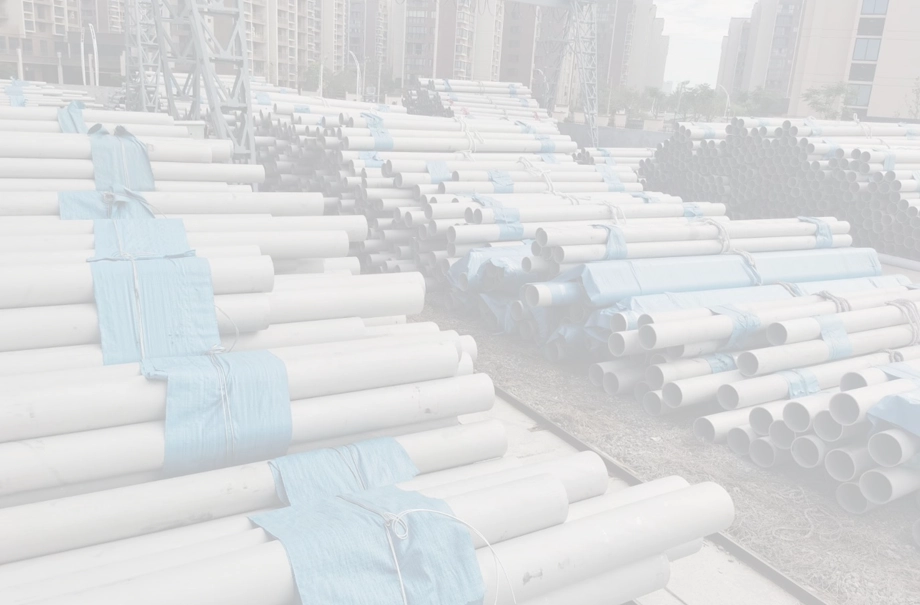
astm a358 tp304l pipe
2. Standard: ASTM A358 / ASME SA358, the premier specification for electric-fusion-welded heavy-duty pressure piping
3. Process: Electric Fusion Welded (EFW) utilizing premium calibrated plates with automated multi-pass double-sided joints
4. Size Range: Large scale sizes from 8" up to 60" Outside Diameter, with diverse customizable heavy wall schedules
5. Heat Treatment: Full-body post-weld solution annealing and rapid cooling to optimize weld and base metal grain matrix
6. Surface Finish: Clean uniform acid-pickled and passivated finish, with interior weld reinforcement strictly controlled
7. Application: Chemical process piping loops, industrial wastewater drainage, municipal plumbing infrastructure, and paper mills
8. Service Advantage: 100% X-ray radiographic testing (RT) compliant with ASME Section VIII, custom pipe beveling available
9. Packaging: Secure sea-freight packing with heavy plastic end-plugs, or bulk-loaded with high-strength lifting slings
10. Key Advantage: Completely eliminates harmful carbide precipitation during fabrication, ensuring absolute joint safety in massive pipelines
ASTM A358 TP304L Pipe - Large-Diameter Welded Stainless Steel Piping Solutions for Heavy-Duty Industrial Applications
Hebei All Trust Steel Co., Ltd manufactures premium astm a358 tp304l pipe engineered specifically for large-bore industrial piping systems demanding exceptional corrosion resistance and weld integrity. Our electric-fusion-welded (EFW) pressure pipe systems use stainless steel of the additional-low carbon TP304L grade (UNS S30403), with the carbon content tightly regulated to below 0.03%, to eliminate the dangers of carbide precipitation during field construction. We manufacture big diameter pipes from 8" to 60" OD with complete ASME Section VIII paperwork, 100% radiographic testing and an annual manufacturing capacity of over 15,000 tons. Each pipe is given a full solution anneal at a minimum temperature of 1900°F and rapidly quenched to provide an optimum grain structure in both the base metal and weld zones for important chemical processing settings.
Understanding ASTM A358 TP304L Pipe Specifications
The product is the industry standard for large-diameter pressure pipe made of electric-fusion-welded austenitic stainless steel. This standard is intended to meet the special needs of heavy-wall industrial pipelines as opposed to smaller diameter A312 seamless pipes.
The very low carbon content of TP304L gives it improved weldability over regular 304 grade. In many installations you get increased resistance to intergranular corrosion, without post-weld heat treatment.
Depending on the welding arrangement and inspection criteria, there are 5 classes of ASTM A358. Class 1 has double welded structure with 100% radiographic testing for highest dependability for critical service.
We use precisely calibrated stainless steel plates in our manufacture, shaped into cylindrical pieces. Automated multi-pass welding enables control of heat input for longitudinal seams, minimising distortion across large diameters.
Technical Specifications Table
| Parameter | Specification Details |
|---|---|
| Material Grade | TP304L (UNS S30403 / EN 1.4306) |
| Manufacturing Standard | ASTM A358 / ASME SA358 / EN 10217-7 |
| Welding Process | Electric Fusion Welded (EFW) - Double Longitudinal Seam |
| Outer Diameter Range | 8" - 60" (219.1 mm - 1524 mm) |
| Wall Thickness Options | SCH 5S to SCH 80S (2.0 mm - 50 mm) |
| Standard Lengths | 5.8 m / 6 m / 11.8 m / 12 m / Custom Cut |
| Heat Treatment | Solution Annealed (Min 1900°F) + Rapid Quench |
| Surface Finish | Pickled & Passivated / Polished Interior |
| End Preparation | Plain End (PE) / Beveled End (BE) / Flanged |
| Carbon Content | Max 0.030% (Extra Low Carbon) |
| Chromium Content | 18.0 - 20.0% |
| Nickel Content | 8.0 - 11.0% |
| Tensile Strength | Min 485 MPa (70 ksi) |
| Yield Strength | Min 170 MPa (25 ksi) |
| Testing Methods | 100% RT / Hydrostatic / UT / PMI / IGC (A262 Practice E) |
| Quality Certificates | EN 10204 3.1 / 3.2 MTC, ISO 9001:2015 |
| Inspection Acceptance | SGS / BV / TUV / DNV / ABS |
Why Choose Our ASTM A358 TP304L Pipe Solutions
Superior Weld Integrity Through Carbon Control
You face significant risks when welding standard stainless steel in large-diameter applications. Chromium carbide precipitation along heat-affected zones creates pathways for intergranular corrosion failure.
Our product eliminates this vulnerability through stringent carbon limitation. With carbon maintained below 0.03%, chromium remains in solid solution rather than forming brittle carbides during thermal cycles.
This metallurgical advantage proves critical when you're constructing multi-kilometer pipeline networks. Field welding operations won't compromise the corrosion barrier, even without immediate post-weld annealing.
Comprehensive Quality Validation Protocol
All manufacturing lots are 100% PMI (Positive Material Identification) scanned to check chemical makeup. The spectrographic examination reveals that the chromium, nickel and carbon content is exactly to your project standards.
Full-length radiographic testing detects internal weld discontinuities before pipes leave our facility. You receive documented proof that each joint meets ASME Section VIII acceptance criteria.
Intergranular corrosion testing per ASTM A262 Practice E validates the material's resistance to sensitization. This oxalic acid etch test ensures the microstructure remains stable in corrosive service environments.
Flexible Dimensional Customization
Large-diameter projects demand precise dimensional coordination. We fabricate pipes with custom wall schedules calculated for your specific pressure ratings and fluid characteristics.
Your engineering team can specify ANSI-standard beveled ends for efficient field butt-welding. Alternatively, plain ends accommodate flange welding or threading operations based on your installation methodology.
Length customization minimizes waste on site. We cut pipes to match your layout drawings, reducing handling requirements and expediting installation schedules.
Industrial Applications for Large-Bore TP304L Piping
Chemical Processing Infrastructure
In nitric acid plants you want pipework that can resist the extremely oxidising conditions without any deterioration. The chromium-rich passive film on astm a358 tp304l pipe is continually regenerated to maintain the barrier.
The material’s resistance to chloride stress corrosion cracking is a plus for organic chemical synthesis activities. The stable austenitic structure precludes catastrophic breakdowns during the treatment of halogenated solvents or chlorinated intermediates.
Petrochemical Distillation Systems
Refinery applications expose piping to elevated temperatures combined with corrosive hydrocarbon streams. Our EFW construction maintains mechanical properties across temperature fluctuations from cryogenic to 800°F.
You gain the ability to specify large-diameter headers and manifolds that seamless pipe cannot economically provide. Cost-effective fabrication of 36" to 60" diameters supports high-volume fluid transfer requirements.
Water Treatment and Municipal Infrastructure
Desalination facilities need to be resistant to the corrosion caused by saltwater and brine concentrations. The molybdenum-free TP304L composition is a cost-saving alternative to 316L in mild chloride environments.
The material’s amphoteric corrosion resistance is an advantage for wastewater treatment systems that process acidic or alkaline streams. You get longer service life than carbon steel with protective linings.
Manufacturing Excellence and Testing Protocols
Our production sequence begins with vendor-certified stainless steel plate from ISO 9001 mills. Plate chemistry undergoes independent verification before entering the forming process.
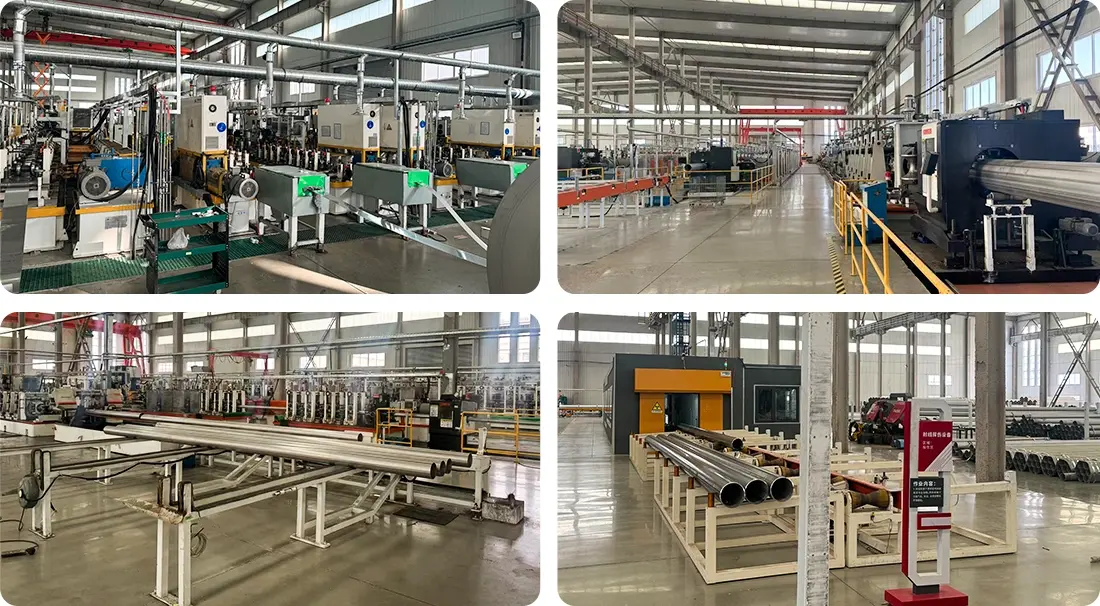
Precision plate rolling creates cylindrical sections with controlled diameter tolerances. Automated EFW welding equipment applies consistent heat input across the entire seam length.
Post-weld solution annealing is carried out in calibrated furnaces with recorded temperature profiling. Fast water quenching stabilises the low carbon microstructure and prevents time-temperature-sensitization.
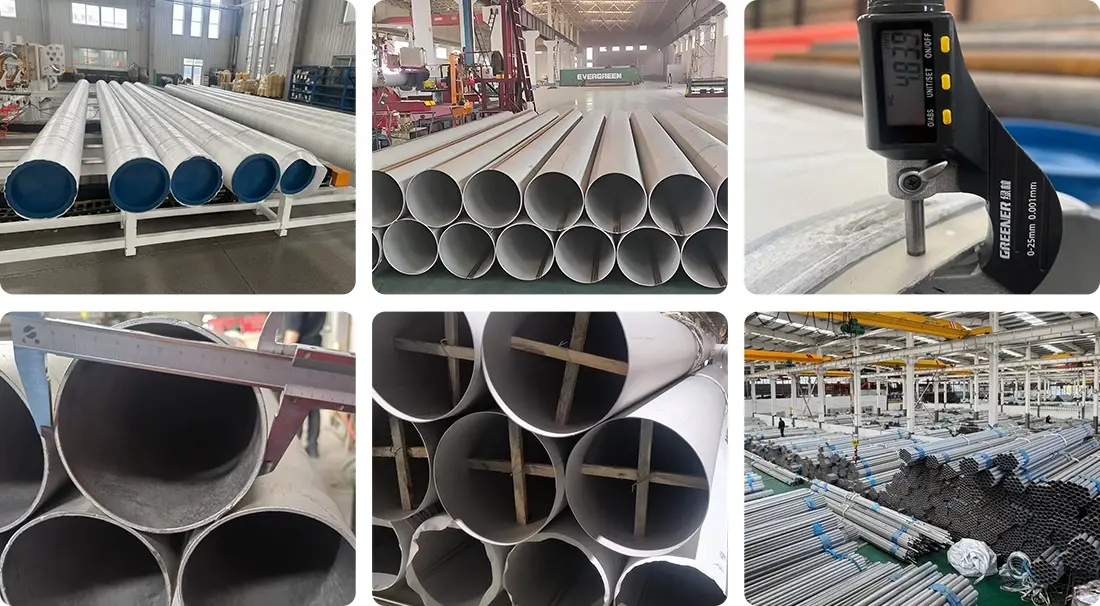
Hydrostatic testing validates pressure integrity at 1.5 times your specified working pressure. Ultrasonic examination confirms wall thickness uniformity along the entire pipe length.
Packaging and Global Logistics Support
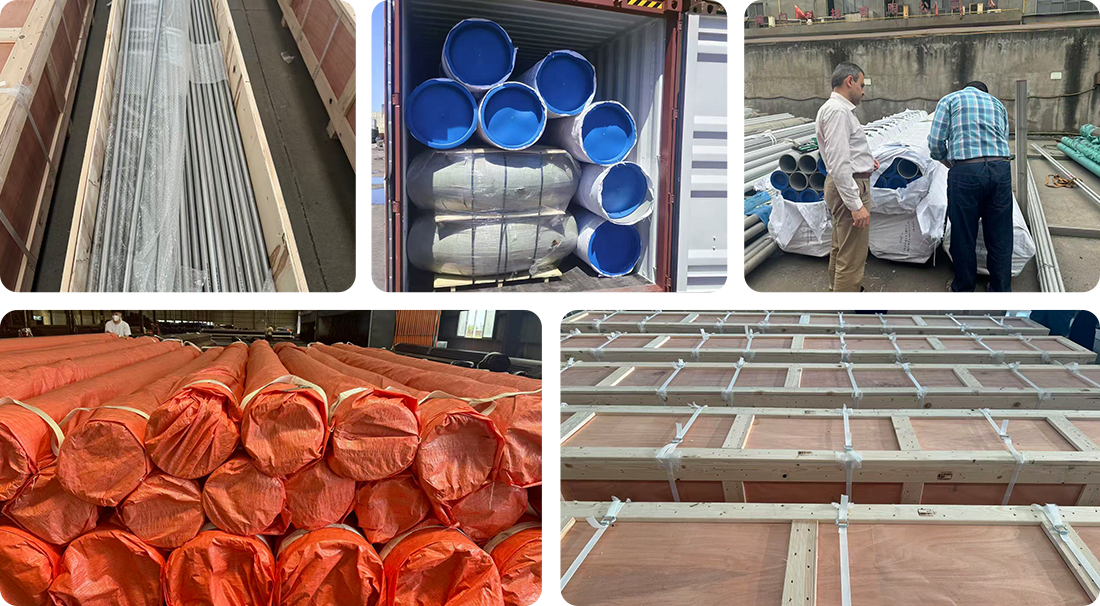
Your pipes arrive protected by heavy-duty plywood crates with steel framework reinforcement. Plastic end caps prevent contamination during ocean freight transit.
We optimize container loading to maximize volume efficiency while maintaining proper weight distribution. Mixed shipments can combine pipes, fittings, and flanges in coordinated deliveries.
Our shipping ports in Shanghai, Tianjin, and Ningbo provide flexible routing options. FOB, CFR, CIF, and DDP terms accommodate your preferred trade arrangements.
FAQ
Q:How does the extra-low carbon matrix framework of this product enhance joint area safety?
A:By restricting carbon levels below 0.03%, this large-bore pipe suppresses hazardous chromium carbide precipitation along weld tracks during field fabrication, successfully preventing weld-decay phenomena that compromise corrosion resistance.
Q:In what specific industrial distribution environments is this low-carbon pressure grade ideally deployed?
A:It is optimized for severe-welding chemical processing utilities, petrochemical distillation networks, large-diameter organic fluid handling loops, and waste water treatment facilities requiring reliable corrosion barriers.
Q:What quality control steps ensure that the chemical purity matches the required pressure vessel parameters?
A:We conduct mandatory 100% Positive Material Identification (PMI) alloy validation alongside spectrographic plate analysis to verify that all alloying elements are perfectly distributed throughout the base material.
Q:Can this low-carbon pipe series be configured with custom end preparations for swifter field coupling?
A:Yes, we offer flexible machining selections including ANSI-standard tapered bevels for butt-welding, specialized plain end facing, or companion flange weld-prep margins tailored to your installation methodology.
Q:Are your astm a358 tp304l piping lots approved by independent international pressure equipment auditing bodies?
A: Our large-diameter line is completely compliant with ISO 9001:2015 standards, CE compliant and allows for independent witness inspections by certified third-party bureaux such as SGS, TUV and BV for project validation.
Contact Us
Ready to specify large-diameter stainless steel piping for your next industrial project with the astm a358 tp304l pipe? Contact our engineering team at info@hballtrust.com for technical consultation and project-specific quotations today.