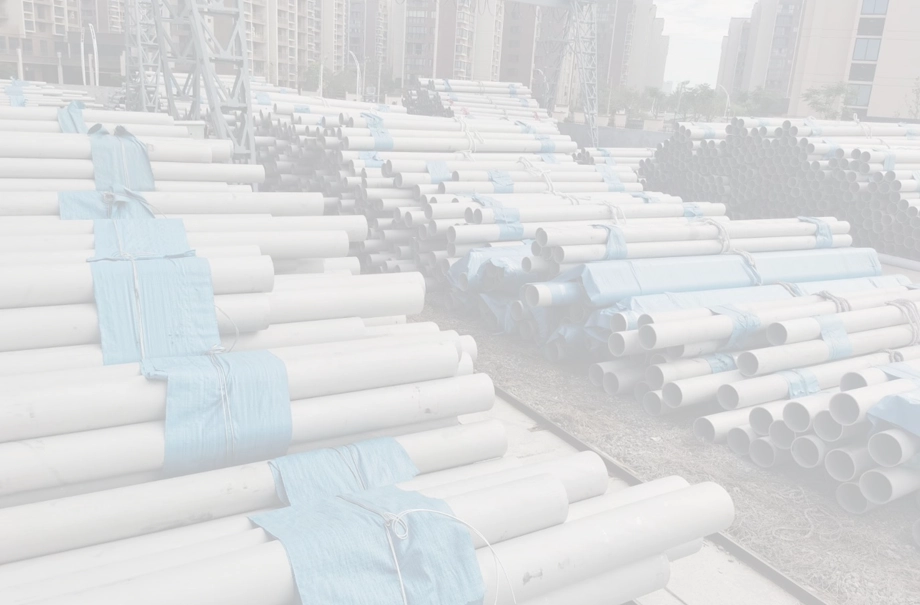
astm a358 tp316 pipe
2. Standard: ASTM A358 / ASME SA358, the benchmark specification for electric-fusion-welded heavy pressure piping
3. Process: Electric Fusion Welded (EFW) using high-quality steel plates and automated double-sided welding with filler metal
4. Size Range: Large diameter sizes from 8" up to 60" (DN200 - DN1500) with flexible customizable wall thicknesses
5. Heat Treatment: Full-body furnace solution annealing above 1040°C to completely normalize weld and base metal structures
6. Surface Finish: Solution annealed and pickled (SA&P), descaled industrial matte, or passivated clean profile
7. Application: Chemical process lines, offshore oil refinery networks, coastal paper mills, and industrial cooling loops
8. Service Advantage: Radiographic examination (RT) compliant with ASME Section VIII, 100% material traceability provided
9. Packaging: Secure sea-freight packing with heavy plastic end-plugs, bundled or loaded with high-strength lifting slings
10. Key Advantage: Combines supreme volumetric flow capacity with ultimate resistance to chloride-induced pitting and crevice corrosion
ASTM A358 TP316 Pipe - Electric Fusion Welded Large Diameter Piping Solutions for Demanding Corrosive Environments
Hebei All Trust Steel Co., Ltd specializes in manufacturing premium astm a358 tp316 pipe engineered for high-stakes industrial applications. Our large-diameter solutions, 8" to 60", are made possible by modern plate-forming technology and our electric-fusion-welded (EFW) pipe systems using molybdenum-enhanced austenitic stainless steel (UNS S31600).
We manufacture more than 15,000 tons of pipe annually and have 100% radiographic testing compliance to verify that each pipe fulfils ASTM A358/ASME SA358 requirements. Every product is fully solution annealed at 1040°C or higher, transverse tensile tested and guided-bend weld verified. We own over 5,000 tons of rolling stock and can provide EN 10204 3.1/3.2 Mill Test Certificates with complete heat number traceability for sensitive petrochemical, offshore and chemical processing sites.
What Makes ASTM A358 TP316 Pipe the Optimal Choice for Corrosive Service?
This product is a stainless steel pipe of a particular electric-fusion-welded kind, suitable for big diameter applications. Unlike seamless, we provide a size-independent plate-formed system that accommodates heavy-wall designs up to 100” outer diameter.
The TP316 grade has 2-3% molybdenum in the austenitic chromium-nickel matrix. This intentional alloying significantly improves the resistance of your system to chloride-induced pitting and crevice corrosion, which are key considerations in maritime, desalination and chemical processing settings.
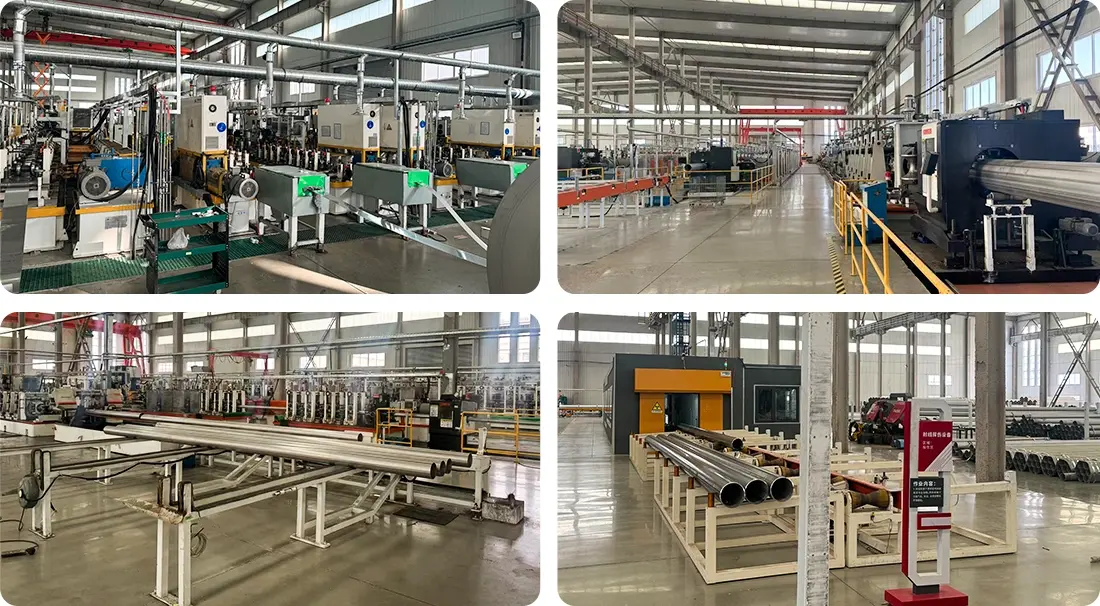
We produce precision rolled plates and automated longitudinal seam double-sided welding. This is achieved by regulated filler metal addition and complete body furnace solution annealing such that the corrosion resistance of the weld zone is equal to the base metal. This approach meets your demand for cost efficient big bore pipework with the same structural integrity as a Code stamped pressure vessel.
Technical Specifications & Available Configurations
| Parameter | Specification Details |
|---|---|
| Manufacturing Standard | ASTM A358 / ASME SA358 / EN 10217-7 |
| Material Grade | TP316 (UNS S31600 / 1.4401) |
| Welding Process | Electric Fusion Welding (EFW) with Filler Metal |
| Outer Diameter Range | 8" – 60" (219.1 mm – 1524 mm) |
| Wall Thickness Options | SCH 5S / SCH 10S / SCH 40S / SCH 80S (2.0 mm – 50 mm) |
| Standard Lengths | 5.8 m / 6 m / 11.8 m / 12 m / Custom Cut |
| Heat Treatment | Solution Annealed at 1040°C Minimum |
| Surface Finish | Solution Annealed & Pickled (SA&P) / Passivated |
| End Preparation | Plain End (PE) / Beveled End (BE) / Flanged |
| NDT Requirements | 100% Radiographic Testing (RT) / Hydrostatic Testing |
| Mechanical Testing | Transverse Tensile / Guided-Bend / Hardness Profile |
| Documentation | EN 10204 3.1 & 3.2 MTC / PMI Analysis / RT Reports |
| Third-Party Inspection | SGS / BV / TÜV / DNV / ABS Certified |
Superior Material Advantages for Demanding Applications
Molybdenum-Enhanced Corrosion Resistance
Your chemical processing systems demand materials that withstand aggressive media. The 2-3% molybdenum content in our astm a358 tp316 pipe provides exceptional resistance to:
- Chloride-bearing solutions in coastal installations
- Sulfuric and phosphoric acid environments
- Organic acids in petrochemical refineries
- Bromide and iodide compounds in pharmaceutical processing
This alloy composition ensures your piping maintains structural integrity in environments where standard 304 grades would rapidly fail through localized attack.
Proven Weld Zone Integrity
Electric fusion welding with controlled filler metal application creates seamless metallurgical continuity. Our multi-pass automated welding procedures eliminate common failure points:
The complete solution annealing cycle at 1040°C+ normalizes weld microstructures. This eliminates sensitization risks that could compromise intergranular corrosion resistance. Descaling pickle baths optimize passive surface layering across both weld seam and parent material zones.
Engineered for High-Pressure Service
Your offshore platforms and refinery headers require reliable pressure containment. Our manufacturing protocol includes:
- Transverse weld tensile testing verifying minimum 515 MPa strength
- Guided-bend tests confirming ductility across fusion zones
- Weld seam flattening trials ensuring formability retention
- Precise hardness profiling detecting heat-affected zone consistency
These quality checkpoints guarantee your systems meet ASME Section VIII vessel code requirements.
Extensive Customization Capabilities
Flexible Dimensional Engineering
We accommodate your specific project blueprints through:
Wall Schedule Versatility: From light-wall SCH 5S configurations for gravity flow systems up to heavy SCH 80S specifications for high-pressure headers—each manufactured to ±12.5% tolerance standards.
Length Precision: Standard production lengths of 6m and 12m, with laser cutting services for exact fit-up dimensions minimizing field welding requirements.
End Preparation Options: Plain ends for socket welding, beveled profiles for butt-welding efficiency, or factory-flanged assemblies reducing installation labor.
Value-Added Processing Services
Beyond standard pipe production, we offer integrated services:
- Laser stenciling for permanent batch traceability
- Hydrostatic testing to your specified proof pressure
- NACE MR0175 compliance documentation for sour service
- Color-coded identification banding per ANSI/ASME A13.1
- Protective PVC sleeving for marine shipping environments
Critical Applications Across Industrial Sectors
Offshore & Marine Infrastructure
Our big diameter TP316 pipe is used for brine transport in desalination facilities of 50,000+ m³/day capacity. The molybdenum boost avoids pitting corrosion at chloride concentrations of 35,000 ppm that would kill weaker alloys in months.
Our astm a358 tp316 pipe is used in seawater cooling loops for offshore oil drilling sites. The structure is electric-fusion welded, giving 100 percent joint efficiency and allowing thermal expansion in exposed deck pipe.
Chemical Process Networks
Heavy-wall structures are required for petrochemical refineries processing sulfuric acid alkylation units. In the solution-annealed state, longitudinal welds in the transport of 98% concentration acids at high temperatures provide homogeneous corrosion resistance.
Our material traceability is critical to pharmaceutical businesses that handle acetic acid and chlorinated solvents. Each heat number leads to validated PMI analysis showing molybdenum concentration fulfils pharmacopoeia purity criteria.
PULP AND PAPER INDUSTRY
Materials for chlorine dioxide bleaching towers must be resistant to oxidation and chloride stress cracking. Our TP316 grade offers the essential molybdenum buffer and the EFW technique enables economically large diameters for high volume circulation of bleaching liquid.
Stringent Quality Assurance Protocol
3.6.2 Required Non-Destructive Examinations
Each and every manufacturing metre is subjected to thorough inspection:
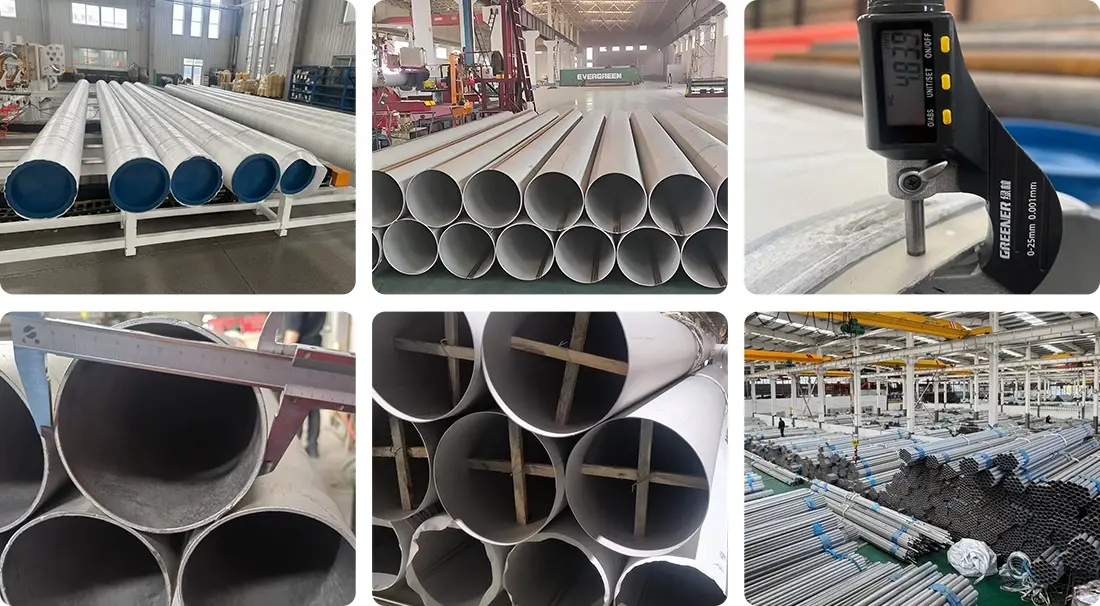
100% Radiographic Testing: Internal fusion faults, slag inclusion or partial penetration are found by full length X-ray inspection. Our Class 1 manufacturing satisfies ASME Section V acceptance standards for weld joint efficiency.
Automated Ultrasonic Scanning: UT probes operated by a computer validate the wall thickness homogeneity to a tolerance of ±0.5mm, thereby proving the constant pressure bearing capability.
Hydrostatic Testing: All pipes are tested at 1.5 times the design pressure to ensure leak-proof functioning under normal operating load.
Metallurgical Verification Test
Beyond dimensional tests, we do crucial material validation:
Intergranular Corrosion Testing (ASTM A262 Practice E): Confirms that sensitised grain boundaries, susceptible to corrosive attack, were not formed during welding heat cycles.
Positive Material Identification (PMI): X-ray fluorescence analysis verifies chromium, nickel and molybdenum levels meet approved mill chemistry.
Charpy V-Notch Impact Testing: For low temperature service, if required, we check toughness retention in the heat affected zones to cryogenic temperatures of -196°C.
Comprehensive Documentation & Traceability
Certified Material Test Reports
Your project compliance depends on transparent documentation. We provide:
- EN 10204 3.1 Mill Test Certificates showing ladle analysis chemistry
- EN 10204 3.2 inspection certificates with witnessed test results
- Radiographic film or digital imaging files for permanent QA records
- PMI reports with calibrated instrument certification
- Third-party inspection certificates from SGS, Bureau Veritas, or TÜV
Each document carries heat number stamps enabling complete backward traceability to steel mill production records.
Compliance with International Codes
Our manufacturing procedures align with global engineering standards:
- ASME B31.3 Process Piping requirements
- ASME Section VIII pressure vessel fabrication codes
- NACE MR0175/ISO 15156 sour service specifications
- EN 10217-7 European technical delivery conditions
- PED 2014/68/EU European Pressure Equipment Directive
This multi-standard compliance simplifies your material approval process across international project jurisdictions.
Secure Export Packaging & Global Logistics
Marine-Grade Protection Systems
Understanding your piping arrives ready for installation, we implement multi-layer protection:
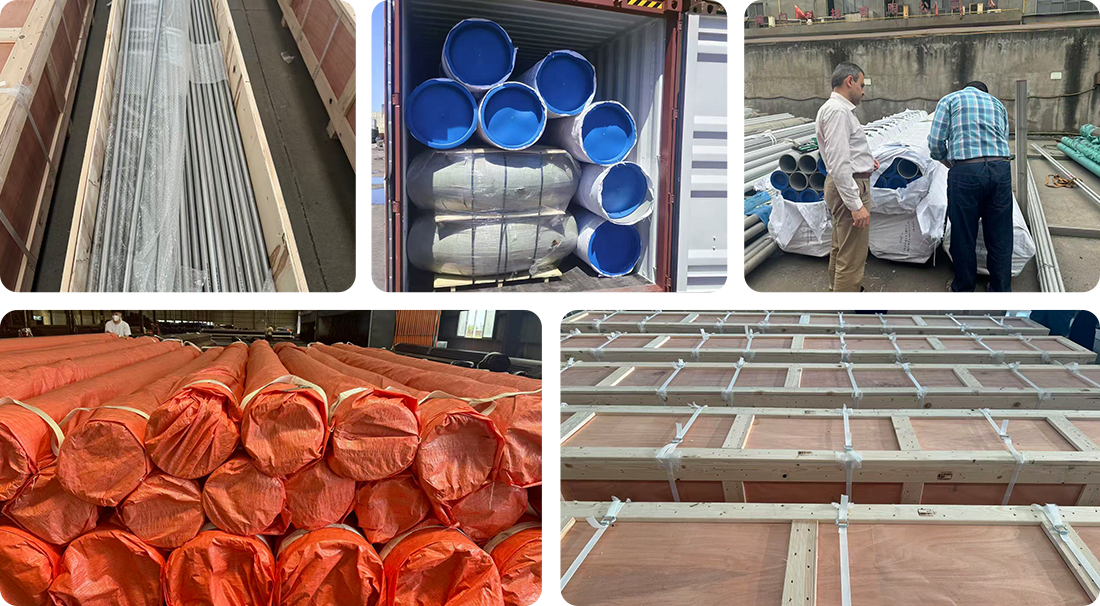
- High-density plastic end caps preventing moisture intrusion
- Individual polyethylene sleeves eliminating surface scratches
- Heavy-duty woven fabric bundles with reinforced steel strapping
- Fumigation-free plywood crates for containerized shipping
- Steel framework cradles for break-bulk cargo handling
This packaging strategy prevents the surface oxidation, impact damage, and salt corrosion common in international freight.
Flexible Shipping Solutions
Our strategic location near major Chinese ports enables efficient delivery:
Available Ports: Shanghai, Ningbo, Tianjin, Qingdao, Shenzhen
Trade Terms: FOB, CFR, CIF, or DDP to your specified destination
Delivery Timeline:
- Stock items: 3-5 days from order confirmation
- Custom specifications: 15-20 days production cycle
- Large engineering quantities: 25-30 days with priority scheduling
Mixed container loading accommodates companion products including flanges, fittings, and valves—reducing your freight costs through consolidated shipping.
FAQ
Q:Why should an engineer select this electric-fusion welded product over a standard tp304 alternative?
A:This pipe incorporates a robust molybdenum alloy addition within its austenitic matrix, delivering superior protection against generalized chloride pitting and aggressive organic acids under large-capacity flow dynamics. The 2-3% Mo content specifically targets environments where standard 304 grades experience accelerated localized corrosion.
Q:What mechanical deformation testing is contractually performed to ensure the structural ductility of this batch?
A:Representative production coupons are subjected to severe transverse weld tensile testing, guided-bend joint tests, weld seam flattening trials, and precise hardness profile mapping. These procedures verify the fusion zone retains parent material ductility and meets ASME code minimum elongation requirements.
Q:What precise volumetric inspection diagnostics are carried out on this specific pressure pipe line?
A:The entire length of the welded joint seam is subjected to mandatory 100% radiographic examination (RT/X-ray) or automated volumetric ultrasonic scanning (UT) to guarantee flawless joint fusion. Our Class 1 production standard ensures complete internal defect detection per ASME Section V acceptance criteria.
Q:What customized dimensional thickness thresholds can be engineered for volatile petrochemical headers?
A:We provide adaptable sizing structures for heavy-duty setups, supporting multiple wall schedule options from light wall SCH 5S up to heavy SCH 80S with customized large bore dimensions. Our plate-forming process accommodates non-standard wall thicknesses calculated per ASME B31.3 pressure design formulas.
Q:What precise mill traceability documentation is dispatched with this astm a358 tp316 product?
A:All shipments include a transparent Mill Test Certificate (MTC) conforming strictly to EN 10204 3.1 or 3.2 criteria, capturing precise ladle chemical heat analysis and physical tensile load values. Heat number stamps on each pipe enable complete backward traceability to original steel mill production records.
Contact Us
Ready to specify the optimal astm a358 tp316 pipe configuration for your application? Contact our technical team at info@hballtrust.com for material selection guidance and project-specific quotations.