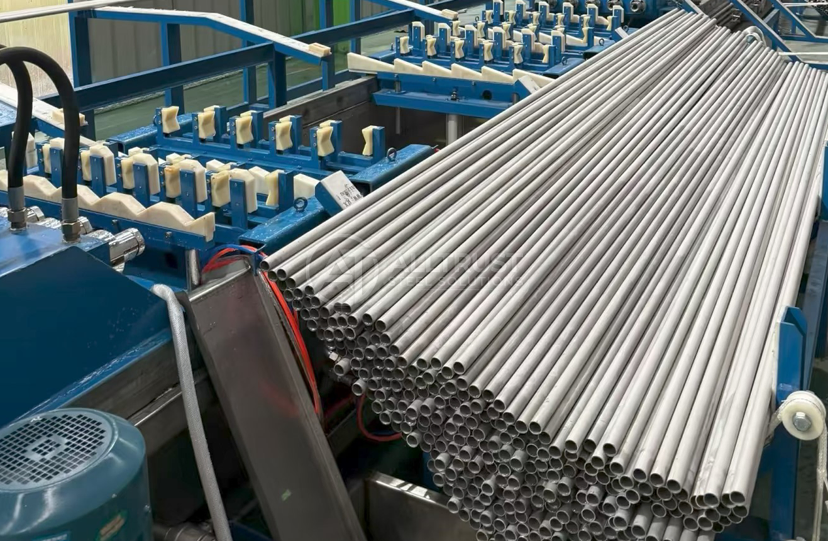
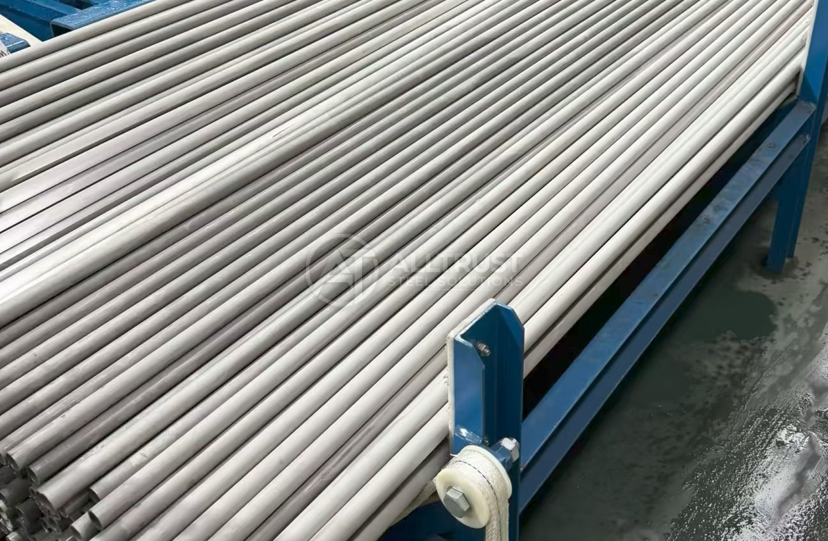
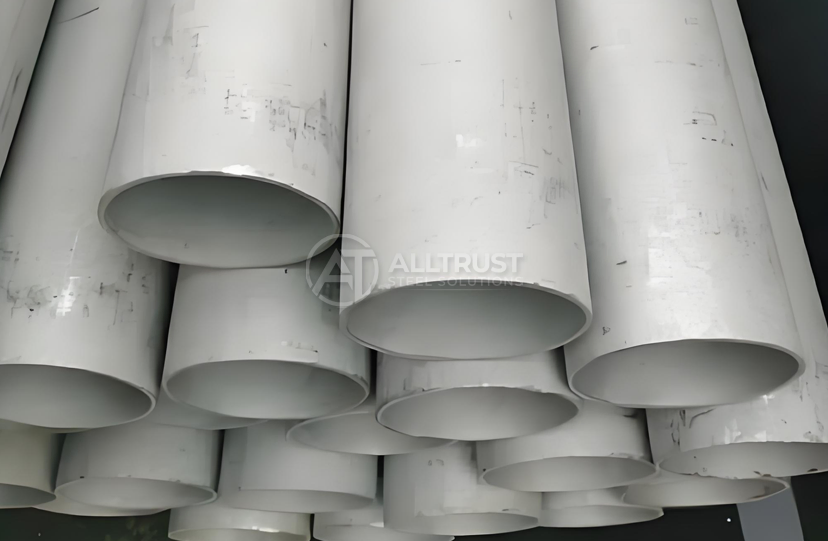
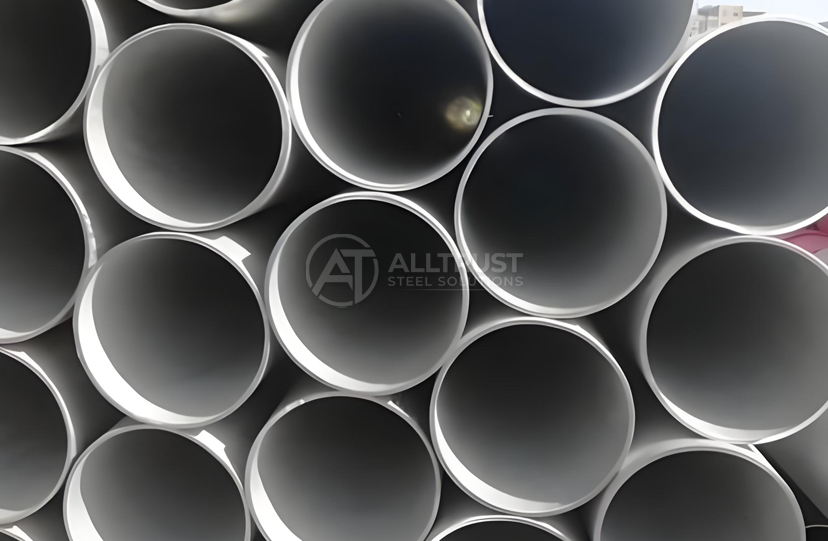
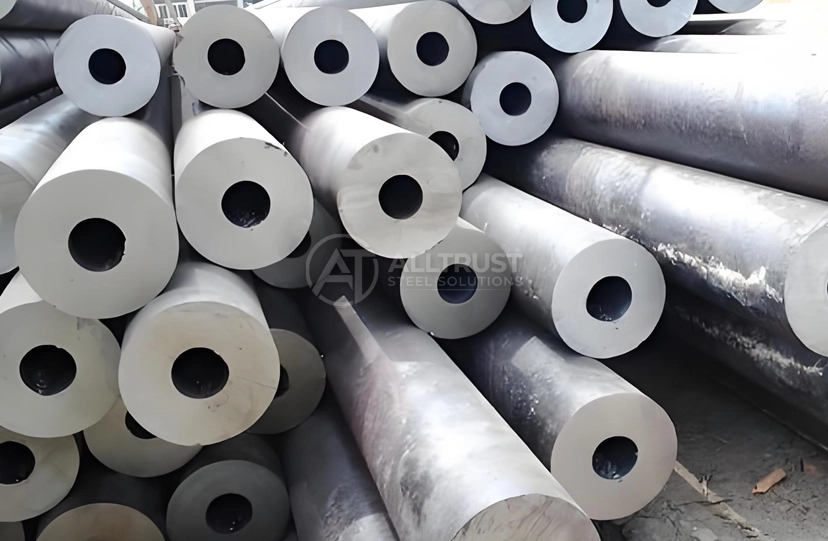
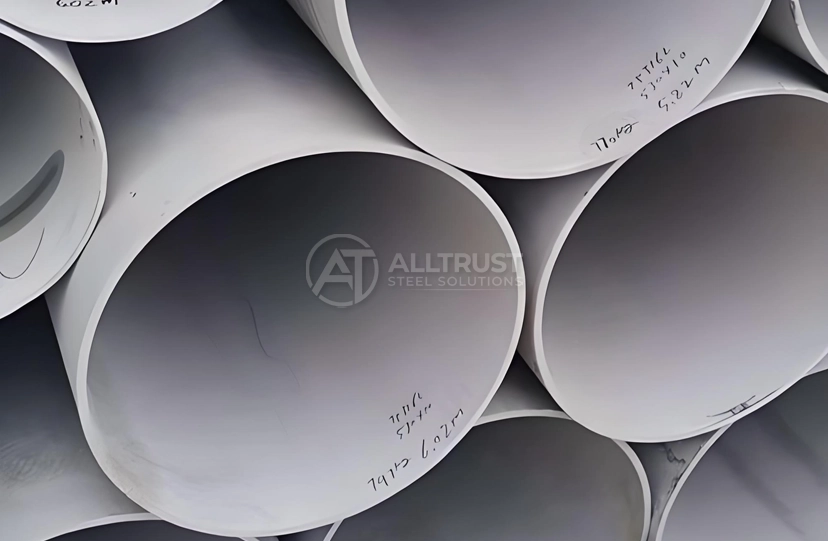
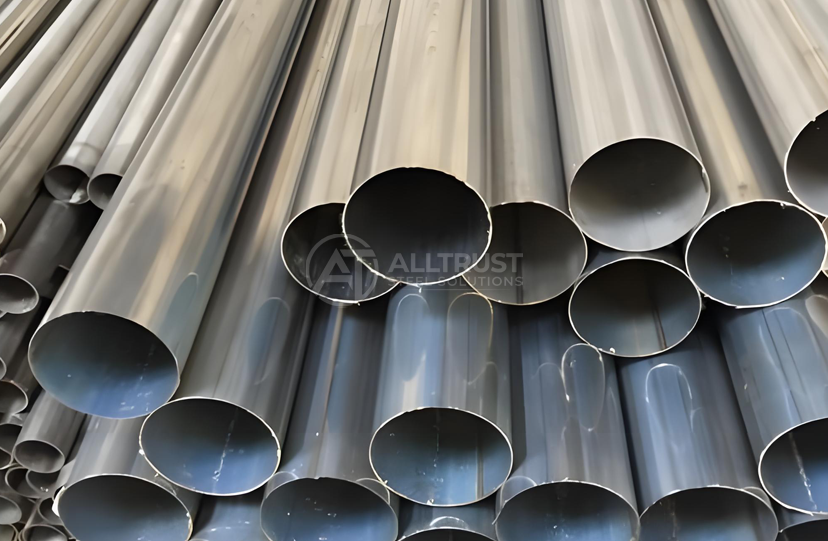
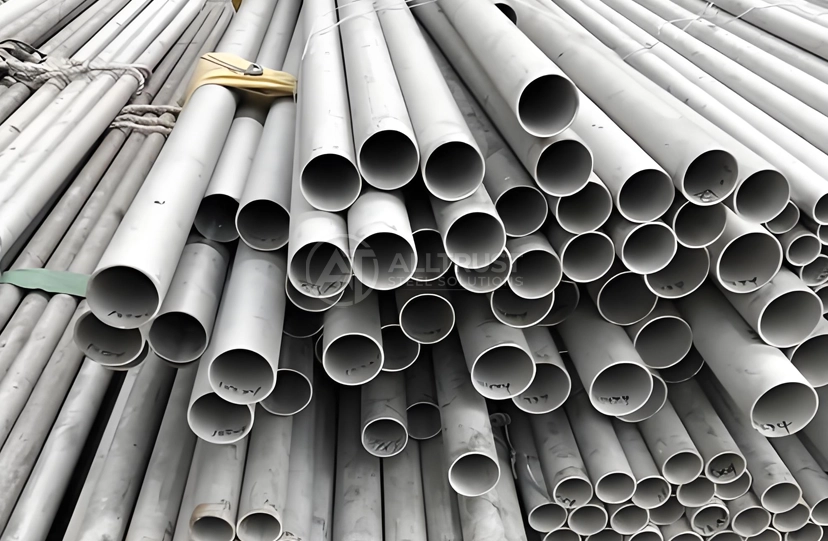
astm a358 welded pipe
2. Standard: ASTM A358 / ASME SA358, the premier specification for large-scale electric-fusion-welded engineering piping
3. Process: Automated electric fusion welding (EFW) from premium plates, utilizing double-sided joints with filler metal
4. Size Range: Large diameters starting from 8" up to 60" (DN200 - DN1500) with flexible custom wall schedules
5. Heat Treatment: Full furnace post-weld solution annealing to completely restore structural parent-metal properties to welds
6. Surface Finish: Solution annealed and pickled (SA&P), descaled matte, or chemically passivated clean finish
7. Application: Municipal wastewater treatment, industrial cooling loops, paper mill pipelines, and large refinery mains
8. Service Advantage: 100% X-ray radiographic inspection (RT) on welds per ASME Section VIII, full material heat traceability
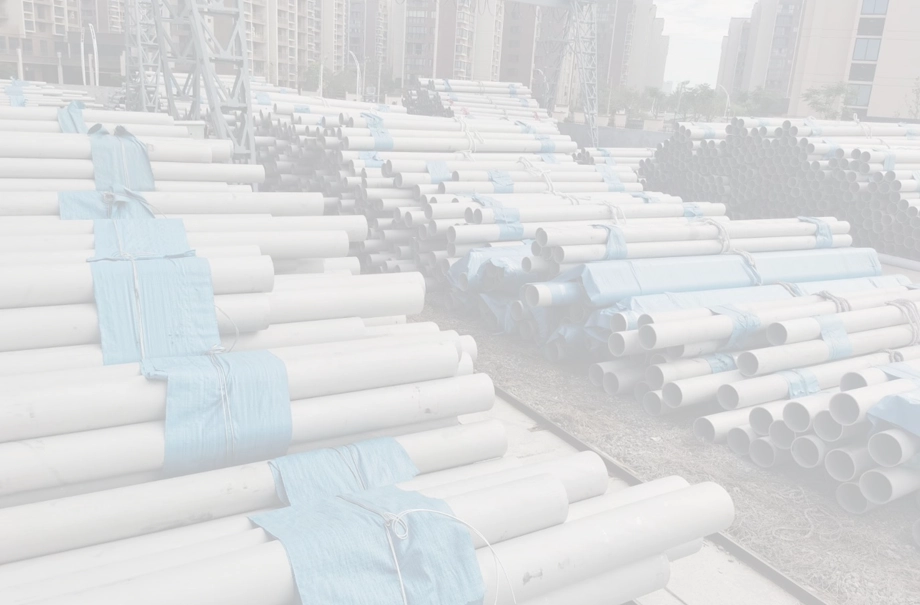
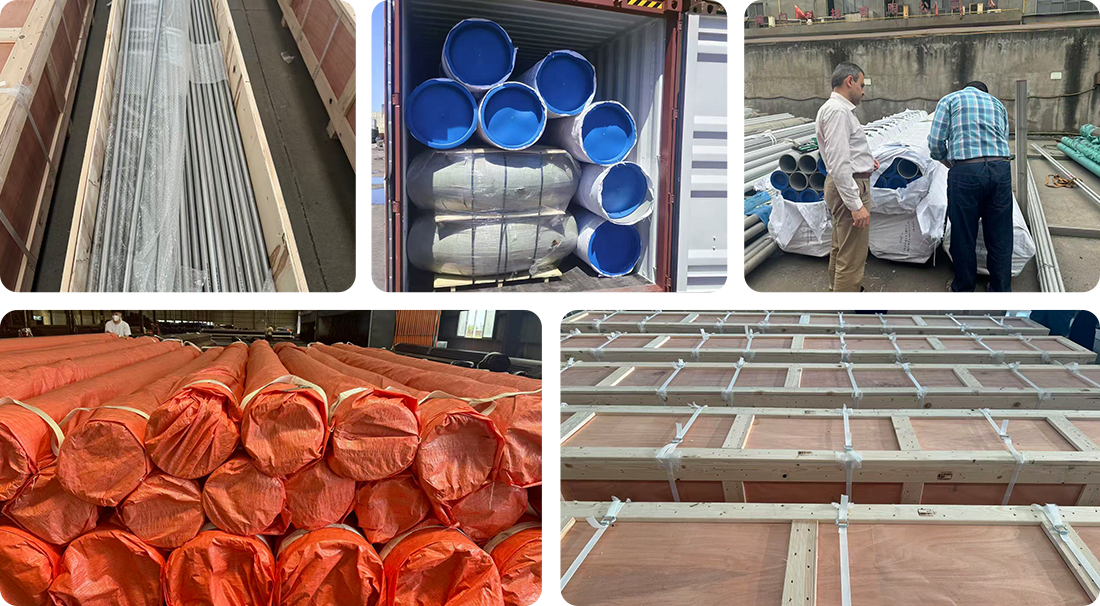
9. Packaging: Secure international sea-freight packing with heavy end protectors or loaded on reinforced steel dunnage
10. Key Advantage: Combines massive volumetric fluid flow capacity with high weld ductility and outstanding cost economy
ASTM A358 Welded Pipe: Large-Diameter Electric Fusion Welded Stainless Steel Solutions for High-Pressure Industrial Systems
Hebei All Trust Steel Co., Ltd specializes in manufacturing premium astm a358 welded pipe designed for critical high-pressure fluid transport systems. We provide electric-fusion-welded stainless steel pipe which has excellent dimensional stability and structural strength, yearly manufacturing capacity of over 15,000 tons and maximum outer diameters up to 1016 mm. All manufacturing lots are 100% radiographically tested (RT/X-ray) and hydrostatic pressure tested for zero fault weld seams. Our production facility complies with stringent ASTM, ASME, EN and DIN standards with full EN 10204 3.1/3.2 Mill Test Certificates. The goods range comprises TP304, TP304L, TP316, TP316L, TP321 and TP347 grades and are used in petrochemical refineries, municipal water treatment plants and power production facilities globally.
What Makes ASTM A358 Welded Pipe Essential for Large-Diameter Applications
The device tackles basic engineering issues in large-bore pipe systems when seamless alternatives are either prohibitively expensive or technically unavailable. This standard covers seamless, electric-fusion-welded (EFW) steel pipe with filler metal addition. The pipe should be of uniform wall thickness for diameters 8 to 60 inches.
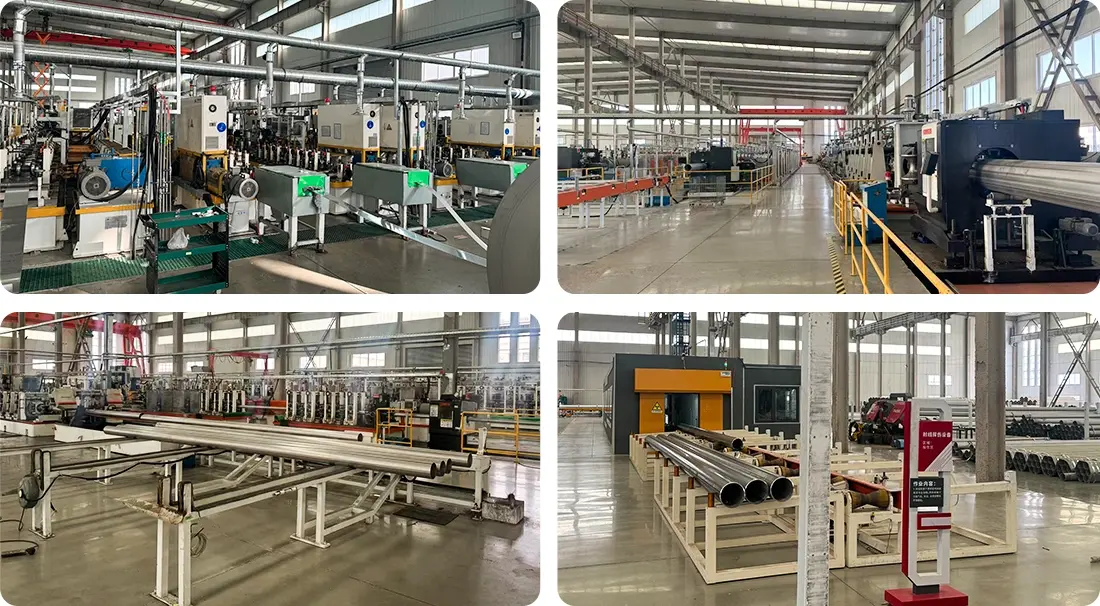
Our manufacturing process includes automated double-sided longitudinal seam welding and required post-weld solution annealing, unlike ordinary welded tubing. This heat cycle recovers the corrosion resistance and mechanical qualities of the parent metal across the whole zone of the weld.
Furthermore, you have better joint efficiency factors up to 1.0 for Class 1 configurations, i.e. the welded seam is as good as the base material during pressure cycling. The pipes can withstand temperatures from −196°C in cryogenic LNG terminals to +600°C in high-temperature steam systems.
Technical Specifications and Dimensional Parameters
| Parameter | Specification Details |
|---|---|
| Standard | ASTM A358 / ASME SA358 / EN 10217-7 |
| Product Type | Electric-Fusion-Welded (EFW) Stainless Steel Pipe |
| Material Grades | TP304, TP304L, TP316, TP316L, TP321, TP347, TP310S |
| Manufacturing Process | Double-Welded Longitudinal Seam / Plate Forming / EFW |
| Outer Diameter Range | 8" – 100" (219.1 mm – 2540 mm) |
| Wall Thickness | SCH 5S / SCH 10S / SCH 40S / SCH 80S (2.0 mm – 50 mm) |
| Standard Length | 5.8 m / 6 m / 11.8 m / 12 m / Custom Cut Length |
| Surface Finish | Solution Annealed & Pickled (SA&P) / As Welded / Polished |
| End Configuration | Plain End (PE) / Beveled End (BE) / Flanged End |
| Non-Destructive Testing | 100% RT/X-ray / Hydrostatic Test / UT / PT |
| Mechanical Testing | Transverse Tension / Guided-Bend Weld / Flattening / Hardness |
| Third-Party Inspection | SGS / BV / TUV / DNV / ABS Certified |
| Quality Certificates | EN 10204 3.1 & 3.2 MTC / ISO 9001:2015 / PED |
| Packaging | Wooden Cases / Steel Framework Cradles / Waterproof Wrapping |
Manufacturing Excellence and Quality Assurance Protocols
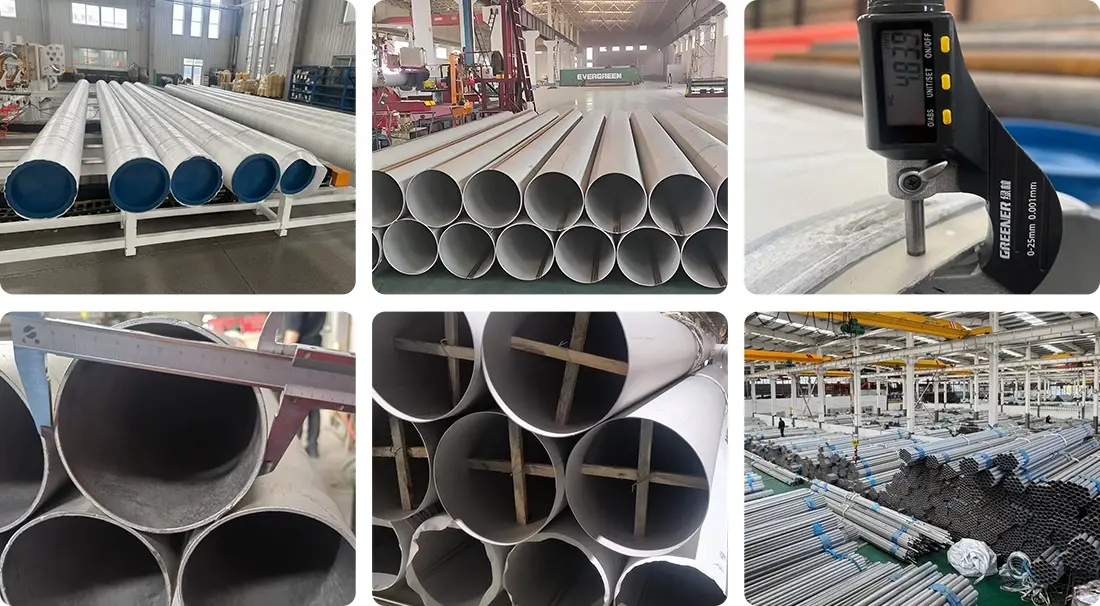
In our product manufacture, we have included four important quality control steps. Spectrographic analysis is used during vendor audit and material verification to check that chromium, nickel and molybdenum concentration is in line with the prescribed grade chemistry. Each coil and plate is traceable by heat number.
The production monitoring is based on real-time dimensional inspection using laser measuring devices. The wall thickness tolerance is kept within ± 0.05 mm throughout the whole pipe length. All longitudinal seams are 100% radiographed per ASME Section V Article 2 post welding.
Independent testing comprises transverse guided-bend tests to ensure weld ductility and transverse tension tests to confirm weld zone tensile strength meets minimum 515 MPa for austenitic grades. Hydrostatic testing at 1.5 times the design pressure for a minimum of five minutes ensures leak-proof functioning.
Visual inspection reports, PMI chemical composition verification, mechanical property certifications and dimensional measurement records are all part of the final inspection paperwork. You have total material traceability from the raw steel plate to the final shipping.
Industrial Applications and Performance Benefits
Petrochemical and Refining Infrastructure Our pipes are resistant to polythionic acid stress corrosion cracking in catalytic reforming systems and crude distillation units working at between 300°C and 550°C.
Municipal Wastewater Treatment Plants TP316L resists chloride-rich effluent streams and maintains structural integrity at continuous flow pressures up to 40 bar.
Power Generation Cooling Systems: Large diameter designs move large volume cooling water in coal fueled and combined cycle facilities where erosion resistance and thermal expansion stability avoid premature failure.
LNG & Cryogenic Terminals: Solution annealed microstructure preserves fracture toughness at -196°C, a requirement for liquefied natural gas storage tank pipework, where brittle fracture cannot be tolerated.
Chemical Processing Networks: Resistant to organic acids, alkalis and halogen chemicals. Ideal for pharmaceutical ingredient processing and speciality chemical production.
Three Core Advantages for Your Procurement Strategy
Material and Functional Superiority: Utilizing advanced longitudinal automated filler-metal added fusion technology, this astm a358 welded pipe ensures exceptional diameter consistency and high-efficiency cost-effectiveness for large-bore high-volume industrial pressure piping systems. The automated plate roll-forming process eliminates the eccentricity common in centrifugally cast seamless alternatives.
Production Quality and Testing Rigor: Processed using premium steel plates formed into tight tolerances and joined via TIG or submerged arc welding protocols, featuring comprehensive weld seam radiographic check trace logs to confirm joint equivalence. Our quality documentation satisfies ASME B31.3 process piping codes and PED 2014/68/EU pressure equipment directives.
Multi-Functional Customisation and Dimensional Sizing : Exceptionally flexible for many sizes up to 48 inches and more, it provides tailored double-welded seam alignments, tailored edge bevelling angles, and tailored wrapping solutions for global shipping. Loading mixed containers with flanges, fittings and valves optimises your shipping expenses.
FAQ
Q:How does this product maximize financial efficiency while maintaining high pressure containment limits?
A:This pipe capitalizes on high-precision automatic roll-forming of uniform steel plates and automated filler-metal added fusion technology, providing exceptional wall thickness consistency and outstanding cost-effectiveness for large-bore lines. The EFW process reduces material waste by 15-20% compared to seamless hot-piercing methods while delivering equivalent pressure ratings.
Q:What specific welding technologies are integrated to ensure the metallurgical equivalence of the joint seam?
A:We utilize advanced automated longitudinal double submerged arc welding (LSAW) or electric-fusion welding (EFW) protocols, featuring comprehensive post-weld solution annealing to dissolve alloy elements uniformly. Weld heat input is precisely controlled between 0.8-1.5 kJ/mm to minimize grain growth and sensitization risks.
Q:What volumetric testing protocol verifies that the automated longitudinal weld is completely secure?
A:The entire length of the straight-seam weld joint is subjected to mandatory 100% radiographic examination (RT/X-ray) or automated volumetric ultrasonic scanning (UT) to guarantee flawless joint fusion. Our acceptance criteria follow ASME Section VIII Division 1 standards, rejecting any linear indications exceeding 6 mm.
Q:What massive dimensional customization limits can be achieved for high-volume municipal flow grids?
A:We can manufacture custom large-bore configurations extending up to 48 inches or greater, accommodating customized double-welded seam alignments and tailor-made edge beveling angles. Special tooling enables wall thickness schedules from SCH 5S to SCH 160 with consistent dimensional accuracy.
Q:How are these welded pipes packaged to prevent internal corrosion or debris accumulation during transit?
A:Every pipe is thoroughly passivated, bundled with protective strapping slings, wrapped inside heavy waterproof weaving bags, and tightly sealed with hard plastic dust caps. Export packaging includes fumigation-free wooden crates for sea freight, with internal dunnage preventing surface contact damage during multi-modal transportation.
Contact Us
Ready to specify large-diameter piping for your next industrial project with the astm a358 welded pipe? Contact info@hballtrust.com for detailed technical datasheets and project-specific quotations today.