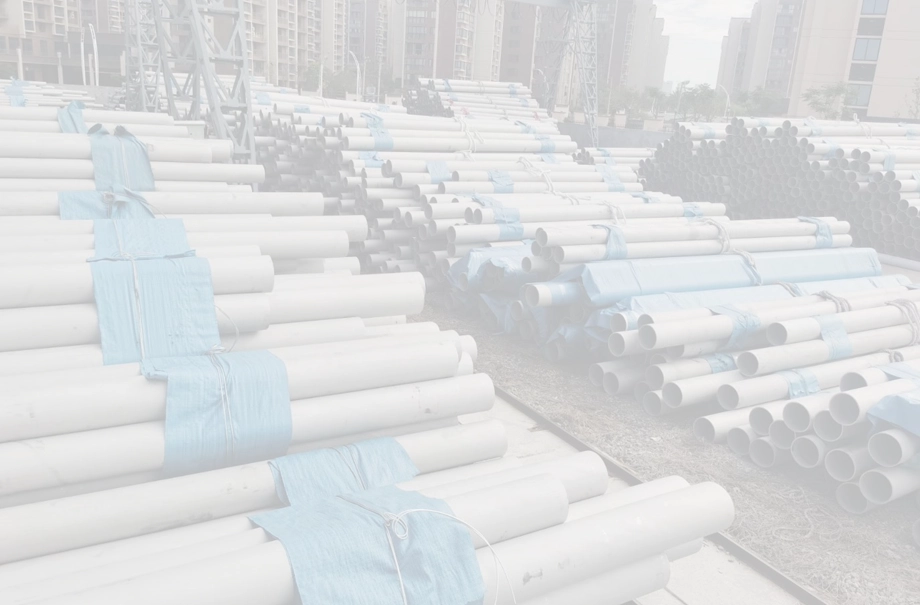
304 Welded Pipe for Food Processing and Industrial Fluid Lines
When your production line depends on consistent fluid flow and contamination-free transfer, the pipe material you choose matters more than most people realize. A 304 welded pipe — manufactured from UNS S30400 austenitic stainless steel with roughly 18% chromium and 8% nickel — gives you a proven balance of corrosion resistance, mechanical strength, and cost efficiency. Whether you're running a dairy processing facility, a municipal water network, or a chemical fluid system, this pipe type covers a wide range of low-to-medium pressure applications without the premium price tag of seamless alternatives.
Understanding 304 Welded Pipe: Properties and Specifications
Chemical Composition and Core Mechanical Properties
Because SS 304 (UNS S30400 / EN 1.4301) is made of 18/8 metal, it has a stable passive oxide layer that doesn't rust, stain, or react badly with light chemicals. At least 205 MPa of yield strength and 515 MPa of tensile strength must be present. It weighs 7.93 grams per cubic centimeter and melts at temperatures between 1,400°C and 1,450°C. There is a good chance that these lines will last a long time and work well for both food-grade fluids and general commercial use.
Manufacturing Process and Weld Integrity
Welding machines that use TIG, Plasma, or Laser to put long strips of high-quality steel together make tubes with very tight tolerances. There is no more stress in the weld zone after full post-weld solution annealing. This makes the base metal immune to rust across the heat-affected zone (HAZ). If you follow ASTM A312 or ASME SA312, the weld joint efficiency factor will be 1.0. This means that the seam can hold the same amount of weight as the parent material.
Dimensional Specifications at a Glance
You can get this item in a lot of different sizes to fit most projects.
- OD range: 1/2" to 48" (DN15–DN1200 / 13.7 mm–1,219.2 mm)
- Wall thickness schedules: SCH 5S, 10S, 40S, 80S (0.5 mm–30 mm)
- Standard lengths: 5.8 m, 6 m, 11.8 m, 12 m, or custom cut lengths
- Surface finish options: Solution annealed & pickled, Bright Annealed (BA), mechanically polished, or internal bead removed flush
- End types: Plain End (PE) or Beveled End (BE)
Schemas for wall thickness: SCH 5S, 10S, 40S, and 80S (0.5 mm to 30 mm)
5.8 m, 6 m, 11.8 m, and 12 m are the standard lengths. You can also get lengths that are cut to order.
The surface can be solution annealed and pickled, Bright Annealed (BA), mechanically polished, or have the internal bead removed flush.

Comparing 304 Welded Pipe with Other Stainless Steel Variants
304 vs. 316 — When Does Molybdenum Matter?
Adding 2–3% molybdenum to Grade 316's 18/8 base makes it much less likely to pit or corrode in gaps and salt. 316L is the best material for environments in the sea, near the coast, or for pharmaceutical lines that will be cleaned with salt water. Regular chemical fluid lines, food processing systems that use fresh water, and most CIP processes work well with 304 welded pipe, which is much cheaper. The decision is based on how much salt is present, not on what most people think.
Welded vs. Seamless — Trade-Offs Worth Knowing
There is no weld line in seamless pipe because it is pushed out from a solid block. There is a lot of pressure or heat, and all the factors need to be controlled. This method works well. When it comes to big diameters, welded pipe has thinner walls and faster lead times. It also costs less per unit. When you're looking for pipe for moderately high-pressure uses in structures, food machinery OEM projects, or city water networks, these are all very important things to think about.
Welding Method and Long-Term Performance
Because it makes a clean, narrow fusion zone with little spatter, TIG welding is the best way to join metal parts together. Because you can control the heat input even more exactly, laser welding is the best way to make accurate tubes with thin walls. When you solution anneal or pickle something, you make a surface that bacteria can't stick to, and that passes hygienic design audits.
Applications of 304 Welded Pipe in Food Processing and Industrial Fluid Lines
Food and Beverage Processing Lines
Cold, hot, and acidic solutions are used in tough Clean-in-Place (CIP) cycles when making milk, beer, or juice. The stainless steel fluid tube has to be able to handle these cycles. Flow resistance is low in a BA-finished tube that doesn't have any beads inside. This is because there are no cracks in the tube where bacteria can grow. OEM manufacturers of food equipment often choose ASTM A312 304 tubes for milk transfer lines, beverage valves, and CIP return loops.
Industrial Fluid and Water Treatment Systems
Drainage networks for cities, low-pressure steam loops, and water treatment plants all need pipes that won't rust inside when they're always wet. The 304 grade can handle deionized water, drinking water, and process fluids that are a little acidic. After a few years of use, its walls don't get thinner as fast as carbon steel's do. East and South China have come to depend on this material for making chemical tools because of this.
Customization for Complex Systems
Catalog sizes don't always fit plants the way they are set up. Factory teams can make things more quickly and easily when suppliers offer fixed-length cutting, pipe beveling, threading, and even slot cutting. Random lengths that are twice as long (11.8 m / 12 m) cut down on the number of weld joints and installation work needed for long pipe runs in Southeast Asia or the Middle East.

Procurement Guide for 304 Welded Pipes: Finding the Right Supplier and Managing Transactions
Evaluating Supplier Credentials
Any 304 welded pipe company you can trust should give you an EN 10204 3.1 Mill Test Certificate (MTC). This shows the chemical makeup and mechanical test results that can be linked to a certain heat number. Ask for PMI (Positive Material Identification) reports to be sure of the real amounts of Cr and Ni. One of the biggest risks in the market is getting cheap metal that has been mixed with watered-down alloy chemistry.
When you're ready to place an order, these are the most important license and test checks you should do:
Certain quality marks that we have are EN 10204 3.1/3.2 MTC, ISO 9001:2015, CE, and PED.
The 100% Eddy Current test, the radiographic (RT/X-ray) weld check, the hydrostatic test, and the ultrasonic test are all types of non-destructive testing (NDT). Some of the mechanical tests that are done are the hardness test, the flattening test, the reverse flattening test, the tensile test, and the weld seam intergranular rust test. Inspections from outside groups like SGS, BV, TÜV, DNV, and ABS are welcome.
- Quality certificates: EN 10204 3.1/3.2 MTC, ISO 9001:2015, CE, PED
- Non-destructive testing (NDT): Hydrostatic test, 100% Eddy Current test, Radiographic (RT/X-ray) weld inspection, Ultrasonic test (UT)
- Mechanical testing: Tensile test, flattening test, reverse flattening test, hardness test, weld seam intergranular corrosion test
- Third-party inspection: SGS, BV, TÜV, DNV, ABS — all accepted
Buyers say they often have three problems: low Cr/Ni content, too much negative wall thickness deviation, and weld flaws that are hard to see because of the finish. These checks protect your supply chain from all three of these issues.
Pricing, MOQ, and Lead Time Management
People who need to restock their stores quickly often have to deal with high minimum order amounts that make it hard for them to use their cash flow. They should have a low minimum order quantity (MOQ) for common sizes and more than 5,000 tons of grades 304, 304L, 316, and 316L in stock at all times. Wait times for custom orders should be 15–20 days, and hold times for stock orders should be 3–5 days. A good provider should be able to meet these times.
Packaging and Transit Protection
There's a good reason to be worried about damage to the surface during sea freight. As part of proper export packaging, you should have plastic end caps, individual protective sleeves, hexagonal bundle strapping with steel bands, waterproof woven wrapping bags, and wooden cases that have not been fumigated. Moving large pipes through ports with heavy pulling slings that are rated for the group's weight doesn't damage the pipes. Before you ship, get written confirmation from your supplier about how they want the package to be packed.
Why Choose 304 Welded Pipe for Your Business? Benefits and Future Outlook
Long Service Life at a Lower Capital Cost
The 304 grade austenitic welded pipe is always better than galvanized or carbon steel options in wet, corrosive places, when you add up how much it costs to install over 15–20 years. When you don't have to do a lot of maintenance or reapply protective coatings, it's easier to plan your capital expenditures.
Regulatory Compliance and Market Access
Exports to North America, Europe, and the Middle East need more and more proof that they meet ASTM and ASME standards and a sign-off from a third-party inspection. Getting things from a seller who already accepts SGS/BV and gives you EN 10204 3.1 paperwork will save you a lot of work.
Sustainability and Sourcing Trends
The stainless steel business is moving toward materials that have been proven to be brand new and supply chains that can be tracked. People who say they don't want any recovered mixed-scrap material and guarantee Ni/Cr content are making sure that the ESG audit needs of tier-1 customers are met by the things they buy. In the next three to five years, this trend will only get stronger.
Conclusion
A correctly specified and properly certified 304 welded pipe offers a dependable, cost-efficient solution for food processing fluid lines and industrial water or chemical systems. The key is sourcing from a supplier who backs every shipment with traceable MTCs, consistent wall thickness tolerance, and tested weld integrity — not just the lowest price. When those conditions are met, this material grade delivers years of stable, low-maintenance service across a broad range of operating environments.
FAQ
Is a 304 welded pipe suitable for food contact applications?
It is very important to find a supplier that gives you more than just the best price. One that backs up every package with MTCs that can be tracked, a consistent wall thickness limit, and weld integrity tests. If those things are true, this type of material will work well for many years with little upkeep in many different places.
How do I verify that the Cr and Ni content meets the 18/8 specification?
Yes. It is clean enough for fluid lines in food and drinks if the pipe has an internal bead-removed or BA finish and is solution annealed to ASTM A312. The smooth inside surface can handle CIP cleaning processes and doesn't let biofilm form on it.
What is the difference between SCH 5S and SCH 40S wall thickness?
It is recommended that you ask for a PMI report along with the EN 10204 3.1 MTC. X-ray fluorescence or optical emission spectroscopy is used by PMI to check the alloy content of the finished pipe, not just the mill's cast analysis.
Can I order a trial quantity before committing to a large volume?
The SCH 5S schedule is made for low-pressure fluid lines and has a thin wall. It is made for high pressure and has a heavier wall than the SCH 40S schedule. The plan should be built on the design pressure, which your process expert should check.
What transit risks should I watch for when importing stainless steel pipe?
The biggest danger is that water will damage, scratch, and rust the surface. Check to see if the company you buy from uses end caps, steel-strapped bundles, and waterproof packaging. Ask for a picture of the packing check that was done before the package is sent.
Get a Quote from All Trust — Your Trusted 304 Welded Pipe Supplier
More than 5,000 tons of goods, including 304 welded pipe, are kept in stock at all times by All Trust (Hebei All Trust Steel Co., Ltd.). Items that are in stock are shipped from major Chinese ports within 3–5 days. Every order is also backed by EN 10204 3.1 MTC paperwork and approval from a third party. Our team can be reached at info@hballtrust.com or hballtrust.com to get a price, look at product datasheets, or talk to a professional right away about your project needs.
References
1. ASTM International. ASTM A312/A312M: Standard Specification for Seamless, Welded, and Heavily Cold Worked Austenitic stainless steel pipes. ASTM International, 2022.
2. ASTM International. ASTM A358/A358M: Standard Specification for Electric-Fusion-Welded Austenitic Chromium-Nickel Stainless Steel Pipe. ASTM International, 2021.
3. European Committee for Standardization. EN 10217-7: Welded Steel Tubes for Pressure Purposes — Stainless Steel Tubes. CEN, 2019.
4. European Committee for Standardization. EN 10204: Metallic Products — Types of Inspection Documents. CEN, 2004.
5. Sedriks, A. J. Corrosion of Stainless Steels. 2nd ed. Wiley-Interscience, 1996.
6. Lippold, J. C., and Kotecki, D. J. Welding Metallurgy and Weldability of Stainless Steels. Wiley, 2005.