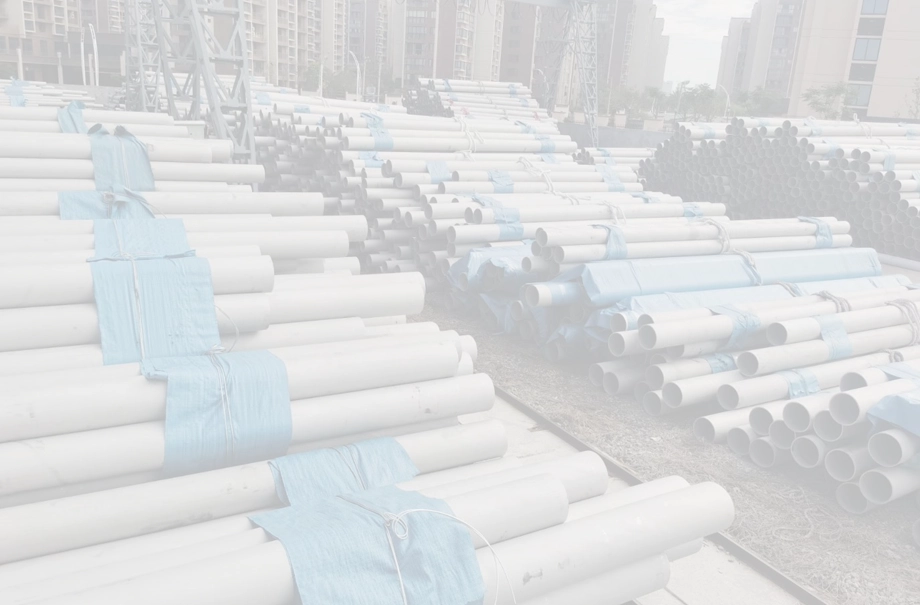
304 Welded Pipe Selection: Common Sizing and Corrosion Risks
Selecting the right 304 welded pipe for your production line is not a trivial decision. Whether you are sourcing for a municipal water treatment project, a food machinery assembly, or a chemical processing system, the wrong size or insufficient corrosion resistance can translate directly into system failures, costly replacements, and delayed deliveries. This guide walks through everything a procurement manager or process engineer needs to know — from dimensional standards and wall thickness schedules to real corrosion risks and supplier evaluation criteria — so you can place your next order with full confidence.
Understanding 304 Welded Pipes: Properties and Composition
Chemical Composition and Its Role
Iron makes up about 18% of 304 stainless steel (UNS S30400 / 1.4301), and nickel makes up about 8%. A steady passive oxide film forms on the pipe's surface because of this ratio. This is the main reason why it doesn't rust. It is the nickel that keeps the austenitic structure stable at temperatures ranging from very cold (cryogenic) to about 870°C (continuous service).
Physical and Mechanical Properties
It is 7.93 g/cm³ dense and has a minimum bending strength of 205 MPa for 304 welded pipe. It can be pulled apart at 515 MPa. They are good enough to use with industrial fluids according to ASTM A312. It can be bent and fitted in different ways on-site without cracking because it is flexible. This is useful in manufacturing shops where installation needs change all the time.
Manufacturing Standards and Welding Process
Hebei All Trust Steel uses automatic TIG, Plasma, or Laser welding to make longitudinally welded stainless steel pipe from quality steel strips that have been measured and checked. After the welding process, the pipe is fully annealed. This heat treatment recrystallizes the weld area, gets rid of any stress that's still there, and makes the heat-affected zone (HAZ) once again corrosion-proof. There was an Eddy Current Test on every pipe to make sure it met the standards set by ASTM A312, ASTM A358, and EN 10217-7.
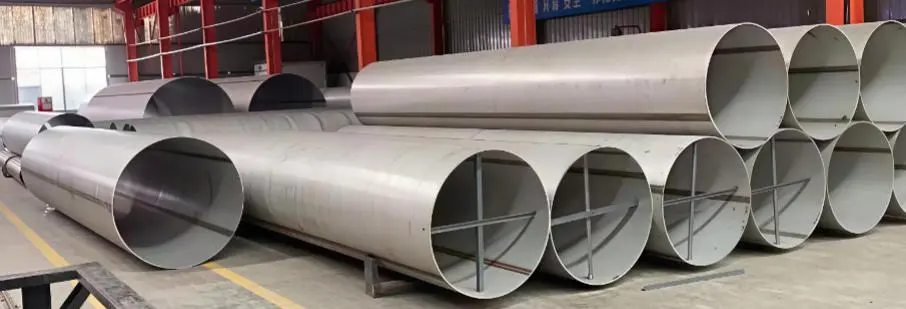
Common Sizing Standards and Options for 304 Welded Pipes
Outer Diameter and Wall Thickness Schedules
All Trust's 304 straight seam welded pipe has an outside diameter that runs from 1/4" to 48" (13.7 mm to 1,219.2 mm). SCH 5S, SCH 10S, SCH 40S, and SCH 80S are the wall thickness options. Between 0.5 mm and 30 mm is how thick the wall really is. The walls of an ASTM A312 building can be -12.5% smaller than what is needed. You should look at this number on every MTC before you take delivery.
Length Options and Custom Cutting
You can choose from standard lengths of 5.8 m, 6 m, 11.8 m, and 12 m. OEM customers who need set sizes can also get choices for custom cut-to-length. There are two kinds of ends: Plain End (PE) and Beveled End (BE). When you need to meet tight turn-around times for medium-batch production, custom lengths save you time and money by cutting down on waste and cutting time.
Selecting the Right Size for Your Application
To match the pipe schedule to the service conditions of 304 welded pipe, you need to pay attention to the operating pressure, fluid temperature, and flow speed. Most of the time, SCH 5S or SCH 10S is enough for low-pressure drainage in cities or for decorative purposes. For high-pressure chemical transfer lines or industrial steam loops, SCH 40S or SCH 80S gives the structural room that is needed. You should always get written confirmation of the pressure rating from your source, along with the correct ASME B31.3 code, if you're not sure.
Corrosion Resistance and Risks for 304 Welded Pipes
Where 304 Performs Well
The grade 304 steel doesn't rust and can stand up to a lot of weak acids and bases. Its surface doesn't react with anything, so it can go through many CIP (Clean-in-Place) rounds in the food and drink industry without breaking down. It is used in water supply networks for cities all over East and South China because it works well in cleaned groundwater where chloride levels are kept in check.
Key Corrosion Risks to Watch
Even though 304 has some good points, buyers in the chemical or coastal businesses need to be aware of its flaws:
- Pitting corrosion occurs when chloride ion concentrations exceed roughly 200 ppm, particularly in stagnant water or acidic environments. This is a known risk in seawater-adjacent installations.
- Intergranular corrosion can develop in the weld HAZ if post-weld annealing is skipped, because carbon precipitates as chromium carbide at grain boundaries — a phenomenon called sensitization.
- Stress corrosion cracking (SCC) is triggered in environments combining tensile stress, elevated temperature (above 60°C), and chloride presence simultaneously.
If procurement teams know about these failure modes early on, they can choose the right grade and surface treatment for a project before it goes into service.
Practical Maintenance to Extend Service Life
Passivating 304 pipe surfaces after they have been made is one of the cheapest ways to get the passive film back on them. This is especially important after cutting or welding. When you clean a lot with pH-neutral or alkaline products, you get rid of chloride layers before they start to pit. A darkening on the surface called "tea staining" is sometimes thought to be rust. It's normally caused by installing with tools made of carbon steel, but it can be fixed with cleaners made just for stainless steel.
Comparative Analysis: 304 Welded Pipes vs Other Materials
304 Welded vs. 316 Stainless Steel
Adding 2–3% molybdenum to 316 stainless steel that is already 18/8 makes it much less likely to get chloride pits. When working in the ocean or with chemicals that contain halides, 316L is the best material to use. On the other hand, 316L is 20–30% more expensive than 304. 304 welded pipe is cheaper and works just as well for general water service, HVAC, and food processing in places that aren't on the coast.
304 Welded vs. Seamless Pipe
This is the best type of stainless steel pipe for high-pressure or cyclic-load work if you don't want to weld the gaps together. When full RT/X-ray inspection is done on welded pipe made to ASTM A312 standards, the joint efficiency factor is 1.0, which is the same as the base metal's rated strength. When it comes to bigger sizes, welded pipe is more consistent in terms of its dimensions and wall thickness. Since it costs less to make, it is the best choice for fluid systems with low to medium pressure.
304 vs. 304L and Carbon Steel
304L (UNS S30403) has only 0.03% carbon at its highest point. This makes it less likely that heavy-gauge welded parts will become sensitized. Standard 304 works about the same for walls that aren't very thick, as long as the right cooling is done after the weld. But carbon steel rusts quickly when it's wet or slightly acidic. 304 is better for most fluid handling uses because it doesn't need protective coatings, which raise the cost of maintenance over the pipe's lifetime.
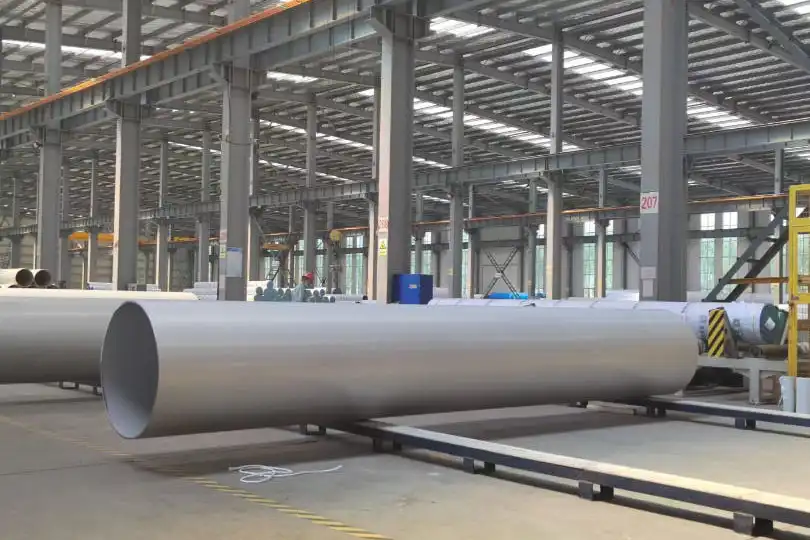
Procurement Insights: Buying 304 Welded Pipes with Confidence
Verifying Material Quality Before Ordering
Every credible 304 welded pipe supplier should provide an EN 10204 3.1 Mill Test Certificate (MTC) confirming actual chromium, nickel, carbon, and other elemental values for the specific heat number. Request PMI (Positive Material Identification) reports if you need independent chemical verification. Third-party inspection by SGS, BV, TÜV, or DNV should be available without resistance from a qualified supplier.
Evaluating Supplier Capability and MOQ Flexibility
High MOQ requirements lock up working capital — a real burden for medium-sized manufacturers running multiple concurrent projects. A capable supplier should offer flexible low MOQ for trial orders and prototype batches without compromising lead time. At All Trust, stock orders ship within 3–5 days from warehouses near Tianjin, Shanghai, Qingdao, and Shenzhen, with standard custom orders completed in 15–20 days.
Packaging and Transit Protection
Stainless pipe surfaces scratch easily, and scratches create initiation points for corrosion. Here are the packaging standards buyers should require from any supplier shipping internationally:
- Plastic end caps on both pipe ends to prevent internal contamination and edge damage
- Individual protective sleeves or PE film wrapping per pipe
- Hexagonal bundles with steel strapping for dimensional stability during lifting
- Waterproof woven bags or plywood crates for sea freight containers
These measures collectively prevent the denting, surface scoring, and moisture-induced rust that drive post-shipment quality disputes and replacement costs.
Conclusion
To pick the right 304 welded pipe standard, you need to match the size plan to the service pressure, look at the chemical make-up through recorded MTC, and be honest about whether the corrosion resistance of 304 is good enough for your environment. If the amount of chloride or pressure is higher than what 304 can take, it's easy to move to 316L. For most industrial fluid, city, and food processing uses, a 304 welded pipe that has been tested and annealed correctly is the best value for money, as well as the most reliable. Work with suppliers who will let a third party check their work and back up every delivery with confirmed certificates. This will protect both your production schedule and your quality record.
FAQ
How do I verify that a 304 pipe is genuinely grade 304?
Request the EN 10204 3.1 MTC showing actual Cr (17.5–19.5%) and Ni (8.0–10.5%) values tied to the heat number stamped on the pipe. PMI testing on-site using an X-ray fluorescence (XRF) analyzer provides fast independent confirmation.
What is the maximum continuous service temperature for 304 welded pipe?
ASTM A312 lists an oxidation resistance limit of approximately 870°C in continuous service and 925°C in intermittent service. For higher temperature applications, grades such as 310S are more appropriate.
Can 304 welded pipe handle potable water service?
Yes. Grade 304 meets NSF/ANSI 61 requirements for drinking water contact when properly passivated. Confirm compliance documentation with your supplier before use in potable water systems.
What causes weld-area corrosion, and how is it prevented?
Sensitization — chromium carbide precipitation at grain boundaries during welding — reduces local corrosion resistance. Full post-weld solution annealing at 1,010–1,120°C dissolves these carbides and restores the passive layer. Always confirm that your supplier performs this treatment.
Is a welded pipe suitable for pressure applications?
Yes, provided it is manufactured to ASTM A312 with 100% RT weld inspection, achieving a joint efficiency factor of 1.0. Verify the applicable schedule and pressure class against ASME B31.3 design requirements for your specific service conditions.
Get Your 304 Welded Pipe Quote from All Trust Today
The only thing that Hebei All Trust Steel Co., Ltd. does is make and sell 304 welded pipes. They have worked in the field for more than 15 years and have shipped more than 5,000 tons of rolling stock. Every package comes with full EN 10204 3.1 MTC paperwork. When you ask for a quote, we'll get back to you within 8 working hours and let SGS or BV do inspections on your behalf. Email our expert team at info@hballtrust.com or go to hballtrust.com right away to get a certified sample of the material and reasonable prices.
References
1. ASTM International. ASTM A312/A312M: Standard Specification for Seamless, Welded, and Heavily Cold Worked Austenitic stainless steel pipes. ASTM International, 2022.
2. American Society of Mechanical Engineers. ASME B31.3: Process Piping. ASME, 2022.
3. ASM International. Corrosion of Stainless Steels, in Metals Handbook, Volume 13: Corrosion. ASM International, 2003.
4. Lula, R.A. Stainless Steel. American Society for Metals, 1993.
5. Sedriks, A.J. Corrosion of Stainless Steels, 2nd ed. John Wiley & Sons, 1996.
6. British Standards Institution. EN 10217-7: Welded Steel Tubes for Pressure Purposes — Technical Delivery Conditions — Part 7: Stainless Steel Tubes. BSI, 2019.