316L Seamless Pipe Supplier for High-Pressure Industrial Piping and Process Equipment
When your project demands piping that holds up under extreme pressure, chloride exposure, and repeated thermal cycling, the material grade you specify matters enormously. A 316l seamless pipe — manufactured from UNS S31603 / 1.4404 ultra-low carbon molybdenum-bearing stainless steel — delivers exactly that reliability. Whether you are sourcing for chemical reactors, offshore platforms, or municipal desalination loops, this guide walks you through specifications, material comparisons, manufacturing quality controls, and what to look for in a trustworthy supplier.
Understanding 316L Seamless Pipes: Specifications, Properties, and Uses
What Sets 316L Apart from Standard 316?
The amount of carbon in 316L is what makes it different from 316. Standard 316 can have up to 0.08% carbon, but 316L can only have up to 0.03%. This lowers the amount of chromium carbide that forms along grain boundaries during welding. This stops a process called sensitization that would otherwise make way for intergranular rusting to happen. This difference is not small for fabricators who weld a lot; it has a direct effect on how long the pipe will last in acidic or salty environments.
Chemical Composition and Mechanical Profile
16–18% of 316L is chromium, 10–14% is nickel, and 2–3% is molybdenum. The molybdenum addition makes it different from grades in the 304 family. It gives it much better resistance to pitting and crevice corrosion caused by chlorine. It has a minimum tensile strength of 485 MPa and a yield strength of 170 MPa. It is also very flexible, even when it's below zero degrees. These numbers are in line with what is needed by ASTM A312 and ASME SA312 and what is needed by EN 10216-5.
Industrial Applications Where 316L Performs Best
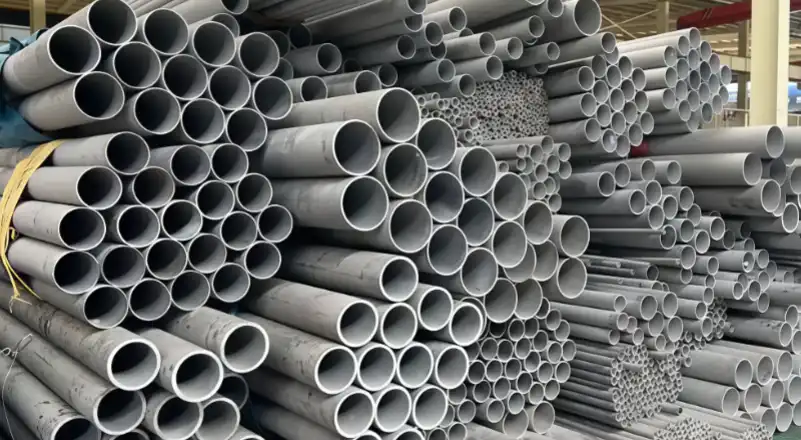
316L steel pipe is the best choice for marine engineering, chemical labs, saltwater desalination loops, pharmaceutical WFI systems, food-grade processing lines, and oil platforms at sea. Its internal surface is smooth, with a roughness of less than 0.8 μm that can be achieved by mechanical cleaning. This makes it good for both fluid flow and cleanliness. It comes in sizes ranging from NPS 1/4" to 24" OD (13.7 mm to 609.6 mm) and plans from SCH 5S to SCH XXS, so it can be used in most industrial pipe situations.
Comparing 316L Seamless Pipes with Alternatives: Making the Right Choice
316L vs. 304L and Standard 316
304L also has low carbon, but it doesn't have molybdenum, which makes it much more vulnerable to chloride attack. If 304L lines are used with seawater or acidic chlorine, damage can be seen within months. Even though standard 316 is made up of the same elements as 316L, it has a higher carbon risk after welding. 316L is always the better standard for built-up parts that go through multiple weld passes.
316L Seamless vs. Welded Pipe
There is a heat-affected zone (HAZ) at the weld seam of welded stainless steel pipe. This HAZ concentrates leftover stress and raises the risk of rusting in that area. In 316l seamless pipe construction, there is no seam at all, so the wall thickness and rust protection are the same all the way around the pipe. The seamless path lowers long-term upkeep costs and failure risk for high-pressure service lines, especially those that deal with aggressive media.
316L vs. Duplex and Alloy Steel
Duplex types, such as UNS S32205, have higher tensile strength and better resistance to stress corrosion cracking in some settings, but they are more expensive and need tighter rules for welding. Unless they are coated or lined, alloy steel choices don't naturally fight rust as stainless steel does. 316l seamless pipe usually has the best performance-to-cost ratio for medium-pressure chemical and marine uses where cost and ease of fabrication are important.
How Are 316L Seamless Pipes Manufactured, and Quality Ensured?
From Billet to Finished Pipe
Before production starts, vacuum-melted or EAF-refined billets are checked using optical emission spectroscopy to make sure they have the right chemical make-up. After being hot-extruded or pierced, billets are cold-drawn or cold-rolled to their final sizes using precise lubricant systems that keep internal flaws to a minimum. The last step is solution annealing, which can be done in a vacuum or a controlled atmosphere. This fully homogenizes the alloying elements and restores the steel's crystalline structure, which makes it resistant to corrosion.
Surface Treatment and Dimensional Accuracy
Depending on the needs of the application, pipes are either acid pickled and passivated or mechanically polished on the inside after heating. Dimensional compliance is based on ASME B36.19M, and ASTM A312 sets tight limits for wall thickness tolerances. Plain end (PE), beveled end (BE), and threaded ends in NPT or BSPT configurations are the different types of ends. Lengths can be set or random and range from 5.8 m to 12 m.
Non-Destructive and Destructive Testing Protocols
Before being shipped, each batch of pipes goes through a series of inspection steps. These are the main testing methods used:
- Hydrostatic Testing: Each pipe is water-pressurized to confirm absolute leak-proof performance under service conditions.
- Eddy Current Testing: Detects surface and subsurface flaws that visual inspection cannot catch.
- Ultrasonic Testing (UT): Checks internal wall consistency and identifies any voids or thickness irregularities.
- Intergranular Corrosion Testing (ASTM A262 Practice E): Confirms the solution annealing cycle was effective in preventing sensitization.
- PMI Analysis: Positive material identification verifies molybdenum and carbon levels on every individual piece.
All of these rules work together to make sure that the material that ships to your location fits the material certificate in terms of both chemistry and structure.
Procurement Guide: Sourcing 316L Seamless Pipes for Industrial Piping
What Affects Price and Lead Time?
The cost per unit of 316l seamless pipe is affected by the wall schedule (SCH 40S vs. SCH 160), the outer diameter, the surface finish, and the testing needs. It goes without saying that certified material with EN 10204 3.1 MTC, full NDT, and third-party inspection by SGS, BV, TUV, DNV, or ABS costs more than regular domestic supply. However, that extra cost directly lowers your risk of failures in the field or customs rejects on export orders. Orders from stock usually ship in 3–5 days, while normal special orders take 15–20 days.
Evaluating a Supplier Before You Commit
A reliable stainless steel pipe provider should offer original mill test certificates that can be linked to specific heat numbers, let third parties check the pipes without any problems, keep a lot of pipes in stock at all times, and answer technical questions within one business day. Early on in your review, ask for sample MTCs. Before you give them money, you should be wary of suppliers who won't share paperwork or who offer prices that are too low compared to the current market prices for nickel and molybdenum.
Packaging and Logistics for Export Orders
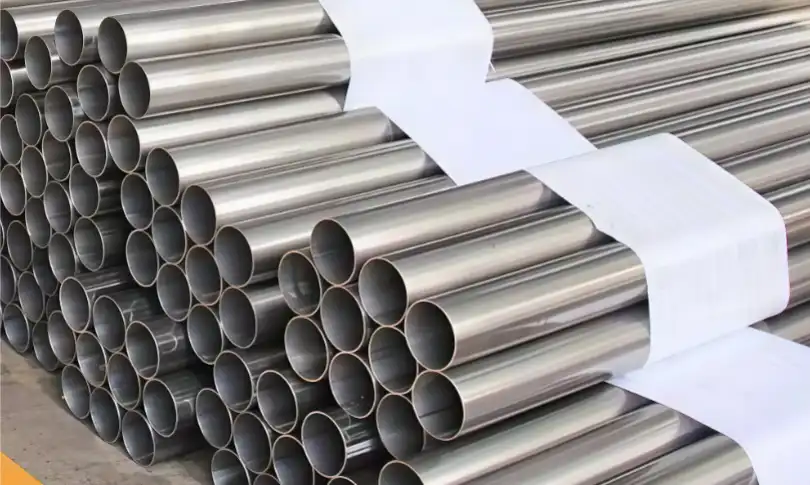
Transit damage, like dents, scratches, and surface rust from salt and water, is a real cost center for people who buy goods from other countries. Make sure that the company you're working with uses heavy-duty ocean-freight plywood cases or hexagonal steel bundles with steel strapping, as well as plastic pipe end caps and individual protective sleeves. For long sea trips, waterproof woven bag wrapping adds another layer of protection against moisture. You can also get shipments that combine different pipe sizes, fittings, flanges, and elbows in one container. This lowers the cost of freight per unit for medium-batch orders.
Trusting Your 316L Seamless Pipe Supplier: Brand Insights & Support
What All Trust Steel Brings to the Table?
Since 2006, Hebei All Trust Steel Co., Ltd has been in business, selling pipes and fittings made of stainless steel to businesses in more than 40 countries. More than 15,000 tons are made every year, and the largest OD that can be handled is 1,016 mm. The company has more than 15 ISO-certified mill partners and uses a four-step independent quality control method that includes auditing vendors, watching production, independent NDT, and final documentary proof. This makes sure that the company can fully trace the steel from the raw billet to the pipe that is delivered.
Certifications and Third-Party Inspection Acceptance
Every Trust ship comes with EN 10204 3.1 and 3.2 Mill Test Certificates. The system for quality management is backed by ISO 9001:2015, CE, and PED certifications. Third-party inspection by SGS, BV, TUV, DNV, or ABS is accepted for every order without any extra talks. This is a clear sign of substantial trust. You can request PMI testing on individual pieces, and the results will be sent with the paperwork.
Technical Support That Goes Beyond Delivery
The engineering team at All Trust helps with choosing materials, analyzing corrosion resistance for different media, looking over CAD drawings, and finding the best way to load containers. A one-year guarantee that covers all material tracking covers quality problems that have been proven. Priority production capacity can cut the time it takes to make things by up to 35% for foreign orders with tight deadlines.
Conclusion
When looking for stainless steel pipes that will be used in harsh environments with high pressure, price alone is not enough to make a choice. 316l seamless pipe that is properly approved, accurately measured, and backed by mill paperwork that can be tracked protects your equipment, your export image, and your bottom line. All Trust Steel provides uniform material quality, batch sizes that are easy to change, and paperwork that can withstand any third-party audit. Now is a good time to look for a better supplier if the one you're using can't meet that standard.
FAQ
What is the difference between 316 and 316L pipe?
The highest amount of carbon in 316L is 0.03%, while the highest amount in standard 316 is 0.08%. Because it has less carbon, 316L is the right standard for fabricated parts that will be used in corrosive environments.
Does 316L seamless pipe require post-weld heat treatment?
Not often, no. Because there isn't much carbon in the metal, chromium carbide doesn't form enough to make it sensitized under normal welding conditions. For high-fatigue or thick-wall uses, stress-relieving may still be chosen.
What certifications should I request from a supplier?
Ask for an EN 10204 3.1 Mill Test Certificate that includes full chemical and mechanical data, PMI results that prove the molybdenum and carbon content, and NDT records at all times. For orders to be exported, you should ask for CE or PED paperwork if the market where the goods are going needs it.
Can 316L seamless pipe handle cryogenic service?
Yes. Its austenitic microstructure keeps its hardness and ductility at temperatures well below 0°C. This means it can be used for LNG auxiliary lines and cold process uses without the risk of breaking easily.
What is the minimum order quantity available?
All Trust offers a flexible low MOQ for unique sizes and other requirements. Talk to the team directly about the batch size needs that are best for your schedule and project.
Get Certified 316L Stainless Pipe Delivered on Schedule — Contact All Trust Steel
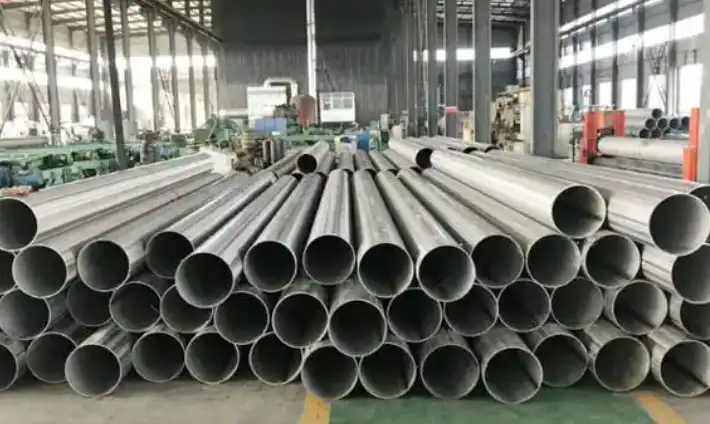
Every order from All Trust Steel comes with a verified 316l seamless pipe manufacturer-grade product that has EN 10204 3.1 MTCs, full NDT, and acceptance by a third-party inspection. It takes 3–5 days to ship stock items, but 15–20 days to ship custom-sized items. Send your specs and the number of balls you need to info@hballtrust.com. Within 8 hours, you'll get a written quote.
References
1. ASTM International. ASTM A312/A312M: Standard Specification for Seamless, Welded, and Heavily Cold Worked Austenitic Stainless Steel Pipes. 2022.
2. ASME. ASME B36.19M: Stainless Steel Pipe. American Society of Mechanical Engineers, 2018.
3. European Committee for Standardization. EN 10216-5: Seamless Steel Tubes for Pressure Purposes — Stainless Steel Tubes. 2021.
4. ASTM International. ASTM A262: Standard Practices for Detecting Susceptibility to Intergranular Attack in Austenitic Stainless Steels. 2021.
5. Outokumpu. Corrosion Handbook: Stainless Steels in Industrial Environments. Outokumpu Stainless, 2021.
6. TWI Global. Intergranular Corrosion of Austenitic Stainless Steel: Causes and Prevention. The Welding Institute, 2020.

