316L Stainless Pipe Fittings: Common Procurement Mistakes to Avoid
Sourcing 316L stainless pipe fittings for critical industrial applications is not as straightforward as it looks. One wrong decision — a misidentified grade, a missing Mill Test Certificate, or a supplier who ships underspec material — can shut down a production line or void an export contract. I've seen purchasing managers lose weeks of lead time over avoidable errors. This guide walks through the most damaging procurement mistakes buyers make, how to verify material quality before you commit, and what separates a dependable WP316L supplier from a risky one.
Understanding 316L Stainless Pipe Fittings: Key Properties and Specifications
What Makes 316L Different From Other Grades?
There is 0.03% carbon in Grade 316L (UNS S31603 / 1.4404), and there is also 2–3% molybdenum in it. This chemical stops carbide from forming in weld heat-affected zones. Normal 316 fittings break down in places with a lot of chloride. The strength to pull apart is at least 485 MPa, and the strength to bend is at least 170 MPa. This shows that it meets the building rules for pressure pipes in ASTM A403 and ASME SA403.
Common Fitting Types and Size Range
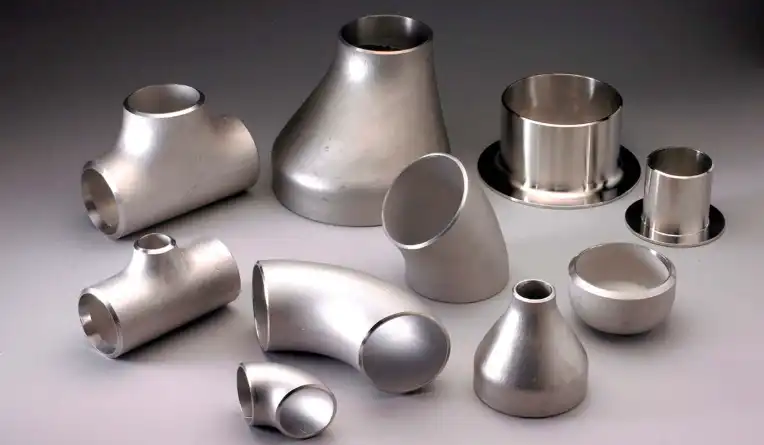
The WP316L fitting family includes ends with caps and stubs, equal and reducing tees, caps, and 90° and 45° elbows. Shapes for buttwelding run from NPS 1/2" to 48", and wall plans go from SCH 5S to SCH 160 and XXS. This range can handle everything from low-pressure water networks to high-pressure pipes in chemical plants.
Why the "L" Designation Matters in Real-World Applications?
Everything about them is the same: the weld joint can't change when it gets hot. This is correct for desalination plants on the coast, plumbing on sea platforms, medicinal process loops, and organic chemical reactors. The "L" grade meets this need because it keeps the carbon level low enough that the weld does not need to be annealed after it is done in the field. In ASTM A262 Practice E testing, a group of stress corrosion cracking failures was found. This one choice about the metal gets rid of them all.
Common Procurement Mistakes When Buying 316L Stainless Pipe Fittings?
Too many buyers don't notice these flaws until after the stuff is put in place. This is what goes wrong and costs the most time and money: If you don't know the difference between 316 and 316L, normal 316 can have up to 0.08% carbon. The extra carbon turns into chromium carbides around the edges of the grains when they fuse at high temperatures. If you do this, the weld area will rust less quickly. Picking plain 316 over 316L when you need to join in the field, which is what most pipe projects do, is a mistake that will cost you a lot of money.
- Confusing 316 with 316L: Standard 316 allows up to 0.08% carbon. At elevated welding temperatures, that extra carbon forms chromium carbides at grain boundaries, stripping corrosion resistance from the weld zone. If your application involves field welding — and most piping projects do — specifying plain 316 instead of 316L is a technical mistake with expensive consequences.
- Accepting MTCs without PMI verification: A paper Mill Test Certificate is only as reliable as the supplier's integrity. Without Positive Material Identification (PMI) testing on the actual fittings, substandard Cr/Ni ratios go undetected. Suppliers who substitute 304 material into 316L orders are a documented problem in global B2B procurement.
- Ignoring wall thickness tolerance compliance: ASTM A403 permits specific negative tolerance bands. Buyers who skip dimensional inspection frequently receive fittings with excessive negative wall deviation, which fails pressure ratings under service load.
- Overlooking schedule compatibility: Using 316L stainless pipe fittings, a SCH 40S elbow welded to a SCH 10S pipe creates a mismatched wall profile at the joint — a stress concentration point that fails under cyclic pressure.
These four mistakes have led to most of the failed procurements I've seen in projects for chemical equipment and city waterworks. It's much cheaper to take care of them before you buy them than after they're set up.
Making the Right Choice: How to Select Quality 316L Stainless Pipe Fittings?
Define Your Technical Requirements First
Before you ask for quotes, write down the working pressure, the type of fluid, the temperature range, and the way the weld will be done. When you know these things, you can choose the right schedule, the type of finish (pickled or passivated vs. mirror polished), and the ASTM A403.Seamless (WP-S) or Welded (WP-W) classification.
Evaluate Certifications Systematically
You should have EN 10204 3.1 Mill Test Certificates at the very least. For high-stakes or export projects, you should get 3.2 approval with a third-party witness. Any of SGS, BV, TUV, DNV, or ABS can be used as a third-party inspector. If a supplier has ISO 9001:2015, CE, or PED certification, it means they have a quality management system that can be checked. They don't just follow the rules on paper.
Balance Cost Against Total Procurement Risk
The lowest price per unit doesn't always mean the lowest cost for the whole job. When a fitting fails the measurement check when it gets there, it leads to delays in getting more resources, extra work, and fines for missing the deadline that are much bigger than the price difference. People who buy certified stock with wait times of 15 days or less always say that they paid less overall than people who try to get the cheapest quote.
Installation and Maintenance Tips to Maximize Fitting Longevity
Follow the Correct Welding Sequence
There is iron scale on the pipe ends and fitting bores that needs to be cleaned out before WP316L fittings are tacked together. To protect the low-carbon weld deposit, use 316L filler wire that is the same color (ER316L). Do not raise the temperatures between passes above 150°C. Too much heat can make even L-grade material more sensitive after being in contact with it for a while.
Apply the Right Cleaning and Passivation Protocol
Once 316L stainless pipe fittings are in place, use a nitric acid or citric acid solution to restore the layer of inactive chromium oxide in the welds. Parts made of austenitic steel shouldn't be cleaned with chloride-based products because they damage the surface and make pits. For pharmaceutical or food-grade lines, electropolishing the surface after installation makes it even less likely that germs will stick to it.
Monitor and Inspect at Regular Intervals
Inspection should be done every 6 to 12 months in harsh places like seawater lines or chemical process loops. If the color of the surface changes near the welds, that means the material is becoming sensitive early on. If there are pits next to a weld, that means a different material was used. Test the fitting for PMI right away and send your seller a picture of the proof.
Partnering With a Reliable WP316L Fittings Manufacturer
What Reliable Supplier Documentation Looks Like?
If you buy 316L stainless pipe fittings from a reputable company, they will give you EN 10204 3.1 MTCs that can be linked to a specific heat number, PMI reports for chemical confirmation, physical inspection reports that follow ASME B16.9, and records of radiographic tests (RTs) for welded joint fittings. Everything should have the heat number on it so it's easy to see how the part got from the raw billet to the finished one.
How All Trust Supports Global Procurement?
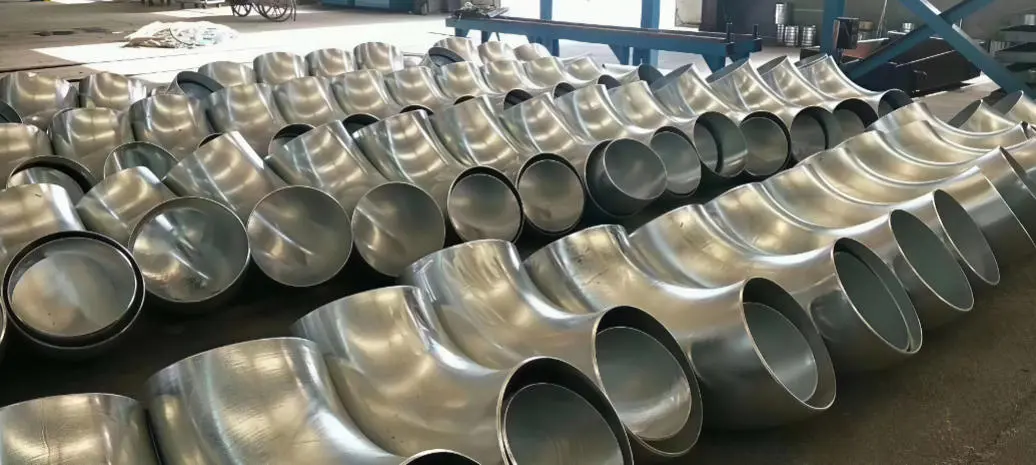
Hebei All Trust Steel Co., Ltd. makes WP316L butt-welding fittings that meet ASTM A403/ASME SA403 and EN 10253-3/4 standards. These fittings can fit NPS 1/2" to 48" and SCH 5S through XXS schedules. As part of the ASTM A262 Practice E intergranular rust testing, all of the parts are fully solution annealed and then quenched in water. The welding cracks are also checked out with X-rays. If SGS, BV, TUV, DNV, or ABS do a third-party inspection, that is fine and welcome. Each item is put in a heavy-duty plywood box that can withstand the sea and is lined with foam. These boxes are made to keep things from getting scratched or broken by water while they're being shipped by sea.
A Real Outcome From a Verified Partnership
An OEM that makes chemical equipment and sells it in the Middle East switched to All Trust as their WP316L fittings supplier because their old one was giving them a lot of MTC problems. It only took them two procurement cycles to get rid of all of the inspections that were turned down, and their export paperwork passed a third-party audit with no changes needed. Once an order is placed for a stock size, it takes 12 days to ship. Head over to hballtrust.com to see the full list of products and information sheets.
Conclusion
When you buy 316L stainless pipe fittings, you can usually avoid making mistakes. Four issues that happen a lot in projects for chemical, marine, and food equipment are grade misunderstanding, missing paperwork, shortcuts for wall thickness, and sources that you can't trust. Buyers who are clear about what they want, ask for MTCs that can be tracked, compare the sizes to ASME B16.9, and work with manufacturers who let third parties inspect their work protect both their project plans and their ability to export. It's not a big difference in the cost of materials between a real 316L fitting and the 304 fitting that was used instead. It's not how much a broken system costs.
FAQ
What is the carbon content difference between 316 and 316L?
Standard 316 allows up to 0.08% carbon. Grade 316L is capped at 0.03%. That difference matters because higher carbon content causes chromium carbide precipitation at weld boundaries, which depletes the corrosion-resistant chromium from the surrounding metal — a process called sensitization.
How do I verify that fittings I receive are genuinely 316L?
Request an EN 10204 3.1 Mill Test Certificate and cross-reference the heat number with a PMI test on the physical fittings. The PMI reading should confirm molybdenum content between 2.00% and 3.00% and carbon at or below 0.030%.
What schedules are available for WP316L butt-welding fittings?
Standard schedules include SCH 5S, 10S, 40S, 80S, 160, and XXS, matching the connected pipe wall profile per ASME B16.9 and ASTM A403 specifications.
Do 316L fittings need post-weld heat treatment?
No. The low-carbon profile prevents sensitization in the as-welded condition under normal fabrication heat input, which is one of the primary reasons engineers specify 316L over standard 316 for field-welded piping systems.
What is a typical lead time for stocked WP316L fittings?
For standard stock sizes, lead times of 3–15 days are achievable from established manufacturers. Custom dimensions or large engineering project volumes typically require 20–30 days depending on order scope.
Get Certified WP316L Fittings From All Trust — Request a Quote Today
All Trust ships 316L stainless pipe fittings that have been checked and come with full EN 10204 3.1 MTCs, a 100% RT inspection, and help from an outside audit. Industrial buyers from all over the world know they can trust us to sell them 316L stainless pipe fittings. Our minimum order quantities (MOQs) are flexible; we can ship quickly, and our shipping containers are safe for the sea. Email our technical team at info@hballtrust.com or visit hballtrust.com to get a competitive quote and a catalog of our products.
References
1. ASTM International. ASTM A403/A403M: Standard Specification for Wrought Austenitic Stainless Steel Piping Fittings. ASTM International, 2022.
2. ASME. ASME B16.9: Factory-Made Wrought Buttwelding Fittings. American Society of Mechanical Engineers, 2018.
3. ASTM International. ASTM A262: Standard Practices for Detecting Susceptibility to Intergranular Attack in Austenitic Stainless Steels. ASTM International, 2021.
4. European Committee for Standardization. EN 10253-3: Butt-Welding Pipe Fittings — Part 3: Wrought Austenitic and Austenitic-Ferritic Stainless Steels. CEN, 2008.
5. Llewellyn, D. T., and R. C. Hudd. Steels: Metallurgy and Applications. 3rd ed. Butterworth-Heinemann, 1998.
6. Sedriks, A. J. Corrosion of Stainless Steels. 2nd ed. John Wiley & Sons, 1996.