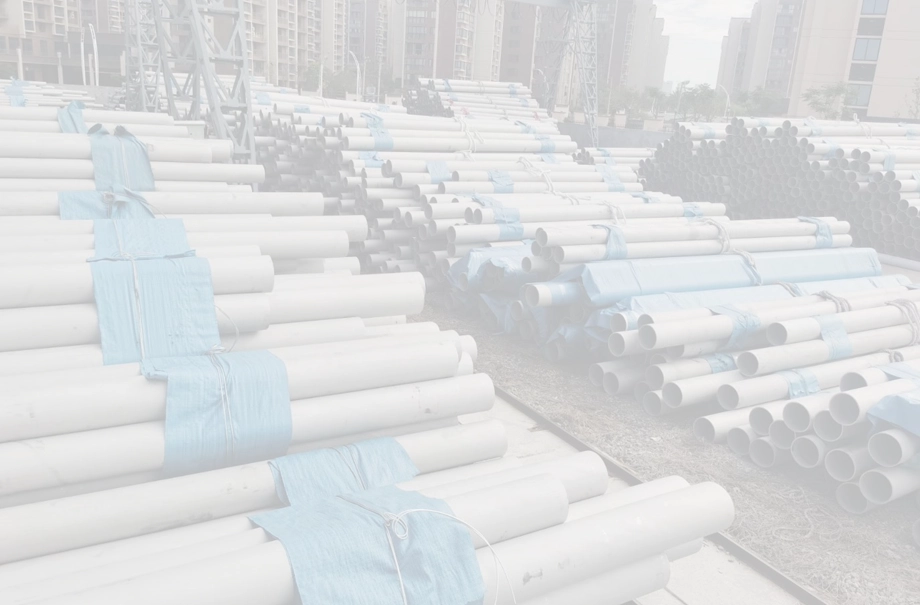
316L Stainless Pipe Fittings for Marine and Chemical Processing
When your pipeline system operates in saltwater spray, concentrated acid, or high-pressure chemical loops, material selection is not a preference — it is a structural necessity. 316L stainless pipe fittings, manufactured from UNS S31603 extra-low carbon molybdenum-bearing austenitic steel, deliver the corrosion resistance and weld integrity that marine and chemical processing environments demand. With carbon content held below 0.03%, these fittings prevent carbide precipitation at weld heat-affected zones, eliminating one of the most common failure modes in aggressive service conditions.
Understanding 316L Stainless Pipe Fittings: Composition, Properties, and Applications
Chemical Composition That Defines Performance
The metal WP316L is very specific. It is made up of 16–18% chromium, 10–14% nickel, and 2–3% molybdenum. This grade is different from 304 because molybdenum was added. In chemical and coastal service, it protects against pitting and crevice corrosion caused by chlorides. These are two types of rust that usually destroy lower-quality metals. One side can pull at least 485 MPa, and the other side can give at least 170 MPa. This makes sure that the material has the strength it needs to hold up under long-term pressure.
Physical Properties Suited for Extreme Environments
It is very tough in 316L, even when it is very cold, even below zero degrees Celsius. Any tiny stresses that were left over from hot forming or cold pressing on a mandrel are taken care of by full-body furnace solution annealing and then rapid water quenching. Because of this, the fitting has a regular grain structure and is protected against corrosion all the way through its wall, not just the outside.
Core Industrial Applications
These fittings are used in pipes for oil platforms in the middle of nowhere, organic chemical labs, pharmaceutical process lines, vacuum tube networks, and city sewage disposal grids. It doesn't matter what kind of failure it is because of the low-carbon chemistry and molybdenum content. It can handle chloride pitting from seawater or intergranular attack from weld sensitization during field installation.
Key Comparisons: 316L Stainless Steel vs. Other Common Grades
316L vs. 304 Stainless Steel
304 is a cheap all-purpose grade that doesn't contain any molybdenum. Seawater, brine, and coastal air are all high in chloride. 304 fittings rust quickly and need to be replaced many times, which eats away at any initial cost savings. It costs more than other metals, but 316L lasts much longer in chemical and saltwater environments. This means that users can save money over the system's lifetime if they look at the whole thing instead of just the unit price.
316L vs. Standard 316
Why is 316 different from 316L? The amount of carbon makes the difference in 316L stainless pipe fittings. In 316, carbon can be up to 0.08%, but in 316L, it can only be up to 0.03%. This difference is very important for soldering. Nickel carbides can form around the edges of the grains when higher carbon types are burned during welding. It's called sensitization. When these places don't have many carbides, they rust more quickly in acidic or chloride-filled environments. Since 316L doesn't go above the sensitization level, it works well after welding and doesn't need to be tempered.
316L vs. Carbon Steel
If you don't coat carbon steel with anything to protect it, it rusts quickly in both marine and chemical environments. Also, these coatings need to be taken care of regularly. 316L, on the other hand, forms a chromium oxide film that sticks to itself. You can use 316L in any situation where fluids come into contact with chlorides, acids, or high humidity without having to pay a lot of money for coating upkeep or system shutdowns for rust.
Selecting the Right 316L Stainless Pipe Fittings for Your Project
Match Size and Schedule to System Requirements
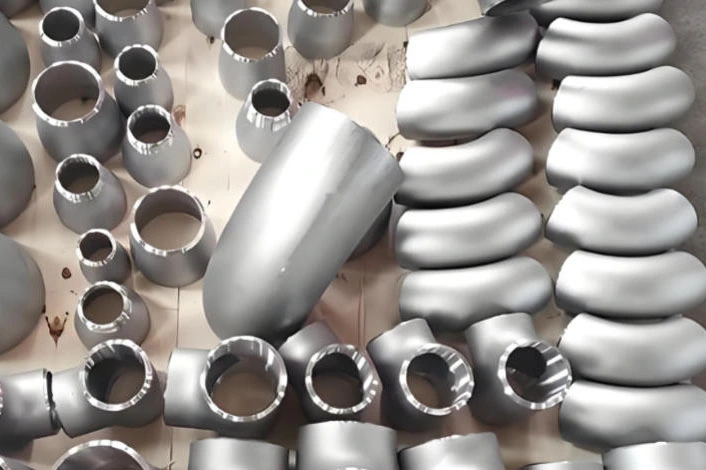
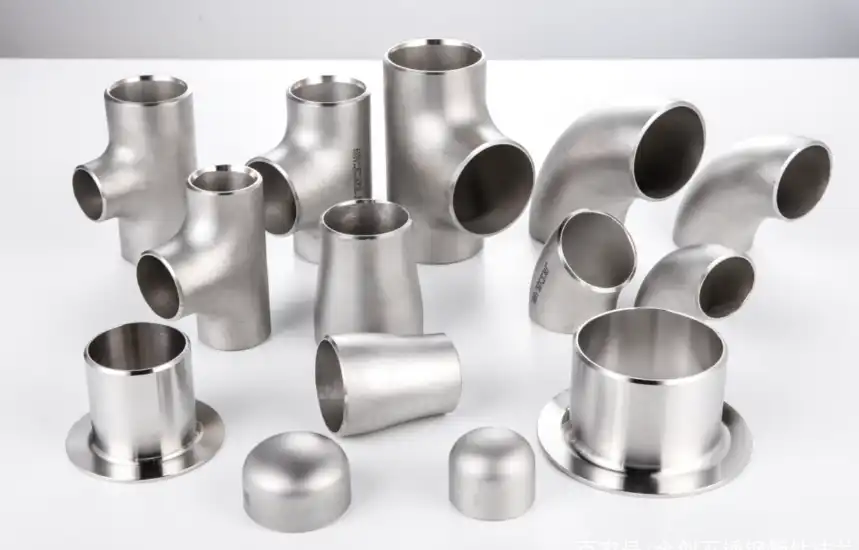
According to ASTM A403 and ASME SA403, you can get butt-welding valves from NPS 1/2" all the way up to 48", and they can work with wall schedules from SCH 5S to SCH 160 and XXS. There are equal and reducing tees, concentric and eccentric reducers, caps, and stub ends to choose from as parts. The elbows can be 90° or 45°. The schedule for the fittings must match the schedule for the connecting pipes. If the wall thicknesses aren't the same, stress builds up at the weld joints, which speeds up fatigue failure under cyclic pressure.
Verify Certification and Material Traceability
Before you place an order, ask for the EN 10204 3.1 Mill Test Certificate (MTC). This paper goes over the fitting and the steel heat that made it. It also makes sure that the amounts of chromium, nickel, molybdenum, and carbon are right for the grade. For companies that are controlled or that sell things abroad, you can get EN 10204 3.2 certification with the help of a third-party witness. You can have another company, like SGS, Bureau Veritas, TÜV, DNV, or ABS, check it out.
Consider Surface Finish for the Application
The finish on the inside and outside of the surface changes both how well it flows and how it reacts to corrosion. The passive film that was broken while making chemical process lines is fixed with a solution-annealed and acid-pickled finish. A satin-brushed or mirror-polished finish on the inside of pipes that carry food, drinks, or medicines makes it easier to follow clean-in-place (CIP) rules. If you need to protect it with more layers, a shot-blasted finish gives you a rough base that can be used in industrial marine settings.
Installation Best Practices and Maintenance Tips for 316L Stainless Pipe Fittings
Pre-Installation Checks That Prevent Field Failures
Make sure the sizes are right according to ASME B16.9 before you join. Check how the end is prepared; the bevel angles must match what the welding process says to do. Check out the changes inside the tube; smooth geometric changes lower the risk of damage and turbulence. It is important that the number on the MTC and the writing on the part match. These steps are quick and easy, but if something goes wrong, they can save days of downtime.
Welding and Joining Considerations
316L stainless pipe fittings don't need post-weld heat treatment (PWHT) when they're being used normally. This speeds up and lowers the cost of fitting. Please use a different metal that is made the same way as 316L (ER316L or something close). In order to keep the work area clean and free of ferritic contamination, you must use specific tools. Surface iron will turn into rust spots that weaken the layer that isn't doing anything. Following the rules set by ASTM and ASME is the only way to be sure that the seam is properly joined when it is in critical service: 100% radiographic testing (RT) of the joint.
Routine Inspection and Maintenance Protocol
In naval service, fittings should be checked once a year, and in a chemical plant, they should be checked whenever the process is stopped. Check for pitting on the outside where salt is present, look for early-stage crevice corrosion in the weld toes, and make sure that electrical contacts aren't creating galvanic paths. Cleaners with bleach shouldn't be used on austenitic stainless steel; instead, use cleaners that don't contain chlorine. It is important to replace any fittings that show measurable wall loss before they reach the minimum design thickness. This will keep the system from breaking down without warning.
Purchasing 316L Stainless Pipe Fittings: Pricing, Suppliers, and How to Buy
Factors That Determine Price
316L butt-weld fittings cost different amounts depending on the size, the depth of the wall, the finish, and the level of certification. Because nickel and molybdenum are both popular metals whose prices change on the market, they are the major costs that can change prices. The cost per unit goes down when you buy in bulk, but buyers shouldn't have to meet large MOQs for trial or pilot-scale projects because it risks their money for no reason. If you buy 316L stainless pipe fittings from a reputable company, you can pick the size of your batch without worrying about meeting certification standards.
What to Demand from a Qualified Supplier
There's more to a good provider than just goods. There are dimensional inspection records, non-destructive testing reports (UT, RT, PT, or eddy current as needed), and ASTM A262 Practice E intergranular corrosion test results in the whole package that you can buy. The EN 10204 3.1 MTC for each batch is also included. The lead time for in-stock items shouldn't be more than 15 days. Most of the time, a good manufacturer can finish regular special orders in 15 to 20 days.
Packaging and Logistics for Transit Protection
When fittings are shipped, they can get dents, scratches, and corrosion on the raw end preparations from being wet. For proper export packing, each part should be wrapped in foam and covered with rigid plastic end caps. The whole thing should then be put together in heavy-duty plywood boxes that can withstand the sea and have dividers inside to keep the metals from touching. This packing rule keeps the acid-pickled surface finish safe from damage and the weld preparation clean while it's being shipped by sea.
Conclusion
There is scientific proof that 316L stainless pipe fittings are best for use in chemicals and ships. Weld sensitization is stopped by the extra-low carbon grade, chloride pitting is stopped by the molybdenum content, and the mechanical performance is kept stable by the solution-annealed microstructure. Procurement teams can get the information they need for regulated projects if they follow ASTM A403 and ASME SA403. This is backed up by EN 10204 3.1 certification and approval by a third-party review. They are more of an investment in the long run of system stability than a line item that is used up quickly. This is because they come with quick technical help, scalable batch sizes, and safe packaging.
FAQ
What is the key difference between 316 and 316L pipe fittings?
Normal 316 can hold up to 0.08% carbon, but 316L can only hold less than 0.03%. When the carbon level drops, sensitization stops. Sensitization is when chromium carbide forms along the sides of grains during welding. In the welded state, this gets rid of the main risk of intergranular corrosion.
Why does molybdenum matter in marine piping systems?
Because 316L has 2–3% molybdenum, it is less likely to pit or crack when chloride attacks it. If you use 304-grade valves in salt spray, seawater, or brine, they often break down quickly in these two ways.
How do I confirm I am receiving genuine 316L material?
To be sure of the chemistry, you can get the EN 10204 3.1 MTC, which links the batch to its original heat number, and do PMI tests on-site. The molybdenum level should be between 2.00 and 3.00%, and the carbon level should be less than 0.03%.
What non-destructive tests apply to welded fittings?
Testing with radiography (RT), ultrasonic testing (UT), eddy current testing, and liquid penetrant inspection (PT) can be used to make sure that a welded joint is solid. Which test is used depends on the standard and service class.
Are small-batch orders available without sacrificing certification?
Yes. There is no minimum order size for special shapes and specs, and all EN 10204 3.1 paperwork is given no matter what batch size.
Request a Quote from All Trust — Your 316L Stainless Pipe Fittings Manufacturer
All Trust Steel has checked 316L stainless pipe fittings in WP316L butt-weld designs from NPS 1/2" to 48", SCH 5S to XXS, so you can get them. They are certified by EN 10204 3.1 MTC, PMI, and a third-party inspection by SGS/BV. In 3–5 days, items that are in stock are sent out. You can email info@hballtrust.com with your project needs, specs, or plans, or you can visit hballtrust.com to see all of their products. Our tech team will get back to you in 8 business hours.
References
1. ASTM International. ASTM A403/A403M: Standard Specification for Wrought Austenitic Stainless Steel Piping Fittings. ASTM International, 2022.
2. American Society of Mechanical Engineers. ASME B16.9: Factory-Made Wrought Butt-Welding Fittings. ASME, 2018.
3. European Committee for Standardization. EN 10253-3: Butt-Welding Pipe Fittings — Part 3: Wrought Austenitic and Austenitic-Ferritic Stainless Steels. CEN, 2008.
4. Lula, R.A. Stainless Steel. American Society for Metals, 1986.
5. Sedriks, A.J. Corrosion of Stainless Steels. 2nd ed. John Wiley & Sons, 1996.
6. Outokumpu Stainless. Corrosion Handbook: Stainless Steel. Outokumpu, 2015.