A269 Tubing Supplier Guide for Reliable Industrial Instrument Connections
If you source stainless steel A269 tubing for heat exchangers, condensers, or instrumentation systems, you already know how much one wrong tube can cost. Leaks, failed pressure tests, or a rejected OEM audit can delay an entire production run. This guide covers everything a procurement manager needs to know about selecting, verifying, and buying ASTM A269 stainless steel tubing — from material specifications to supplier evaluation criteria.
Understanding A269 Tubing: Specifications and Material Properties
ASTM A269/ASME SA269 specifies the rules for both seamless and welded austenitic stainless steel tubing that is meant to be used in acidic environments and at low or high temperatures. A269 tubing is different from regular pipe because it is made to exact tolerances for its outside diameter (OD) and average wall thickness. This means that it can be used with compression fittings and instrumentation assemblies.
Chemical Composition and Grade Options
It includes grades TP304, TP304L, TP316, TP316L, TP321, and TP347. TP304 has 18–20% chromium and 8–11% nickel, which makes it very resistant to oxidation and many organic acids. TP316L adds 2–3% molybdenum, which makes it much more resistant to chloride pitting, which is a big problem for HVAC lines along the coast and control lines that are used offshore.
Mechanical Properties That Matter
Tensile strength of at least 515 MPa (75 ksi) and yield strength of at least 205 MPa (30 ksi) must be met by A269 TP304 tube. It must also be able to stretch at least 35%. Because the tube has a high ductility figure, it can be bent, flared, or swaged without breaking. This is very helpful for making U-bends in condenser assemblies.
Size Range and Surface Finish
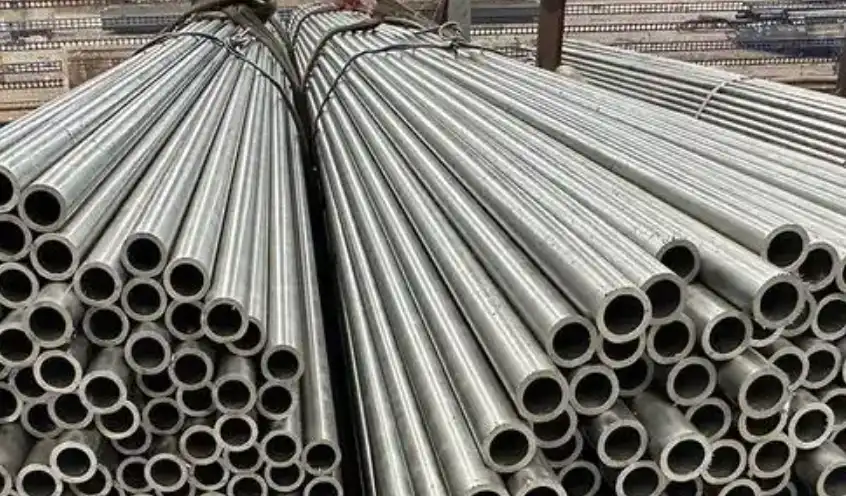
The outside diameter (OD) ranges from 1/16" (1.59 mm) to 5" (127 mm), and the wall thickness ranges from 0.010" to 0.200" (0.25–5.08 mm). The bright annealed (BA) finish, which is made in an atmosphere protected by hydrogen, gives the metal a clean, smooth bore that is important for heat transfer. There are different levels of mechanical polishing, including 180, 240, 320, and 400 grit, for different uses.
Comparing A269 Tubing with Other Stainless Steel Tubing Options
Purchasing managers often want to know how ASTM A269 compares to other standards that are similar. The answer depends on what it will be used for in the end.
A269 vs. ASTM A213
ASTM A213 covers tubes made of ferritic and austenitic alloys that are seamless and are used in boilers, superheaters, and heat exchangers. It sets a required wall thickness that is made for high-temperature pressure service. A269, on the other hand, uses average wall thickness and is more focused on basic instruments and corrosive service. The design standard for a shell-and-tube heat exchanger under the ASME code is A213. The design standard for instrument data lines and hydraulic control tubes is A269.
A269 vs. A312
ASTM A312 covers both smooth and welded stainless steel pipe, which is not the same thing as tube. Pipe sizes are based on their nominal pipe size (NPS) and plan. A269 tubing sizes are based on their actual outside diameter (OD) and decimal wall. When compression fittings or ferrule-type joints are needed, A269 pipe is always used because A312 pipe doesn't meet the size requirements of those fittings.
A269 vs. EN 10216-5
European projects can use EN 10216-5 for stainless seamless tubes. The mechanical requirements are mostly the same, but the names of the chemical grades are different. If you want to sell your products to people in Europe or work with multinational OEM partners, you should choose products that are dual-certified, meaning they meet both ASTM A269 and EN 10216-5.
How to Identify and Verify Authentic A269 Tubing?
More often than most buyers think, fake or low-quality stainless steel tubing gets into supply chains.
Visual and Dimensional Checks
Start with the marks on the tube. If it fails a flaring test or shows stress rust at a U-bend, it could lead to a costly OEM audit lapse. There should be a heat number, material grade, standard identification, and maker name on every real A269 tube. Make sure you use accurate micrometers to measure the OD and wall thickness, then check them against the Mill Test Certificate (MTC). Any difference is a red flag.
Non-Destructive and Mechanical Testing
Ask for proof of hydrostatic testing, air-under-water testing, and eddy current testing (to find flaws on the surface and below the surface). For measurement purposes, you should also ask for test records that show flaring and thinning. Hardness must stay at or below 90 HRB; if it goes above that level, ferrule-type fittings won't be able to seal properly on the tube.
Documentation and Third-Party Certification
Make sure you have an EN 10204 3.1 or 3.2 Mill Test Certificate that lists both the chemical makeup and the mechanical properties of the tube. For important purchases, getting a third-party review from SGS, BV, TUV, DNV, or ABS gives you peace of mind. For TP316L sales where molybdenum content is important, it is a good idea to ask for a Positive Material Identification (PMI) study.
Procuring A269 Tubing: A Guide for Industrial Buyers
It takes more than just finding the lowest price per foot to find good instrumentation tubing. Here are the main things that make smart choices about buying.
Around one to three weeks pass between confirming the drawing, looking for materials, making a prototype, testing it on a small scale, and then starting mass production for a269 tubing heat exchanger tubes. If suppliers can't meet your small-batch needs during that time frame, it will mess up your schedule.
Before you place an order, here are the most important things to look at when buying something:
- Low MOQ and fast sample availability: Prototyping and trial runs require only a few meters to a few tens of meters. A supplier with flexible minimum order quantities and complimentary samples lets you validate fit and performance before committing to a full run.
- Stock inventory depth: Suppliers holding over 5,000 tons of rolling stock across grades 304, 304L, 316, and 316L can ship standard orders in 3–5 days, which directly protects your production schedule.
- Custom length and coil capability: Fixed straight lengths of 6 m and 12 m cover most heat exchanger applications. Coiled tubing configurations are needed for instrumentation loops and hydraulic lines. Confirm the supplier can handle both, and ask about packaging for coiled orders to prevent transport deformation.
- Documented quality package: Every shipment should arrive with an original MTC, PMI report, and test records. This is what your OEM end-customer will ask for during a factory audit.
Low MOQ and quick sample availability: Prototypes and test runs only need a few meters to a few tens of meters. If a seller has flexible minimum order numbers and free samples, you can make sure the fit and performance are good before committing to a full run.
Choosing the Right A269 Tubing Supplier: What Procurement Managers Need to Know
The supplier you pick has a direct impact on how well your assembly line runs and how well your end-customer audit goes. Here are some things you should look for in a company that makes or sells A269 tubing.
Certification and Standards Compliance
Check to see if the supplier is ISO 9001:2015 certified and can provide EN 10204 3.1 MTCs as a standard. Make sure the products are made according to ASTM A269 / ASME SA269 standards, and see if they can be certified for both A213 and EN 10216-5 for orders that go to more than one market.
Production and Testing Capability
A trustworthy company does in-house eddy current testing, hydrostatic testing, and measurement checking, along with cold drawn or cold rolled smooth production. For clean inside surfaces, bright annealing in a controlled hydrogen atmosphere is the standard. Tighter tolerances are offered by suppliers who have automatic cold rolling lines and watch dimensions in real time.
OEM Support and After-Sales
When buying from an OEM, how quickly they respond is just as important as the quality of the products. Quotes should be answered in less than an hour, products should come with a one-year guarantee, and there should be a clear way to handle quality complaints. Access to third-party inspection coordination, in which the supplier helps with SGS or TUV audits, is a strong sign of openness.
Conclusion
Choosing the correct instrumentation a269 tubing for heat exchangers and control systems is an important task that impacts the performance of the product, compliance with regulations, and OEM customer happiness. In grades TP304, TP304L, TP316, and TP316L, ASTM A269 stainless steel tubing has the exact dimensions, smooth surface, and ability to bend that is needed for heat transfer and instrumentation. Procurement risk is eliminated by checking with the right MTC paperwork, NDT records, and a third-party review. Small-batch prototyping and fast delivery are not only possible, but they're also expected when you work with the right supplier.
FAQ
Is A269 tubing suitable for high-pressure hydraulic applications?
Yes, as long as the right wall width and grade are given. When the wall thickness is right, TP316L can handle hydraulic forces in most sensor and control line situations. Before you order, you should always compare the measured working pressure to what your system needs.
What certifications should I verify before purchasing?
Ask the supplier for at least an EN 10204 3.1 Mill Test Certificate, proof of eddy current or hydrostatic testing, and ISO 9001:2015 certification.
How does A269 tubing perform in chloride-rich environments?
In high-chloride environments, TP304 can get pitted over time. With the addition of molybdenum, TP316L works much better in environments with salt spray, coastal HVAC, and marine instrumentation. If the chlorine exposure is very high, you might want to look at dual-certified TP316L with a BA surface finish.
What is the difference between BA and pickled surface finish?
A controlled hydrogen atmosphere is used to make a bright annealed (BA) finish, which leaves the tube's surface clean, smooth, and free of oxides. For solution annealed and pickled (AP), acid is used to get rid of scale. For high-purity instruments and heat transfer uses, BA is better than AP. AP is fine for general structure use.
Request a Quote from All Trust — Certified A269 Tubing Supplier
Hebei All Trust has a large selection of A269 tubing grades in stock. They also offer low minimum order quantities for test orders and quality packages with proof that they meet OEM standards. Our team gets back to you within an hour, whether you need straight lengths, twisted shapes, or BA-finish instrument tubing. For samples, specs, or a competitive price on A269 tubing for your next project, please email us at info@hballtrust.com.
References
1. ASTM International. ASTM A269/A269M: Standard Specification for Seamless and Welded Austenitic Stainless Steel Tubing for General Service. ASTM International, 2022.
2. ASME. ASME SA-269: Seamless and Welded Austenitic Stainless Steel Tubing for General Service. ASME Boiler and Pressure Vessel Code, Section II, Part A, 2023.
3. ASTM International. ASTM A213/A213M: Standard Specification for Seamless Ferritic and Austenitic Alloy-Steel Boiler, Superheater, and Heat-Exchanger Tubes. ASTM International, 2022.
4. European Committee for Standardization. EN 10216-5: Seamless Steel Tubes for Pressure Purposes — Technical Delivery Conditions — Stainless Steel Tubes. CEN, 2021.
5. Outokumpu. Stainless Steel Corrosion Handbook: Grades, Properties, and Applications. Outokumpu Oyj, 2021.
6. Chemical Engineering Progress. "Material Selection for Instrumentation Tubing in Corrosive Process Environments." AIChE, 2020.

