ASTM A270 TP304 Tube for Hygienic Food and Beverage Processing
If you work in food machinery OEM, dairy processing, or beverage production, you already know how much rides on your tubing choice. One wrong call on material grade or surface finish, and you face contamination risks, failed audits, or costly line shutdowns. The astm a270 tp304 tube is the industry's answer to these exact concerns. Built from UNS S30400 austenitic stainless steel and produced under the ASTM A270 / ASME SA270 standard specification, this sanitary tubing grade is specifically engineered for hygienic fluid handling — combining a passive chromium-oxide barrier, a smooth inner bore, and full traceability documentation that procurement managers and process engineers demand.
Understanding ASTM A270 TP304 Tube Specifications and Properties
Chemical Composition and Grade Identity
18% of TP304 (UNS S30400 / EN 1.4301) is chromium, and 8% is nickel. A passive oxide layer is formed by this common Cr-Ni matrix. This layer can self-repair and is not affected by most acids, bases, or cleaning products that are safe for food. As long as the carbon level stays at 0.08%, there is less chance of sensitization during the normal heat cycles that happen in food preparation sites.
Mechanical Performance Parameters
According to ASTM A270, TP304 sewage tube needs to be able to withstand at least 515 MPa of tension and 205 MPa of strain. The tube can handle changes in temperature in pasteurization loops, sudden rises in pressure in carbonation lines, and mechanical stress from orbital welding without breaking or deforming. So you can be sure of these numbers in real life.
Surface Finish and Dimensional Tolerances
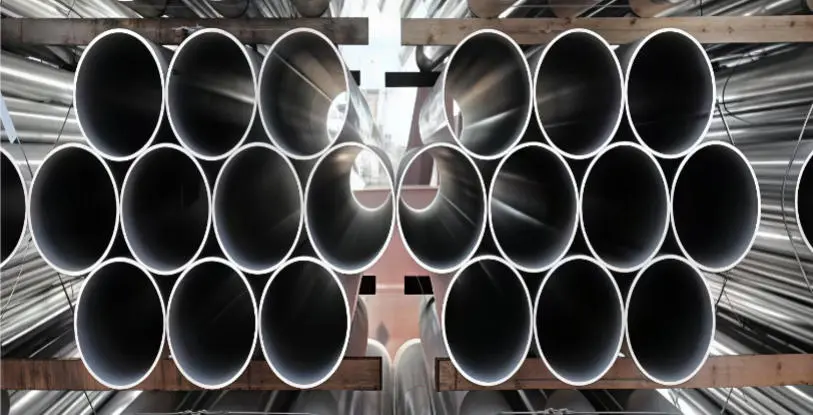
Seamless and welded. The OD ranges from 1/2" to 8" (12.7 mm to 203.2 mm), and the wall widths are 0.049", 0.065", 0.083", and 0.109". For mechanical cleaning, the inner surface must be as smooth as Ra ≤ 0.8 μm. It is kept to Ra ≤ 0.51 μm (20 µin) for an electropolished (EP) finish. In a pressure oven with hydrogen as the oxygen source, each tube goes through full solution annealing. This keeps the surface from getting carbon on it and keeps the bore clean and bright.
Comparing TP304 Tubes to Alternatives: Making Informed Procurement Decisions
TP304 vs. TP316L
Salt doesn't hurt TP316L as much because it has 2–3% molybdenum added to it. You should use TP316L in systems that have high-salinity brines, strong CIP chemicals, or medicinal water for injection. But astm a270 tp304 tube is a much better choice for standard dairy lines, brewery fermentation vessels, and beverage distribution grids where chloride exposure is moderate because it is much cheaper and better at keeping things clean. This makes it the best grade for most OEM builds of food machines.
Welded vs. Seamless Construction
In order to make welded sanitary tube, the inner bead must be removed in full, and the tube must be bright-annealed. For most food and drink uses that work at normal process pressures, welded construction is both the right choice and the most cost-effective option. People who work in pharmaceuticals and science like continuous cold-drawn tube for ultra-high-purity loops because it doesn't have any weld lines. Whether or not to buy something depends on the budget, the amount of stress, and the exact process standard that is written in the project plan.
TP304L and Carbon Steel Considerations
TP304L lowers the carbon level to 0.03%, which stops carbides from forming even more in hot spots. Tell people when the heavy field welding is going to happen. You shouldn't use carbon steel in clean food lines because it doesn't have the passive layer needed for hygienic service. It will also corrode when exposed to CIP cycles, which will make the food dirty and nullify any food safety certification.
Procurement and Supply Chain Insights for ASTM A270 TP304 Tubes
Certification and Documentation Requirements
For business-to-business buyers of clean steel tubes for export or food plants that need to follow rules, they must have proof. Need an EN 10204 3.1 Mill Test Certificate (MTC) with full mechanical test results, as well as chemistry and heat analysis reports. Compare the Cr and Ni values to what the grade calls for. Some mills that aren't very good will weaken these things to save money. Outside review by SGS, BV, TÜV, DNV, or ABS adds another level of safety checks that meet the reporting needs of your end customer and keeps your supply chain safe.
Pricing Drivers and MOQ Flexibility
Steel tubes cost what they do because of the spot prices of nickel and chromium. The last price is based on how many items are ordered, what kind of finish is chosen (mechanical or EP), and how long they are cut to order. A lot of the time, high minimum order amounts make it hard for mid-sized producers to keep their cash flow going. When suppliers work with more than one mill network, they can often offer flexible MOQ on custom sizes while still having standard stock on hand so they can quickly restock.
Lead Time and Packaging for Export
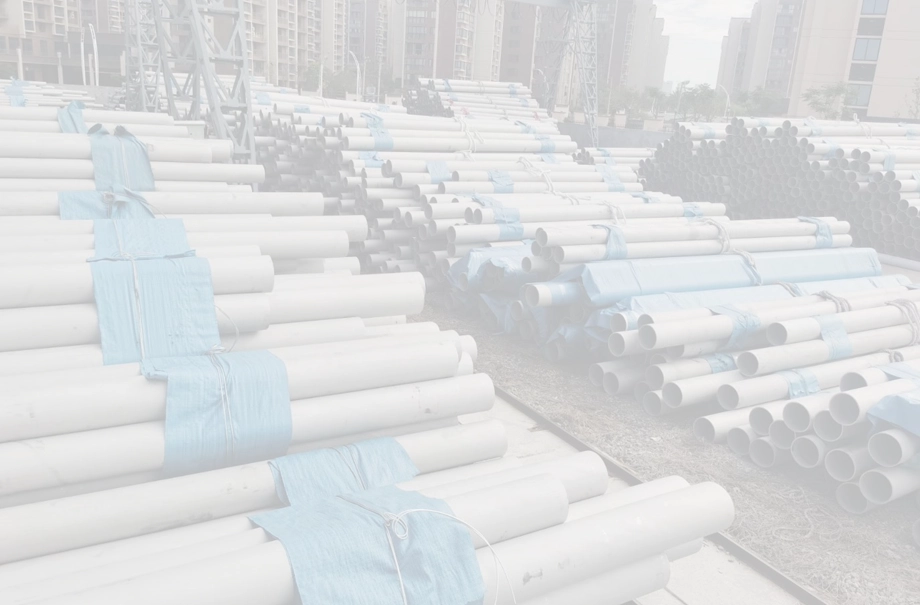
Orders of standard sanitary sizes that are already in stock should be sent out in three to five days. Cutting to length or making EP finishes takes 15–20 days. Because they are going to be exported, each tube should have a secure end cap put on it, be sealed in a thick plastic sleeve, and be packed in fumigated wooden boxes so that water doesn't dent, scratch, or stain them while they are being shipped.
Applications and Advantages of ASTM A270 TP304 Tubes in Food and Beverage Industry
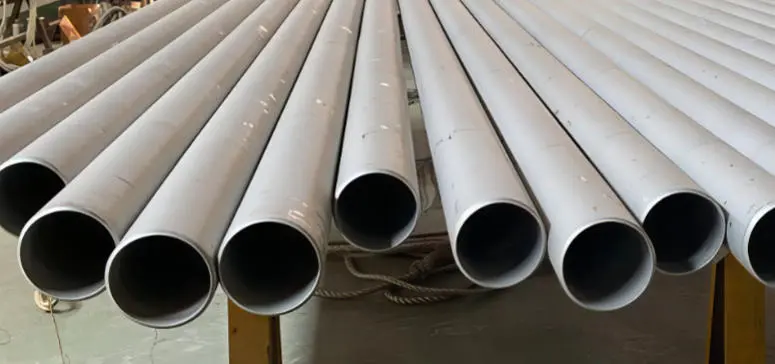
Sanitary stainless astm a270 tp304 tube appears in some of the most demanding hygienic environments in manufacturing. Here are the primary application areas and the functional reasons each sector chooses TP304:
- Dairy processing lines: Milk pasteurization loops require a bore smooth enough to prevent protein adhesion. Ra ≤ 0.8 μm ensures efficient CIP (Clean-in-Place) cycles without residue build-up, reducing cleaning downtime and microbial risk.
- Brewery and distillery systems: Beer filtration, carbonation, and transfer lines operate under moderate pressures with organic acid exposure. TP304 resists hop acids, CO₂, and ethanol while maintaining dimensional stability under thermal swings.
- Beverage distribution grids and food machinery plumbing: Juice, soft drink, and bottled water lines benefit from the tube's Tri-Clamp compatible plain ends and consistent OD tolerances, allowing direct connection to standard sanitary fittings without gap-creating mismatches.
- Biotech and pharmaceutical fluid systems: Purified water (PW) distribution systems specify EP finish to Ra ≤ 0.51 μm, limiting biofilm anchor points and supporting SIP (Steam-in-Place) sterilization protocols.
These application advantages directly reduce maintenance frequency, shorten cleaning cycles, and support regulatory compliance with FDA, 3-A Sanitary Standards, and EC 1935/2004 requirements for food-contact materials.
Selecting the Right ASTM A270 TP304 Tube Supplier: Key Evaluation Criteria
Certification Verification
Before you place an order, make sure you get a copy of the current batch's MTC, the ISO 9001:2015 certificate, and the 3-A certificate, if they apply. To see if the grade given is correct, check the MTC's heat chemistry. Something that can be done to make sure that lower-quality alloys aren't used is to test the received material for PMI (Positive Material Identification).
Testing Capabilities
A trustworthy company that sells sanitary tubes checks every batch that they make with hydrostatic pressure, 100% eddy current on the welded seams, a borescope for checking the inside, and a laser for OD proof. For every sale, you should ask for surface roughness Ra profile reports, not just a number. These should include real measurements taken by a profilometer. These papers will protect you when customers or other people check out your business.
Supply Chain Stability and Response Speed
It's just as important that the things are good as that they are delivered on time. Make sure to ask the seller if they keep standard clean sizes in stock, can ship small batches quickly, and can ship tubes, fittings, and flanges all in one container to save money on shipping.
Conclusion
Clean steel astm a270 tp304 tube made to ASTM A270 in TP304 grade is now the standard around the world for making food and drinks. Its precise dimensions, controlled surface finish, and chemistry make it ideal for clean operations and following rules, whether it's pasteurizing milk in a dairy or moving beer from one brewery to another. When you're buying, it's important to find a provider that has shown they can accept third-party inspections, has verified MTC paperwork, and has confirmed Ra surface data. When you buy these things, keep these things in mind so you don't have problems on the job site that cost a lot more.
FAQ
Is TP304 approved for direct food-contact applications?
Yes. With the right finish on the outside, TP304 (UNS S30400) can be used in places where food is present and also meets 3-A Sanitary Standards. To make sure you're following the rules, check the Ra value and ask for MTC paperwork at all times.
What surface finish is required for CIP-compatible sanitary tubing?
For most food and drink CIP systems, an inner bore Ra of less than 0.8 μm is fine. Most pharmaceutical-grade SIP systems need an electro-polished finish at Ra ≤ 0.51 μm (20 µin) to lower the risk of biofilm.
What certifications should I request from a sanitary tube supplier?
Ask for an EN 10204 3.1 MTC, an ISO 9001:2015, and a 3-A license if you need to. Check reports from SGS, BV, or TÜV give businesses that are controlled extra peace of mind.
Can I order custom cut lengths and Tri-Clamp compatible ends?
Yes. You can get them cut to any length you need, but the usual lengths are 5.8 m or 6 m. There are different kinds of ends, like square-cut plain ends, cleaned ends without burrs, and fixed ends that work with Tri-Clamp, so they can fit a range of system plans.
How do I verify that I am not receiving a substituted lower-grade alloy?
When you get the material, ask for PMI (Positive Material Identification) testing and look at the MTC. Compare the Cr (min 18%) and Ni (min 8%) numbers with the ASTM A270 grade standards. Having a third party inspect the goods before they are shipped takes away most of the risks that come with substitution.
Get Certified ASTM A270 TP304 Sanitary Tube from All Trust — Request a Quote Today
All Trust (Hebei All Trust Steel Co., Ltd.) sells checked Astm a270 tp304 tube maker stock that has EN 10204 3.1 MTC, records of all 100% borescope checks, and Ra surface roughness profiles for every batch. AMOQ can change, and we ship from stores near Tianjin, Shanghai, and Qingdao. We also accept inspections from SGS and BV. Stock gets here in 3–5 days. You can email our technical team at info@hballtrust.com or visit hballtrust.com to get a price or a technical data sheet.
References
1. ASTM International. ASTM A270/A270M: Standard Specification for Seamless and Welded Austenitic and Ferritic/Austenitic Stainless Steel Sanitary Tubing. ASTM International, 2022.
2. 3-A Sanitary Standards, Inc. 3-A Sanitary Standards for Stainless Steel Tubing, Number 68-03. 3-A SSI, 2019.
3. European Committee for Standardization. EN 10357: Stainless Steel Tubes for Food, Chemical and Dairy Industries — Technical Delivery Conditions. CEN, 2020.
4. American Society of Mechanical Engineers. ASME BPE: Bioprocessing Equipment Standard. ASME, 2022.
5. Sedriks, A. J. Corrosion of Stainless Steels. 2nd ed. Wiley-Interscience, 1996.
6. International Dairy Federation. IDF Bulletin: Hygienic Design of Dairy Processing Equipment. IDF, 2018.