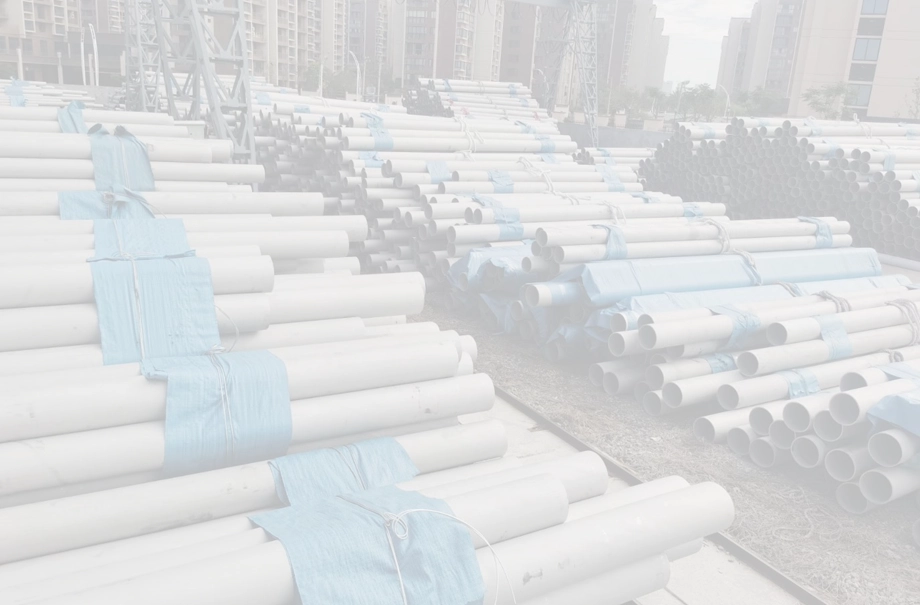
ASTM A358 TP304 Pipe: Key Checks Before Placing Bulk Orders
Before committing to a bulk purchase of ASTM A358 TP304 pipe, every procurement manager needs a clear checklist. This electric-fusion-welded (EFW) austenitic stainless steel pipe — built to UNS S30400 / 1.4301 chemistry — covers NPS 8" through 60" in wall schedules from SCH 5S to SCH 80S. It delivers a minimum tensile strength of 515 MPa and a yield strength of 205 MPa, making it a proven choice for municipal water mains, chemical distribution loops, and refinery networks. Get these checks right, and your order lands on schedule, on spec, and on budget.
Understanding ASTM A358 TP304 Pipe Specifications and Standards
Chemical Composition and Mechanical Properties
18–20% of TP304 is being brought. In irregular service, it can handle temperatures up to about 870°C because it has a lot of chromium and 8–11% nickel, which makes it very resistant to rust. It can pull apart at least 515 MPa (75 ksi) and give way at least 205 MPa (30 ksi). That's not possible with regular carbon steel; it gets soft very quickly and cannot be tough again. It is important for process engineers to check these numbers against the Mill Test Certificate (MTC) before they place a big order.
How ASTM A358 Differs from ASTM A312 and A409?
Before committing to a bulk purchase of ASTM A358 TP304 pipe, every procurement manager needs a clear checklist. This electric-fusion-welded (EFW) austenitic stainless steel pipe — built to UNS S30400 / 1.4301 chemistry — covers NPS 8" through 60" in wall schedules from SCH 5S to SCH 80S. It delivers a minimum tensile strength of 515 MPa and yield strength of 205 MPa, making it a proven choice for municipal water mains, chemical distribution loops, and refinery networks. Get these checks right, and your order lands on schedule, on spec, and on budget.
Manufacturing Process and Heat Treatment
The EFW process takes a thick piece of stainless steel and shapes it into a pipe cylinder. It then joins the two halves together with filler metal lengthwise lines that are added automatically on both sides. Heating the solution after the weld above 1,040°C makes the weld zone as strong as the parent metal again and eliminates the risk of sensitization. In acidic service, weld lines can become less strong if they don't go through this full-body temperature cycle. You should always ask for proof of the heating temperature and holding time as part of your pre-order package.
Critical Performance Factors to Verify Before Ordering
Weld Integrity and Radiographic Testing
The five types of pipes in ASTM A358 are called Class 1 through Class 5. These classes decide if extra metal needs to be added and if a full or spot RT/X-ray is needed. As per ASME Section VIII, pick Class 1 or Class 2 for uses where pressure is important to make sure that all of the RT is covered. You may want to look at other sellers if the ones you're interested in can't give you RT film reports or digital radiography records for the exact heat numbers you need.
Wall Thickness Tolerance and Dimensional Accuracy
Too much negative wall thickness deviation is one of the most common quality issues that people have when they buy bulk astm a358 tp304 pipe. If you use the tolerance tables in ASTM A312 for standard schedules, you can go below the nominal wall by no more than 12.5%. ASTM A358 is linked to these tables. You should get a measurement inspection report for at least 10% of the pipes in the lot before you sign any purchase order. Ultrasonic thickness gaging should really be used to back up this story.
Corrosion Resistance Verification
If it has too much Chromium or Nickel, which can happen if you buy it from a source you don't trust, it won't protect you as well. X-ray fluorescence (XRF) is a fast and easy way to identify metal. It takes less than two minutes to do each pipe, and you can see the metal right away. You might also want to ask for an ASTM A262 Practice E intergranular corrosion test on weld samples that will be used in places with a lot of chloride or acid.

Comparative Analysis: ASTM A358 TP304 vs Other Pipe Types
TP304 vs TP316 Stainless Steel
Adding 2–3% Molybdenum to the 18-8 base chemistry makes TP316 less likely to pit and crack in chloride environments, such as seawater cooling systems. TP304 costs about 15–20% less than TP316 for the same size. If you need to carry food-grade water or chemicals with less than 50 parts per million chloride, this is the best pick. TP304 will work just as well and costs less than TP316. However, TP304 is more likely to fail early in places where chlorides are high.
TP304 EFW vs Seamless Pipe
All the time, seamless pipe has been used for high-pressure tasks because it is made without a split line. But for widths bigger than 8 inches NPS, technology doesn't allow smooth production, and it costs a lot more. The same pressure ratings and weld joint efficiency factors can be found in an EFW pipe that has been solution-annealed and 100% RT-inspected and meets the requirements of ASTM A358. Because of this, EFW building is the safest and most cost-effective way to build big fluid transfer projects.
TP304 vs Carbon Steel Pipe
Carbon steel costs less per ton, but it rusts quickly in places where chemicals and water are treated, so the covering needs to be changed or kept up regularly. TP304 stainless pipe costs more at first, but it costs a lot less over its lifetime. This is because it needs less upkeep, less downtime, and fewer repairs. What makes TP304 and carbon steel different when it comes to rust is very important for exports to Southeast Asia or the Middle East, where it is very hot and hard to work.
Buying Guide: How to Source ASTM A358 TP304 Pipes for Bulk Orders
Procurement teams often narrow suppliers down quickly on price, but the following verification steps protect the entire investment.
Here are the core checks to run before confirming any EFW stainless astm a358 tp304 pipe supplier:
- MTC to EN 10204 3.1 or 3.2: The certificate must link specific heat numbers to chemical and mechanical test results. A generic grade stamp on a data sheet is not a substitute. Confirm that Cr, Ni, C, and Mn values fall within UNS S30400 limits.
- Third-party inspection acceptance: A credible supplier will accept SGS, BV, TÜV, DNV, or ABS inspection without objection. Hesitation on this point is a warning sign. Budget for independent inspection on first orders and any order exceeding your normal batch size.
- Stock availability and lead time: For standard schedules (SCH 10S, SCH 40S) in common diameters (NPS 8"–24"), stock lead times of 3–15 days are achievable from well-resourced suppliers. Custom dimensions or heavy-wall schedules (SCH 80S in large OD) may require 15–30 days production time.
- Packaging specification: Sea-freight bundles must include plastic end caps, waterproof fiber wrapping, and steel dunnage cradles for large-diameter pipe. Dents and surface scratches from inadequate packing generate real cost at the receiving end.
These four checks together — documentation, inspection access, lead time, and packing standard — cover the highest-risk failure points in bulk EFW pipe procurement. Skipping any one of them increases the probability of a costly quality dispute after shipment.
Practical Use Cases and Industry Applications of ASTM A358 TP304 Pipes
Municipal Water Treatment and Distribution
Large EFW TP304 pipe in NPS 12"–36" is often used for mains and headers in water treatment plants. It's easier to install because the pipe works with standard flange systems and has a clean internal hole that limits the number of places germs can grow. The 18% Cr content also protects against cleaning leftovers. A lot of cities in East China have moved from coated carbon steel pipe to TP304 EFW pipe for updates to their trunk mains. They have seen a clear drop in the amount of upkeep that needs to be done every 10 years.
Chemical Processing and Petrochemical Refinery Networks
ASTM A358 Class 1 pipe with a diameter of 10 inches or more is often used for cooling water lines and process fluid circulation loops in petrochemical companies. Under ASME B31.3 process piping codes, there must be a record of all 100% RT inspections. This is called the quality audit trail. They have a finish on the outside called solution-annealed and pickled (SA&P). This makes it less likely that iron will get into processes further down the line that are sensitive to it.
OEM Equipment Manufacturing and Export Projects
Large OEM manufacturers that send goods to Southeast Asia and the Middle East often need pipe paperwork that meets ASTM and ASME standards in order to meet the needs of end users or EPC contractors. Many international engineering standards can be met by the ASTM A358 TP304 EFW pipe that comes with EN 10204 3.1 MTC, PMI reports, and hydrostatic test records. This means that the pipe doesn't need to be tested again on the job site, which speeds up the start of the project.

Conclusion
If you order a lot of large-diameter EFW stainless pipe without first doing these checks, the material might not match the specs, it might get damaged in transit, or you might be sent the wrong size pipe. It costs a lot more to fix all of these issues after the fact than it did before. Make sure you look at the MTC, the weld inspection class, the wall thickness tolerance records, and the fact that a third party can inspect. Astm a358 tp304 pipe is a tried-and-true, low-cost choice for high-volume fluid systems in OEM, chemical, and city settings.
FAQ
What is the difference between ASTM A358 TP304 and TP304L?
The most carbon that can be in TP304L is 0.03%, and the least in regular TP304 is 0.08%. The lower-carbon grade doesn't react (carbide forms at the edges of the grains) when it's welded, so it doesn't need to be heated up again. For EFW pipe that will be fully solution-annealed above 1,040°C, both standard TP304 and TP304L work well in acidic service. Pick TP304L if you want to weld in the field without having to cool it down first.
How do I verify a new supplier's material authenticity?
Ask for an EN 10204 3.1 MTC that can be tracked by heat, and then check the Cr and Ni readings against the UNS S30400 limits. Next, test a sample from your first order with an XRF-based PMI test. This is easy to do, only takes a few minutes per pipe, and it directly shows how the metal works chemically. Having a third party, like SGS or BV, look over your work before you ship it adds another independent quality check.
What are typical MOQ and lead times for bulk orders?
We have most common sizes (SCH 10S–SCH 40S) in stock in NPS 8"–24" widths. Lead times are 3–15 days. It takes about 15 to 30 days to make custom heavy-wall schedules or diameters bigger than NPS 36". There are a lot of good suppliers who will take orders for medium-sized amounts without needing a large minimum order quantity. When you ask about the source, make sure of this.
Which ASTM A358 class should I specify for pressure service?
If you want to keep air inside, Class 1 or Class 2 is best. All weld points must be X-rayed for both, which gives the most confidence in the bond's strength. Class 3–5 doesn't have much or any RT service, so they should only be used for low-risk, non-essential tasks.
Get a Verified Quote on ASTM A358 TP304 Pipe — All Trust Steel
All Trust Steel (Hebei All Trust Steel Co., Ltd) has more than 5,000 tons of rolling stainless steel in stock, as well as large-diameter EFW pipe from NPS 8" to more than NPS 60" in SCH 5S through SCH 80S. Before a pipe leaves, it is fully checked by a third party (SGS, BV, or TÜV) and has a full EN 10204 3.1 MTC. There are also records of all 100% hydraulic tests. Get in touch with our technical team right away if you need a single batch of prototypes or a planned program for bulk deliveries. You can send your needs to info@hballtrust.com or visit hballtrust.com right away to look through our list of approved Astm a358 tp304 pipe suppliers.
References
1. ASTM International. ASTM A358/A358M: Standard Specification for Electric-Fusion-Welded Austenitic Chromium-Nickel Stainless Steel Pipe for High-Temperature Service and General Applications. ASTM International, 2022.
2. ASTM International. ASTM A312/A312M: Standard Specification for Seamless, Welded, and Heavily Cold Worked Austenitic stainless steel pipes. ASTM International, 2022.
3. American Society of Mechanical Engineers. ASME B31.3: Process Piping Code. ASME, 2022.
4. ASTM International. ASTM A262: Standard Practices for Detecting Susceptibility to Intergranular Attack in Austenitic Stainless Steels. ASTM International, 2021.
5. European Committee for Standardization. EN 10204: Metallic Products — Types of Inspection Documents. CEN, 2004.
6. Sedriks, A. J. Corrosion of Stainless Steels. 2nd ed. John Wiley & Sons, 1996.