ASTM A403 WP304 WP304L Elbow for Industrial Piping Direction Changes
When you need to change the direction of your pipeline system, the setting you pick has real effects. An ASTM A403 WP304 WP304L Elbow is a wrought austenitic stainless steel fitting that is designed to change the flow of fluid in pressure piping systems without affecting the strength of the pipes. These elbows are made to meet ASTM A403, which is the standard for wrought stainless steel pipe fittings. They can be used with both Grade WP304 (UNS S30400) and Grade WP304L (UNS S30403). The letter "L" means a lower carbon ceiling of 0.03%, which stops sensitization right away in areas where the heat from the welding affects them. If purchase teams are looking for parts for chemical equipment, food machines, or public water systems, they need to know the detailed differences between these two types in order to make a good buying choice.
Understanding ASTM A403 WP304 and WP304L Elbows
Chemical Composition and Key Mechanical Properties
Because it has 18–20% chromium and 8–11% nickel, Grade WP304 is very resistant to rust and air. Grade WP304L has the same base chemistry as standard 304, but the carbon cap is only 0.03% instead of 0.08%. According to ASTM A403, WP304L has a minimum tensile strength of 485 MPa and a minimum yield strength of 170 MPa. WP304, on the other hand, has a minimum tensile strength of 515 MPa and a minimum yield strength of 205 MPa. It is good that both grades are flexible and tough, even at temperatures below zero (-196°C).
Corrosion Resistance and Temperature Range
There is a chromium oxide film on these valves that keeps them safe from many dangerous things, like weak acids, chloride-free water, and food-grade fluids. It is best to use WP304L when you can't heat treat the material after welding because it keeps the passive film stable during and after welding. Scaling resistance is good up to about 870°C when used short-term, but the grade needs to be reviewed for long-term work above 427°C (800°F).
Standard Dimensions and Tolerances
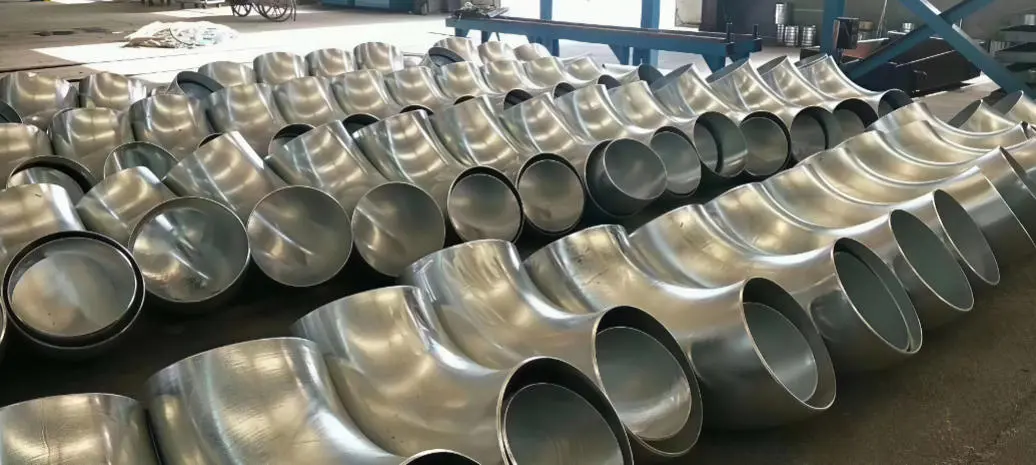
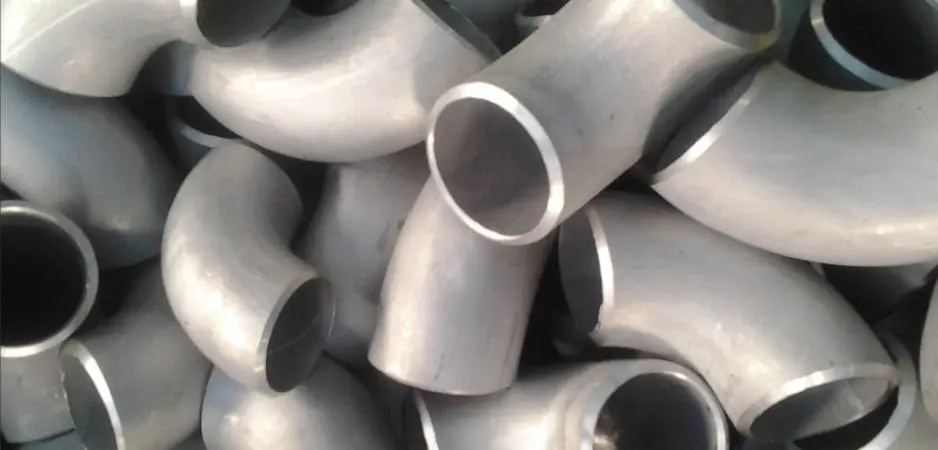
Based on ASME B16.9, these elbows are the right size. They come in two forms, Long Radius (LR) and Short Radius (SR), which have angles of 90 degrees and 45 degrees. Sizes range from NPS 1/2" to 48", and wall sizes range from SCH 5S to SCH 80S. For butt-weld joints, ASME B16.25 says that the ends should be bevelled. There are two types of choices in this standard: welded-seam (WP-W) and seamless (WP-S).
WP304 vs WP304L Elbows: In-Depth Comparison for Informed Decisions
The Carbon Difference and Weldability
The main difference between WP304 and WP304L is how much carbon they contain. Chromium carbides can form around the edges of the grains of normal 304 when it is welded. In some places, this makes the steel less resistant to corrosion. It's called sensitisation. That risk is gone because WP304L's low carbon doesn't need to be softened after welding. With this in mind, field production teams always pick it for parts that need to be soldered.
Long-Term Durability and Lifecycle Cost
ASTM A403 WP304 WP304L Elbow products cost a little more per unit for the WP304L grade, but they last longer and need to be replaced less often in corrosive service because they don't rust between the grains. For a device that will last 10 years in a chemical plant or food processing business, the small price difference is worth it. Often, WP304L is a better deal than the normal grade when you add up the costs of downtime and inspection work.
When to Consider WP316 or Duplex Alternatives?
Adding 2–3% molybdenum to WP316 makes it less likely to get chloride pits. This is important for process lines that are underground, near the water, or have a lot of salt in them. When used under a lot of pressure, duplex types like UNS S32205 are better because they are stronger and don't rust. Even though it costs more, WP304L is still the best choice for chemical pipes, food processing, and public water systems that are exposed to modest amounts of salt.
Manufacturing Process and Quality Assurance of WP304 and WP304L Elbows
Hot Forming, Cold Pressing, and Seamless vs. Welded
In the making process, the first step is either hot forming on a frame or cold pressing and fitting. Each way works best for a range of sizes and amounts of time. Seamless elbows (WP-S) are the best choice when you need a consistent zero-weld seam, like in high-pressure chemical lines. Elbows that are welded (WP-W) can cover bigger holes for less money. Each elbow is formed, then fully solution annealed at about 1040°C, and then quickly cooled in water. This changes the structure of the grains back into crystals, which makes the metal as rust-proof as it can be.
Identifying Genuine Fittings Through Marking and Testing
Real ASTM A403 fittings are permanently marked with the name of the standard, the heat number, the grade of the material, the size, and the schedule. Verification needs both marks and written proof. The tests that show compliance are listed below:
- PMI stands for "Positive Material Identification." XRF or OES research checks the amount of Cr, Ni, and C against the ASTM A403 chemistry table. This finds material replacement before it gets into your system.
- The Intergranular Corrosion Test (ASTM A262 Practice E) confirms that WP304L's low-carbon makeup can withstand grain boundary attack. This is a test that some suppliers of normal 304 steel skip.
- Ultrasonic Testing (UT) for smooth elbows and Radiographic Testing (RT/X-ray) for welded joints make sure the inside is sound, and Liquid Penetrant Testing (PT) checks for flaws that can be seen on the surface.
Test for Intergranular Corrosion (ASTM A262 Practice E): This test specifically shows that WP304L's low carbon content can withstand attack from grain boundaries. Some suppliers of standard 304 steel skip this test.
Certifications That Matter to Procurement Teams
All of these tests work together to make sure that purchasing managers don't get cheap parts that look good but don't work when they're used.
Procuring ASTM A403 WP304 and WP304L Elbows: Best Practices and Supplier Selection
Evaluating Supplier Credibility
A good company that sells ASTM A403 WP304 WP304L Elbows should give you more than just a data sheet. They should be able to show you the full path of heat from the block to the finished part. Get samples of the MTCs before you place an order for mass production. If the order is important, check the heat numbers with data from a different lab. There is less single-point supply risk when a supplier has networks that include more than one mill. This is very important when lead times are short, and you need to restock right away.
MOQ, Lead Times, and Logistics
High MOQ requirements make it hard for medium-sized manufacturers to keep up with their inventory needs and use up their working capital. A sensible provider should offer a range of batch sizes for common LR and SR designs. Ordinary sizes in stock at Hebei All Trust Steel are sent out within 3–5 days from warehouses close to Tianjin, Shanghai, Qingdao, and Shenzhen. Orders for custom sizes usually take 15 to 20 days to finish.
Why All Trust Fits the Medium-Batch Buyer
International box packaging with foam-wrapped individual pieces and plywood outer cases prevents transport dents and surface scratches that often lead to rejection claims.
Application Scenarios and Advantages of Using WP304/WP304L Elbows
Chemical Processing and Municipal Water Systems
In chemical distribution lines that carry weak acids or bases, a 90-degree LR elbow made of WP304L handles changes in direction without creating welds that rust. The non-reactive surface and long service gaps of these fittings make them ideal for municipal water systems. The solution-annealed and acid-pickled finish on the surface stops biofilm and mineral deposits from building up, which means that upkeep is needed less often in water treatment uses.
Food Processing and Sanitary Piping
OEMs that make food and drinks choose 304L elbows for Clean-in-Place (CIP) systems because the low-carbon austenitic matrix doesn't mix with cleaning agents or fluids that are safe for food. ASME B16.9 dimensional compliance makes sure that welds fit up consistently, which is very important in sanitary manufacturing where holes at joints can let germs in. The options for a mechanically polished or passivated finish make the construction of the line even more hygienic.
Performance in Oil, Gas, and Petrochemical Lines
ASTM A403 compliance directly meets the purchase requirements set by engineers for export orders going to petrochemical projects in Southeast Asia or the Middle East. WP304L elbows work well with utility fluid lines and low-pressure petroleum waste lines. Specifying WP316L or duplex fittings is the right step up when the working environment gets to high salt exposure or high pressure, but for most general process lines, 304L works fine and doesn't cost too much.
Conclusion
Choosing the right ASTM A403 WP304 WP304L Elbow is not just a matter of selecting the right stainless steel elbow; it's also a matter of managing the risks that come with buying things. The weld sensitivity problem that normal 304 doesn't solve is fixed by WP304L's dual-certified low-carbon chemistry. For export-grade supply chains, full solution annealing, ASME B16.9 dimensional compliance, and a full EN 10204 3.1 MTC package are all musts. When you buy from a seller that can prove heat traceability, accept third-party inspection, and offer flexible group delivery, you get recorded security at every step of the order process instead of buying doubt.
FAQ
How do I tell WP304 and WP304L apart without a lab test?
On fittings that are compliant, the grade designation ("WP304" or "WP304L") is stenciled next to the heat number and standard reference. However, marking something visually is not enough to confirm. Using an XRF analyzer for PMI on-site only takes a minute or two, and it checks the levels of carbon, chromium, and nickel directly against the ASTM A403 chemistry table.
What is the typical lead time for custom WP304L elbows?
In most cases, it takes 15–20 days for All Trust to make something when the size or timeline isn't normal. Orders for large engineering projects can take up to 30 days, depending on the diameter and wall schedule. It takes 3–5 days to ship stock items in common LR configurations.
Are these elbows suitable for service above 800°F (427°C)?
Even when the carbon content is low, WP304L shouldn't be used for long periods of time above 427°C because of the chance of carbide precipitation in that temperature range. When the temperature stays high for a long time, engineers usually choose Grade 321 or 347 with titanium or niobium stabilization. WP304L works fine below 427°C.
Does All Trust accept third-party inspection?
Yes, we accept checks from SGS, BV, TÜV, DNV, and ABS. Buyers can make plans for an inspector to come to the building before the containers are loaded.
Request a Quote from All Trust — Your Certified WP304L Elbow Supplier
All Trust is a reliable company that makes ASTM A403 WP304 WP304L Elbows. They can make more than 15,000 tons of them every year, have full EN 10204 3.1 documentation, and offer flexible batch sizes for medium-scale purchases. Our team responds within one business hour, whether you need stock to be shipped right away or a production run made to your exact specifications. You can get a quote from us at info@hballtrust.com or look through our full catalog of certified stainless steel pipe fittings at hballtrust.com.
References
1. ASTM International. ASTM A403/A403M: Standard Specification for Wrought Austenitic Stainless Steel Piping Fittings. ASTM International, 2022.
2. ASME. ASME B16.9: Factory-Made Wrought Buttwelding Fittings. American Society of Mechanical Engineers, 2018.
3. ASTM International. ASTM A262: Standard Practices for Detecting Susceptibility to Intergranular Attack in Austenitic Stainless Steels. ASTM International, 2021.
4. Lula, R.A. Stainless Steel. American Society for Metals, 1986.
5. Sedriks, A.J. Corrosion of Stainless Steels, 2nd ed. Wiley-Interscience, 1996.
6. ASME. ASME B16.25: Buttwelding Ends. American Society of Mechanical Engineers, 2017.