TP304 Pipe for Water Treatment Systems: Stable Corrosion Resistance for Long-Term Operation
When sourcing piping materials for water treatment systems, the choice of grade directly affects operational longevity and maintenance costs. 304 pipe — manufactured to UNS S30400 under ASTM A312 — is the most widely specified austenitic stainless steel in municipal waterworks, food processing, and industrial fluid systems. With a chromium content of 18–20% and nickel content of 8–10.5%, it builds a self-renewing passive oxide layer that resists rust, pitting, and general corrosion. This article breaks down why TP304 pipe remains a go-to solution for long-term water treatment performance.
Understanding TP304 Pipe: Essential Properties for Water Treatment
Chemical Composition and Structural Stability
TP304 pipe contains a maximum of 0.08% carbon, 18–20% chromium, and 8–10.5% nickel. This specific ratio produces a stable austenitic crystal structure that remains non-magnetic in the annealed state. The chromium forms a thin, self-repairing oxide film on the surface — the primary defense against corrosion in water-bearing environments. According to ASTM A312, minimum tensile strength is 515 MPa (75 ksi) and minimum yield strength is 205 MPa (30 ksi), providing enough mechanical strength for pressurized water distribution lines.
Corrosion Resistance in Water Treatment Environments
Water treatment systems expose piping to chlorinated water, mild acids from chemical dosing, and fluctuating pH levels. TP304 handles these conditions well within a pH range of roughly 4 to 10. The passive chromium-oxide layer regenerates automatically after minor surface damage, which significantly reduces the risk of red-water contamination or pinhole leaks developing over years of service. For non-marine, low-chloride municipal water systems, TP304 provides a reliable service life that routinely exceeds 20 years under normal operating conditions.
How to Verify Authentic TP304 Material?
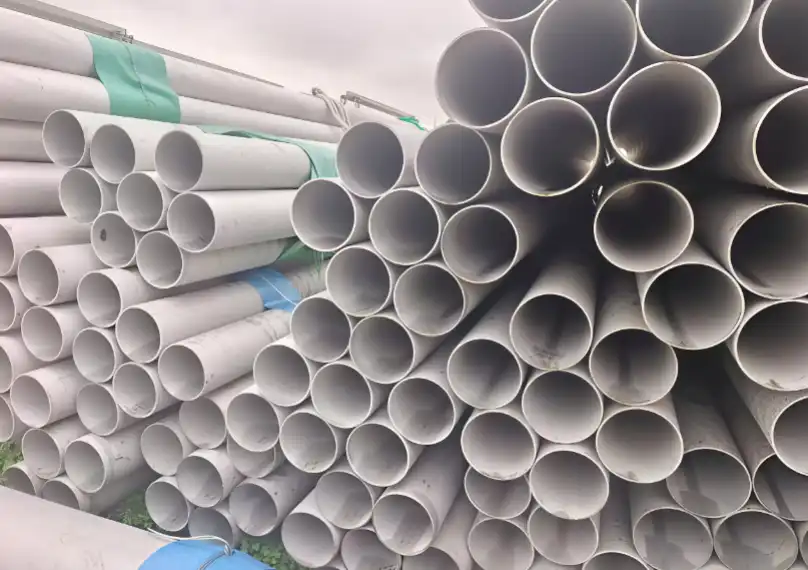
Material fraud is a real concern in the stainless steel supply chain. Always request an EN 10204 3.1 Mill Test Certificate (MTC) tied to the pipe's heat number. The MTC should confirm chromium and nickel content within ASTM specification limits. Positive Material Identification (PMI) testing — using optical emission spectroscopy — can verify elemental composition on-site before acceptance. At Hebei All Trust Steel Co., Ltd, every shipment includes a traceable MTC, and third-party inspection by SGS, BV, or TÜV is supported on request.
Comparing TP304 with Other Stainless Steel Grades for Water Treatment
TP304 vs. TP316 and TP316L
TP316 adds 2–3% molybdenum to the alloy, which makes it much less likely to pit or rust when chloride is present. TP316 works best in saltwater or process streams that have a lot of chlorine. TP304, on the other hand, provides enough protection at a lower cost, usually 20–30% less per ton than TP316 at the current nickel and molybdenum premiums. This is true for city water, process water that has been softened, and food-grade clean-in-place (CIP) systems that have low salt levels.
TP304L and TP304: When the Low-Carbon Grade Matters?
With TP304L, the carbon level drops to no more than 0.03%. This keeps carbide from forming in the area that will be heated up during welding. This is very important when making heavy-wall systems with more than one pass of welding. Water treatment pipes with a normal wall that have passivation put on them after the weld work just as well and cost less when made of TP304 pipe. TP310 has 24–26% chromium, which makes it good for oxidation at high temperatures above 650°C. However, it's usually too strong to be used for water treatment.
Stainless Steel vs. Carbon Steel in Water Systems
In places that are wet and full of air, carbon steel rusts quickly if it doesn't have a protective coating on it. Over time, those coats wear off. When they do, rust particles enter the water stream and cause problems with quality and sudden shut-downs. Lifecycle cost studies often show that stainless steel piping lowers total ownership costs because it doesn't need to be cleaned, treated with chemicals, or replaced before it's time. It's true even though it costs more at first. Austenitic stainless steel is the standard for OEM food equipment and public water systems where the product can't be harmed.--- (
Procurement Guide: Buying TP304 Pipes for Water Treatment Systems
Selecting a Certified Supplier
Certification is the first thing that you should do before you buy something. A trustworthy TP304 pipe provider should have ISO 9001:2015 quality management certification, include EN 10204 3.1 MTCs with every batch, and not mind if a third party checks out their work. An independent four-step quality control method is used by All Trust Steel to make sure the quality of its products. This process includes spectrographic verification of raw materials and a final packing check. We can keep track of each batch before it leaves the warehouse this way.
Pricing Factors and Dimension Selection
The price per ton of TP304 pipe depends on the outside diameter, the wall schedule, the type of production (seamless vs. welded), and the finish on the outside. Sizes from All Trust range from OD 10.3 mm to 1,219 mm, wall thicknesses from SCH 5S to SCH 160, and lengths of 6 m or 12 m with either one or two random cuts. These are the main things that affect how much it costs to land:
- Wall schedule: Heavier schedules (SCH 80S, SCH 160) consume more material per meter, directly increasing cost.
- Process route: Cold-drawn seamless pipe carries a premium over ERW/EFW welded pipe for the same dimension.
- Surface finish: Bright annealed (BA), or mirror-polished finishes (up to 600#) add processing cost versus standard pickled-and-annealed.
- Order volume: Stock orders ship in 3–5 days; standard custom orders typically deliver in 15–20 days.
Cold-drawn seamless pipe costs more than ERW/EFW welded pipe for the same size.
MOQ, Customization, and Delivery Planning
As we all know, having high minimum order amounts can make it hard for mid-sized producers to keep track of their changing stock levels. There are warehouses close to Tianjin, Shanghai, Qingdao, and Shenzhen where All Trust stores more than 5,000 tons of goods. For standard sizes, this means that low-minimum-order fulfillment is possible. You can get custom sizes, like fixed-length cutting, pipe beveling, threading to NPT/BSPT, and flanged ends, with a short wait time of 15–20 days for most needs.
Manufacturing and Quality Assurance of TP304 Pipes
Production Process and Heat Treatment
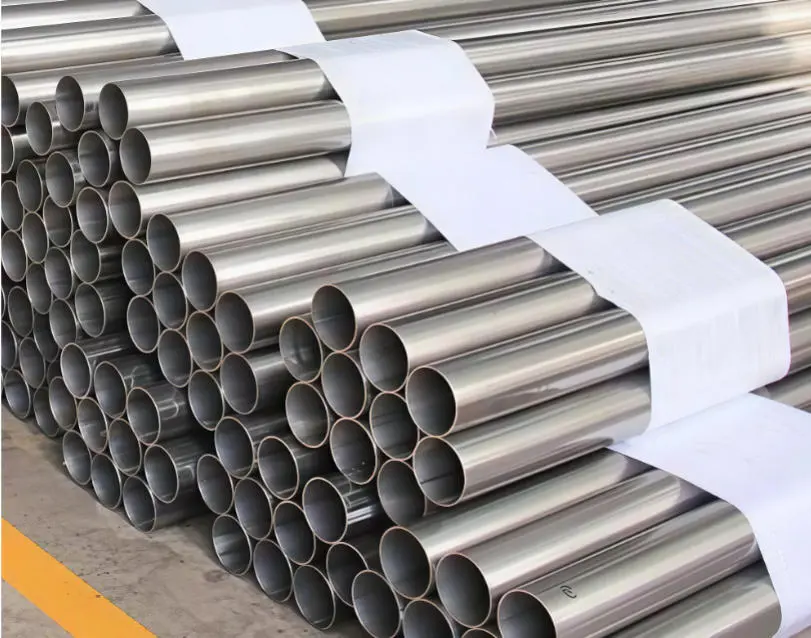
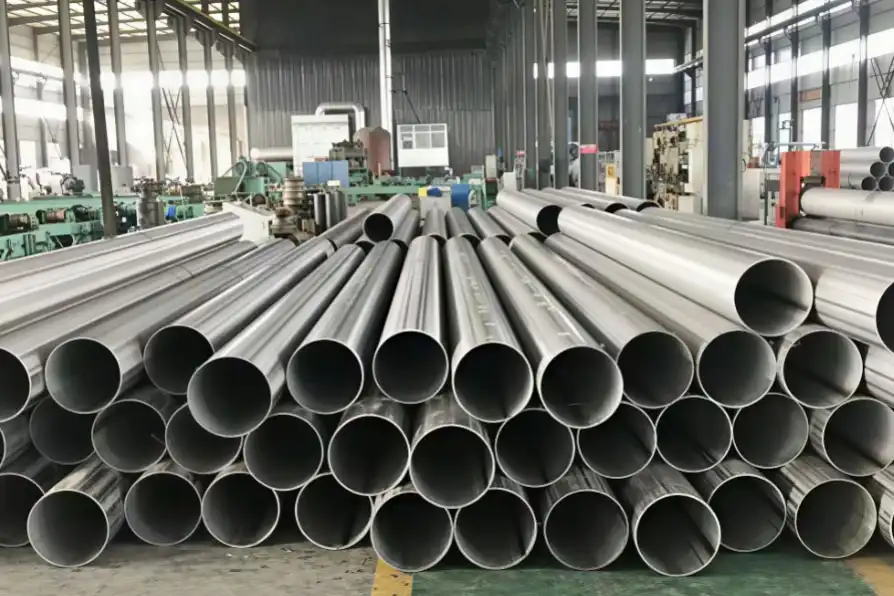
All of Trust's partner mills make TP304 pipe in four different ways: hot-finished, cold-drawn, cold-rolled, and welded (ERW/EFW). There is a controlled heating cycle that gets rid of carbide precipitates and rebuilds the austenitic structure in each pipe after it has been made. This step is needed for the water treatment service. If you skip it, you'll leave stress behind, which speeds up stress corrosion cracking in polluted settings.
Non-Destructive and Mechanical Testing
Before any cargo ships come in, it has to go through a set of checks. The test covers the following:
- Eddy current testing: Detects surface and sub-surface discontinuities along the pipe wall.
- Hydrostatic testing: 100% of pipes are pressure-tested to confirm leak-free performance.
- Ultrasonic testing (UT): Confirms wall thickness consistency and identifies internal voids.
- Mechanical tests: Tensile, yield strength, elongation, flattening, and flaring tests verify ductility and load-bearing capacity.
- PMI analysis: Confirms chromium and nickel content against the heat's MTC values.
The eddy current test finds cracks in the pipe wall both above and below the surface.
Certifications and Documentation Package
Mechanical tests, such as tensile, yield, extension, flattening, and bending tests, show how strong and flexible the material is.- PMI analysis: Compares the heat's chromium and nickel levels to their MTC levels.
Maximizing the Benefits of TP304 Pipes in Water Treatment Systems
Routine Maintenance Practices
For TP304 to last longer, there are a few things that can be done. It doesn't need as much care as treated carbon steel. If you look at the surface once a year for darkening, deposits, or crevice rust at joints, you can find problems early. A weak nitric acid or citric acid solution can be used for periodic passivation to fix an oxide film that was damaged by welding or other mechanical means. You can keep from getting iron on your hands by not letting them touch metal tools or carbon steel surfaces for long periods of time during installation. Free iron makes rust more likely to happen.
Design and Layout Best Practices
It is important for engineering teams to set minimum angles of bend so that the pipe wall doesn't get too hard and allow magnetic leaks to happen. There should be rubber or stainless steel on the touch points of supports and clamps so that they don't get galvanic contact and damage the surface. If the inside is going to be used for food or water, pick finishes that have been pickled and annealed or bright-annealed. With CIP, it's easier to clean things that are smooth.
Emerging Coating and Surface Technologies
Electropolishing, the process of removing a thin layer from the surface with electricity, makes the surface rougher than Ra 0.4 µm. This makes it a lot harder for bacteria to stick to water systems used in pharmaceuticals. There are now times when this finish is asked for on ultrapure water loops instead of mechanical mirror polishing. These high-tech products cost more, but they reduce the need for cleaning agents over time and the chance of breaking the rules in businesses that are monitored.
Conclusion
tp304 pipe stainless steel pipe continues to be the most practical and cost-effective choice for water treatment systems that require reliable corrosion protection, certified documentation, and medium-batch supply flexibility. Its chromium-nickel composition resists the oxidation and mild chemical exposure common in municipal water, food processing, and industrial fluid systems. Backed by ASTM A312 compliance, full solution annealing, 100% hydrostatic testing, and EN 10204 3.1 MTC documentation, a properly sourced and installed TP304 pipe system delivers consistent performance across a multi-decade service life without demanding extensive maintenance resources.
FAQ
What standard governs TP304 pipe for water treatment?
ASTM A312 is the primary standard for seamless and welded TP304 stainless steel pipe in general corrosive service, including water treatment. ASME SA312 is the pressure vessel equivalent. Both set tight limits on chemical composition, mechanical properties, and dimensional tolerances.
How do I confirm that the Cr/Ni content meets specification?
Request an EN 10204 3.1 Mill Test Certificate linked to the pipe's heat number. The certificate lists actual chemical analysis values. For added certainty, arrange PMI testing — optical emission spectroscopy — to verify elemental content against the MTC before formal acceptance.
Can TP304 pipe handle chlorinated municipal water?
Yes, at typical municipal chlorination levels (0.2–4 mg/L free chlorine). For high-chloride or brackish water systems, TP316 or TP316L is more appropriate due to the added molybdenum content that resists chloride pitting.
What wall schedule should I specify for water distribution?
SCH 10S and SCH 40S cover most municipal and industrial water distribution applications. Higher schedules (SCH 80S, SCH 160) are specified where elevated operating pressure or external mechanical load requires additional wall thickness.
Does All Trust accept third-party inspection?
Yes. All Trust Steel accepts and coordinates third-party inspection by SGS, BV, TÜV, DNV, Lloyd's, and ABS at the warehouse or mill before shipment.
Get a Quote from All Trust — Your Trusted TP304 Pipe Supplier
More than 5,000 tons of approved stainless steel pipe are always in stock at Hebei All Trust Steel. Orders that are shipped from stock arrive in 3–5 days, and we also accept orders with a low MOQ. When you buy or make TP304 pipes from our skilled company, you can get EN 10204 3.1 MTCs, third-party inspection help, and export packaging that is made to keep pipes from getting damaged while they're being shipped. Email our team at info@hballtrust.com or go to hballtrust.com Right now to get a quote and certified product data sheets.
References
1. ASTM International. ASTM A312/A312M: Standard Specification for Seamless, Welded, and Heavily Cold Worked Austenitic Stainless Steel Pipes. ASTM International, 2022.
2. American Society of Mechanical Engineers. ASME SA-312: Specification for Seamless, Welded, and Heavily Cold Worked Austenitic Stainless Steel Pipes. ASME, 2021.
3. Sedriks, A. J. Corrosion of Stainless Steels, 2nd ed. John Wiley & Sons, 1996.
4. Outokumpu Stainless. Corrosion Handbook: Stainless Steel in Water Applications. Outokumpu, 2015.
5. U.S. Environmental Protection Agency. Water Distribution System Analysis: Field Studies, Modeling and Management — Reference Manual. EPA/600/R-06/028, 2006.
6. British Stainless Steel Association (BSSA). Stainless Steel in Water Industry Applications. BSSA Technical Publication, 2018.

