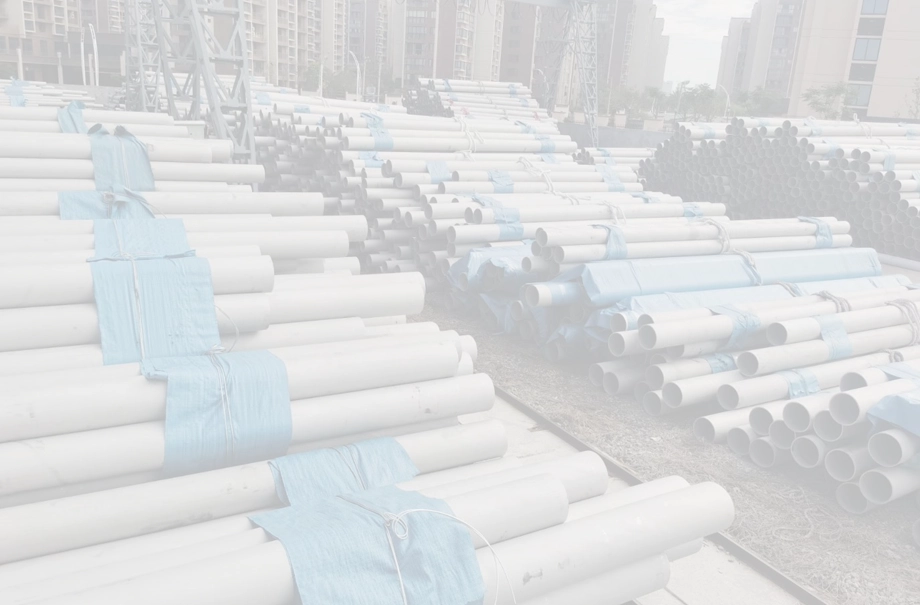
ASTM A403 WP304 WP304L Elbow: Grade, Schedule and Fit Checks
Getting the grade and schedule of wrought stainless steel pipe fittings for pressure pipe systems right the first time saves a lot of money. When it comes to chemical processing, municipal water, and food-grade piping, the ASTM A403 WP304 WP304L Elbow is one of the most important butt-weld fittings. WP304 carries UNS S30400 chemistry, while WP304L (UNS S30403) holds carbon at a maximum of 0.03%, directly preventing carbide precipitation in weld heat-affected zones. In terms of size, both grades meet ASME B16.9 and ASTM A403/ASME SA403 standards. They cover NPS 1/2" to 48" in ranges from Sch 5S to Sch 80S.
Understanding WP304 and WP304L Grades and Specifications
To pick between WP304 and WP304L, you must first know what each grade has to offer in chemistry.
Chemical Composition at a Glance
Nickel makes up 8–10.5% of WP304, and carbon makes up no more than 0.08% of the metal. No more than 0.03% carbon is in WP304L, but the rest of it is the same. When you weld, chromium carbide precipitates along the grain boundaries between 425°C and 860°C. This is called sensitisation. It's gone after this one change. Most of the time, intergranular corrosion fails in fabricated piping assemblies because the materials become less resistant to it.
Mechanical Properties and Heat Treatment
It must be at least 515 MPa for both grades to be strong. The yield for WP304 is 215 MPa, and the yield for WP304L is 205 MPa. To make each elbow, the steel is heated to about 1040°C and then quickly cooled in water. This is done after the elbow has been hot-shaped on a mandrel or cold-pressed. This recrystallizes the grain structure and lets the material bend again in some ways that it lost while it was being formed. Without that step of heat treatment, the fitting will still have stress and less protection against rust.
Dual Certification and Standards Compliance
A lot of companies now sell valves that are dual-certified, which means they meet the chemical and mechanical needs of both WP304 and WP304L. So, procurement teams can make the most of their time since they don't have to keep track of two different stock lines. ASTM A403, ASME SA403, ASME B16.9, EN 10253-3, and EN 10253-4 all say that these elbows are safe to use. In other words, they can be used on projects in the US, the Middle East, and Southeast Asia.
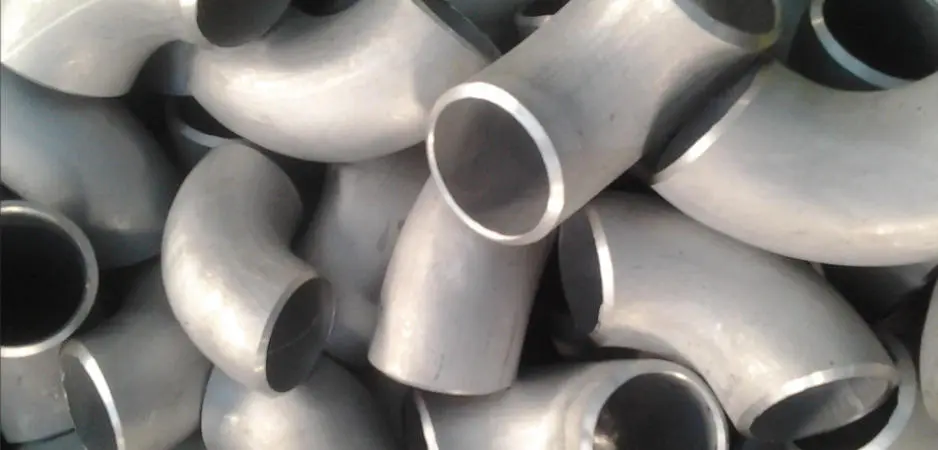
Schedule and Dimensional Fit Checks for Stainless Steel Elbows
If the elbow and pipe don't match in size, it won't be seen until hydraulic testing or, even worse, when the pipe is being used. To get this right from the start, you need to look at three variables that are all connected.
Wall Thickness and Schedule Matching
ASTM A403 WP304 WP304L Elbow cover Sch 5S, 10S, 40S, 80S, 160, and XXS wall plans can be used. Because the ASME B16.9 standard is based on pressure design instead of a uniform-thickness requirement, the wall thickness at the elbow intrados can be less than the nominal pipe wall. Teams in charge of buying things should ask for the supplier's measurement inspection report to include both the nominal schedule label and the actual measured wall at the intrados. There is a known risk of replacement when there is negative variation beyond the ASTM limit.
Radius and End Diameter Verification
The center-to-end length of a Long Radius (LR) elbow is 1.5 times the standard pipe size, while the center-to-end length of a Short Radius (SR) elbow is only 1 time. By making sure of the correct radius type before placing an order, installation problems in limited equipment bays can be avoided. The bevel end's outside diameter must match the pipe it's connecting to within the ASME B16.9 tolerances, which are usually ±1.6 mm for bigger sizes. ASME B16.25 says that the bevelled ends must be 37.5° ± 2.5°.
Fit Verification Tools and Inspection Methods
There are several ways that the procurement and quality assurance teams can check for dimensional conformance. In a B2B industry acceptance check, these are the usual steps that are taken:
- Calliper and ultrasound wall gauge checks measure the real wall thickness at four corners of each bevel end. This makes sure that the schedule is met before the fitting gets to the manufacturing floor.
- Go/no-go bevel gauges check the end bevel angle and land dimension against ASME B16.25 in less than two minutes per fitting. This finds mistakes in the machining process before it is put together.
- As part of the EN 10204 3.1 Mill Test Certificate package, every shipment should come with a dimension inspection report from the mill. This report can be linked to the heat number and used to find information.
Together, these ways make sure that each elbow fits smoothly into the pipe system, so there is no need for expensive repairs or changes in the field.
Comparing WP304 vs WP304L for Procurement Decisions
The grade will be given after reading about how it was made and how it will be used.
When WP304 Is the Right Choice?
WP304 works well for jobs that don't need a lot of welding or can be fixed with heat after the fact. In mechanical systems with a lot of pressure, its slightly higher yield strength is a good thing. It makes sense for frames for food equipment, structural brackets, and general-use compression parts that don't need to be soldered together. Most of the time, WP304 is a little cheaper than WP304L because carbon control is not as strict when the metal is melting.
When WP304L Is the Correct Specification?
WP304L is the standard for pipes used in chemical processes, city water systems, and any other situation where welding takes place in the field without annealing afterward. The ASTM A262 Practice E intergranular corrosion test shows that WP304L keeps the integrity of its grain boundaries even after being heated and cooled many times in a simulation of welding. Pharmaceutical CIP circuits, food-grade beverage lines, and offshore water injection systems all use WP304L for this reason.
Market Availability and Lead Times
A lot of well-known providers keep dual-certified ASTM A403 WP304 WP304L Elbows in stock. These come in LR 90° and 45° configurations, and the sizes range from NPS 1/2" to 12". Standard plans have lead times of less than 15 days most of the time. Bigger sizes and plans that aren't the norm need mill production runs of 25 to 30 days. When there aren't many days to finish a job, making sure the stock is available before agreeing to a plan helps keep supplies on track.
Testing and Quality Assurance Protocols
There should be good paperwork that can be used to track every part that is sent out. Before putting the ASTM A403 elbow on the market, well-known companies that make it go through these main tests:
- Using XRF or OES for PMI (Positive Material Identification), the verified heat chemistry on the MTC is compared to the chromium, nickel, and carbon content. This finds any grade substitutions before the fitting gets to the site.
- Non-destructive testing, or NDT, includes Ultrasonic Testing (UT) for seamless (WP-S) fittings and Radiographic Testing (RT/X-ray) for welded seam (WP-W) variants. These tests can find internal gaps or weld breaks that a visual inspection can't.
- Intergranular rust tests according to ASTM A262 Practice E confirm that WP304L is resistant to sensitisation. This is proof that the low-carbon chemistry works as expected after being heated during welding.
People who sell goods will be happy to have a third party like SGS, Bureau Veritas, TUV, DNV, or ABS check their work. To complete the quality package, there are also EN 10204 3.1 and 3.2 mill test certificates, ISO 9001:2015, CE, and PED certificates. The buying team needs these badges to show that they have followed the rules. They are not just nice to have; they are necessary.
Procurement Best Practices for Stainless Elbow Sourcing
To find the right part from the right source, you need to think about more than just price per unit.
Supplier Qualification Criteria
As part of ASTM A403 WP304 WP304L Elbow, a good provider keeps track of raw material heat numbers, lets third parties check their work, and makes sure they have standard sizes in stock. You can make sure that the supplier's way of recording meets the standards of the EN 10204 3.1 format by looking at their MTC samples before you place an order. When sellers can't give heat-traceable MTCs when asked, there is a material replacement risk.
Managing MOQ and Capital Exposure
High minimum order numbers are very hard for medium-sized businesses that work on a range of project sizes. Work with suppliers who ship a variety of pipe sizes, schedules, and fittings all at once. This saves you money on shipping costs and keeps your capital from being stuck in extra stock. It's normal for us to ask established sellers to be flexible on MOQ terms for standard sizes when we trade.
Packaging and Transit Protection
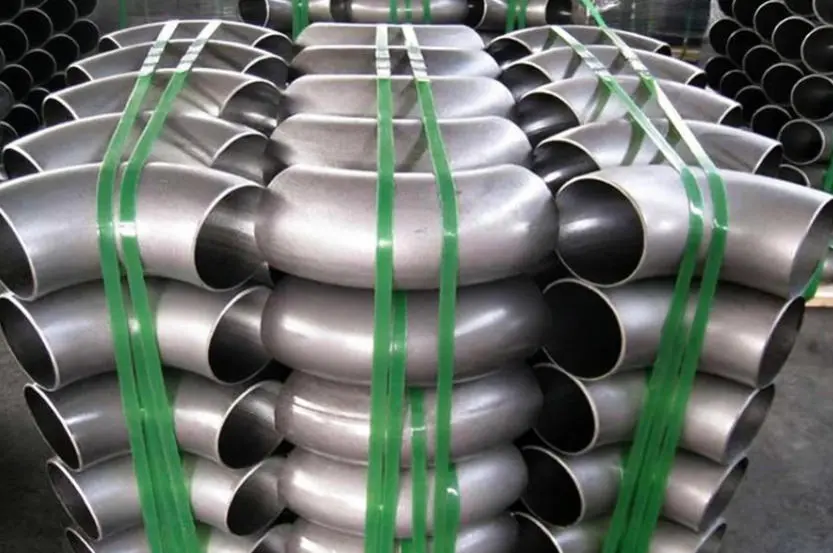
Steel elbows that are scratched or dented during shipping cost more to fix and take longer to deliver. As part of proper export packing, fittings should be individually wrapped in foam, protected with plastic end caps, and stored in strong wooden boxes with dividers inside to keep them separate by size. In order to file a shipping damage claim, you should first ask for pictures of the packed goods before the container is sealed.
Conclusion
There are three main things that keep pressure piping systems from failing: choosing the right grade, making sure that the schedule works with the grade, and checking that the ASTM A403 WP304 WP304L Elbow products' sizes are right before they are shipped. WP304L is the best material for field welding because it has low carbon. One stock line that has dual approval can be used for both types. Full solution annealing, tracked MTCs, and third-party NDT acceptance are quality signs that can't be changed. They tell the difference between a stable supply source and a risky substitute. Following these simple steps during the buying process will help keep projects on track and pipelines in good shape for as long as the asset lasts.
FAQ
What is the main difference between WP304 and WP304L elbows?
The difference is the amount of carbon. WP304 allows up to 0.08% carbon, but WP304L only allows up to 0.03%. This lower carbon level stops chromium carbide from forming during welding. This keeps the heat-affected area safe from intergranular corrosion. WP304L is the right standard for any construction that uses field welding without a heat treatment after the welding process.
How do I verify that an ASTM A403 elbow is genuinely compliant?
Ask for the EN 10204 3.1 Mill Test Certificate that is linked to the fitting's specific heat number. Compare the approved amounts of chromium, nickel, and carbon to the standards in ASTM A403 Table 1. For soldered parts, you should ask for an RT/X-ray report. PMI with XRF on-site gives a quick second check before installation.
Can WP304L elbows handle high-temperature service?
In constant service up to about 425°C, WP304L keeps its mechanical properties in a good state. Even if the carbon percentage is low, the chance of sensitisation goes up above that temperature, so better metal types should be considered. Standard WP304 with post-weld annealing works well for scaling resistance up to 870°C in intermittent conditions.
What schedules are typically available from stock?
Most of the time, Sch 10S and Sch 40S in LR 90° and 45° configurations from NPS 1/2" to 12" are in stock. Mill lead times for Sch 80S and heavier walls in larger sizes are usually 25 to 30 days.
Request a Quote from All Trust — Certified ASTM A403 WP304 WP304L Elbow Supplier
All Trust always has certified WP304/WP304L elbows in stock. They come in LR and SR shapes and have NPS 1/2" to 48" sizes. They come with EN 10204 3.1 MTCs, third-party inspection acceptance, and export packaging as standard. We answer all questions within an hour because we are a reliable ASTM A403 WP304 WP304L Elbow maker. To get a quote right away, email your list of requirements to info@hballtrust.com or go to hballtrust.com.
References
1. ASTM International. ASTM A403/A403M: Standard Specification for Wrought Austenitic Stainless Steel Piping Fittings. ASTM International, 2022.
2. ASME. ASME B16.9: Factory-Made Wrought Buttwelding Fittings. American Society of Mechanical Engineers, 2018.
3. ASME. ASME B16.25: Buttwelding Ends. American Society of Mechanical Engineers, 2017.
4. ASTM International. ASTM A262: Standard Practices for Detecting Susceptibility to Intergranular Attack in Austenitic Stainless Steels. ASTM International, 2021.
5. European Committee for Standardization. EN 10253-3: Butt-Welding Pipe Fittings — Wrought Austenitic and Austenitic-Ferritic (Duplex) Stainless Steels. CEN, 2008.
6. Llewellyn, D. T., and Hudd, R. C. Steels: Metallurgy and Applications, 3rd ed. Butterworth-Heinemann, 1998.