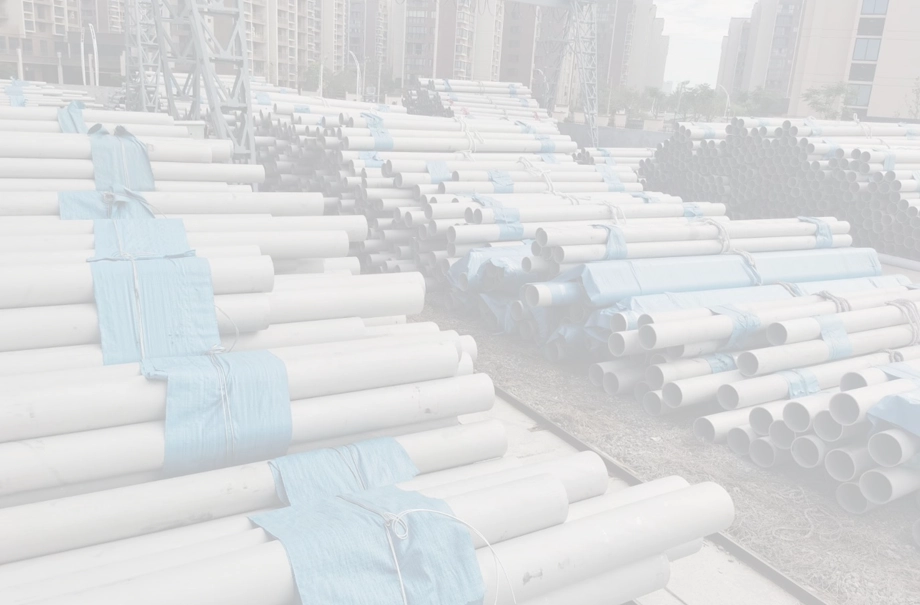
Can TP304 Pipe Deliver Reliable Performance in Food and Beverage Processing Lines?
Yes — and the evidence is well-established. A TP304 pipe, manufactured to ASTM A312 from UNS S30400 austenitic stainless steel, contains 18–20% chromium and 8–10.5% nickel. This composition creates a self-repairing passive oxide layer that resists most food-grade acids, alkalis, and sanitizing agents. With a minimum tensile strength of 515 MPa and full solution annealing applied during production, these pipes maintain dimensional stability and hygiene integrity across continuous processing cycles — making them a dependable choice for food and beverage plant operators worldwide.
Understanding TP304 Pipe: Composition and Properties
Chemical Composition and Grade Certification
What makes TP304 (UNS S30400) different from other carbon steel pipes is its alloy chemistry. The highest amount of carbon in the material is 0.08%, which makes it stable against sensitivity in most standard-temperature use. Chromium and nickel levels are closely monitored by ASTM, and each approved batch has an EN 10204 3.1 Mill Test Certificate (MTC) that can be traced back to the original heat number. This ability to track saves buyers from getting low-quality Cr/Ni substitutes.
Mechanical Properties That Matter in Production
304 stainless steel pipe has a minimum elongation of 35% and a yield strength of 205 MPa. In real life, this means that the pipe can bend without cracking while it's being installed, and it can also handle vibrations from pumps and agitators without cracking over time. When full solution annealing is done after cold drawing or welding, it gets rid of any remaining stress and stabilizes the grain structure. This makes it less likely that stress-corrosion cracks will form in cleaning chemical environments.
Corrosion Resistance Compared to TP316 and TP321
TP304 works well with most Clean-In-Place (CIP) soaps used in dairy, beer, and beverage lines. It also works well with light phosphoric acid and organic acids. TP316 has 2–3% molybdenum added to it to make it more resistant to chlorides and work better in seawater or high-salt brines. TP321, on the other hand, uses titanium stabilization to handle high temperatures for a long time above 425°C. For most food processing tasks that don't involve long-term chloride exposure, TP304 offers sufficient protection at a lower cost per unit.
TP304 Pipe vs Other Stainless Steel Pipes: Making the Right Choice
TP304 vs TP304L: Carbon Content and Weld Performance
TP304L only allows 0.03% carbon, which stops carbide from forming in the heat-affected zones. This stops a situation called sensitization that can lead to intergranular corrosion. For welders who don't want to anneal the pipe after the weld, TP304L is the better pick. Standard TP304 is physically identical to standard-gauge pipe that is solution-annealed after welding, and it is a little cheaper when buying in medium quantities.
TP304 vs Carbon Steel: Hygiene and Total Cost
When carbon steel pipe is exposed to water, acids, and cleaning products, it rusts quickly. The iron oxide scale it forms messes up product lines and goes against rules about food safety. When you switch to austenitic stainless tp304 pipe, you get rid of rust, cut down on cleaning time, and increase the service life to 15–25 years in most food plant settings. ASTM International says that over the life of the system, maintaining stainless steel pipe systems in food preparation is always cheaper than maintaining coated carbon steel systems.
Identifying the Right Schedule and Surface Finish
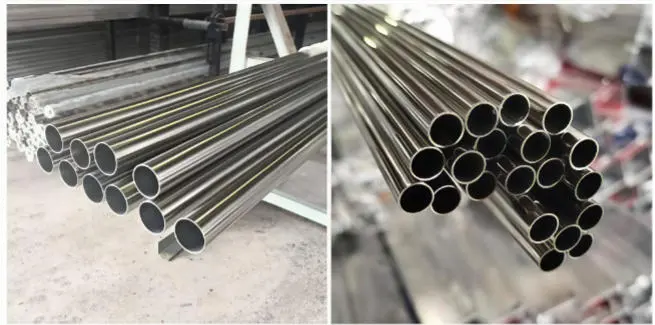
The following ASTM A312 schedule numbers are used to choose wall thickness: SCH 5S, 10S, 40S, 80S, and up to SCH 160. For pipes that come into contact with food, a mirror-polished (180# to 600# grit) or Bright Annealed (BA) surface stops biofilm and bacteria from sticking to the tube. Industrial lines that don't touch can use No. 1 or 2B finishes, which are easier to find and less expensive to make.
Applications of TP304 Pipe in Food and Beverage Processing Lines
Pipelines, Tanks, and Heat Exchangers
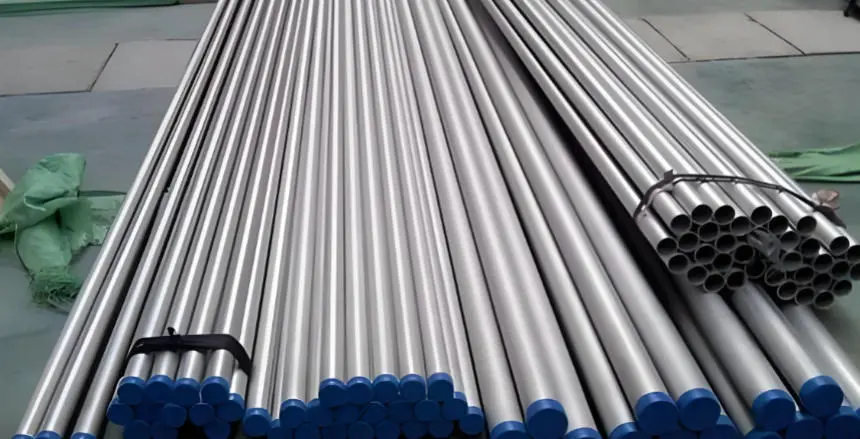
304 stainless steel pipe is used in food and drink plants for product transfer lines that move milk, juice, beer, and sauces at temperatures that range from almost freezing to 72–85°C, which is the point at which the food is pasteurized. Heat exchanger tubes made to ASTM A213 TP304 can handle thermal cycling without getting pitted or scaling. Tank inlet and outlet nozzles made of the same alloy keep the corrosion behavior of the whole vessel assembly the same.
Fittings, CIP Headers, and Sanitary Connections
Threaded NPT/BSPT ends and beveled-end pipe (BE) ends make it easy to connect to sanitary fittings and tri-clamp units that are used in CIP circuits. The smooth bore made by cold-drawing or precision internal grinding reduces areas of turbulence where waste builds up. This directly helps meet FDA and 3-A Sanitary Standards. For hygienic transfer headers, OEM food machinery builders often ask for outer diameters of 25 mm to 219 mm and walls that are SCH 10S.
Utility and Support Systems Within the Facility
304 stainless steel pipe is used throughout the plant for cooling water, compressed air, steam condensate, and mild chemical dosing lines. It also comes into direct contact with food. Corrosion-resistant pipes are also useful for HVAC draining systems and refrigerant support lines. This cross-facility applicability lets procurement teams combine orders from different departments, which cuts down on the number of suppliers and makes managing inventory easier.
Procurement Considerations for TP304 Pipes in B2B Context
Certifications and Material Traceability
A trustworthy Tp304 pipe seller should give you an EN 10204 3.1 MTC that lists the heat number, chemical analysis, mechanical test results, and hydrostatic test data for each lot of pipes you buy. Documents showing compliance with ISO 9001:2015, CE marking, and PED rules help with regulatory submissions in export markets. Before the cargo leaves the mill, it is checked by a third party, such as SGS, BV, TÜV, or DNV, to make sure that the chemical makeup and wall thickness meet ASTM A312 standards.
Evaluating Wall Thickness Tolerance and Dimensional Accuracy
Negative wall thickness deviation is a regular problem in the market for steel pipes. As per ASTM A312, welded pipe can have a wall thickness range of -12.5%. Buyers should ask for dimensional reports that show the actual wall thickness that was measured at several points along the length of each pipe. Eddy current testing and ultrasound testing find cracks below the surface that can't be seen with the naked eye. Hydrostatic pressure testing proves that the system works properly at its recommended service pressure and doesn't leak.
Before placing an order, buyers should make sure of these main procurement checkpoints:
- MTC / EN 10204 3.1 certificate with matching heat number on each pipe
- Third-party inspection acceptance (SGS / BV / TÜV) confirmed in writing
- Stock availability and lead time ≤ 15 days for standard schedules
- Low MOQ with flexible batch sizing to avoid excess capital tied up in inventory
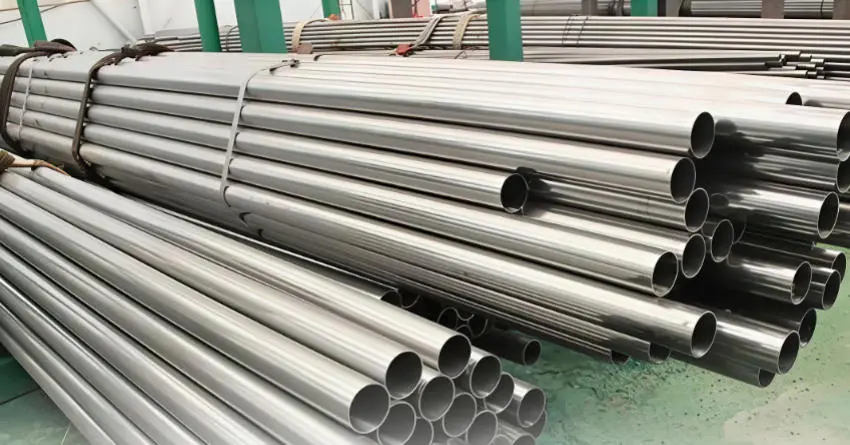
- Export-grade packaging: plastic end caps, waterproof woven bags, and steel-strapped bundles to prevent transit damage
These checks protect procurement managers from the most common sourcing risks, such as alloy content that isn't up to par, dimensions that don't match up, and damage during shipping that causes delays in production plans.
Ensuring Reliable Performance: Installation and Maintenance Best Practices
Welding and Joining Recommendations
When you use inert gas back-purging with TIG welding (GTAW), you protect the passive layer inside the bore and stop the oxidation discoloration that makes surfaces rough and easy for bacteria to grow on. The filler metal should have the same amount of alloy as the parent metal or more. After welding, the heat-affected area can be made fully resistant to rust again by electropolishing or pickling paste.
Cleaning Protocols for Food-Grade Environments
To get rid of protein and mineral buildup, CIP systems usually move caustic soda (NaOH, 1% to 2%) and then nitric acid (HNO3, 0.5 to 1.5%) through the system. At normal CIP temperatures (65–80°C), TP304 can handle both reagents. If you want to keep low-flow areas from pitting, you should fully rinse chlorine-based cleaners within the contact time given by the chemical supplier.
Non-Destructive Testing and Documentation
Ultrasonic thickness gaging is used for regular in-service checks to find wall thinning caused by erosion or localized corrosion before leaks happen. Food safety audits required by FSMA, BRC, and ISO 22000 frameworks can be met by keeping a pipe register that notes the date of installation, the heat number, and the history of inspections. This also allows for full material traceability throughout the asset's service life.
Conclusion
For batch after batch, food and drink handling lines need materials that stay clean, stay strong, and stay in line. As long as the Tp304 pipe is made according to ASTM A312 standards and has a verified Cr/Ni content and full solution annealing, it will always meet the needs of pipelines, heat exchangers, CIP headers, and utility systems. The important thing is to find a provider that backs up every package with a traceable MTC, lets a third party check, and keeps the schedules and surface finishes that your production schedule needs in stock.
FAQ
Can TP304 pipe handle pasteurization temperatures?
Yes, TP304 keeps its mechanical properties up to about 870°C (1600°F) for resistance to oxidation, and it works well in the normal temperature range of 72–85°C for plate pasteurizers.
Is TP304 pipe less corrosion-resistant than TP316 in food applications?
For long-term service above 425°C, think about TP321 with titanium stability.
What certifications should I request from a TP304 pipe supplier?
Ask for an EN 10204 3.1 Mill Test Certificate that includes a heat number that can be tracked, ISO 9001:2015 quality management certification, records of hydrostatic tests, and results of eddy current or ultrasound tests. For orders to be sent abroad, third-party inspection certificates from SGS, BV, or TÜV provide a separate check.
What is the standard wall thickness range for food-grade TP304 pipe?
For lightweight hygienic pipe, food-contact lines usually ask for SCH 5S or SCH 10S, while structural and pressure service call for SCH 40S or heavier. Schedules range from SCH 5S to SCH 160, and ODs range from 13.7 mm (1/4") to 609.6 mm (24").
How do I verify that TP304 pipe has correct Cr/Ni content?
Ask for an X-ray fluorescence or optical emission spectroscopy Positive Material Identification (PMI) analysis. 18.0–20.0% Cr and 8.0–10.5% Ni should be seen on the MTC. Before shipping, PMI tests can be done by independent third-party labs like SGS and TÜV.
Partner with All Trust for Certified TP304 Pipe Supply
All Trust Steel, also known as Hebei All Trust Steel Co., Ltd., keeps more than 5,000 tons of stock on hand to meet both standard and special plans. Stock items can be shipped in 3–5 days. As a reliable company that makes and sells Tp304 pipes, we offer EN 10204 3.1 MTCs, allow third-party inspection by SGS/BV, and ship our products in export-grade packaging to keep them safe during transport. Send your question to info@hballtrust.com right now to get a reasonable price that is based on the size of your order and when you need it delivered.
References
1. ASTM International. ASTM A312/A312M: Standard Specification for Seamless, Welded, and Heavily Cold Worked Austenitic Stainless Steel Pipes. ASTM International, 2022.
2. American Society of Mechanical Engineers. ASME B31.3: Process Piping Code. ASME, 2022.
3. 3-A Sanitary Standards, Inc. 3-A Sanitary Standards for Multiple-Use Tubular Fittings. 3-A SSI, 2019.
4. U.S. Food and Drug Administration. Food Safety Modernization Act (FSMA): Preventive Controls for Human Food. FDA, 2021.
5. British Stainless Steel Association. Stainless Steel in the Food and Drink Industry. BSSA Technical Publication, 2020.
6. Euro Inox. Stainless Steel: Tables of Technical Properties — Materials and Applications Series. Euro Inox, 2014.