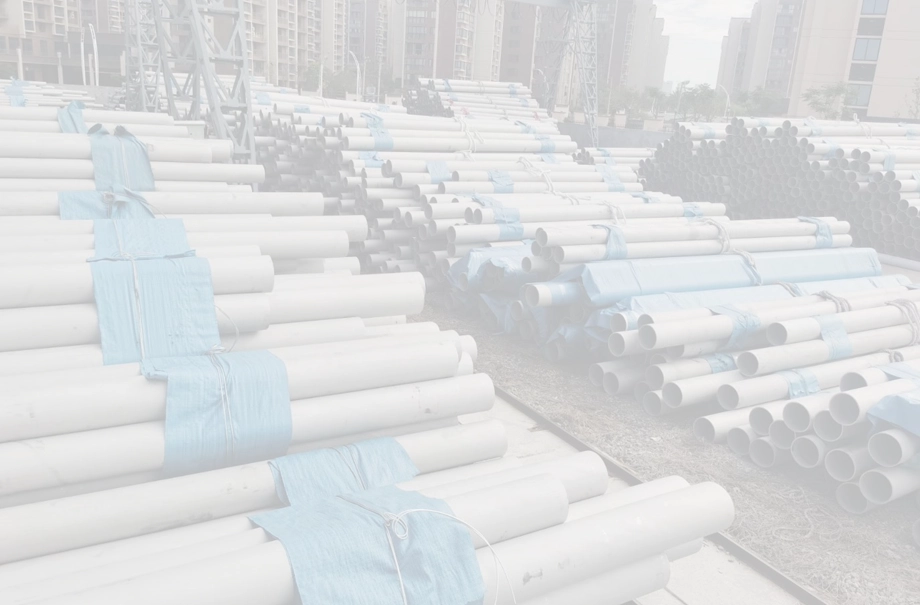
EN 10216-5 1.4404 Tube for Chemical and Process Piping Systems
When engineers specify tubing for aggressive chemical service, the grade and standard behind the material matter far more than the price tag. The EN 10216-5 1.4404 tube is a seamless austenitic stainless steel pressure tube manufactured to European technical delivery conditions, carrying the low-carbon, molybdenum-bearing designation widely recognized as 316L. Its extra-low carbon ceiling of 0.03% max prevents carbide precipitation at weld zones, while 2.0–2.5% molybdenum content delivers measurable resistance to chloride pitting—making it the go-to choice for chemical reactors, desalination plants, offshore platforms, and pharmaceutical fluid networks where a single leak carries severe consequences.
Understanding EN 10216-5 1.4404 Stainless Steel Tube Specifications
Chemical Composition That Drives Performance
In grade 1.4404 (X2CrNiMo17-12-2), there is 16.5% to 18.5% chromium, 10.0% to 13.0% nickel, and 2.0% to 2.5% molybdenum. The pitting resistance equivalent number (PREN) goes well above the normal 304/1.4301 when molybdenum is added. This makes the metal stand out in process streams that have halides in them. Because the carbon content is only 0.030 percent, there is no risk of sensitization after thermal cycling like there is with standard 316.
Mechanical Properties You Can Specify With Confidence
According to EN 10216-5, the minimum yield strength (Rp0.2) is 190 MPa, the tensile strength is between 490 and 690 MPa, and the extension is at least 45%. When making hot-finished or cold-drawn steel, these numbers stay the same. Full furnace solution annealing is done on the tube before it leaves the mill. This gets rid of any remaining mechanical stresses and evens out the microstructure of the alloy.
How to Authenticate Tube Quality on Arrival?
Every conforming tube needs to have the name of the manufacturer, the standard number "EN 10216-5," the grade number "1.4404," the heat number, and the test group (TC1 or TC2) permanently written on it. These marks should be used to compare with the EN 10204 3.1 Mill Test Certificate (MTC). Laser emission spectroscopy (PMI analysis) is a quick and easy way to check how much chromium, nickel, and molybdenum are in the sample as soon as it arrives.
Comparing 1.4404 Tubes With Other Stainless Steel Grades for Chemical Piping
1.4404 vs. 1.4301 (304): Why Molybdenum Changes Everything
To be exact, grade 1.4301 (304) does not have any molybdenum in it at all. When chloride is present in process fluids like seawater cooling loops, acid wash systems, and brine transfer lines, 304 tubes start to pit, but 1.4404 tubes don't seem to have any problems. Do not choose 1.4301 instead of a molybdenum-bearing grade for export projects that are meant for chemical plants in Europe or the Middle East. Doing so will put your compliance at risk and not save you money.
1.4404 vs. 1.4435: Nickel Content and Pitting Resistance
The chemistry of Grade 1.4435 is the same, with low carbon and molybdenum, but its nickel floor is only 12.5%, which makes its PREN a little higher. Because of this, many standards for food and medicine need 1.4435. Chemical process service-wise, en 10216-5 1.4404 tube and 1.4435 work about the same. However, 1.4404 is more often in stock, which cuts down on lead times and shipping costs.
Real-World Selection Logic From Chemical Plant Projects
In plants that work with sour gas, seamless 1.4404 tubing is often used instead of 316 welding pipe when sulfur stress causes it to break. The longitudinal weld line is not present in the seamless design at all. This means that the weakest spot in the cross-section is no longer there. A number of Southeast Asian petroleum OEMs have put this switch to the test in heat-exchanger tube bundles and found that it makes the tubes last three to five years longer between inspections.
Procurement Insights: How to Source High-Quality 1.4404 Stainless Steel Tubes?
Certification Checklist Before You Place an Order
A good source starts with good documentation. Before you agree to work with a seller, make sure they have the following:
A certificate in ISO 9001:2015 quality management or EN 10204 3.1 or 3.2 MTC that shows real results from mechanical and heat tests
—A statement that the service of pressure equipment is in line with PED 2014/68/EU
—Being approved by a third party, like SGS, BV, TUV, DNV, or ABS
- EN 10204 3.1 or 3.2 MTC showing actual heat analysis and mechanical test results
- ISO 9001:2015 quality management certification
- PED 2014/68/EU compliance declaration for pressure equipment service
- Third-party inspection acceptance: SGS, BV, TUV, DNV, or ABS
As time goes on, these certificates keep you from being responsible for anything and meet the standards for technical checks that are usual in export agreements. You should try to stay away from suppliers who can't give you full 3.1 documentation within 24 hours of being asked to.
Pricing Factors and Lead Time Planning
It is because nickel and molybdenum are sold as sources that the price of 1.4404 moves with the LME metal index. If you change the OD range (6.0–609.6 mm), wall thickness (0.5–40.0 mm), and surface finish (solution annealed and pickled (SA&P/CFA), bright annealed (CFB), or electropolished), the cost per meter will change. If you need a medium-sized order to be shipped in 15 days, make sure that the seller keeps a collection that is always being added to and doesn't rely on mill-to-order production. Items in stock at a secured warehouse can be sent out in 3–5 days. It takes about 15–20 days for standard custom lengths.
Risk Mitigation: Avoiding Substitution and Substandard Material
If a supplier sends standard 316 or even 304 with the label "1.4404," this is called material substitution. It is a known risk of buying on the spot market. To be safe, get eddy current or ultrasound tests and PMI analysis from a third party before the shipment. If there are any negative wall errors, check the wall thickness tolerance class against EN ISO 1127 (D3/T3 or D4/T4 for tight-tolerance uses). Do this before the tubes get to your company.

Installation, Maintenance, and Technical Best Practices for 1.4404 Tubes
Welding Protocols That Preserve Corrosion Resistance
For en 10216-5 1.4404 tube, use AWS ER316L filler wire or a wire that is the same in Europe for all fusion welds. During TIG welding, use argon or nitrogen to clean out the tube body so that the inside doesn't rust. Due to the fact that 1.4404 already has 0.030% carbon, most process codes don't need a heat treatment after the weld. While going through this process, the temperature should stay 150 °C below so that heat-affected areas next to it don't become sensitive.
Handling, Cutting, and Fitting on the Shop Floor
Racks made of bare steel can get iron on them, so never store tubes on them. Use cradles made of wood or plastic instead. For cutting, use a plasma torch or a blade made just for stainless steel. When a carbon-steel blade is stored in a damp place for a few weeks, it leaves behind bits that rust on the surface. Always use a stainless steel thread compound when fitting, and make sure the gasket materials are safe for the process fluid. This will keep the flange faces from rusting in cracks.
Maintenance Schedules and Corrosion Monitoring
When the wall is in chloride-bearing service, it should be checked visually and with UT every 12 to 18 months. Eddy current can be used to look at the outside of the tube and find cracks early, before they reach the wall. Write down the results of each check and compare them to the width readings you got at the beginning of the project. This audit trail helps your program keep your assets safe and meets the needs of most insurance and government inspection programs.
Why Choose Our Certified 1.4404 Stainless Steel Tubes for Your Business?
Hebei All Trust Steel Co., Ltd. has been selling seamless stainless steel tubing to companies in East and South China, Southeast Asia, and the Middle East since 2006. We have more than 15 ISO-certified mills in our supply chain, so we can fill medium-batch orders without having to keep extra stock on hand. Our stock depth and measurement width range from 6.0 mm to 609.6 mm, and the wall thickness ranges from 0.5 mm to 40.0 mm.
All Trust's services are better than other spot-market sources in the following ways:
- Full EN 10204 3.1/3.2 MTC documentation issued with every batch, traceable by heat number to the original melt
- 100% NDT coverage: eddy current, ultrasonic, and hydrostatic pressure testing before shipment
- Third-party inspection accepted: SGS, BV, TUV, DNV, and ABS are all welcome on-site
- PED 2014/68/EU compliance and CE certification available for pressure equipment applications
- Export packaging: hexagonal ocean bundles with high-tensile steel straps and thick protective pipe-end closures, designed to prevent transit dents and surface contamination
- Lead times: 3–5 days for stock items; 15–20 days for custom dimensions
Purchasing managers often have problems with the supply chain because of things like lost paperwork, changes in wall thickness, damage during shipping, and slow response times for small-batch testing. These benefits directly fix these problems. Visit hballtrust.com to see all of our goods and get a free taste of our MTC before you buy it.

Conclusion
While chloride pitting, intergranular attack, and pressure integrity are all problems in chemical and process pipes, the EN 10216-5 1.4404 tube grade, also known as X2CrNiMo17-12-2 / 1.4404 and made according to EN 10216-5, is the best choice from a scientific point of view. Because it is seamless, has a low carbon ceiling, and a lot of molybdenum, it has a longer service life than welded or lower-alloy alternatives. If you buy something from a supplier who will let a third party check the goods and has all the necessary 3.1 MTC paperwork, the choice you make will stand up to both a technical audit and a budget review.
FAQ
What is the difference between 1.4401 and 1.4404?
Both grades contain molybdenum, but 1.4404 limits carbon to 0.030% maximum versus 0.070% for 1.4401. That lower carbon ceiling makes 1.4404 significantly more resistant to sensitization during welding, so it is the preferred choice wherever post-weld heat treatment is impractical.
What dimensional tolerances apply to EN 10216-5 tubes?
Dimensional tolerances follow EN ISO 1127. Standard orders are typically supplied to D3/T3; tighter D4/T4 tolerances are available for precision instrumentation and high-pressure applications where wall thickness deviation is a design-critical parameter.
Can 1.4404 tubing handle cryogenic service?
Yes. The austenitic structure retains toughness at low temperatures. Impact tests at −196°C or −46°C can be performed to verify suitability for specific cryogenic design codes upon request.
Does EN 10216-5 mandate hydrostatic testing?
Yes. Each tube is hydrostatically tested at the mill, typically to pressures exceeding 70 bar depending on wall thickness, confirming leak-tight integrity before the MTC is issued.
How do I confirm authentic 1.4404 material on delivery?
Check the tube marking for the manufacturer's logo, "EN 10216-5," "1.4404," the heat number, and the test category (TC1 or TC2). Cross-reference against the 3.1 MTC and conduct PMI analysis on arrival to verify actual chromium, nickel, and molybdenum levels.
Request Your EN 10216-5 1.4404 Tube Quote From All Trust Today
We trust All Trust, and they have been making En 10216-5 1.4404 tubes for more than 15 years. We offer full 3.1 MTC paperwork, accept third-party checks, and have stock that can be delivered within 15 days. Send your specs (OD, wall thickness, length, and surface finish you want) to info@hballtrust.com or visit hballtrust.com to get a price quote within 8 business hours.
References
1. European Committee for Standardization (CEN). EN 10216-5: Seamless Steel Tubes for Pressure Purposes — Technical Delivery Conditions — Part 5: Stainless Steel Tubes. CEN, 2013.
2. ASTM International. ASTM A312/A312M: Standard Specification for Seamless, Welded, and Heavily Cold Worked Austenitic stainless steel pipes. ASTM International, 2022.
3. International Organization for Standardization. ISO 1127: Stainless Steel Tubes — Dimensions, Tolerances and Conventional Masses per Unit Length. ISO, 1992.
4. European Commission. Pressure Equipment Directive 2014/68/EU. Official Journal of the European Union, 2014.
5. International Organization for Standardization. EN ISO 3651-2: Determination of Resistance to Intergranular Corrosion of Stainless Steels — Part 2: Ferritic, Austenitic, and Ferritic-Austenitic Stainless Steels. ISO, 1998.
6. Llewellyn, D. T., and Hudd, R. C. Steels: Metallurgy and Applications. 3rd ed. Butterworth-Heinemann, 1998.