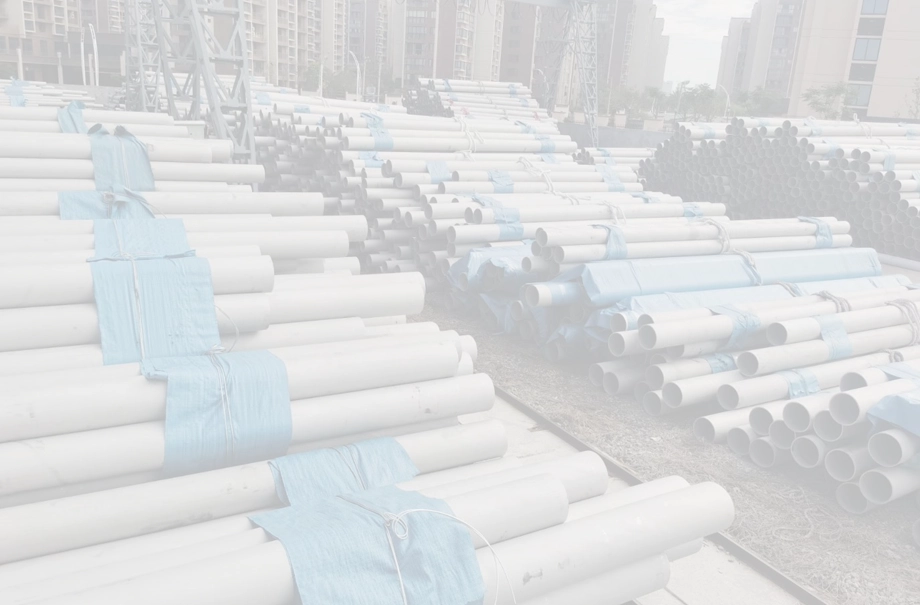
How to Check Weld Quality Before Buying 304 Stainless Steel Pipe
Before placing any bulk order, knowing how to evaluate weld quality in a 304 welded pipe can save your operation from costly failures down the line. A properly welded austenitic stainless steel pipe — manufactured to ASTM A312 with automated TIG, Plasma, or Laser longitudinal fusion — delivers a joint efficiency factor of 1.0, meaning the seam performs as strongly as the base metal itself. This guide walks purchasing managers, technical engineers, and OEM buyers through every practical step: spotting defects visually, applying non-destructive testing, reading certifications, and selecting the right supplier before committing capital.
Understanding Weld Quality in 304 Stainless Steel Pipes
SS 304 (UNS S30400 / 1.4301) has 8% nickel and 18% chromium. This mixture creates a steady layer of inactive oxide. The substance has a density of 7.93 g/cm³, a minimum yield strength of 205 MPa, and a tensile strength of 515 MPa. Things that make this material good must not change in the weld zone when it is shaped into welded pipe.
Chemical Composition and Physical Properties
304 is different from other carbon options that aren't as good because it has an 18/8 formula. Nickel and chromium work together to keep the austenitic structure stable. ASTM A312 says that heat that doesn't meet these limits should be thrown away right away. So, PMI (Positive Material Identification) research is a big part of buying things in a smart way.
304 vs. 304L: What Changes at the Weld
It is possible for 0.03% of carbon to form in 304L rather than 0.08% in 304. This means that less carbide will form in the heat-affected zone (HAZ) during welding. When 304L welds are left out in harsh chemicals or high temperatures for a long time, they tend to protect against intergranular corrosion better. Standard 304 is a great metal for pipes that carry clean water, drains, and pipes that are just for looks.
When to Consider 316 or Seamless Alternatives?
316 stainless steel, which has more molybdenum added to it, is the better choice if you need to use it in chloride-rich fluids or marine environments. To make high-pressure steam loops safer, heavy-wall welded pipe that has been 100% X-ray tested or construction that doesn't have any seams is the better choice.
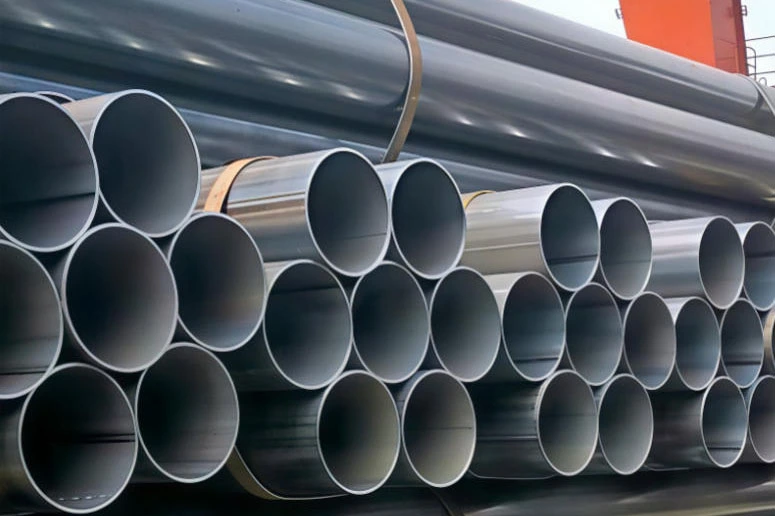
Common Welding Defects and How They Affect Pipe Performance
Each weld line is unique. Welding flaws can be so small that you can't even see them, but when a pipe is under pressure or changes temperature, they can make it last a lot less time.
Porosity, Cracks, and Slag Inclusions
When gas gets stuck in the weld pool as it hardens, holes form inside 304 welded pipe, making the joint less strong. This is called porosity. Large or small cracks in metal are usually caused by sudden changes in temperature or a weak base metal. Inclusions of slag happen when non-metallic matter gets stuck in multi-pass welds. It makes the cross-sectional strength weaker and lets corrosion happen.
Incomplete Fusion and Its Structural Impact
It means that along one or both of the fusion sides, the weld metal did not fully join with the base material. It happens a lot in places like water treatment plants and low-pressure industrial steam loops where the pressure changes over time. This flaw concentrates stress and speeds up fatigue cracking long before the pipe's rated service life is up.
Real-World Consequence: Why Inspection Cannot Be Skipped
If a chemical processing company doesn't check the 304 pipe stock that comes in for weld seam decay, they might find pinhole breaks after the pipes have been put in. After the buy, it costs ten to twenty times more to replace pipes in a system than it did before the buy. The flattening test and the reverse flattening test are both standard mechanical checks in ASTM A312. They are in charge of finding these issues before they happen on the factory floor.
Step-by-Step Methods to Check Weld Quality Before Purchase
You can feel safe about the purchases you make with a structured review process that gives your expert team objective proof before they accept payment.
Follow this order when your team does a core review: Check the dimensions and look at it. Check the outside weld bead to see if the crown height and width are the same and there are no cracks or undercuts on the surface. ASTM A312 says to check the OD, wall thickness, and straightness against these standards. Pipes in schedules with ODs ranging from 1/2" to 48" (DN15 to DN1200). For each size, from SCH 5S to SCH 80S, the product must meet certain size requirements in order to meet the MTC.
- Visual Examination and Dimensional Check: Inspect the exterior weld bead for uniform crown height, consistent width, and absence of surface cracks or undercut. Measure OD, wall thickness, and straightness against ASTM A312 tolerances. Pipes ranging from 1/2" to 48" OD (DN15–DN1200) in schedules SCH 5S through SCH 80S each carry specific dimensional acceptance criteria that must match the MTC.
- Eddy Current Testing (ECT): ECT passes an alternating electromagnetic field through the pipe wall to detect surface and subsurface flaws without cutting the pipe. It is fast, suitable for 100% production-line coverage, and is the baseline non-destructive test standard for welded austenitic stainless steel pipe.
- Radiographic Testing (RT / X-Ray): RT produces a permanent film record of internal weld integrity, revealing porosity, inclusions, and incomplete fusion invisible to ECT. It is the preferred method for high-confidence procurement, particularly for export orders requiring ASTM A358 compliance or third-party sign-off from SGS, BV, TÜV, or DNV.
- Ultrasonic Testing (UT): UT uses sound wave propagation to locate internal voids and measure wall thickness consistency. It works well on heavier schedules where RT sensitivity decreases.
"ECT" stands for "Eddy Current Testing." With ECT, flaws on the surface and below the surface can be found without cutting the pipe. An alternating electromagnetic field is sent through the pipe wall. This is the usual non-destructive test for welded austenitic stainless steel pipe. It works quickly and can check the whole production line.
Radiographic tests, like X-rays and others, make a permanent film record of the integrity of the internal weld in 304 welded pipe. This film shows inclusions, porosity, and incomplete fusion that ECT can't see. Many people buy things this way because they are sure they are safe. This is especially true for export orders that need to meet ASTM A358 standards or have a third party like SGS, BV, TÜV, or DNV sign off on them.
They don't cancel each other out; they work better together. The buying teams are most sure about a deal before they approve it when it has both ECT and extra RT.
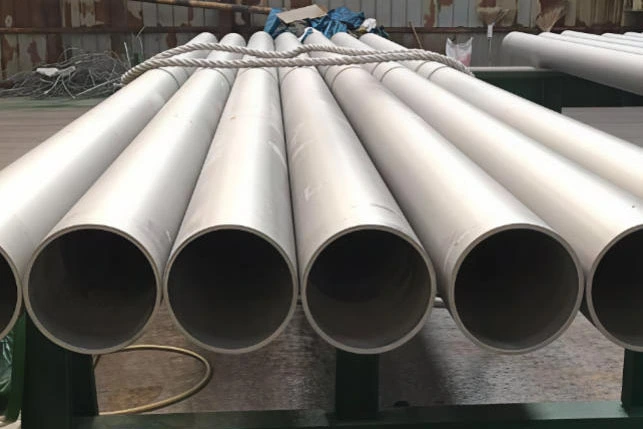
How to Choose the Right Supplier and Pipe Grade for Your Needs?
Whether or not your MTC fits the pipe you get depends on which provider you choose. There are both fully recognized makers and sellers who use cheaper materials on the market, so all the goods need to be checked.
Certifications and Documentation to Demand
At the very least, ask for an EN 10204 3.1 Mill Test Certificate, an ISO 9001:2015 certificate, and proof that the mill lets outsiders check it out. When goods are sold in other countries, CE marks and PED compliance make them safer. Not giving you the original MTCs or letting SGS/BV check them is a big red flag.
Comparing 304 vs. 304L and Seamless Options
304 welded pipe is a standard size that can be used for most machines, local water systems, food machine OEMs, and building structures. Intergranular corrosion can't happen in the weld zone if your process engineer tells you so. 304L is the right grade for that. To make sure the wall thickness schedule matches ASME B31.3 or the appropriate piping code, check it against the pressure values before you place your order.
Negotiating Lead Times, MOQ, and Customization
If a supplier has more than 5,000 tons of stock spread out over several warehouses near major ports, they can honestly say that stock orders will be filled in 3–5 days and custom orders will be filled in 15–20 days. Buyers can get a trial order with a flexible low MOQ and check the quality of the welds on a small batch before committing to full production volumes. At the same time, this lowers the risk to the company's cash and proves that the seller can do the job.
Best Practices to Ensure Long-Term Performance of Welded Pipes
Purchasing a properly certified pipe is only half the equation. How you store, handle, and maintain welded stainless steel pipe determines whether the weld zone performs across its full design life.
Handling and Storage to Protect the Weld Zone
Always store 304 welded pipe on rubber-padded racks, segregated from carbon steel to prevent iron contamination. Plastic end caps and individual protective sleeves prevent surface scoring during transit and staging. "Tea staining" — a surface discoloration sometimes mistaken for corrosion — typically traces back to contact with carbon steel tools or improper storage, not weld defects.
Routine Inspection After Installation
Schedule periodic visual checks and, where access permits, spot UT readings at weld seams for systems operating under cyclic pressure or temperature. Early detection of surface oxidation at the HAZ allows targeted passivation treatment before structural integrity is affected.
After-Sales Support and Warranty Coverage
A reputable 304 welded pipe supplier should back deliveries with a product warranty, full material traceability to the original heat number, and fast technical response if quality issues arise. Original EN 10204 3.1 certificates must travel with the shipment to support customs clearance and on-site compliance audits.
Conclusion
The quality of the weld in 304 welded pipe is an important factor that determines whether your pipe system will last as long as it's supposed to or will break down early. It is safer to buy things if you follow this guide's steps, like learning about 304 grade chemistry, using ECT and RT, reading MTCs correctly, and picking a supplier who will let a third party check their work. It is important to pay close attention to the paperwork, insist on test papers that can be tracked, and make sure that every weld is solid before accepting a shipment. When you cut down on downtime and repair costs, the work you do up front pays off many times over.
FAQ
What is the difference between 304 and 304L welded pipe?
The amount of carbon is what makes them different. The most carbon that can be in normal 304 is 0.08%, but the most carbon that can be in 304L is 0.03%. Cutting down on the carbon content stops carbides from forming in the weld's heat-affected area. This makes it more resistant to intergranular rust. Normal 304 is good for many general tasks, like cleaning water, keeping water away from buildings, and building things. If you need to do a lot of welding or the pipe will be exposed to chemicals that will break it down after the welding is done, choose 304L.
Which certifications confirm authentic weld quality?
First, you should ask for an EN 10204 3.1 Mill Test Certificate. The exact heat chemistry, mechanical test results, and NDT methods that were used must be shown. The manufacturer's quality management system is checked by ISO 9001:2015. To make sure that the pipe you ordered is the same one that was made and sent, you can get inspection reports from SGS, BV, TÜV, or DNV.
Does weld quality alone determine corrosion resistance?
Not at all. Corrosion resistance depends on the base metal's chemistry (proven Cr/Ni content), the solution annealing heat treatment that is done after welding, the surface state (pickled, passivated, or bright annealed), and where it will be used. If you store it incorrectly or join it with carbon steel, even a pipe that is properly welded can get rust on the outside that has nothing to do with the weld itself. How strong the structure is depends on how well the welds are done, and rust protection needs to be thought about at every step of the supply and installation process.
Get Certified 304 Welded Pipe from All Trust — Request a Quote Today
All Trust (Hebei All Trust Steel Co., Ltd.) sells 304 welded pipe that is fully approved and meets ASTM A312/A358 standards. They test 100% of weld joints with Eddy Current, RT/X-ray on weld joints as an extra, and EN 10204 3.1 MTCs with every order. The OD ranges from 1/2" to 48". Our company makes 304 welded pipes, and you can trust us. For test runs, we have a low minimum order quantity (MOQ) and accept inspections from SGS and BV. Our stores are close to major Chinese ports, and we ship from them. Email us at info@hballtrust.com or go to hballtrust.com to find out about our goods and get a quick price.
References
1. ASTM International. ASTM A312/A312M: Standard Specification for Seamless, Welded, and Heavily Cold Worked Austenitic stainless steel pipes. ASTM International, 2022.
2. ASTM International. ASTM A358/A358M: Standard Specification for Electric-Fusion-Welded Austenitic Chromium-Nickel Stainless Steel Pipe. ASTM International, 2021.
3. American Society of Mechanical Engineers. ASME B31.3: Process Piping — ASME Code for Pressure Piping. ASME, 2022.
4. European Committee for Standardization. EN 10204: Metallic Products — Types of Inspection Documents. CEN, 2004.
5. TWI — The Welding Institute. Weld Quality and Inspection of Stainless Steel Fabrications. TWI Ltd., 2020.
6. ASM International. Stainless Steels for Design Engineers. ASM International, 2008.