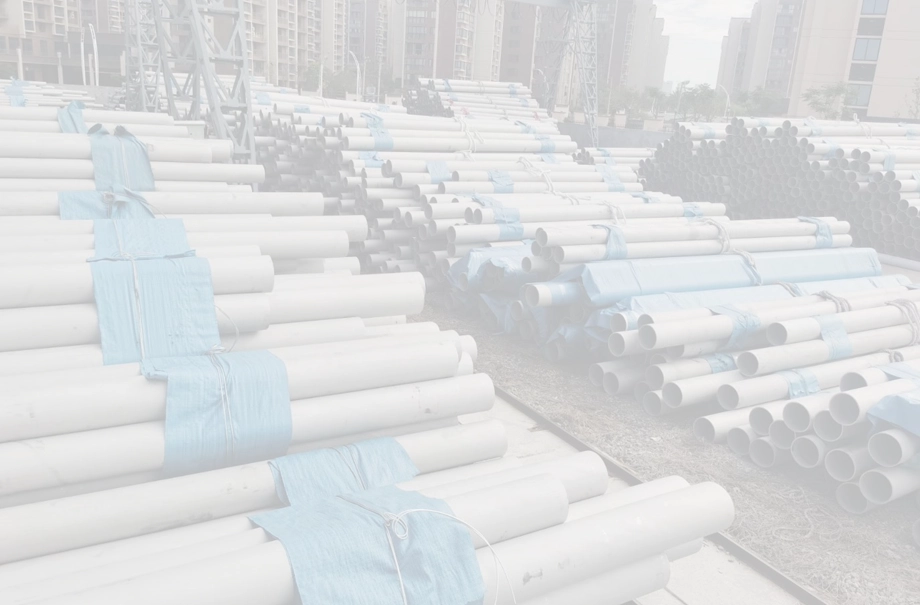
How to Evaluate Weld Integrity in ASTM A358 TP304 Pipe
Evaluating weld integrity in an ASTM A358 TP304 pipe starts with understanding what the specification demands. This standard governs electric-fusion-welded (EFW) austenitic stainless steel pipe intended for high-temperature and corrosive service. TP304, the 18-8 chromium-nickel alloy (UNS S30400), must maintain a minimum tensile strength of 515 MPa and yield strength of 205 MPa—even at the weld line. A sound evaluation combines radiographic inspection, mechanical testing, and chemical verification to confirm that no defect compromises pressure-retaining performance across NPS 8" to 60" diameter ranges.
Understanding Weld Integrity Issues in ASTM A358 TP304 Pipes
As long as the welds on a large-diameter EFW pipe are good, it will safely hold pressure for its job. If they don't handle it right, procurement teams can forget that the weld zone is where things are weakest.
Common Weld Defects to Watch For
There are three types of flaws that cause most EFW steel pipe to fail in the field: porosity (gas holes stuck inside the weld bead), lack of fusion between the filler metal and parent plate, and centerline cracks caused by residual thermal stress. There needs to be a different way to find each type of flaw. Ultrasonic screening is often needed to find flaws where there isn't enough fusion, but X-rays are good at finding pores.
How TP304 Chemistry Affects Weld Behavior?
18–20% of TP304 is chromium and 8–11% is nickel. When it cools from 427°C to 871°C, carbide can form in the heat-affected zone (HAZ). This process, known as sensitization, makes the metal near the weld line more likely to rust. When these carbides are broken down by solution annealing after welding at temperatures above 1040°C, the structure goes back to its original austenitic state. They might send you pipe that looks fine on the outside but breaks down quickly in hard conditions if they don't do this step.
Why Operator Skill and Process Control Matter?
Sometimes the weld profile won't be even if the filler metal and joint design are right because the travel speed isn't steady or the shielding gas isn't covered properly. This is why ASTM A358 sets up five types of welds. There is a big difference between Class 1 and Class 5. Class 5 doesn't need any RT at all. If you need something that can handle high pressure, like chemical distribution loops or refinery networks, you can only use Class 1.
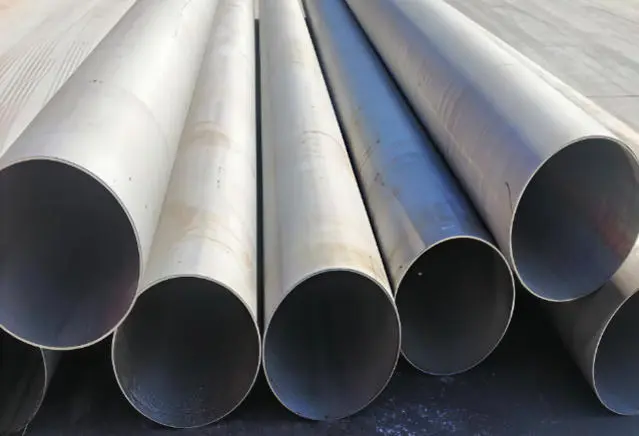
Key Methods to Evaluate Weld Integrity in ASTM A358 TP304 Pipes
A thorough inspection program layers multiple techniques because no single test catches every defect type. The methods below represent the standard practice applied to large-diameter EFW stainless pipe.
Radiographic Testing (RT/X-ray)
RT is the primary tool for evaluating internal weld quality in astm a358 tp304 pipe. Per ASME Section VIII requirements, 100% X-ray radiographic inspection of every weld seam is the gold standard. The technique exposes the weld to radiation and records the image on film or a digital detector. Voids, inclusions, and incomplete penetration appear as density variations. A pipe that passes 100% RT provides documented evidence that the weld metal is sound from root to cap across the entire seam length.
Mechanical Testing: Bend, Tension, and Flattening
Three mechanical tests confirm that the weld zone matches parent-metal performance. The transverse guided-bend test wraps a coupon over a mandrel to check weld ductility—any crack wider than 3 mm at the weld is a rejection. The transverse tension test verifies that the weld joint reaches the minimum tensile strength of 515 MPa. The seam flattening test collapses a pipe ring until the walls touch; the weld must show no cracking. Together, these tests confirm that the double-welded longitudinal seam behaves as a structural equal to the base plate.
Chemical Analysis and Post-Weld Verification
Positive Material Identification (PMI) using X-ray fluorescence (XRF) or optical emission spectroscopy confirms that the pipe and filler metal both meet TP304 (UNS S30400) chemistry. Chromium must read between 18–20% and nickel between 8–11%. PMI is especially important when purchasing from new suppliers, as substandard Cr/Ni content is a real risk in the market. Pairing PMI with the EN 10204 3.1 Mill Test Certificate (MTC) gives procurement teams a complete chemical audit trail from melt to finished pipe.
Comparing ASTM A358 TP304 Pipe Welds with Other Stainless Steel Pipes
You need to know how each grade and standard works at the weld line in different jobs in order to choose the right one.
TP304 vs. TP316 Weld Inspection Focus
TP316 adds 2–3% molybdenum to the metal, which makes it less likely to pit when chloride is added. It's a little more noticeable for TP316 HAZ when the sigma phase forms at high temperatures, when it comes to checking welds. This means that TP316 welds usually get more attention during heat treatment tests. TP304 EFW pipe is a good choice for general water treatment mains and cooling lines when salt levels are mild because it doesn't rust and doesn't cost as much. Both grades are inspected in the same way, but there are different rules for what makes corrosion tests pass or fail.
ASTM A358 vs. ASTM A312 and ASTM A409
ASTM A312 includes pipe with a diameter of 12 inches or less that is either joined together without seams or has a straight seam. That's why ASTM A409 covers welded large-diameter pipe for general service that is acidic but can handle lower pressures. And ASTM A358 is written just for EFW pipe in high-temperature pressure service. It needs both an X-ray exam and written qualifications for the welding process. Anyone who buys something from another country should make sure that the big diameter sizes meet A312 standards when the order says that they must. Many of the sizes they need don't, so A358 is the right setting.
Welded EFW Pipe vs. Seamless Pipe
Smooth astm a358 tp304 pipe costs too much and takes too long to make in sizes bigger than 14 inches NPS. A calibrated plate with straight seams of filler metal on both sides is used to make an EFW pipe. This pipe is then solution-annealed and pickled to make its mechanical properties similar to those of a seamless product. The need for 100% RT is the most important part. A wall that doesn't have any joints and an EFW joint that has been checked with X-rays both hold the same amount of pressure. The most useful and inexpensive way to move large amounts of fluid in oil refinery networks or water treatment mains is through EFW pipe.
Best Practices for Ensuring Weld Quality During Procurement
Before the order goes through, it's important to make sure the weld is good. This is what buying managers do most of the time:
- Specify weld class in writing. Include the ASTM A358 weld class (typically Class 1 for pressure service) directly in the purchase order, not just the grade and size. This locks in the RT requirement contractually.
- Request the full MTC before shipment. An EN 10204 3.1 certificate must include chemical composition, mechanical test results, heat treatment records, and RT results signed by the mill's authorized inspector. A 3.2 certificate adds a third-party countersignature.
- Mandate third-party inspection. Agencies such as SGS, BV, TUV, DNV, and ABS provide independent pre-shipment verification. This step is especially important for first-time supplier qualification or large-volume orders.
- Verify solution annealing temperature records. The post-weld heat treatment log should confirm furnace temperature above 1040°C and appropriate soak time. This is your protection against sensitized weld zones.
- Confirm hydrostatic test results. Every pipe must pass hydrostatic testing per ASTM A358 requirements. Request the test pressure values and duration records as part of the shipping documentation package.
Write down the metal class. On the order, you should write down not only the grade and size, but also the ASTM A358 weld class (usually Class 1 for duty service). The RT requirement is now written into law.
Before you ship, ask for the full MTC. A certificate called EN 10204 3.1 must have the chemistry make-up, mechanical test results, heat treatment records, and RT results. This certificate must be signed by the mill's representative. An extra signature from a third party is added to a 3.2 certificate.
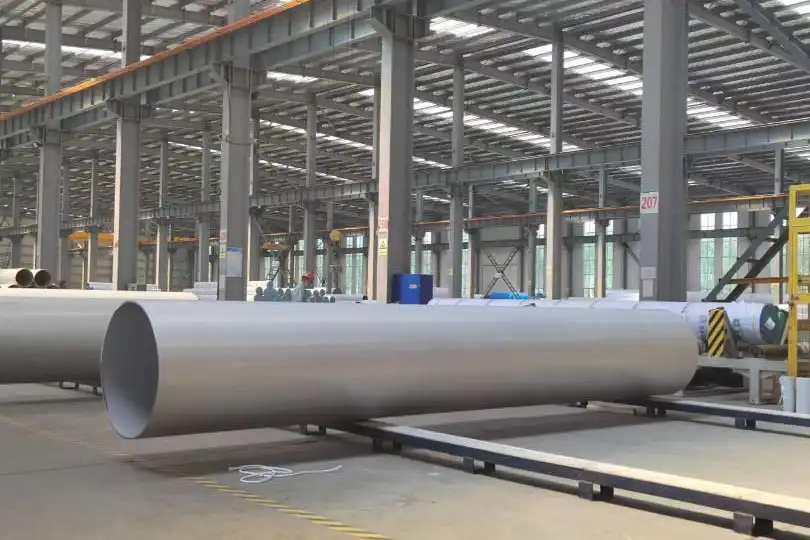
Case Studies: Successful Weld Integrity Evaluations in Industrial Applications
Petrochemical Refinery Pipeline Qualification
As part of its work to improve its cooling water network, a company asked for ASTM A358 TP304 EFW pipe in NPS 24" SCH 10S. It was important for the buying team to get a third-party review and 100% RT on all weld seams before filling the container. They also wanted PMI on each heat. When hydraulic tests were done in the field, there were no weld failures, and the pipeline passed its first pressure hold with no changes.
Municipal Water Treatment Main Replacement
A city got rid of its old carbon steel mains and put in large-diameter TP304 EFW pipe in NPS 36" to save money. For every pipe joint, the specification called for a surface finish that was solution annealed and pickled (SA&P) to meet standards for contact with drinkable water and EN 10204 3.1 MTC. Before they were sent out, a 100% X-ray was used to check all of the weld seams. The pipes came in strong bundles with caps on both ends, and no damage was reported during shipping.
Chemical Process Piping for Export Order
A machinery OEM had to find pipe for an order to Southeast Asia. They also needed paperwork that met both ASTM A358 standards and the client's SGS review needs. They gave me a 3.1 MTC and guided-bend test coupons, flattening test results, and full RT film records. Another person looked over the whole package and gave their approval in one visit. This kept the project on track.
Conclusion
You can't just take their word for it that a weld in a big astm a358 tp304 pipe is strong; you have to show proof at every step. Buyers need a proof chain that includes 100% radiography inspection, mechanical testing, PMI chemical analysis, and post-weld solution annealing above 1040°C. These steps must be used together. It's easy to choose a seller if they offer EN 10204 3.1 MTC, let a third party review their work, and keep heat records that can be tracked. The proof package should be just as full when the standard is ASTM A358 Class 1.
FAQ
What NDT method is most effective for EFW pipe weld inspection?
According to ASTM A358 Class 1, the best way to check the quality of the weld on the inside of an EFW steel pipe is to use 100% RT/X-ray. Ultrasonic testing (UT) is a good way to find flaws in thick-wall schedules that don't join properly. The dye penetrant test (PT) looks for cracks in the surface. Procurement engineers are most sure of full coverage on pressure-critical pipes that have been tested with RT, UT, and PT all together.
What is the difference between TP304 and TP316 in weld inspection?
ASTM A358 says that the X-ray and mechanical tests for both grades must be the same. The biggest change is how the rust tests are done. TP316 is less likely to get chloride pits because it has molybdenum in it. This means that when checking welds in tough chloride settings, it's more important to make sure that the heat treatment was done right. TP304 EFW pipe is a cheaper option for normal chemical service and water treatment, as long as records of solution annealing show that the carbide dissolves properly.
Can custom-sized pipes be tested before delivery?
Yes, pipes that are cut to lengths other than 5.8 meters can go through full NDT (RT, UT, hydraulic test, and PT) before they are shipped. People from SGS, BV, TUV, or DNV can check out the mill and see the tests. Procurement managers should write in the buy order that a review witness is needed so that the project doesn't get behind schedule.
What certificates should I request with each order?
To get at least an EN 10204 3.1 Mill Test Certificate, which shows the chemical make-up, mechanical properties, heat treatment records, and NDT results, you should ask for one. If you want to use it for high pressure or send an order abroad, you should ask for a 3.2 certificate with a third-party countersignature, PMI reports, and records of hydraulic tests.
Partner with All Trust for Certified ASTM A358 TP304 EFW Pipe
Hebei All Trust Steel Co., Ltd. sells all sizes of ASTM A358 TP304 EFW pipe, from NPS 8" to 60". The pipes have been fully X-rayed, meet EN 10204 3.1 MTC standards, and have been approved by SGS, BV, TUV, and DNV. As a company that has been making Astm a358 tp304 pipes for a long time, we keep more than 5,000 tons of stock near major Chinese ports so that we can send out stock orders in 3–5 days. You can get a sample MTC, a written price, or set up a pre-shipment inspection by emailing info@hballtrust.com or visiting hballtrust.com.
References
1. ASTM International. ASTM A358/A358M: Standard Specification for Electric-Fusion-Welded Austenitic Chromium-Nickel Stainless Steel Pipe for High-Temperature Service and General Applications. ASTM International, 2022.
2. ASME. ASME Boiler and Pressure Vessel Code, Section VIII: Rules for Construction of Pressure Vessels. American Society of Mechanical Engineers, 2023.
3. ASME. ASME SA-358/SA-358M: Specification for Electric-Fusion-Welded Austenitic Chromium-Nickel Alloy Steel Pipe for High-Temperature Service. ASME, 2023.
4. AWS. AWS D1.6/D1.6M: Structural Welding Code—Stainless Steel. American Welding Society, 2017.
5. Lippold, J.C., & Kotecki, D.J. Welding Metallurgy and Weldability of Stainless Steels. John Wiley & Sons, 2005.
6. ASTM International. ASTM A262: Standard Practices for Detecting Susceptibility to Intergranular Attack in Austenitic Stainless Steels. ASTM International, 2021.