Is 304 Welded Pipe Suitable for Water Treatment and General Process Systems?
Yes — 304 welded pipe is well-suited for water treatment and general process systems in most standard operating conditions. Manufactured to ASTM A312 from UNS S30400 austenitic stainless steel, it delivers dependable corrosion resistance, consistent wall thickness, and verified mechanical strength. With an 18% chromium and 8% nickel composition, it forms a stable passive layer that resists oxidation effectively. For procurement teams sourcing stainless welded pipe for municipal waterworks, chemical processing, or food machinery, this grade strikes a practical balance between performance and cost.
Understanding 304 Welded Pipe: Properties and Manufacturing Process
Chemical Composition and Core Properties
Grade 304 (UNS S30400 / 1.4301) has a mass of 7.93 g/cm³ and a melting point range of 1,400–1,450°C. It is made up of about 18% chromium and 8% nickel. It can be stretched to 515 MPa and has a minimum yield strength of 205 MPa. Because of these features, welding stainless steel tubing is one of the most commonly used austenitic types in industrial fluid systems around the world.
Manufacturing Processes: TIG, Plasma, and Laser Welding
Longitudinal TIG, plasma, or laser welding is used to make the products, which are made from calibrated premium steel strips. Full post-weld solution annealing is done on the pipe after welding. This recrystallizes and normalizes the weld zone completely. As-welded bead, internal bead-removed (bead-conditioned), solution annealed and pickled, and bright annealed (BA) are the surface styles that can be chosen. These choices work for both applications that need to keep things moving and those that need to be clean.
Welded vs. Seamless: Which Fits Your Project?
Welded stainless pipe consistently achieves better wall thickness uniformity and dimensional concentricity than many seamless alternatives, especially in large diameters. The outside widths cover wall schedules from SCH 5S to SCH 80S and range from ½" to 48" (DN15–DN1200). Welded pipe is the best option for jobs that care more about cost, lead time, and tight roundness tolerances than very high pressure values.
Corrosion Resistance and Performance of 304 Welded Pipe in Water Treatment
Performance in Standard Water Chemistries
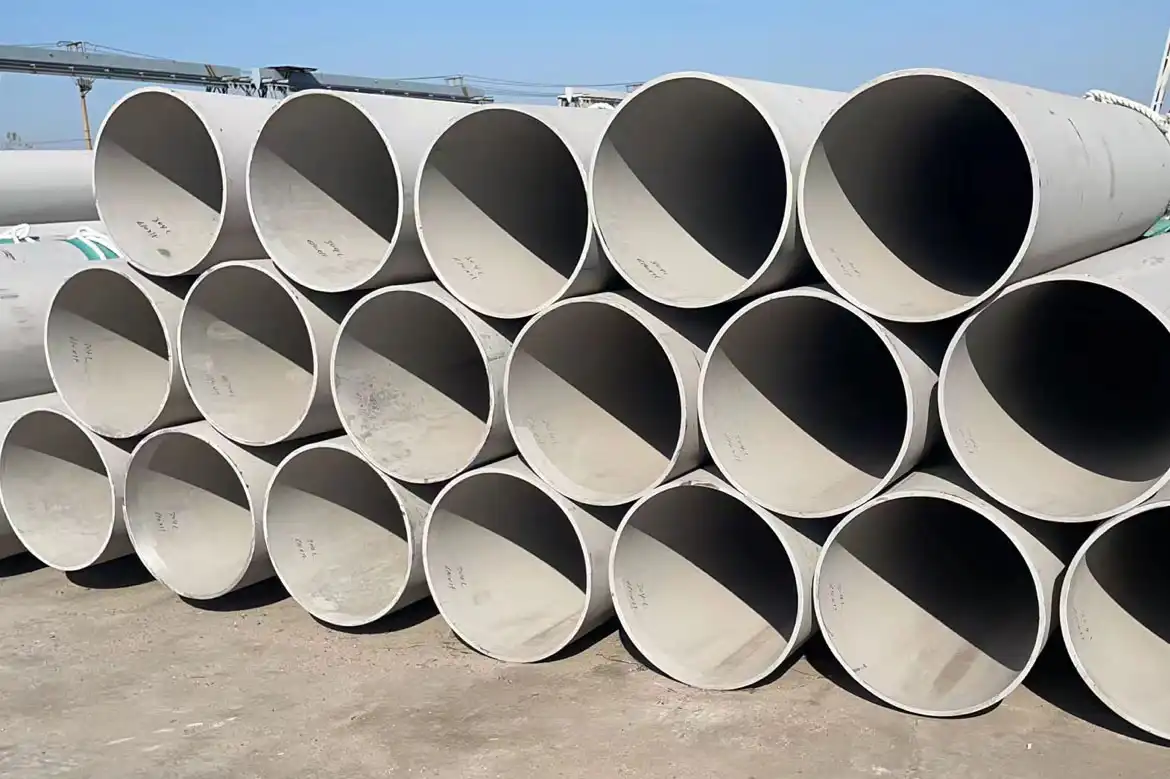
Grade 304 austenitic pipe works well in freshwater systems, networks for potable water, and process streams with low chlorine levels. It doesn't show any pitting or crevice corrosion that can be seen. For decades, municipal waterworks in East and South China, Southeast Asia, and the Middle East have used ASTM A312 TP304 pipe in their supply and sewage networks, and the pipes have always worked well.
Where 304 Reaches Its Limits?
If the pipe is not properly passivated, Grade 304 welded pipe may get localized pitting at the heat-affected zone (HAZ) in places where chloride levels are above 200 ppm, like seawater cooling loops or chemical lines that are very acidic. Molybdenum added to 316L (2–3%) makes it more resistant in these situations. When engineers know this boundary, they can avoid giving the wrong grade.
Weld Zone Integrity and Post-Weld Treatment
According to ASME standards, a well-made 304 welded pipe that has been fully solution annealed has a weld joint efficiency factor of 1.0. This means that the seam is just as strong as the base metal. Getting rid of the internal weld beads gets rid of even more turbulence points that could cause corrosion in the water treatment channels. This mix makes it physically sound for service under pressure up to normal working conditions.
Applications of 304 Welded Pipe in General Process Systems
Water Treatment and Municipal Infrastructure
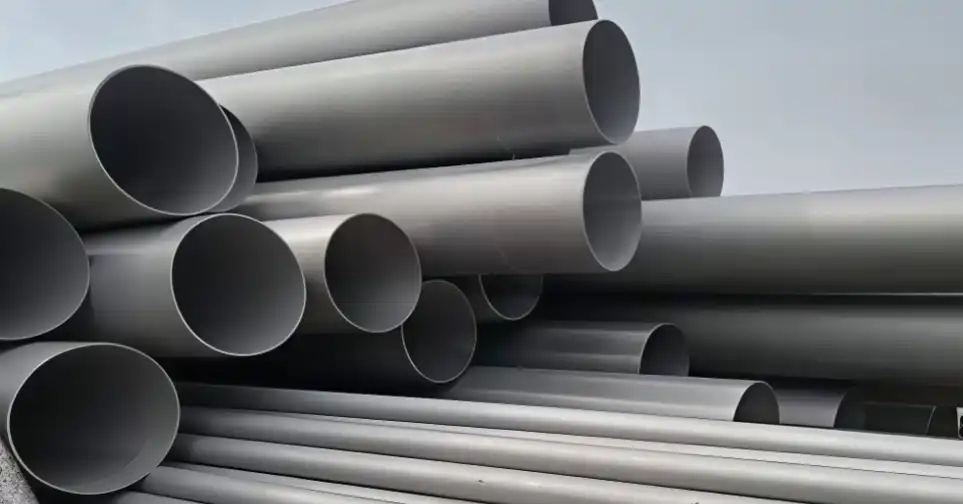
A lot of water filtration systems, sewage treatment plants, and city drainage networks use Grade 304 stainless steel welded pipe. Its non-reactive surface keeps it clean, and solution-annealed finishes meet the needs of clean shipping. It meets the needs of large-bore infrastructure at a fraction of the cost of smooth options up to 48" in diameter.
Food Processing, HVAC, and Industrial Fluid Lines
The 18/8 metal surface doesn't let product spoilage happen and can handle harsh Clean-in-Place (CIP) cycles, which is why it's often used in lines that process food and drinks. Schedules SCH 5S and SCH 10S offer sufficient pressure levels in HVAC and low-pressure industrial steam loops while keeping weight and material costs low. This is particularly useful for building big systems.
Chemical Equipment and General Machinery OEM
Grade 304 stainless welded tube is used for light acid handling, heat exchanger shells, and structural pipe uses by companies that make chemical equipment and other machinery. With outside diameters ranging from ¼" to 48" and custom-cut lengths of 5.8 m, 6 m, 11.8 m, or 12 m, manufacturers can get the most out of their materials and spend much less.
Procurement and Cost Considerations for 304 Welded Pipe
Price Drivers and Budget Planning
The global prices of raw nickel and chromium have a direct effect on the costs of stainless steel pipes. When it comes to the same grades and sizes, welded pipe always costs 15–30% less than seamless pipe. This can save a lot of money on big jobs. With suppliers who keep more than 5,000 tons of inventory on hand, you can order in medium batches instead of minimum-order-quantity (MOQ) lots, which tie up working capital.
Lead Times and Stock Availability
Stock orders of 304 welded pipe usually get sent out within 3–5 business days if they are available on standard schedules and in common diameters. It usually takes 15–20 days to finish a standard custom order. For purchasing teams that need to meet tight dates for restocking or export orders, sellers with warehouses close to the port clusters in Tianjin, Shanghai, Qingdao, or Shenzhen offer clear logistics benefits.
Before placing an order, buyers should make sure of the following quality assurance features:
- 100% Eddy Current Testing on every weld seam to detect surface and subsurface defects before shipment.
- Optional Radiographic Testing (RT/X-ray) on welds for pressure-critical applications requiring higher confidence levels.
- Hydrostatic and Ultrasonic Testing to verify leak-proof performance and internal wall integrity.
- PMI Analysis confirming exact Cr/Ni content against the certified heat chemistry — protecting against material substitution.
- EN 10204 3.1 Mill Test Certificate (MTC) with full heat traceability, accepted by SGS, BV, TUV, DNV, and ABS.
These steps of verification are not extras that can be skipped; they are the usual quality level that sets a reliable 304 welded pipe provider apart from a commodity trader.
How to Choose the Right 304 Welded Pipe for Your Water Treatment and Process Systems?
Match the Grade to the Environment
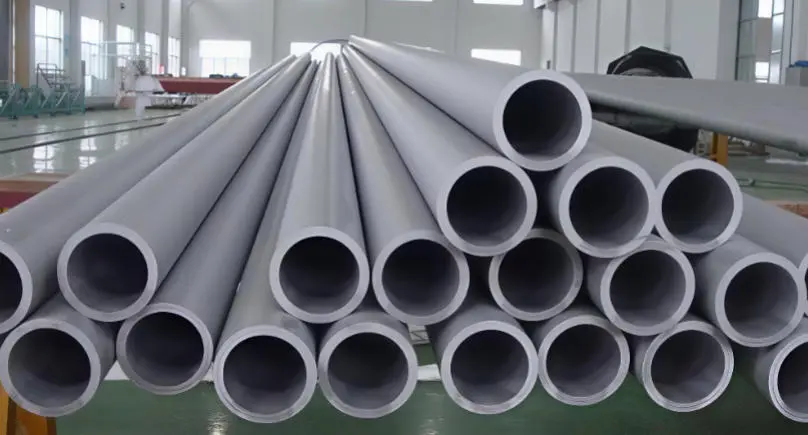
It doesn't cost more than Grade 316L if the service medium is clean water, low-chloride process fluid, or light chemicals. Grade 304 meets the requirements. If the chloride level goes over 200 ppm or the pH falls below 4, you should switch to 316L. It only takes 10 minutes to write down the working chemistry before defining. This will save a lot of money on expensive replacements in the field.
Verify Dimensional Compliance with ASTM A312
ASTM A312 says that the negative departure from the standard wall can't be more than 12.5% of the wall thickness. Before accepting delivery, ask for the MTC and compare the OD, WT, and length measurements to the ones on the purchase order. Pipes that aren't within tolerance make it hard for CNC forging lines to fit them properly, which slows down production and adds a secret cost that is higher than any price savings made at first.
Require Certification and Third-Party Inspection Acceptance
Any reputable 304 welded pipe manufacturer will offer EN 10204 3.1 MTC, ISO 9001:2015 paperwork, and will gladly let SGS or BV do a third-party inspection. When evaluating suppliers, procurement managers should see a refusal of a third-party inspection as a red flag. Packaging is also important. Waterproof wrapping bags, plastic end caps, and hexagonal package strapping keep things from getting damaged during shipping. Dents and scratches on stainless steel pipe are not just for looks; they are places where rust can start.
Conclusion
Grade 304 welded pipe has been used for many years and is a reliable and affordable option for water treatment plants, city sewers, food processing lines, and other general process systems that work in normal, low to moderate salt settings. Its production method is in line with ASTM A312, and it includes full solution annealing, as well as strict non-destructive testing. This makes a product whose weld zone integrity matches that of the base metal. 304 stainless welded pipe always works well in a wide range of industrial fluid handling uses as long as buyers put verified material chemistry, exact wall thickness tolerances, and traceable certificates ahead of rock-bottom prices.
FAQ
Is 304 welded pipe approved for drinking water applications?
Yes. When manufactured to ASTM A312 with a passivated or pickled internal finish, Grade 304 stainless pipe meets NSF/ANSI 61 and equivalent standards for potable water contact. Confirm the surface finish specification — bead-removed and passivated finishes are preferred for water supply networks.
How does 304 compare to 316L in chloride environments?
Grade 304 lacks molybdenum, which 316L carries at 2–3%. In chloride concentrations above approximately 200 ppm, 316L provides noticeably better pitting resistance. For standard freshwater and low-chloride process applications, 304 performs adequately and costs less.
Can I order small trial batches before committing to a full production quantity?
Yes. Suppliers with flexible low-MOQ policies accept trial orders for prototyping or qualification testing. Confirm this upfront during the inquiry stage, along with lead time for non-standard dimensions.
What certifications should I request with my order?
Request EN 10204 3.1 MTC, PMI report, hydrostatic test record, and eddy current test report as a minimum package. For export orders, third-party inspection by SGS or BV adds an auditable layer of quality confirmation.
What packaging protects stainless welded pipe during sea freight?
Standard export packaging uses plastic end caps, individual protective sleeves, hexagonal bundle strapping with steel banding, and waterproof woven bags. This configuration prevents surface scratching, moisture ingress, and transit damage on long ocean routes.
Get a Verified Quote from All Trust — Trusted 304 Welded Pipe Supplier
Hebei All Trust Co.,ltd keeps more than 5,000 tons of standard 304 welded pipe and 316L welded pipe from ½" to 48" OD in stock, and each batch comes with EN 10204 3.1 MTC paperwork ready to go. We are a confirmed producer of 304 welded pipes, and we accept third-party inspection by SGS/BV. We also offer a low minimum order quantity (MOQ) for trial orders, and we ship stock items from ports near Tianjin, Shanghai, and Qingdao within 3–5 days. If you email your requirements to info@hballtrust.com, you'll get a full quote within 8 business hours.
References
1. ASTM International. ASTM A312/A312M: Standard Specification for Seamless, Welded, and Heavily Cold Worked Austenitic Stainless Steel Pipes. ASTM International, 2022.
2. American Society of Mechanical Engineers. ASME B31.3: Process Piping Code. ASME, 2022.
3. Outokumpu Stainless. Corrosion Handbook: Stainless Steel in Aqueous Environments. Outokumpu, 2021.
4. British Stainless Steel Association (BSSA). Stainless Steel in Water Applications: Grade Selection and Performance Guide. BSSA, 2020.
5. European Committee for Standardization. EN 10217-7: Welded Steel Tubes for Pressure Purposes — Stainless Steel Tubes. CEN, 2019.
6. Nickel Institute. Guidelines for the Use of Stainless Steel in Water Treatment and Distribution Systems. Nickel Institute, 2020.

