Where Does A269 Tubing Fit in Food, Pharmaceutical, and Process Equipment?
When engineers and purchasing managers ask where A269 tubing fits in industries with strict requirements, the answer is simple: it fits wherever cleanliness, resistance to corrosion, and exact measurements are most important. ASTM A269 stainless steel tubing is the standard for food processing lines, pharmaceutical fluid systems, and general process equipment because it has tight limits for outside diameters and smooth tube surfaces on the inside. Whether you are looking for TP304 or TP316L types, this standard covers tube that is made to work in chemical cleaning cycles, safe transfer conditions, and high-cycle service that goes on all the time.
Understanding A269 Tubing: Specifications and Properties
You should know exactly what the A269 standard calls for and how the different types of tubes vary before you choose any of them for a controlled purpose.
Grades and Chemical Composition
Austenitic types like TP304, TP304L, TP316, and TP316L are covered by ASTM A269. High-purity dual-certified metals like 304L/316L combination certifications are also covered. TP304 has 18–20% chromium and 8–11% nickel, which makes it very resistant to rust at a reasonable price. TP316L adds 2–3% molybdenum, which makes it much more resistant to chloride pitting. This is important for cleaning agents used in pharmaceuticals and food processing plants near the coast.
Mechanical Properties and Dimensional Range
The minimum tensile strength for ASTM A269 TP304 is 515 MPa (75 ksi), the minimum yield strength is 205 MPa (30 ksi), and the maximum elongation is 35%. This shows that the steel is very flexible and can be used for flaring and bending. Wall thicknesses range from 0.010" to 0.200" (0.25 mm to 5.08 mm), and outside diameters range from 1/16" to 5" (1.59 mm to 127 mm). Because the sizes are so different, one standard can be used for everything from small instrumentation lines to big heat exchanger shells.
Manufacturing Process
Either cold drawing or cold rolling is used to make tubing that meets AS269 standards. Either way, the wall thickness is uniform, and the inside bore is smooth. In clean service, cold-drawn smooth tubes are better because they don't have any weld seams, which means there are no cracks where bacteria can gather. After being formed, tubes go through bright annealing (BA) in an atmosphere covered by hydrogen. This gets rid of any surface oxides and makes sure that the inside is completely clean, with no pickling leftovers left over.
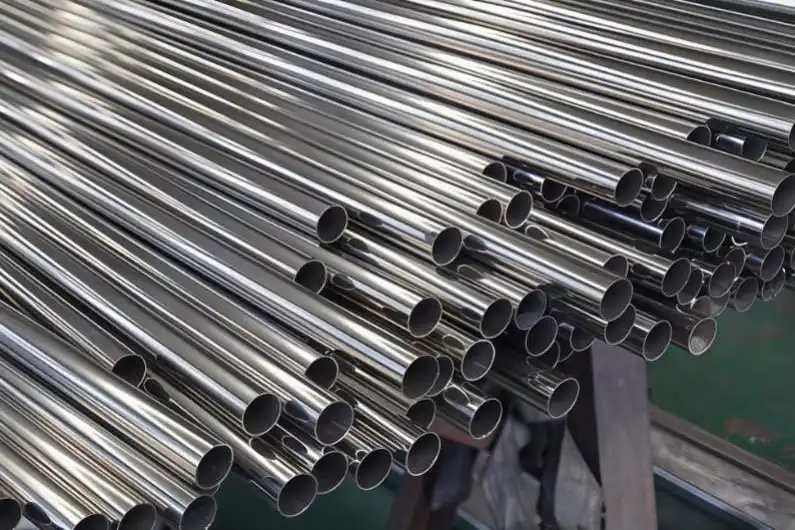
Why A269 Tubing Is Ideal for Food, Pharmaceutical, and Process Equipment?
Governments keep a close eye on the food and drug businesses. The material you choose can affect how safe your goods are, how well your audits go, and how long your equipment lasts.
Surface Finish and Hygiene
You can get A269 tubing with either a bright annealed (BA) finish or a finish that is hand-polished with 100 to 400 grits. It is harder for bacteria to stick to something that has a smooth internal Ra value. This is true for both clean-in-place (CIP) and sterilize-in-place (SIP) protocols. 3-A The Sanitary Standards say that surfaces that come into touch with goods must be a certain amount of rough. These standards are always met by BA or 320-grit polished A269 tubing. Biofilm can stay in a rough hole even after hard CIP cycles, so this is important.
Corrosion Resistance in Aggressive Environments
There are solutions of caustic soda, phosphoric acid, and peracetic acid that are used to clean food and drug equipment. TP316L grade tubing doesn't respond with these acids, though. Because it has molybdenum in it, salt can't make pits in it, which would weaken a standard TP304 fitting over time. Water-for-injection (WFI) systems used in medicine must not have any metal pollution. The norm is low-carbon 316L tubes with a BA finish.
Regulatory Compliance Confidence
ISO 9001:2015, CE/PED, and EN 10204 3.1 mill test certificates on tubing give OEM end users and quality testers the proof they need during plant checks. It is fine and possible for SGS, BV, TUV, DNV, or ABS to do a third-party review. For companies that are controlled and need to be able to fully track their steps, this completes the chain.
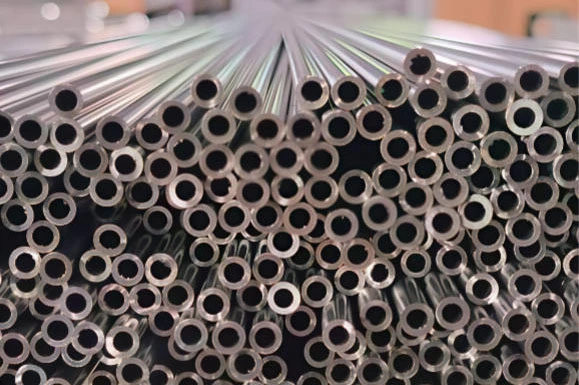
Comparing A269 Tubing to Alternative Stainless Steel Tubing Options
When you look at the A269 next to its best competitors, you can decide which one to buy.
ASTM A213 is for the boiler, the superheater, and the heat transfer tubes. This method is bigger and costs more than A269's nominal-wall method because it needs a minimum wall width. A269 costs less and weighs less per meter than A268 but has the same amount of metal that doesn't rust for general service and instruments. You can use ASTM A312 to plan wall widths for pressure service, not exact tools. It only applies to pipe, not tubes. The compression fitting might leak if you pick A312 over A269 because the ferrule form needs tight OD specs that A312 doesn't offer.
Here are the main differences that will help you pick the right stuff:
- When comparing A269 and A213, A269 uses average wall tolerances that are good for general service, while A213 needs a minimum wall for thermal pressure service. If the heat exchanger is designed for high differential pressure, use A213. For instruments and clean fluid lines, use A269.
- A269 seamless vs. welded: Seamless A269 doesn't have a weld line, so there is no risk of rusting in cracks. Welded A269 passes eddy current and air-under-water tests to show that the weld is strong, and it can be used in many process lines where cost is important.
- TP304 vs. TP316L: TP316L costs about 15–25% more, but in chloride-rich environments, that extra cost stops pitting failures that would mean a whole new system needs to be installed in two to three years.
Procurement managers can use these differences to make sure that the standard fits the need without going too far or too little.
Procurement Guide: How to Buy and Source Quality A269 Tubing?
To get A269 tubing for production schedules that go from prototyping to mass production, you need a supplier that can help you at all stages of the cycle.
Evaluating Supplier Credentials
A reliable provider of A269 tubing keeps EN 10204 3.1 or 3.2 mill test certificates for each heat, as well as full PMI analysis records and ISO 9001:2015 certification. Ask for a heat number that can be traced back to the melt. Every shipment should have records of non-destructive tests like eddy current, ultrasonic, hydrostatic, or air-under-water. When suppliers let SGS or TÜV check their products, it shows that they have faith in their own quality system.
Sizing, Lead Time, and MOQ Flexibility
One of the most frustrating parts of OEM procurement is small-batch prototyping. When a supplier has more than 5,000 tons of TP304, TP304L, TP316, and TP316L in stock, they can send out stock orders in three to five days. For exact building needs, you can get custom-cut lengths, coiled shapes on wooden spools, and plain ends without burrs. Trial runs with low minimum order numbers let design engineers make sure that the parts fit well before committing to large-scale production.
Packaging and Transport Integrity
When shipped by ocean freight, coiled tubing is especially likely to bend. Reliable exporters wind tubing around special wooden spools, add plastic end caps, wrap each tube in a protective cover, and seal bundles in heavy-duty woven bags before putting them in wooden cases that haven't been fumigated. This multi-layer method stops surface scratches, water from getting in, and distortions in size that would fail your facility's incoming inspection.
Real-World Applications of A269 Tubing in Process Equipment
Many tough situations call for A269 tubing, and its track record in all of them backs up how often it is recommended.
In dairy plants, milk and whey are moved at high temperatures by TP316L bright annealed tube. It can also handle the lactic acid and CIP chemicals that are always going through the system. For pharmaceutical bioreactor skids, the same grade works with both buffer solutions and water that has been filtered. If there are more than a few parts per billion of metals in the batch, it is thrown out. Copper tubes would lose their zinc when exposed to ammonia-based coolants, which can lead to stress corrosion cracks in HVAC and refrigeration OEM assemblies. Instead, TP304 A269 tubes are used in condensers and evaporators. Labs that do gas chromatography use A269 equipment tubes with a small hole for the carrier gas lines. How clean the tubes are inside has a direct effect on how well the research works.
In every case, one thing stays the same: picking the wrong grade and surface finish at the start costs a lot more than having the tube break because it is contaminated, corrodes, or leaks.
Conclusion
As a standard, a269 tubing stainless steel tubes offer precise size control, clean surface treatments, and alloy grades that don't rust. These are all things that are used in food, drug, and process equipment. Most sanitary and process uses are good for TP304 and TP316L. Buying teams can find the right product for their practical and legal needs because they come in different sizes, surface styles, and test standards. These are the main sourcing risks that slow down projects and raise costs. You can avoid them if you choose an experienced supplier with a flexible MOQ and full traceability.
FAQ
What is the difference between ASTM A269 and A213?
ASTM A213 is only for boiler, superheater, and heat exchanger tubes, and it says how thick the walls must be at the very least. In ASTM A269.1, the rules for general service and instrument tubes are based on the standard (average) wall thickness.
Is TP316L better than TP304 for food applications?
As the OD tolerances are tighter, A269 is the right specification for sanitary and instrumentation service. This is because the compression fitting assembly won't leak.
Can A269 tubing pass hydrostatic testing?
They are all popular types of tests. They are the hydraulic test, the air-under-water test, the eddy current test, and the ultrasound test. Which test to use depends on how thick the wall is and what it's for. The results that were passed are written on the EN 10204 3.1 mill test certificate.
What surface finish does pharmaceutical service require?
ASME BPE and 3-A Sanitary Standards say that materials must be bright annealed (BA) or manually polished to 320-grit (Ra ≤ 0.5 µm) before they can be used in water-for-injection systems. An acidic residue that can be left behind by pickled finishes is not present in a BA finish that is made in an oven that protects against hydrogen.
Does A269 tubing support bending and flaring without cracking?
Yes. Low hardness (below 90 HRB) and high elongation (35% of its original length) make sure that the tube can reliably bend and flare without cracking. It is used to make U-bend heat exchanger tubes and put in compression fittings because of this.
Get Certified A269 Tubing from All Trust — Your Trusted A269 Tubing Supplier
You can get certified A269 stainless steel tube from Hebei All Trust Steel. It comes in TP304, TP304L, TP316, and TP316L types and has EN 10204 3.1 MTCs, full PMI tracking, and third-party inspection acceptance. Orders from stock are sent out within 3–5 days, low MOQ trial runs are allowed, and the A269 tubing lengths or coil shapes can be cut to order. Get in touch with our team right away at info@hballtrust.com to get a detailed quote that fits your exact needs.
References
1. ASTM International. ASTM A269/A269M: Standard Specification for Seamless and Welded Austenitic Stainless Steel Tubing for General Service. ASTM International, 2022.
2. ASME. ASME BPE: Bioprocessing Equipment Standard. American Society of Mechanical Engineers, 2022.
3. 3-A Sanitary Standards, Inc. 3-A Sanitary Standards for Stainless Steel Tubing Used in Dairy and Food Processing Equipment. 3-A SSI, 2019.
4. Sedriks, A. J. Corrosion of Stainless Steels. 2nd ed. Wiley-Interscience, 1996.
5. Schweitzer, Philip A. Corrosion Engineering Handbook: Corrosion of Linings and Coatings. CRC Press, 2006.
6. ASM International. ASM Handbook, Volume 13A: Corrosion: Fundamentals, Testing, and Protection. ASM International, 2003.

