Where Does 316L Seamless Pipe Fit Offshore and Marine Fluid Transport?
The choice of material for pipes in offshore platforms or marine fluid systems can make the difference between a project lasting decades or failing in just a few months. In the middle of these requirements is a 316L seamless pipe with a grade of UNS S31603 and a very low carbon content of ≤0.03%. It also has 2–3% molybdenum. Because it doesn't have any joint seams, is resistant to chloride cracking, and meets ASTM A312/ASME SA312 standards, it is the most common material used for saltwater pipes, desalination loops, and remote chemical transfer lines around the world.
Understanding 316L Seamless Pipe and Its Relevance to Marine Environments
Chemical Composition and What It Means in Practice
16 to 18% of this metal is chromium, 10 to 14 % is nickel, 2 to 3 % is molybdenum, and less than 0.03% is carbon. The main part is molybdenum, which raises the pitting resistance equivalent number (PREN) above what it is in standard 304 and 316 grades. In seawater service, this means the pipe can handle chloride attack. Low carbon stops chromium carbide from forming at the edges of grains. In normal 316, this is what causes problems with corrosion in the weld zone.
How It Differs from 304 and Standard 316?
Because Grade 304 doesn't have any molybdenum, it can't be left in salt water for a long time. Up to 0.08% of carbon can be found in standard 316, which can make the area that was heated more sensitive after welding. For the 316L version, that risk is gone, so welders can make big ocean pipes without having to anneal them first. This feature is helpful and saves time and money during installation.
Verifying Authenticity Through Certifications
The EN 10204 3.1 says that a mill test certificate (MTC) has the exact mechanical and heat chemistry data for every batch. One piece at a time, Positive Material Identification (PMI) tests are used to confirm the levels of molybdenum and carbon in the field. An outside review by SGS, BV, TUV, DNV, or ABS adds an extra level of security that buyers and clients trust before they sign off on a project.
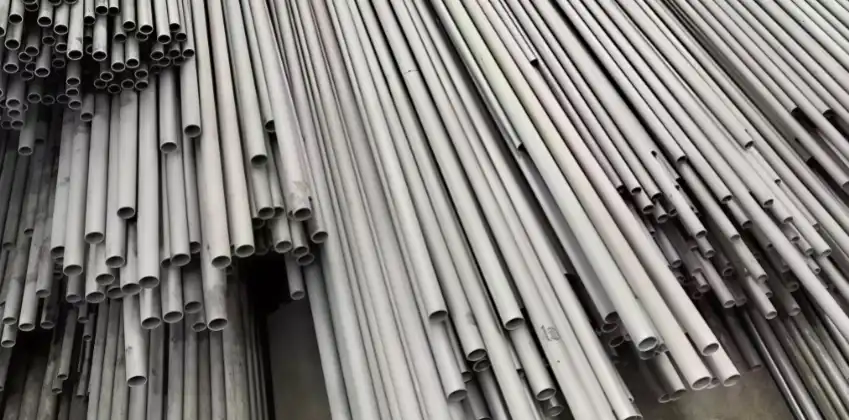
Critical Comparison: 316L vs. Alternative Pipe Options in Offshore Use
316L Seamless vs. 316 Standard Grade
The carbon difference between 316 and 316L might not seem like a big deal on paper, but it has a big effect on how the steel will rust over time. Even though it costs a little more at first, 316L doesn't need to be inspected as often and can last longer before it needs to be replaced because it doesn't rust. This is especially true in places like offshore oil rigs where pipe joints are welded over and over again and are exposed to warm seawater.
Seamless vs. Welded Pipe Construction
Stainless steel pipes that have been welded have a seam that runs along their length. This seam can create a heat-affected zone and differences in the pipe's size at the joint. Smooth 316l seamless pipe has walls that are the same thickness all the way along its length, no matter how it was made (hot extrusion or cold drawing). Based on information from NACE International, weld-seam failures are the main cause of most offshore pipeline accidents involving stainless steel types. When underwater lines are under a lot of pressure, the seamless structure is not an option; it is a must.
316L vs. Duplex Stainless Steel
Duplex grades, such as S32205, are stronger and less likely to react with chloride. In other words, they can be used in very deep sea or loops with a lot of brine. They do, however, cost 40–70% more than 316L, and the heat flow during welding needs to be more precisely controlled in production. 316L is a much better choice for chemical input lines, heads for desalination plants, and most ocean surface pipes because it is less likely to rust and performs better overall.
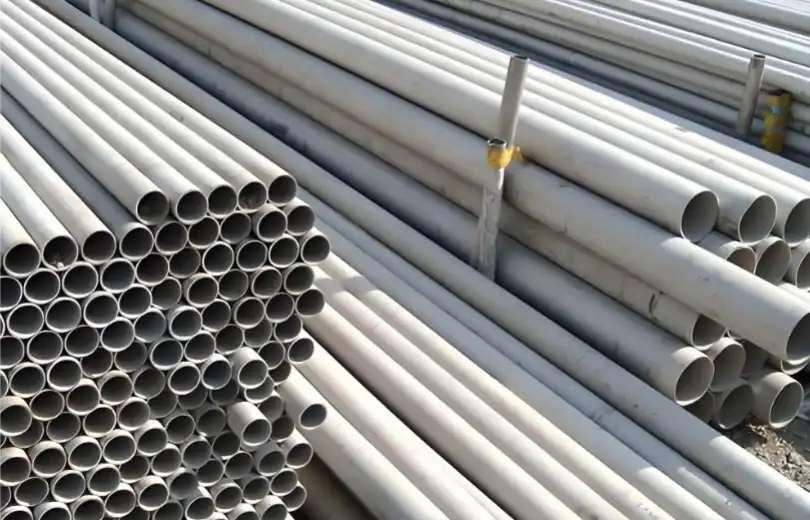
Applications and Advantages of 316L Seamless Pipe in Offshore and Marine Fluid Transport
This stuff works well in many places, like the chemical injection lines on the deck of FPSO ships and the underground seawater intake heads at coastal desalination plants.
316l seamless pipe is useful for many things in the navy and at sea, as shown below:
- Seawater cooling and balancing systems: Materials that can stand up to long-term contact with high-chloride seawater are needed. 316L pipe with a wall thickness of 10S or 40S can handle these flows without wall loss speeding up.
- Offshore chemical injection lines: small-diameter high-pressure tubing carries corrosion inhibitors, methanol, and chemicals that stop scale buildup. It is impossible for weld-seam fatigue failure to happen because the structure is smooth.
- Desalination process loops: Thermal distillation and reverse osmosis plants can both deal with brine concentrations that are much higher than those found in normal seawater. 316L keeps its shape through changes in temperature that would weaken lower-grade metals.
- For oil and gas platforms, the pipes that carry produced water, gas condensate, and mixtures of hydrocarbons and water are built to ASME B31.3 standards. 316L pipe that is compliant with ASTM A312 meets the standards of the process code without any extra rust permit.
Manifold systems built to ASME B31.3 standards move produced water, gas condensate, and mixtures of hydrocarbons and water through the pipes that are used on oil and gas platforms. 316L pipe that is ASTM A312 compliant meets the process code requirements without any extra room for corrosion.
Procurement Insights: How to Source High-Quality 316L Seamless Pipes for Offshore Projects?
There's more to finding marine-grade stainless steel pipe for a remote job than just comparing prices per kilogram. The choices made during the purchase stage have a direct effect on the quality of the manufacturing, the results of the inspections, and the long-term dependability of the system.
Make sure you are clear about the standard and plan. A request for "316L pipe, 4-inch, schedule 40S, ASTM A312, with EN 10204 3.1 MTC and PMI report" doesn't leave a provider any room to offer a product with lower standards. For wall thickness limits, dimensional compliance should look at ASME B36.19M.
Check how transparent the testing is with each provider. You should be able to get hydrostatic testing, eddy current or ultrasonic NDT, intergranular corrosion testing according to ASTM A262 Practice E, and PMI on every piece of 316l seamless pipe, not just when you ask for them. For export sales going to the Middle East or Southeast Asia, third-party inspection acceptance (SGS, BV, or TUV) is a must.
Think about the packaging as part of the quality. When pipes arrive with dents, scratches, or moisture on them, they have to be fixed, which costs money and takes time. During ocean freight, plywood boxes with plastic end caps and waterproof weave wraps protect the finish on the outside and the shape of the items inside.
Talk about lead time as well as price. For jobs in the ocean that need to be installed quickly, a source near Tianjin, Shanghai, or Qingdao that has stock in 304/316L types can send stock orders in 3–5 days. Most custom orders take between 15 and 20 days. When a production line is waiting, these dates are more important than small price differences.
Future Trends Impacting 316L Seamless Pipe Usage Offshore
Stricter Environmental and Safety Regulations
Offshore governing groups in the Gulf, the US, and the EU are making it harder for platform pipe systems to rust. This is why operators are looking for materials that have been shown not to rust, have full chemical traceability, and have inspection records that have been approved. If you can find the right 316L seamless pipe, it already meets all of these standards.
Digital Traceability in Mill Certification
Top mills now send digital MTCs with QR codes that link to heat records. This lets outside testers and buying teams check the chemistry of pipes from afar. This trait makes certificate scams less likely, but they are still a problem when you buy a lot of stainless steel.
Lifecycle Cost and Recyclability
When stainless steel is no longer useful, it can be recycled, and the value of the scrap is usually between 60 and 70% of what it cost. Offshore companies should choose 316L over carbon steel with an epoxy finish or cheaper metals when they know the total cost of ownership. This is because 316L lasts longer and can be recovered more easily.
Conclusion
316L seamless pipe is a key part of moving fluids in and out of the ocean. This isn't because it's the wackiest metal out there; it's because it has the right amount of salt protection, weld integrity, physical stability, and confirmed traceability at a price that project budgets can handle. Being able to find ASTM A312-compliant material for export orders or to restock is not the most important thing for procurement managers. They should instead look for a provider whose papers, tests, and track record of deliveries take away all danger in the supply chain.
FAQ
Does 316L actually resist corrosion better than standard 316 in seawater?
Yes, because it has less carbon, 316L doesn't form chromium carbide at grain boundaries when it is fused. Standard 316 starts to rust in certain places where the heat makes the metal more vulnerable. When used for a long time in salt water, this difference shows up as early pitting near the weld joints. 316L is made to avoid this kind of failure.
What certifications should a marine-grade pipe order include?
At the very least, EN 10204 3.1 MTC records of the actual heat chemistry and mechanical results, a PMI report proving the molybdenum and carbon amounts, and records of hydraulic tests. If the project or order is for DNV, ABS, or Lloyd's class, you need a 3.2 certificate with a countersignature from a third-party inspection.
Can 316L seamless pipe be customized for non-standard offshore dimensions?
Yes. The wall schedules go from SCH 5S to SCH XXS, and the sizes range from 1/4" NPS to 30" (OD 13.7 mm to 609.6 mm). To make things more valuable, we offer fixed-length cutting, bevel end preparation (BE), threaded ends (NPT/BSPT), and mechanical cleaning on the inside to lower flow friction.
What is the typical lead time for an offshore procurement order?
Items that are in stock and normally shipped out of the warehouse do so within 3–5 days. For regular orders, it takes 15–20 days. For custom sizes or schedules, it takes longer. For big projects, the priority output plan could take 25 to 30 days.
Partner with All Trust for Your Next Offshore Piping Requirement
EN 10204 3.1 MTC standards are met by the 316l seamless pipe material that Hebei All Trust Steel sells. This stuff comes with full third-party review acceptance and piece-by-piece PMI. Our response time is less than an hour, and we have over 5,000 tons of goods on hand near major Chinese ports. This helps procurement teams that can't wait for supplies. Send your requirements to info@hballtrust.com, and you'll get a price within 8 hours that you can track.
References
1. ASTM International. ASTM A312/A312M: Standard Specification for Seamless, Welded, and Heavily Cold Worked Austenitic Stainless Steel Pipes. 2022.
2. NACE International. Corrosion in the Oil and Gas Industry: An Offshore Perspective. NACE Technical Committee Report, 2019.
3. American Society of Mechanical Engineers. ASME B36.19M: Stainless Steel Pipe Dimensions Standard. 2018.
4. Outokumpu Stainless. Corrosion Handbook: Stainless Steel in Marine and Offshore Environments. 11th Edition, 2021.
5. European Committee for Standardization. EN 10216-5: Seamless Steel Tubes for Pressure Purposes — Stainless Steel Tubes. 2021.
6. TWI Global. Sensitization and Intergranular Corrosion in Austenitic Stainless Steels. TWI Industrial Member Report, 2020.

