Where Does 321 Seamless Pipe Support Longer Service in Thermal Cycling Applications?
When engineers and procurement directors ask where titanium-stabilized stainless steel piping delivers the longest service life, the answer consistently points to applications defined by repeated, aggressive temperature swings. 321 seamless pipe—manufactured to ASTM A312, ASTM A213, and ASME SA312—is purpose-built for exactly these conditions. Its titanium addition binds free carbon before chromium carbide can form at grain boundaries, preserving corrosion resistance through the entire 427°C to 816°C service range. In thermal cycling environments such as power plant boiler circuits, refinery heating furnaces, and chemical cracking systems, this metallurgical advantage directly translates to extended service intervals and fewer unplanned shutdowns.
Understanding 321 Seamless Pipe in Thermal Cycling Environments
Chemical Composition and the Role of Titanium
Grade 321 (UNS S32100 / 1.4541) is a type of austenitic stainless steel that has been stabilized with titanium at a minimum of 5 times (C+N). This number makes sure that titanium carbides, not chromium carbides, form when exposed to high temperatures. It is called sensitization when chromium carbides form along the edges of grains. This leaves the areas around the grains low on chromium and open to attack from between the grains. Titanium completely removes this risk, which is why ASTM A262 Practice E intergranular corrosion testing always shows that properly stable material has no grain-boundary attack.
Mechanical Performance Under Cyclic Thermal Stress
321 stainless steel has a minimum tensile strength of 515 MPa and a minimum yield strength of 205 MPa when it is at room temperature. In thermal cycling, it's important that these numbers drop much more slowly than unstabilized grades. Thermal wear is caused by repeated heating and cooling processes. The titanium-locked microstructure stops grain growth and keeps the material's flexibility. Every batch goes through hydrostatic testing, eddy current inspection, and ultrasonic wall-thickness verification to make sure the structure is sound before it is sent out.
Seamless Manufacturing Process and Quality Controls
The "seamless" label isn't just a marketing tool; it actually refers to a fundamental difference in how the product is made. Multi-pass precision cold drawing gets rid of all longitudinal weld seams, making the walls all the same thickness and getting rid of the stress concentration points where thermal cracking usually starts. After the titanium carbides are formed, they are fixed throughout the matrix by a stabilizing heat treatment that is done after solution annealing. The finished surface goes through industrial pickling and passivation, which get rid of the oxide scale and iron residue that could cause rust holes to form when heated and cooled over and over again.
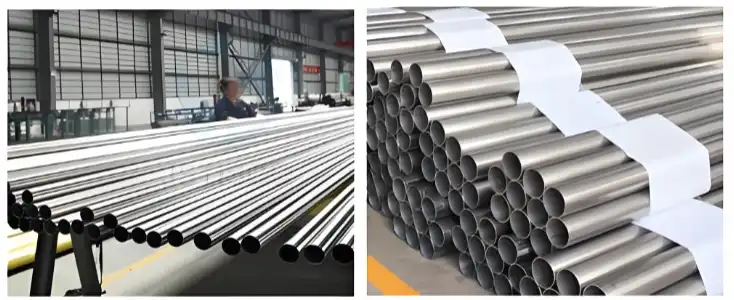
Why 321 Seamless Pipe Excels in Thermal Cycling Applications?
Oxidation and Aging Resistance Compared with Other Grades
When kept in the 427°C–816°C range, standard 304 stainless steel becomes very sensitive very quickly. This means it can't be used in boilers for long periods of time. Grade 316 adds molybdenum to make it resistant to cracking in water, but it doesn't protect against sensitization at high temperatures. Grade 310S can handle higher peak temperatures, but it doesn't have titanium support, which leaves it open to damage during slow cool-down processes. Grade 321, on the other hand, keeps its crystalline matrix integrity even after being heated and cooled many times. This is why process engineers at design institutes always choose it for superheater tubes and reheater lines.
Real-World Performance in Power and Industrial Sectors
Field data from thermal power plants show that titanium-stabilized austenitic tubes in superheater circuits usually last longer than 100,000 hours of use before they need to be replaced because of an inspection. This is compared to much shorter time periods for 304 tubes in the same places. The same 321 Seamless Pipe grade doesn't react with the carburizing atmospheres that come with repeated firing plans in refinery heating furnaces. Heat exchanger bundles used in chemical cracking show that not sensitizing them greatly lowers the number of tube failures and the costs of process downtime that come with them.
Cost-Effectiveness Over a Project Lifecycle
Total cost of ownership, not just unit price, must be taken into account by procurement directors who are in charge of projects that will last ten years or more. Longer service intervals directly lower the number of times that outage-linked tubes need to be replaced, as well as the costs of scaffolding and the labor needed to inspect welds. Over the course of a ten-year boiler overhaul cycle, the extra money you pay for properly stabilized, certified 321 pipe usually pays for itself in the first time you don't have to replace it.
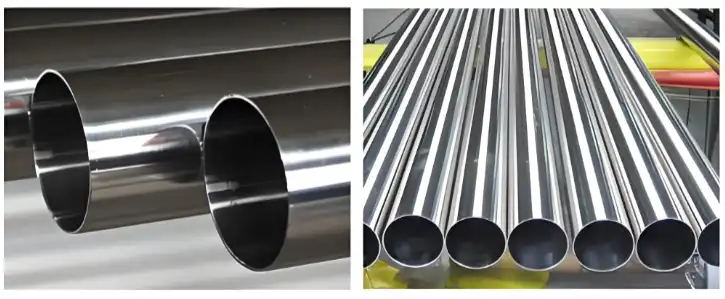
Procurement Considerations for 321 Seamless Pipe in Thermal Applications
Verifying Certifications and Standards Compliance
The people in charge of buying things should make sure that any pipe that meets ASTM A213 or A312 standards comes with an EN 10204 3.1 Mill Test Certificate (MTC) that shows the real chemical and mechanical test results from the production heat. Third-party review by SGS, BV, TÜV, DNV, or ABS adds an extra level of security. Components that hold air in U.S.-code boilers must comply with ASME SA312. For installations in Europe, you need PED/CE paperwork. Any supplier who can't show these documents during the inquiry stage should be taken out of the technical evaluation.
Dimensional Range and Customization Options
These are the most important dimensions that can be used to specify a project:
- Outer Diameter: 1/4″ to 24″ (13.7 mm to 609.6 mm), covering NPS schedules up to NPS 20″
- Wall Thickness: SCH 5S through SCH XXS, from 0.5 mm to 50 mm
- Length Options: 5.8 m, 6 m, 11.8 m, 12 m, or custom-cut lengths with beveled or plain ends
- Surface Finish: Solution annealed and pickled, bright annealed (BA), or mechanically polished to project specification
These factors cover almost all of the requirements that design schools give for boiler overhauls and new builds. Suppliers with large inventories can meet urgent delivery needs without making procurement teams give up on size requirements.
Supply Chain Reliability for Long-Term Projects
It takes more than a low first-order price to build a supplier relationship that can last for ten years or more for a project. Directors of procurement should look at the annual production capacity, relationships with backup mills, and how close the warehouse is to major export ports. Suppliers with warehouses near Tianjin, Shanghai, or Qingdao and rolling stock that weighs more than 5,000 tons can usually fill stock orders in three to five days and standard custom orders in fifteen to twenty days. With priority production scheduling, manufacturing lead times can be cut by about 35% when project deadlines get tight.
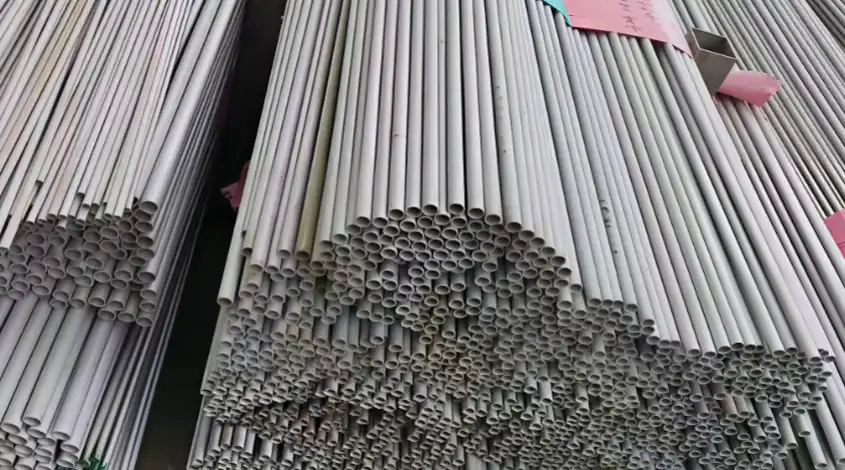
Comparing Seamless and Welded 321 Stainless Steel Pipes for Thermal Cycling
Structural Differences and Their Thermal Consequences
Since smooth 321 Seamless Pipe doesn't have a fusion weld, the most common place where stress corrosion cracks start to form is removed when the temperature is cycled. Weld heat-affected areas in austenitic stainless steel become more sensitive, even if the base material is titanium-stabilized. This is because the temperature profile during welding can temporarily rise above the stabilization temperature, letting chromium carbide nucleation happen before titanium can re-bind the carbon.
When Is Welded Pipe Acceptable?
Welded 321 pipe meets ASTM A249 standards and works well in heat exchanger rings and low-pressure enclosures where pressure levels are low and temperature changes happen slowly rather than quickly. In these cases, the difference in cost between seamless and selected can be a good reason to choose seamless. The seamless route is required for high-pressure steam lines, superheater circuits, and any other use where the pressure is higher than what the ASME code allows for seamless-only design.
Performance Data Summary
Tests done by outside experts regularly show that seamless tubes in cyclic pressure–temperature service last about 30% longer before they crack for the first time than welded tubes of the same grade but the same diameter. This means that procurement teams writing technical specifications have to include a minimum service life clause that welded alternatives can't always meet.
Best Practices for Maximizing 321 Seamless Pipe Performance in Thermal Cycling
Installation Guidelines to Preserve Material Integrity
The space between pipe supports needs to take into account that austenitic stainless steel expands more than carbon steel, by about 17.2 µm/m·°C. When there isn't enough support, bending stress builds up at fixed-point links with each heat cycle. It is better to include expansion loops or bellows in the planning phase rather than adding them later, and installation workers should be careful not to damage the pickled and passivated surface with iron tools.
Routine Inspection and Preventive Maintenance
Scheduled eddy current scanning of the outside of tubes during major outage periods finds wall-thinning trends before they reach the thinnest limits. Ultrasonic thickness measurement in high-heat areas, like superheater exit heads, lets you know early on when the dimensions are changing because of creep. Checking the surface for rust damage above 900°C can show that the temperature is too high in the area and needs to be looked at by metallurgists.
Common Pitfalls and Risk Mitigation
Two common reasons why titanium-stabilized pipes fail early are wrong recording of the heat number, which lets unstabilized material into service, and chloride contamination during hydrostatic testing with water that hasn't been cleaned. Both risks can be avoided: using deionized or potable water with a chloride content below 25 ppm for hydrostatic testing stops chloride stress corrosion cracking during commissioning; and full heat traceability through EN 10204 3.1 MTC stops materials from getting mixed up.
Conclusion
It is possible to tell that Grade 321 Seamless Pipe titanium-stabilized seamless pipe, will last longer in thermal cycling uses because its metallurgy directly addresses the two main failure mechanisms: intergranular rust and thermal fatigue cracking at weld seams. It is made according to ASTM A312, ASTM A213, and ASME SA312, and its outside diameter ranges from 1/4′′ to 24′′. Its wall schedules go up to SCH XXS, and it meets the certification and size needs of boiler overhauls, refinery furnace circuits, and chemical cracking service. As long as the procurement specifications call for ASTM A262 Practice E test reports, EN 10204 3.1 MTC documentation, and compliance with ASME code, properly manufactured 321 pipe meets all of these requirements and supports projects for at least ten years.
FAQ
Why does 321 resist intergranular corrosion better than 304 at high temperatures?
Chromium doesn't stick to carbon as well as titanium does. In grade 321, titanium joins free carbon as stable TiC before chromium carbide can form at the edges of the grains when the metal is heated. Since Grade 304 doesn't have this kind of buffer, the chromium levels drop at the grain boundaries between 427°C and 816°C, making way for intergranular attack. Testing according to ASTM A262 Practice E indicates that 321 that has been properly stabilized shows no rust entry under this standard.
What standards apply to 321 seamless pipe for boiler service in the United States?
It is necessary to follow ASTM A213 for seamless ferritic and austenitic alloy steel boiler and superheater tubes, ASTM A312 for general seamless and welded austenitic stainless steel pipe, and ASME SA312 for pressure tanks and boilers that need to follow ASME codes. When European rules for pressure tools apply to the installation, EN 10216-5 is used.
What is the maximum continuous service temperature for grade 321?
Under constant service, Grade 321 keeps its full intergranular corrosion resistance up to 816°C (1500°F). It can handle temperatures up to about 900°C (1650°F) without oxidizing. Above these limits, types of 321H or higher alloys like 310S should be considered.
Can 321 seamless pipe be welded in the field during boiler installation?
Yes, Grade 321 is easy to weld and usually doesn't need a heat treatment after the welding process to make it resistant to rust, as long as ER347 or a filler metal supported by titanium or niobium is used. If you don't use unstabilized 308 or 316 filler metal, the weld metal itself won't become sensitive.
Partner with All Trust for Your Next 321 Seamless Pipe Supply Requirement
Hebei All Trust Steel Co., Ltd. keeps more than 5,000 tons of approved stainless steel pipe in stock. This includes grade 321 Seamless Pipe in all NPS 1/4′′ to 20′′ sizes, and it can be loaded into containers right away. You can get third-party inspections from SGS, TÜV, or BV if you want, along with EN 10204 3.1 MTC and ASTM A262 Practice E intergranular corrosion test reports for every batch that ships. All Trust is a reliable source for 321 Seamless Pipe, and they can help with project procurement processes that range from three days for stock orders to thirty days for big engineered packages. If you email your technical specifications to info@hballtrust.com, you'll get a written quote within eight business hours.
References
1. ASTM International. ASTM A213/A213M: Standard Specification for Seamless Ferritic and Austenitic Alloy-Steel Boiler, Superheater, and Heat-Exchanger Tubes. ASTM International, 2022.
2. ASTM International. ASTM A262: Standard Practices for Detecting Susceptibility to Intergranular Attack in Austenitic Stainless Steels. ASTM International, 2021.
3. ASME. ASME Boiler and Pressure Vessel Code, Section II, Part A: Ferrous Material Specifications (SA-312). American Society of Mechanical Engineers, 2023.
4. Lai, G. Y. High-Temperature Corrosion and Materials Applications. ASM International, 2007.
5. Sedriks, A. J. Corrosion of Stainless Steels, 2nd ed. John Wiley & Sons, 1996.
6. Davis, J. R. (Ed.). Stainless Steels. ASM International, 1994.

