Where Does 316Ti Pipe Provide an Advantage in Chemical and Refinery Equipment?
When engineers specify piping for chemical reactors or refinery heat exchangers, material selection directly determines whether equipment lasts five years or twenty. The 316Ti pipe — grade TP316Ti, UNS S31635, also known as 1.4571 — gives chemical and refinery operations one specific protection that standard 316 cannot match: complete resistance to intergranular corrosion across the sensitization temperature range of 427°C to 816°C. Titanium binds free carbon as stable titanium carbides, preventing chromium depletion at grain boundaries. That single metallurgical difference translates into longer service intervals, fewer unplanned shutdowns, and lower lifecycle costs on aggressive process lines.
Understanding 316Ti Pipe: Composition, Properties, and Benefits
Chemical Composition and the Role of Titanium
TP316Ti has the same base as normal 316: 16–18% chromium, 10–14% nickel, and 2–3% molybdenum. Titanium, added at a ratio of 5(C+N) at the very least and up to 0.70% at most, makes the difference. This ratio makes sure that every carbon atom bonds to titanium instead of chromium. This keeps the chromium-rich passive layer intact even after welding or heating and cooling. This makes a material that doesn't get pitted, attacked in cracks, or made sensitive all at the same time, which is very important in sulfuric acid service and chloride-bearing process streams.
Governing Standards and Dimensional Range
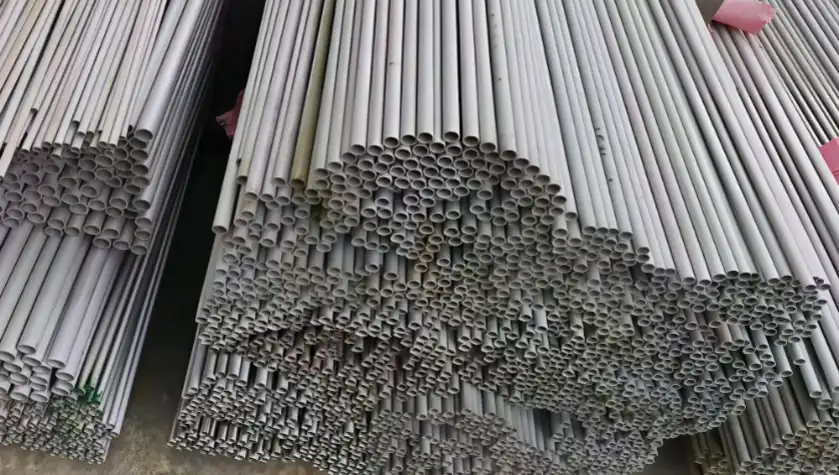
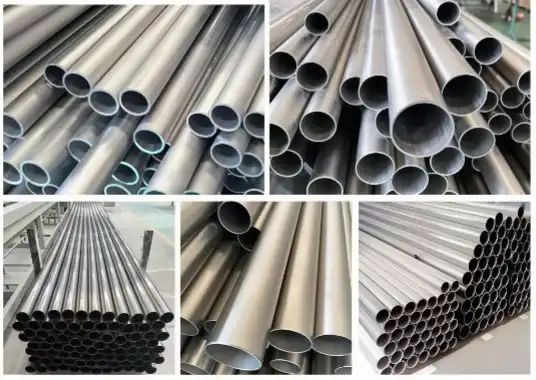
Hebei All Trust Steel makes TP316ti pipe that is certified by ASTM A312, ASME SA312, ASTM A213, and EN 10216-5. The outside sizes range from ¼" to 24" (13.7 mm to 609.6 mm), and the NPS ranges from 1/8" to 30". You can choose wall thicknesses from SCH 5S to SCH XXS, which are 0.5 mm to 50 mm. You can choose from lengths of 5.8 m, 6 m, 11.8 m, 12 m, single random, or double random. After solution annealing, each batch goes through a specific heat treatment to lock the titanium carbides in place. This is done before the pipe leaves the mill.
Mechanical Strength and Surface Finish Options
The minimum yield strength is 205 MPa, and the minimum tensile strength is 515 MPa. It has a density of 7.99 g/cm³ and melts between 1,370°C and 1,400°C. At high service temperatures, where 316L starts to lose its ability to resist creep, these numbers still hold true. You can choose from different surface finishes, such as solution annealed and pickled (SA&P), bright annealed (BA), satin, and mirror polished. This means that the same grade can be used for both high-pressure refinery headers and pharmaceutical or food processing lines.
Comparative Analysis: 316Ti Pipe vs Other Common Stainless Steel Pipes
316Ti vs 316 and 316L
Standard 316 and 316L are both made of the same alloy. 316L, on the other hand, gives up some high-temperature strength in exchange for being easier to weld. Once parts are constantly working in the 427–816°C band, neither grade stops sensitization. This problem is solved directly by TP316Ti's titanium stabilization, so post-weld annealing is usually not needed. This saves time and money when making large reactor skids and exchanger bundles.
316Ti vs 304 Stainless Steel
Grade 304 doesn't have any molybdenum at all. When 304 is exposed to chloride or acidic chemicals, it pits much more quickly than any other molybdenum-containing grade. This study shows that the titanium-stabilized version of 316ti pipe works better when chloride levels are higher than trace amounts. This is usually the case in coastal refineries, ocean cooling loops, and systems that handle hydrochloric acid.
316Ti vs Duplex and Carbon Steel
In some places, duplex types like 2205 are better at resisting stress corrosion cracking and have higher tensile strength. However, they cost more per kilogram and need stricter rules when welding. Carbon steel is much less expensive, but it rusts quickly in acidic environments without coatings to protect it. Titanium-stabilized austenitic pipe is a good compromise between duplex steel and carbon steel when it comes to medium-pressure, high-temperature chemical lines where cost and weld complexity are important.
Application Scenarios: Where 316Ti Pipes Excel in Chemical and Refinery Equipment?
The data always point to the same conclusion: titanium stabilization quickly pays for itself in any process that goes through the sensitization range more than once.
These are the main places where this material is useful and can be measured:
- Chemical reactor piping and vessel nozzles: Continuous thermal cycling in sulfuric acid, phosphoric acid, and organic acid reactors creates repeated sensitization risk. TP316Ti maintains grain boundary integrity through thousands of cycles, cutting inspection intervals significantly.
- Petrochemical heat exchangers and boilers: ASTM A213 and ASTM A249 cover tubes used in heat exchangers. Titanium-stabilized tubes resist both process-side corrosion and steam-side oxidation at operating temperatures that standard grades cannot tolerate long-term.
- Power plant piping and pressure vessels: High-temperature pressure vessel codes frequently specify sensitization-resistant materials. Compliance with ASME SA312 and EN 10216-5 makes TP316Ti directly usable without grade substitutions during engineering review.
- Pharmaceutical and pulp-and-paper processing: Where product purity is regulated, a pipe that resists crevice corrosion without post-weld treatment reduces contamination risk and simplifies validation documentation.
One thing that all of these uses have in common is that the pipe must keep its rust protection after it has been made, not just before. That's exactly what titanium stability does. When procurement teams define this grade early on, they avoid having to pay a lot of money to replace materials in the field that were wrongly chosen during the planning stage.
Procurement Insights: Buying and Sourcing 316Ti Pipes for Industrial Use
Evaluating Supplier Certifications
For each heat, you should ask for an EN 10204 3.1 Mill Test Certificate (MTC) before you place an order for 316ti pipe. The MTC should list values for chromium, nickel, molybdenum, titanium, carbon, and nitrogen, not just the amount of alloy in the whole. Make sure that the amount of titanium to carbon is at least 5(C+N). Material substitution is still the most common quality problem in this product category, and suppliers who don't want to give heat-specific chemical data put customers at risk.
Understanding Lead Times and MOQ
Regular restocking is different from project-critical supply when it comes to stock availability. Orders from stock are shipped within 3–5 days at All Trust. Standard custom orders are shipped within 15–20 days, and large engineering project batches are shipped within 25–30 days. For custom sizes and wall schedules, flexible low minimum order quantities are available. This answers the capital-tie-up concern that procurement managers in medium-sized manufacturing operations often bring up.
Third-Party Inspection and Non-Destructive Testing
Accepting review by a third party, like SGS, BV, TUV, DNV, or ABS, is a must for international orders that need to be trusted. We do hydrostatic testing, eddy current testing, ultrasonic testing (UT), radiography testing (RT/X-ray), ASTM A262 Practice E intergranular rust testing, PMI analysis, and measurement verification as part of our testing procedure. Before being shipped, every batch goes through 100% PMI approval. To fit your pipe system perfectly, you can choose an end type that is regular, curved, NPT/BSPT threaded, or flanged.
Why Leading Chemical and Refinery Brands Choose 316Ti Pipe?
In the chemical and refinery industries, buying decisions depend on how well the paperwork is filled out and how long the supply chain stays open. When brands send back an order, they always have the same experience: the approved materials showed up on time, the wall thickness tolerances met ASTM standards, and there were no corrosion failures in the field during the guarantee period.
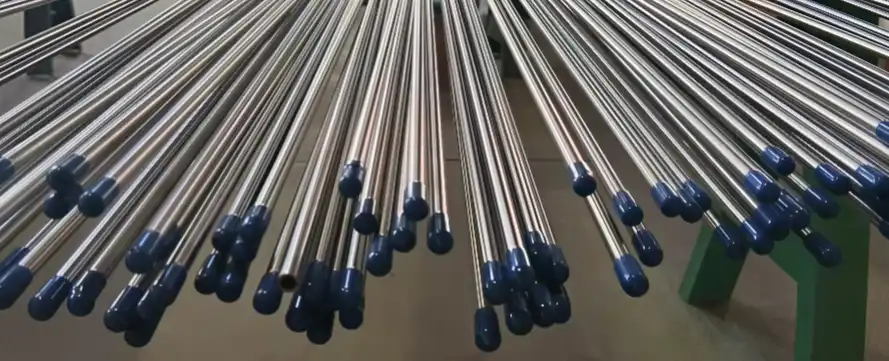
Our four-step quality control method at Hebei All Trust Steel includes auditing vendors and making sure materials are correct, keeping an eye on output, getting independent tests done, and making sure final certification requirements are met. We only buy from mills that are ISO-certified and use 100% new stainless steel billets—no recycled mixed scrap. Each pipe is shipped in a hexagonal ocean box that is held together with steel strapping, has protective end caps, and is wrapped in waterproof woven bags to keep the surface from getting scratched, wet, or damaged during shipping.
Our engineering team has worked in this field for more than 15 years and helps with choosing materials, checking CAD drawings, and optimizing container packing at no extra cost. All of our product paperwork comes with ISO 9001:2015, CE, and PED certificates.
Conclusion
For chemical and refinery equipment, the 316ti pipe is the right choice because it fixes a real metal problem that regular 316 grades don't: sensitization. Titanium stability makes chromium available to protect against rust even after welding and being exposed to heat many times. It also meets ASTM A312/ASME SA312 standards, has a full NDT testing protocol, is certified by EN 10204 3.1, and is guaranteed to be in stock. This makes it a material choice that lowers both technical risk and procurement risk. If you are a medium-sized company that sells chemical equipment in the United States or to Southeast Asia and the Middle East, it is easy to make sure that the quality of your products is always the same by only buying from confirmed TP316Ti suppliers.
FAQ
What temperature range makes 316Ti pipe necessary instead of standard 316?
It needs to be between 427°C and 816°C. Standard 316 loses its ability to resist rust at the edges of its grains in this range because chromium carbide starts to form. Titanium-stabilized pipe completely stops this from happening, which makes it the best choice for any equipment that constantly works or welds in this range.
How does 316Ti compare to 316L for corrosion resistance after welding?
316L lowers the chance of sensitization by keeping the carbon level below 0.03%. But it doesn't completely stop intergranular corrosion when temperatures stay high for a long time. TP316Ti actively gets rid of free carbon by joining with titanium, which protects the grain boundaries better in high-heat work for a longer time.
Does 316Ti pipe require post-weld heat treatment?
Most of the time, no. Post-weld annealing is not needed to restore corrosion resistance because titanium grabs carbon before it can bond with chromium. Putting together reactor and exchanger units is easier and takes less time because of this.
What custom sizes are available?
The OD runs from ¼" to 24", and the wall thickness goes from SCH 5S to SCH XXS. It is possible to cut to a fixed length, bevel, thread, and bend. Low MOQ is used for special sizes.
Which certifications should I request with my order?
Ask for an EN 10204 3.1 MTC that lists the full chemical makeup by heat, as well as a PMI report, ASTM A262 Practice E test results, and NDT reports. If you want, a third-party inspection by SGS, BV, or TUV can be set up.
Get Certified 316Ti Pipe from All Trust — Request a Quote Today
With yearly production exceeding 15,000 tons and full third-party inspection support, All Trust is a verified 316Ti pipe supplier and manufacturer. When it comes to stainless steel pipes, we have NPS 1/8" through 30" in TP316Ti (UNS S31635) that are all approved under ASTM A312 and EN 10204 3.1. Our team gets back to you within an hour during business hours, whether your job needs basic wall schedules or unique fabrication. Get in touch with us at info@hballtrust.com to get an MTC sample, dimensional details, or competitive pricing on your next order of chemical or refinery equipment.
References
1. ASTM International. ASTM A312/A312M: Standard Specification for Seamless, Welded, and Heavily Cold Worked Austenitic Stainless Steel Pipes. ASTM International, 2022.
2. ASTM International. ASTM A262: Standard Practices for Detecting Susceptibility to Intergranular Attack in Austenitic Stainless Steels. ASTM International, 2021.
3. American Society of Mechanical Engineers. ASME SA312: Seamless, Welded, and Heavily Cold Worked Austenitic Stainless Steel Pipes — Boiler and Pressure Vessel Code, Section II, Part A. ASME, 2021.
4. European Committee for Standardization. EN 10216-5: Seamless Steel Tubes for Pressure Purposes — Technical Delivery Conditions — Stainless Steel Tubes. CEN, 2021.
5. Lula, R. A. Stainless Steel. American Society for Metals, 1986.
6. Sedriks, A. J. Corrosion of Stainless Steels, 2nd ed. John Wiley & Sons, 1996.

