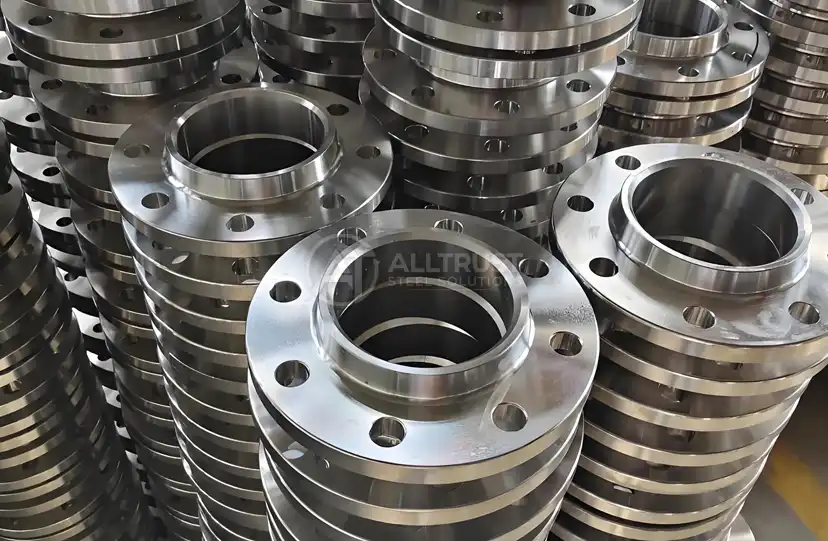
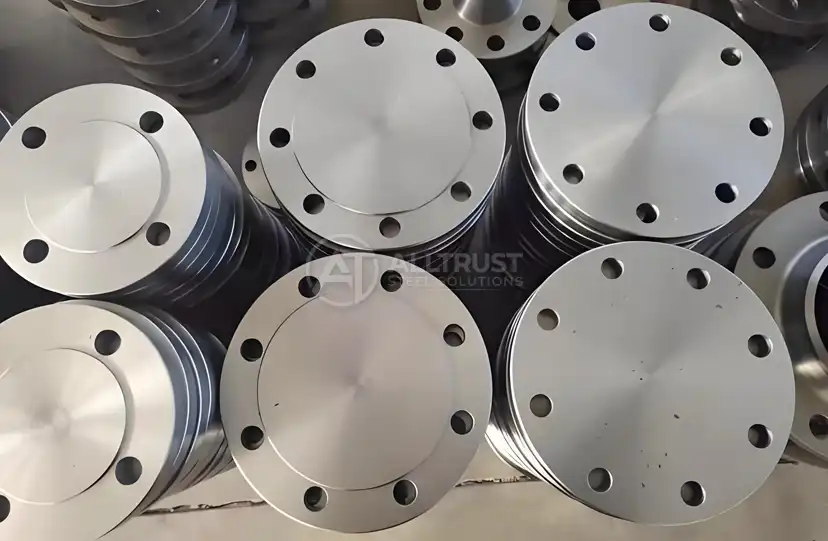
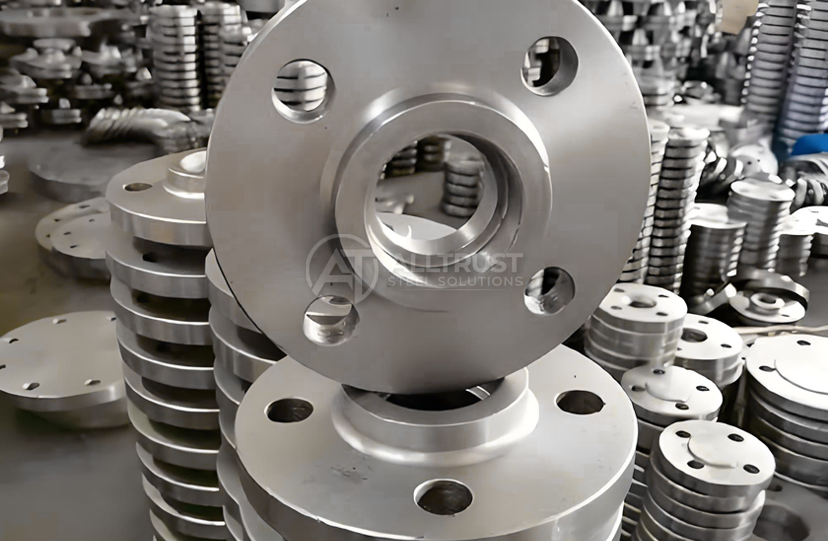
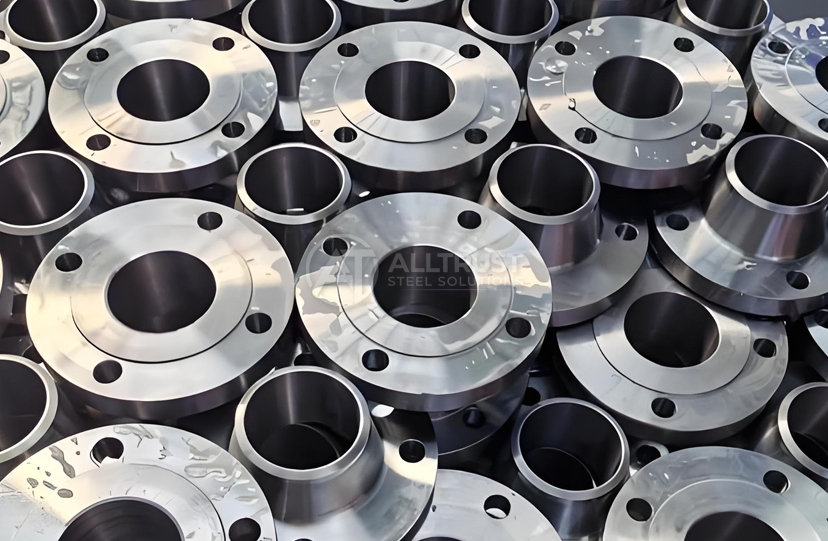
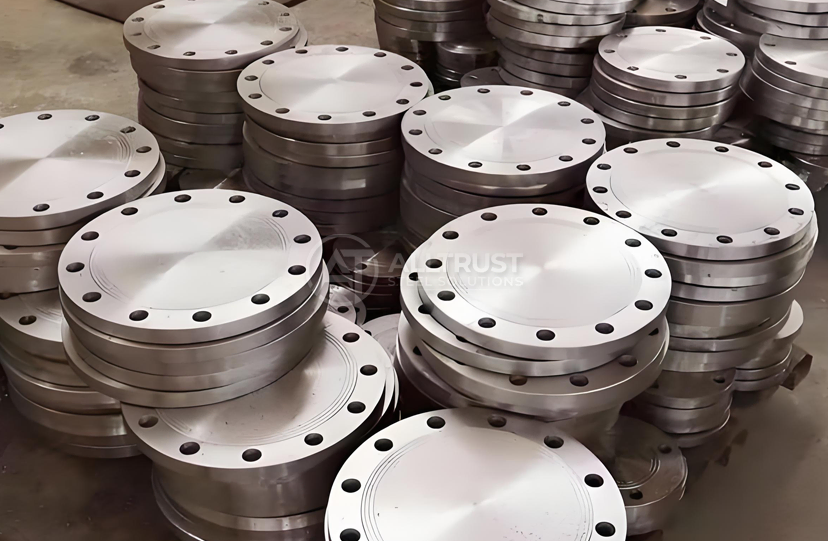
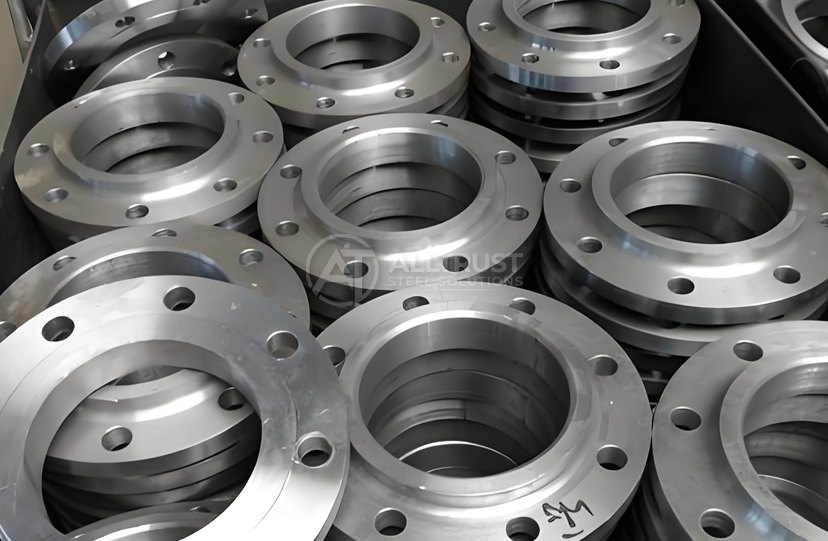
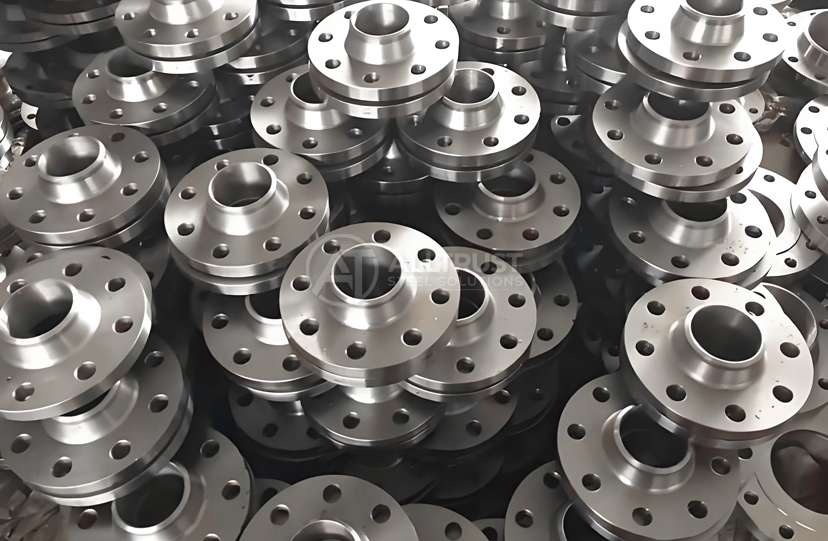
ASME B16.5 ASTM A182 F304 F304L Socket Weld Flange
2. Standard: ASME B16.5 / ASTM A182, standard specification for forged steel pipe flanges and flanged fittings
3. Process: Precision industrial forging combined with accurate internal counterboring to engineer the internal pipe stop
4. Size Range: Socket Welding (SW) configurations from 1/2" to 3" (NPS small-bore limits) across Class 150 to 1500
5. Heat Treatment: Program-controlled furnace solution annealing followed by rapid uniform water quenching to stabilize structures
6. Surface Finish: Two-side machined smooth bore with standard stock finish phonographic serrations on the raised face (RF)
7. Application: Small-bore high-pressure chemical lines, laboratory fluid networks, hydraulic piping, and plant utility grids
8. Service Advantage: Strictly calibrated inner socket tolerances, 100% alloy verification, full technical MTC 3.1 reports
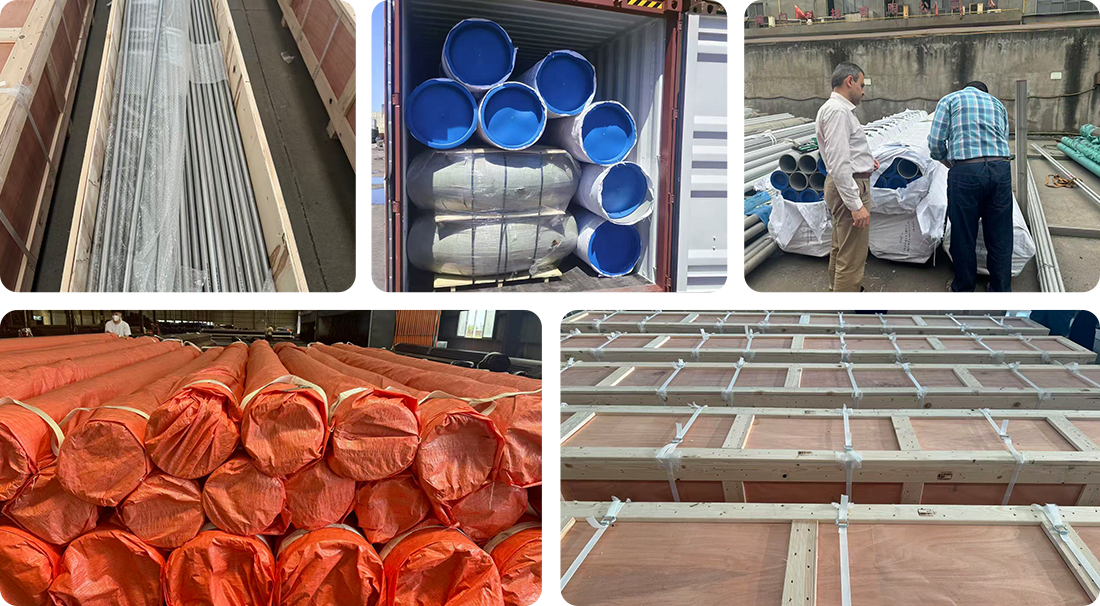
9. Packaging: Each flange carefully individual-wrapped and securely packed into heavy-duty seaworthy wooden boxes
10. Key Advantage: Internal socket shoulder ensures seamless pipe positioning and effortless single-fillet weld alignment with zero bore restriction
High-Performance ASME B16.5 ASTM A182 F304 F304L Socket Weld Flange for Small-Bore High-Pressure Applications
HEBEI ALL TRUST STEEL CO., LTD manufactures precision-engineered ASME B16.5 ASTM A182 F304 F304L Socket Weld Flanges with guaranteed dimensional accuracy and superior corrosion resistance. Our dual certified F304/F304L forged flanges are designed to fit internal socket shoulders and allow the pipe to slide in with excellent fillet weld alignment for small bore piping systems from 1/2 to 3. We are producers of flanges with an annual capacity of over 15,000 tonnes, 100% hydraulically tested, regulated forging, solution annealed at 1040°C and quick water quenched. Every socket weld flange is rigorously tested using ultrasonic and chemical methods to ensure compliance with international standards for chemical processing, cryogenic applications, and high-pressure industrial utilities.
Why Socket Weld Flanges Outperform Threaded Connections in Critical Piping
Socket weld method solves basic problems in tiny bore fluid networks. Conventional threaded connections produce turbulence, lower pressure ratings and provide leak pathways during heat cycling.
The product solves these problems via developed internal shoulder design. When you place the pipe into the pre-machined socket bore the shoulder functions as a positive stop, making sure you have the necessary 1.5mm expansion gap specified by ASME B31.3.
This gap avoids the buildup of thermal stress during welding. Your welding team adds a single external fillet around the hub for a leak-proof connection that has better fatigue resistance than double-welded slip-on designs. The smooth interior bore minimises erosion in high velocity systems and preserves laminar flow.
Forged grain flow follows the curve of the flange providing mechanical strength not present in cast alternatives. In vibrating situations, where threaded joints would inevitably break, you get dependable service.
Technical Specifications Table of ASME B16.5 ASTM A182 F304 F304L Socket Weld Flange
| Parameter | Specification |
|---|---|
| Manufacturing Standard | ASME B16.5 / EN 1092-1 |
| Material Specification | ASTM A182 F304 / F304L (Dual Certified) |
| UNS Designation | S30400 / S30403 |
| Size Range | 1/2" – 3" NPS |
| Pressure Class | 150 / 300 / 600 / 900 / 1500 |
| Face Type | Raised Face (RF) / Flat Face (FF) / RTJ |
| Socket Depth | Per ASME B16.11 Schedule Tolerance |
| Manufacturing Process | Closed Die Forging + CNC Socket Boring |
| Heat Treatment | Solution Annealing (1040°C Min) + Water Quenching |
| Chemical Composition | C ≤0.03% / Cr 18-20% / Ni 8-12% |
| Tensile Strength | ≥515 MPa |
| Yield Strength | ≥205 MPa |
| Surface Finish | Serrated Concentric Phonographic Grooves (125–250 μin) |
| NDT Testing | Ultrasonic (UT) / Liquid Penetrant (PT) |
| Certificates | EN 10204 3.1/3.2 MTC / ISO 9001:2015 |
| Third-Party Inspection | SGS / BV / TUV / DNV Approved |
Material Advantages: Dual-Certified F304/F304L Chemistry
Your piping system demands materials that resist intergranular corrosion while maintaining structural integrity. Standard F304 provides excellent strength but risks carbide precipitation in the heat-affected zone during welding.
This is where our dual-certified product comes in. The low carbon L-grade chemistry (max 0.03% carbon) precludes the development of chromium carbides at the grain boundaries, when subjected to temperatures between 425°C and 815°C.
The benefits of weldability without losing corrosion resistance. The 18-20% chromium provides a passive oxide layer that protects against oxidising acids, salt water exposure and air corrosion. Higher nickel concentration (8-12%) results in austenitic stability in cryogenic to high temperature ranges.
Each batch is subjected to Positive Material Identification (PMI) spectroscopy prior to machining. Our quality team will check the mill certificates for chromium, nickel, molybdenum and carbon to ensure they meet your project standard.
Process for Precision Forging and Socket Machining
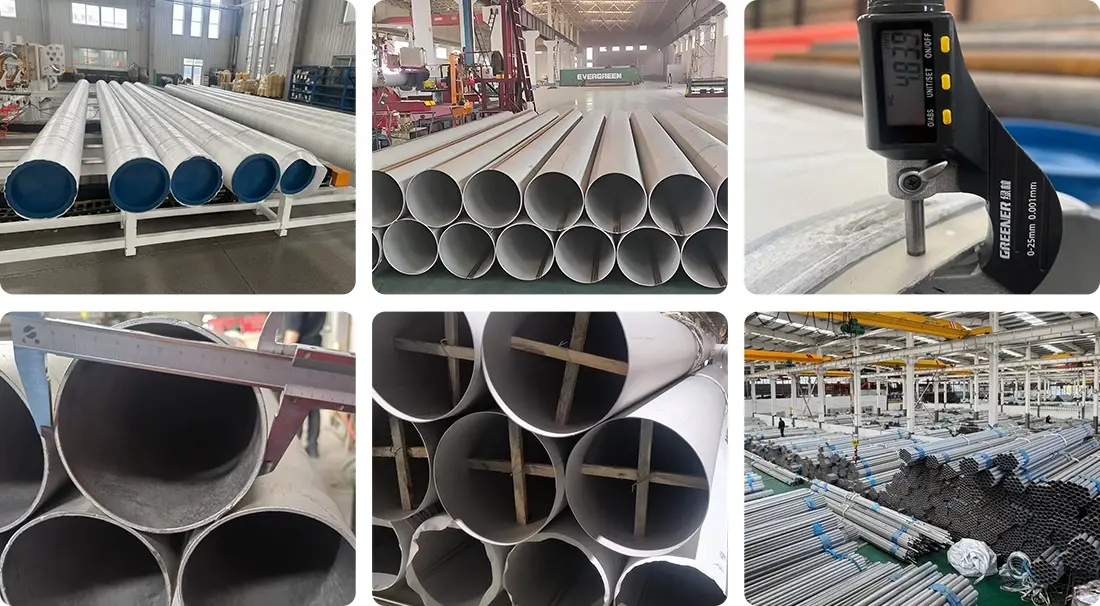
Long term performance in demanding applications is critically dependent on quality of manufacture. We use virgin stainless steel billets from ISO certified factories. No recycled waste material to affect alloy uniformity.
Heated billets undergo closed die press forging, aligning grain flow with stress distribution patterns. This process creates superior mechanical properties compared to plate-cut or cast flanges.
The interior socket was machined to high tolerances using multi-axis CNC machining centres. Socket depth, bore diameter, shoulder radius to your selected pipe schedule, Schedule 40, 80 or custom wall thickness.
Bolt hole drilling is done using automated coordinate systems to ensure bolt circle diameter and hole spacing per ASME B16.5 Table 2-3.1. Raised face surfaces are phonographically finished with serrations and concentric grooves, 125-250 microinches Ra.
Solution annealing at a minimum of 1040°C reduces forging stresses and dissolves carbides. Rapid quenching in water stabilises the austenitic structure and gives the best resistance to corrosion and prevents sensitisation.
Application Solutions Across Critical Industries
Chemical Processing and Hazardous Fluid Handling
Small-bore chemical lines transporting corrosive acids, alkaline solutions, or chlorinated solvents require zero-leak integrity. The ASME B16.5 ASTM A182 F304 F304L Socket Weld Flange provides hermetic sealing under thermal cycling and pressure fluctuations.
Your installation crews like the streamlined welding process - insert, gap and weld in one action. Fugitive emissions are kept at minimal levels, enabling environmental compliance and safety in the workplace.
Cryogenic LNG & Industrial Gas Systems
LNG plants run at -196°C. F304L retains excellent toughness and ductility under Cryogenic conditions when carbon steel becomes brittle.
The forged microstructure survives the thermal stress during quick cooling cycles. Socket weld joints avoid the threaded connections that fracture from frequent temperature changes in regasification skids and transfer lines.
High Pressure Hydraulic and Utility Piping
Compact hydraulic systems with Class 600 to 1500 pressure ratings are used in power generating plants, refineries and industrial operations. You need parts that can cope with vibration, water hammer and pressure surges.
Socket weld flanges provide more fatigue resistance than threaded fittings. The continuous fillet weld around the hub distributes the stress uniformly, eliminating the onset of cracks at the thread roots that is typical with NPT connections.
Thorough Quality Control and Testing Procedure
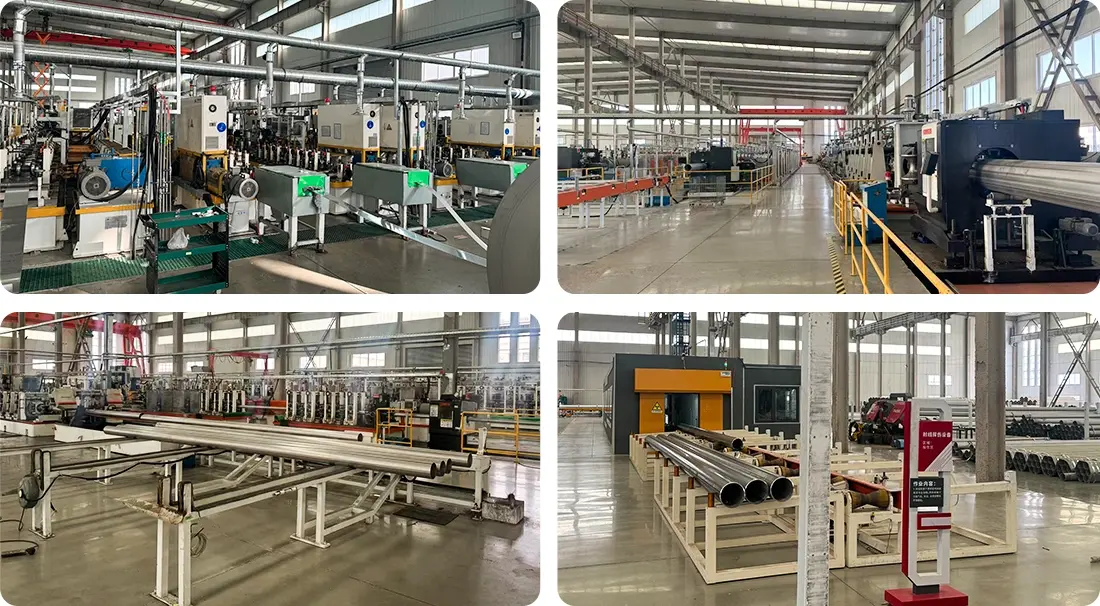
Quality Assurance starts with raw material verification. Our incoming inspection team performs spectrographic analysis on every heat batch, verifying chemical compliance prior to release for production.
Dimensional inspectors check socket depth, bore concentricity and face flatness during manufacture using calibrated gauges traceable to national standards. Bolt hole placements (tolerance ± 0.5mm) are checked by automated coordinate measuring devices.
Non-destructive testing includes ultrasonic examination of the socket shoulder region, detecting subsurface discontinuities invisible to visual inspection. Liquid penetrant testing reveals surface-breaking defects on machined faces and weld prep areas.
Mechanical testing on representative samples validates tensile strength, yield strength, and elongation properties. Hardness testing across the flange cross-section confirms proper heat treatment effectiveness.
Every order ships with EN 10204 3.1 Mill Test Certificates documenting chemical analysis, mechanical properties, heat treatment parameters, and heat numbers. You receive complete material traceability supporting project quality plans and regulatory audits.
Customization Capabilities for Engineering Projects
Standard catalog sizes serve most applications, but complex projects demand tailored solutions. Our engineering team supports customization across multiple parameters.
Specify non-standard socket depths matching proprietary pipe schedules. Request special facing finishes including spiral serrated, smooth, or RTJ groove machining for metal-to-metal seals in high-pressure Class 1500 configurations.
We accommodate mixed material orders combining F304L socket weld flanges with duplex grades for selective corrosion resistance. Laser marking services add permanent identification including heat numbers, project codes, or sequential numbering for inventory control.
Expedited production schedule minimises lead times for time-sensitive projects. Priority orders ship in 10-15 days vs the typical 20-25 day cycles, helping you reach crucial building milestones.
Excellence in Packaging and Global Logistics
Protective packing ensures no harm in overseas shipment. Each flange is individually wrapped in polythene and has plastic socket liners to protect the interior bores from contamination.
Bundles are secured with steel banding in heavy-duty plywood boxes during container loading. ISPM-15 compliant fumigation-free hardwood cases for shipment to Australia, New Zealand and European Union destinations.
During sea voyages, stainless steel surfaces are protected by using moisture-resistant desiccant packets and VCI (Vapour Corrosion Inhibitor) sheets. We ship from Shanghai, Ningbo, Tianjin and Qingdao ports to cut down freight costs and make delivery dates as efficient as possible.
We provide FOB, CFR, CIF and DDP terms as per your purchase needs. With mixed container loading, flanges and companion fittings are loaded together to save freight costs and ease your reception process at your site.
FAQ
Q:What functional joint-welding advantage does the specialized socket shoulder of this Socket Weld Flange provide?
A:This socket weld flange is engineered with an internal socket shoulder bore that facilitates easy small-bore pipe insertion and alignment, allowing for high-pressure single fillet structural welding on the outer hub seam. The shoulder creates a positive stop that maintains the ASME B31.3 mandated 1.5mm expansion gap, preventing pipe bottoming during thermal expansion while ensuring consistent weld quality across multiple joints.
Q:How does your factory achieve the exceptional circumference concentricity required for this hubbed socket ring?
A:We implement precision closed die press forging and ring rolling from certified raw inputs, followed by precision multi-axis CNC internal socket boring and precision bolt hole drilling to lock in micro-tolerances. Our automated machining centers maintain socket bore concentricity within 0.05mm, ensuring uniform weld penetration and eliminating flow turbulence at the joint interface.
Q:What mechanical deformation testing is contractually performed to ensure the structural safety of this forged socket shoulder?
A:Representative production coupons are subjected to room temperature tensile property verification, socket tolerance hardness evaluation, and precise Positive Material Identification (PMI) chemical grade verification. Additionally, we perform ultrasonic testing across the socket shoulder region to detect subsurface discontinuities, ensuring structural integrity under cyclic pressure loading and thermal shock conditions.
Q:Can this universal socket weld flange series be configured with specific small-bore pipe schedule alignments?
A:Yes, we offer extensive manufacturing flexibility, accommodating Class 150 to Class 1500 pressure parameters, supporting micro-calibrated inner socket bore diameters accurately tailored to match different small-bore piping charts. Whether you specify Schedule 40, 80, 160, or custom wall thicknesses, our CNC boring operations machine sockets to your exact dimensional requirements with documented tolerance verification.
Q:What material documentation is provided to verify the precise material traceability of this dual-certified grade?
A:Each shipment is accompanied by a fully transparent EN 10204 3.1 Mill Test Certificate (MTC) detailing exact chemical ladle heat profiles, elongation percentages, and physical tensile load values. Certificates include spectrographic analysis results, mechanical test data, heat treatment records, and heat numbers permanently stamped on each flange for lifetime traceability supporting quality audits and failure analysis investigations.
Contact Us
Ready to source reliable ASME B16.5 ASTM A182 F304 F304L Socket Weld Flanges for your next project? Our technical team responds within one hour during business hours. Request your detailed quotation and MTC samples today at info@hballtrust.com.