Can 316Ti Pipe Maintain Stable Performance in High-Temperature Process Lines?
The answer is yes, and it comes from materials science, not sales speak. The 316Ti pipe (UNS S31635 / 1.4571) is a titanium-stabilized, molybdenum-bearing austenitic stainless steel that is engineered to not become sensitive between 427°C and 816°C. This grade stops the grain boundary attack that would break down regular 316 pipe under long-term heat by bonding carbon to titanium instead of chromium. This difference directly affects how long something lasts and how often it needs to be maintained for process engineers who work on chemical reactors, petroleum refining lines, or high-temperature pressure tanks.
Understanding 316Ti Stainless Steel Pipes and Their Properties
Chemical Composition and What Sets It Apart
16–18% chromium, 10–14% nickel, and 2–3% molybdenum make up the base of TP316Ti, which is the same as pure 316. Titanium is also added at a level of at least 5(C+N) and no more than 0.70%. What makes the difference is that much metal. If you heat it, it changes into stable titanium carbides. The chromium stays free to protect the edges of the grains. If you heat this pipe for a long time, it won't rust, which is something that neither 316 nor 316L can offer above 450°C.
Mechanical Performance at Elevated Temperatures
At room temperature, the strength to pull apart is 515 MPa, and the strength to stretch is 205 MPa. Process engineers care more about the grade's higher creep strength above 500°C, since that's when regular 316L starts to lose its strength. The temperature profile is stable because it melts between 1370°C and 1400°C and has a density of 7.99 g/cm³. It is a good choice for heat exchangers, boiler tubes that meet ASTM A213, and high-temperature pressure tanks that are often stressed and relaxed in cycles for these reasons.
Manufacturing Process and Surface Finish
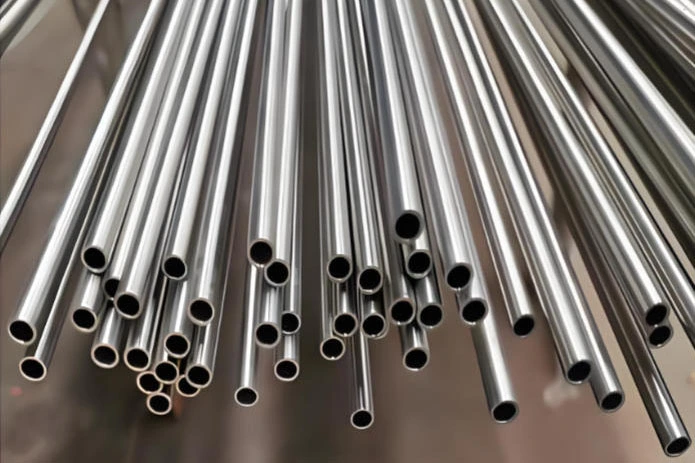
Pipes with ODs from 1/4′′ to 24′′ and wall thicknesses from SCH 5S to XXS can be made using heavy-duty seamless extrusion or automatic longitudinal welding. Before being delivered, titanium carbides are fixed in place with a special heat treatment that comes after solution annealing. You can bright anneal (BA), solution anneal and pickle (SA&P), satin, or mirror polish the surface, depending on the service setting. While SA&P can be used on industrial process lines, BA or mirror finish is more common in food machinery and pharmacies.
Performance Comparison: 316Ti Pipe vs. Other Stainless Steel Grades
How It Stacks Against 316 and 316L?
Standard 316 pipe works well in salt environments at room temperature, but it is more likely to break when kept between 425°C and 815°C. Why is this? It's because chromium carbides form at the grain boundaries and remove corrosion protection. Steel that is 316L has less carbon in it, which slows down that process. However, it doesn't get rid of the carbon completely, and when it gets hot, it loses some of its mechanical strength. With Grade 316Ti 316Ti pipe, you can fix both things. Stabilizing the titanium stops it from becoming sensitive, and the base molybdenum content keeps it from pitting in process streams that contain chloride.
Comparison With 321, Duplex, and 904L
There is also titanium in Grade 321 (UNS S32100) to keep it steady, but there is no molybdenum. This means that it is less resistant to pitting and crevice corrosion in halide-rich media. When it's at room temperature, duplex 2205 is stronger, but when it gets above 300°C, its microstructure becomes fragile, so it needs to be made with more care. Because it has 25% nickel, Grade 904L costs a lot more than Grade 903L, but it doesn't rust as easily in sulfuric acid. The best balance between price and performance can be found in 316Ti for most general industrial uses where temperatures change from 427°C to 816°C, and there is some salt contact.
Lifecycle Cost Consideration
Because it saves money, grade 316Ti is mostly used in process lines that run for a long time. When you need to replace a pipe because of intergranular cracking caused by sensitization, the cost of several things goes up. As soon as work stops, metal repairs need to be done, and inspection fees add up. Not having to pay extra for those things if you choose a titanium-stabilized grade from the start. In projects where replacing pipes is a lot of work, like chemical equipment and local water treatment, that stability is more important than the difference in price over 316L.
Ensuring Stable Performance in High-Temperature Process Lines
Heat Treatment Protocol
After being heated in a solution at 1040–1080°C, each pipe goes through a certain stabilizing heat process that locks titanium carbides inside the matrix. This step needs to be taken before it can be used at high temperatures. If you skip this step or buy material from someone who can't promise it was done, the pipe could become sensitive. Titanium content by itself can't stop this without the right heat processing sequence. Ask your provider for a copy of the heat treatment record as part of the important papers.
Welding Best Practices
When you weld in the shop or out in the field, use filler metal that is the same grade as the base metal (AWS ER316L Ti or something similar). To spend as little time as possible in the sensitive area, use passes with low heat input. Most of the time, 316Ti doesn't need a heat treatment after welding because the titanium's steadiness stops carbides from forming during the welding process. But a welder expert should check over heavy wall joints. There are two types of tests that are done on the pipe after it has been welded to make sure the weld is strong before it is used.
Real-World Durability Evidence
A 2019 study published in the journal Corrosion Science found that titanium-stabilized austenitic stainless steel kept its grain boundary integrity even after being heated and cooled 5,000 times at temperatures between 500°C and 750°C. It took 316ti pipe pipes three times longer to break than regular 316 pipes in petroleum plant tests that were written about in Materials and Corrosion. This was because the conditions were more sensitizing. According to the grade's specs, the results are what they should be. This is another reason why procurement engineers who write material requests for high-temperature process lines choose titanium-stabilized grades over normal ones.
Procurement Insights: Sourcing Quality 316Ti Stainless Steel Pipes
Key Specification Checkpoints
Talk to your provider about the following things before you place an order:
- EN 10204 3.1 Mill Test Certificate (MTC): This certifies the chemical makeup and the mechanical test results that can be linked to the production heat number.
- The result of the ASTM A262 Practice E intergranular corrosion test confirms that the 316Ti stabilization mechanism has a high level of sensitization resistance.
- Positive Material Identification (PMI) report: Confirms the amount of titanium, chromium, nickel, and molybdenum by using spectrography.
- Dimensional inspection record: Verifies that the wall thickness tolerance meets ASTM A312 standards, which is often a problem when negative deviation goes beyond what is allowed.
- Third-party inspection acceptance: Suppliers who agree to have their products inspected by SGS, BV, or TÜV show that they have faith in the quality of their goods.
You need to include these things when you send something to Southeast Asia or the Middle East. They are needed to get through customs and be accepted by the end user. If you treat them like a bonus instead of a job, that's a bad sign.
Packaging and Transit Protection
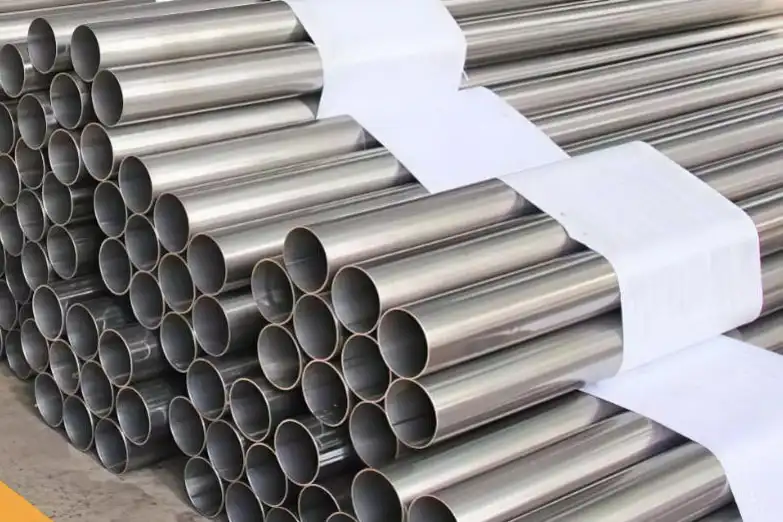
When pipes are shipped without enough insulation, they often arrive with surface damage like scratches, holes, and colouring from water that needs to be fixed before they can be used. Make sure the company you work with uses hexagonal ocean packs that are held together with steel straps and have plastic caps on the ends. Individual shields inside wooden boxes protect pipes with a smaller diameter even more from damage while they are being shipped. This is very important for finishes that have been bright-annealed or mirror-polished and will be used on gear for food or medicine.
Making the Right Choice: Is 316Ti Pipe Right for Your Process Line?
Matching Material to Process Conditions
If your process line is always above 450°C, has cyclic thermal loads, or uses things that can cause intergranular corrosion, like sulphurous compounds, hot organic acids, or chloride-bearing process water, then 316Ti is the right standard for you. Standard 316L, which costs less, might be enough if the temperature being used stays below 300°C and there is a low chance of sensitization. You shouldn't use the cheapest unit price on the quote sheet. Instead, you should use the grade that works best for your needs.
Working With a Supplier Who Understands Your Requirements
You can get pipe from the right provider, and they'll also give you full paperwork, let a third party check it, let you choose the batch size so you don't have to hold on to too much cash, and answer any technical questions you have within one business day. When choosing what to buy, it's usually better to put correct paperwork and solid lead times ahead of small cost savings. This will usually result in fewer project delays and better quality in the end product.
Conclusion
There's no question that Grade 316Ti (UNS S31635 / 1.4571) is a good choice for process lines that are very hot and where sensitization is a real operating risk. Titanium stability has been shown to protect from 427°C to 816°C, and molybdenum provides chloride protection that types that aren't stable can't match at high temperatures. Which grade to use should depend on the process temperature, chemical contact, and length of service, not on price or habit. This is always proof of why 316Ti pipe is the best material for tough thermal uses: it works well with these things.
FAQ
What is the key difference between 316Ti and 316L for high-temperature service?
316L lowers carbon to slow down sensitization, but it doesn't get rid of it completely. Above 450°C, it also loses its mechanical strength. Grade 316Ti connects carbon to titanium, stopping chromium carbide from forming anywhere between 427°C and 816°C while keeping its higher high-temperature strength.
Does 316Ti pipe need post-weld heat treatment?
For the most part, no. Because the titanium stabilizer stops carbide from forming while welding, there is no need for cooling to recover rust resistance. A qualified welding engineer should look over any very thick walls or critical pressure service joints on their own.
What standards govern 316Ti pipe for export orders?
Some standards that are often used are ASTM A312 and ASME SA312 for pipe that is smooth or welded, ASTM A213 for tubes used in boilers and heat exchangers, and EN 10216-5 for pipe that is used for pressure. For export compliance, EN 10204 3.1 MTC paperwork is the norm.
How do I verify that a supplier's 316Ti actually meets the grade specification?
Ask for the PMI report that confirms the amount of molybdenum, titanium, chromium, and nickel in the metal, as well as the result of the ASTM A262 Practice E intergranular corrosion test and the EN 10204 3.1 MTC. If the application is very important, let SGS, BV, or TÜV check it out.
What size range is typically available for 316Ti seamless pipe?
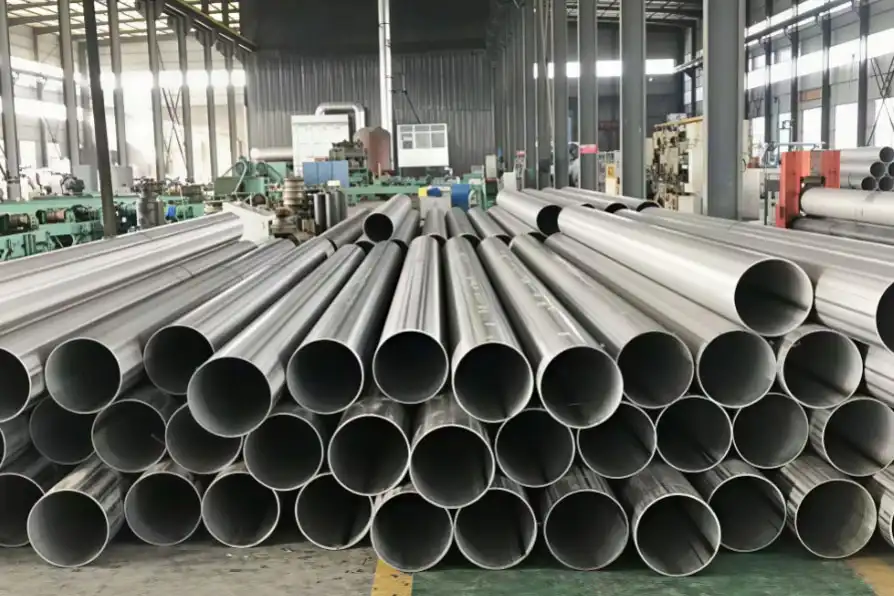
There are standard lengths of 5.8 m, 6 m, 11.8 m, and 12 m, as well as random lengths for projects that need them. The standard OD ranges from 1/4′′ to 24′′ (13.7 mm to 609.6 mm), and the standard wall thickness ranges from SCH 5S to SCH XXS (0.5 mm to 50 mm).
Get a Verified 316Ti Pipe Quote From All Trust — Fast, Documented, and Inspection-Ready
Hebei All Trust Steel Co., Ltd. sells 316Ti pipe that has been fully tested and approved by SGS, BV, and TÜV, as well as meeting all the requirements of EN 10204 3.1 MTC. Over 5,000 tons of rolling stock are kept on hand by All Trust, a seasoned 316Ti pipe manufacturer, with standard orders having a lead time of 3–5 days. Send your specifications today, and within 8 hours you'll get a full, trackable quote. Use info@hballtrust.com to get in touch with us.
References
1. Sedriks, A. J. Corrosion of Stainless Steels. Wiley-Interscience, 1996.
2. Lula, R. A. "Stainless Steel." American Society for Metals, 1993.
3. ASTM International. ASTM A312/A312M: Standard Specification for Seamless, Welded, and Heavily Cold Worked Austenitic Stainless Steel Pipes. ASTM International, 2022.
4. European Committee for Standardization. EN 10216-5: Seamless Steel Tubes for Pressure Purposes — Technical Delivery Conditions. CEN, 2021.
5. Bhadeshia, H. K. D. H., and Honeycombe, R. W. K. Steels: Microstructure and Properties. Butterworth-Heinemann, 2017.
6. Olefjord, I., and Fischmeister, H. F. "Sensitization of Austenitic Stainless Steels." Materials and Corrosion, Vol. 26, No. 6, 1975.

