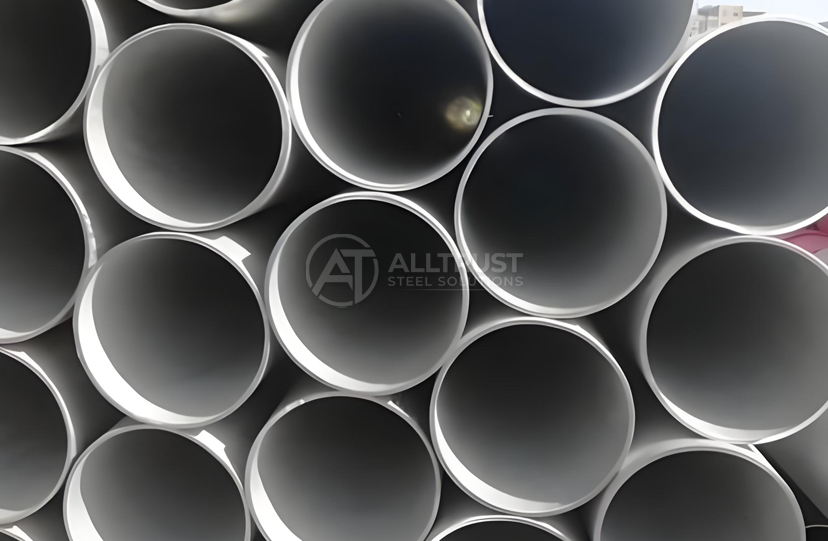
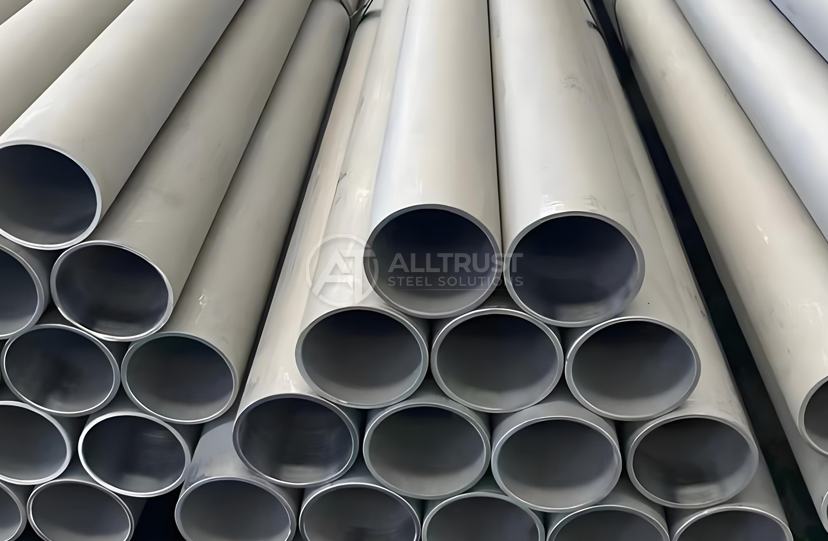
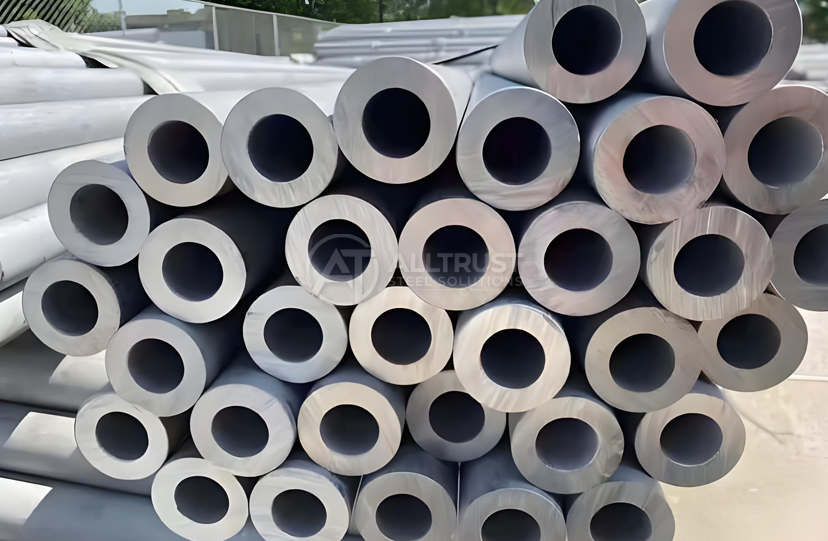
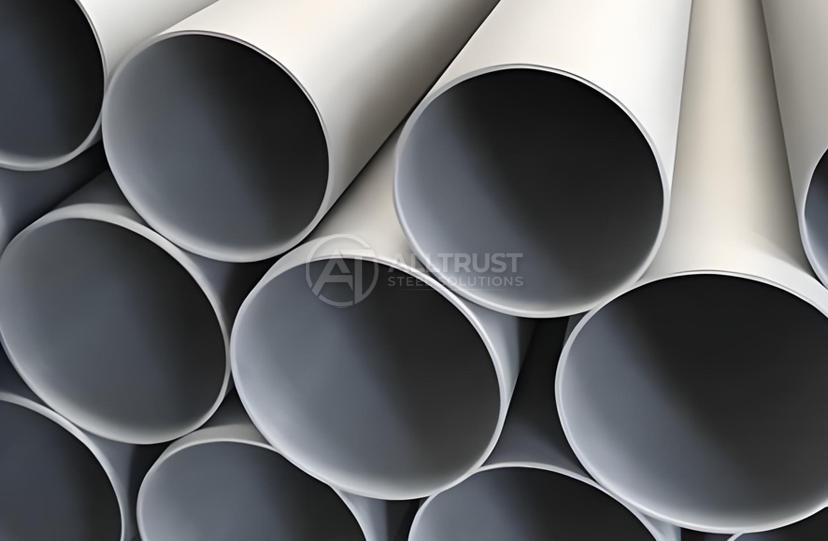
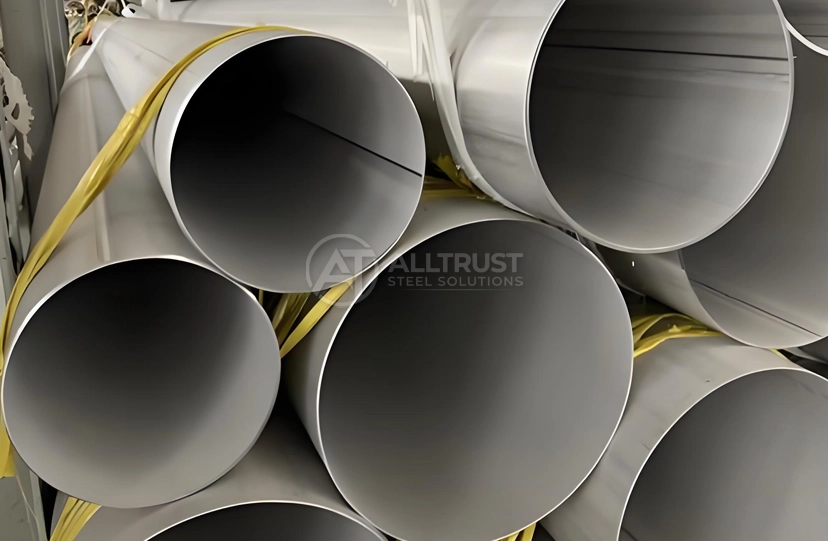
316ti pipe
2. Standard: ASTM A312, ASME SA312, EN 10216-5, strictly compliant with international high-temperature codes
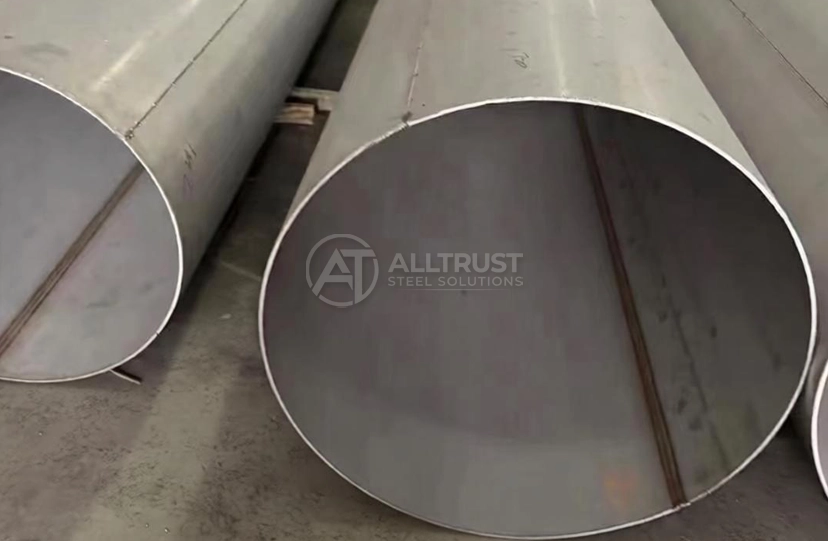
3. Process: Heavy-duty seamless extrusion or automated precise welding with absolute structural density
4. Size Range: Nominal Pipe Size (NPS) 1/8" to 30", wall thickness profiles from Schedule 5S to heavy XXS
5. Heat Treatment: Specialized stabilizing heat treatment applied after solution annealing to fix titanium carbides
6. Surface Finish: Clean solution annealed and pickled (SA&P), descaled industrial matte, or sandblasted finish
7. Application: Chemical reactors, petrochemical refining, pharmaceutical equipment, and automotive exhaust systems
8. Service Advantage: Sourced from tier-one steel billets, 100% PMI testing, and third-party inspection (SGS/TUV/BV) welcome
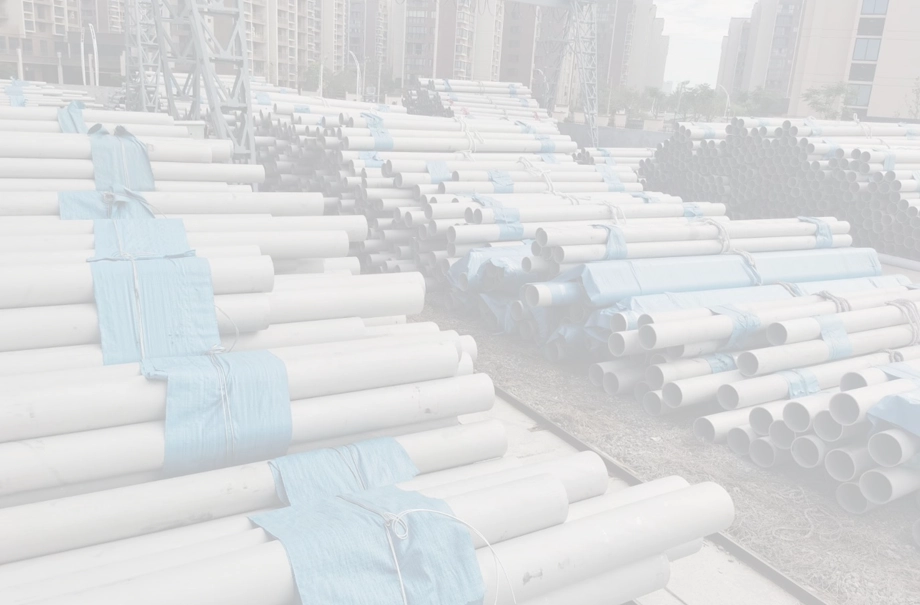
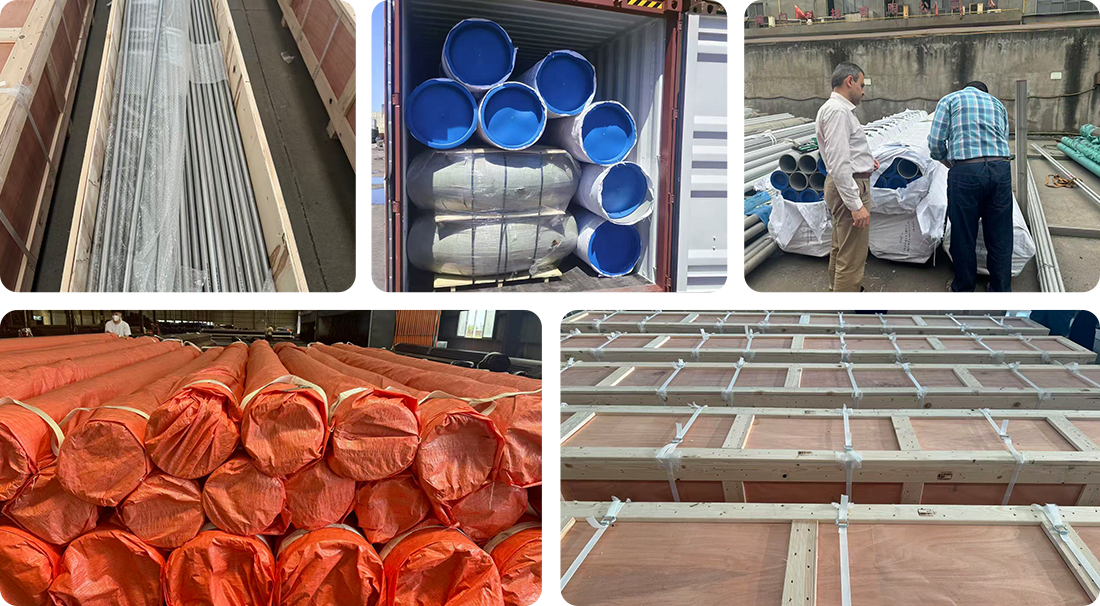
9. Packaging: Hexagonal ocean bundles bound with strong steel strapping, equipped with protective end caps
10. Key Advantage: Complete immunity to intergranular corrosion under high thermal exposure from 427°C to 816°C
316Ti Pipe | Titanium-Stabilized Stainless Steel Pipe for High-Temperature Industrial Applications
Hebei All Trust Steel Co., Ltd specializes in manufacturing premium 316ti pipe engineered with advanced titanium stabilization technology. Our manufacturing capacity surpasses 15,000 tons per year, and every pipe is 100% hydro-tested for zero-defect performance.
Targeted titanium alloying prevents intergranular corrosion in the critical 427°C to 816°C temperature range, providing unmatched structural durability for petrochemical reactors, marine exhaust systems, and pharmaceutical sterilisation equipment. We provide NPS 1/8" to 30" dimensional flexibility with Schedule 5S to XXS wall thickness and stringent ASTM A312, ASME SA312 and EN 10216-5 requirements. All batches include valid EN 10204 3.1/3.2 Mill Test Certificates with heat number tracking.
Why 316Ti Pipe Solves Critical High-Temperature Corrosion Challenges
The fatal flaw of conventional austenitic stainless steels is sensitisation. Chromium carbides precipitate at grain boundaries and chromium-depleted zones susceptible to catastrophic intergranular assault at temperatures between 425°C and 815°C.
Strategic titanium stabilisation chemistry avoids this industrial risk for the product. The titanium concentration, of at least 5×(C+N), reacts mostly with carbon to generate stable titanium carbides, not dangerous chromium carbides. The metallurgical innovation keeps the protective layer rich in chromium at grain boundaries.
2. Long term exposure to heat requires materials with structural strength . Your high temperature pressure vessels , chemical reactors and vehicle exhaust pipes . The product provides constant performance in chloride heavy situations where normal 316 or 316L grades would breakdown during operating lifecycles.
2-3% molybdenum concentration boosts resistance to pitting and crevice corrosion in strong acidic environments. This combination makes our pipe the best alternative for maritime cooling systems, fertiliser production equipment and offshore platform installations.
Technical Specifications
| Parameter | Details |
|---|---|
| Material Grade | 316Ti (UNS S31635 / 1.4571) |
| Manufacturing Standards | ASTM A312, ASME SA312, ASTM A213, EN 10216-5, ASTM A249 |
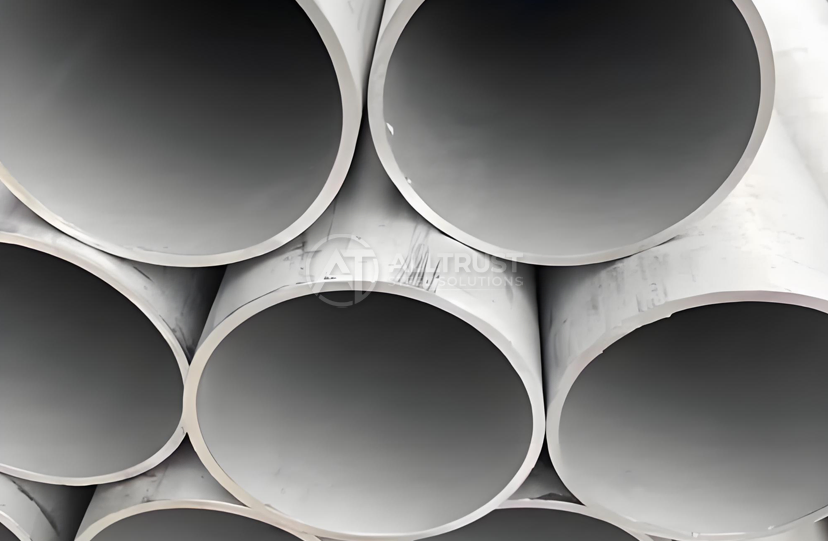
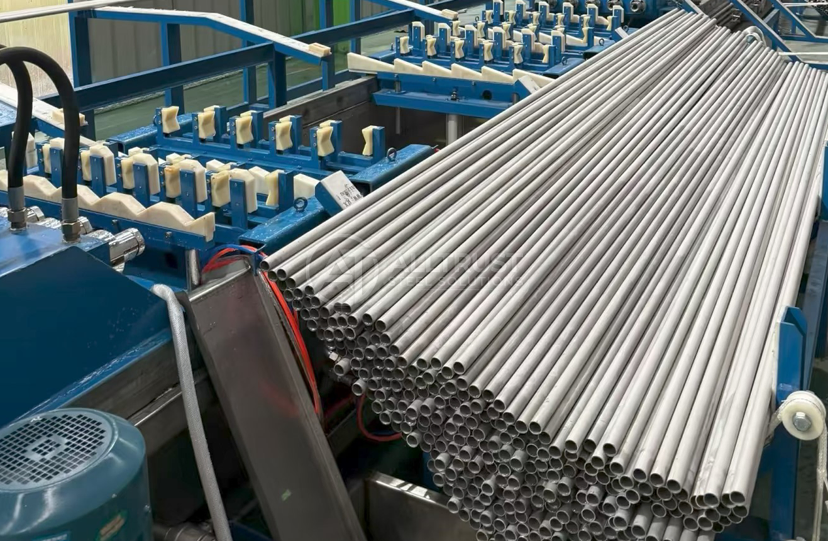
| Product Type | Seamless & Welded Stainless Steel Pipe |
| Manufacturing Process | Hot Finished / Cold Drawn / Cold Rolled / Automatic Longitudinal Welding |
| Outer Diameter Range | 1/4" - 24" (13.7 mm - 609.6 mm) |
| Wall Thickness | SCH 5S / 10S / 40S / 80S / 160 / XXS (0.5 mm - 50 mm) |
| Standard Length | 5.8 m / 6 m / 11.8 m / 12 m / Custom Random Length |
| Surface Finish | Solution Annealed & Pickled / Bright Annealed / Satin / Mirror Polished |
| End Configuration | Plain End / Beveled End / Threaded (NPT, BSPT) / Flanged |
| Chemical Composition | Cr 16-18%, Ni 10-14%, Mo 2-3%, Ti 5×(C+N) min to 0.70% max |
| Density | 7.99 g/cm³ |
| Melting Range | 1370-1400°C |
| Tensile Strength | ≥515 MPa |
| Yield Strength | ≥205 MPa |
| Maximum Service Temperature | Up to 800°C continuous operation |
Comprehensive Quality Testing Protocol
All products are subjected to strict multi-stage testing before shipment:
Chemical Verification: Precise Ti:C ratio for efficient stabilisation is verified by Positive Material Identification (PMI) analysis. Spectrographic examination shows that chromium, nickel and molybdenum content conform to specification.
Intergranular Corrosion Testing: Resistance to grain boundary attack should be verified by ASTM A262 Practice E corrosion testing. This severe test replicates the long-term high temperature exposure conditions that your equipment may experience in service.
Mechanical Properties Verification: Tensile tests, flattening tests and flaring tests verify the pipe has the required ductility and strength. Tensile tests at high temperature confirm performance at working temperature.
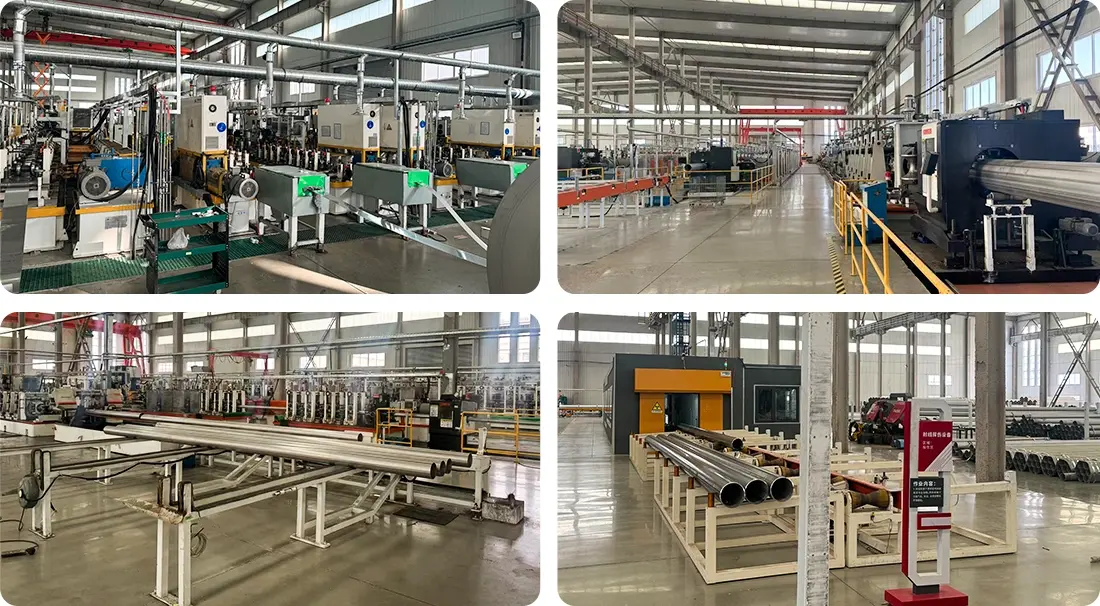
Non-Destructive Examination: Internal faults are revealed by 100% hydrostatic testing at defined pressures. Eddy current testing and ultrasonic inspection are used to verify wall thickness uniformity and structural soundness.
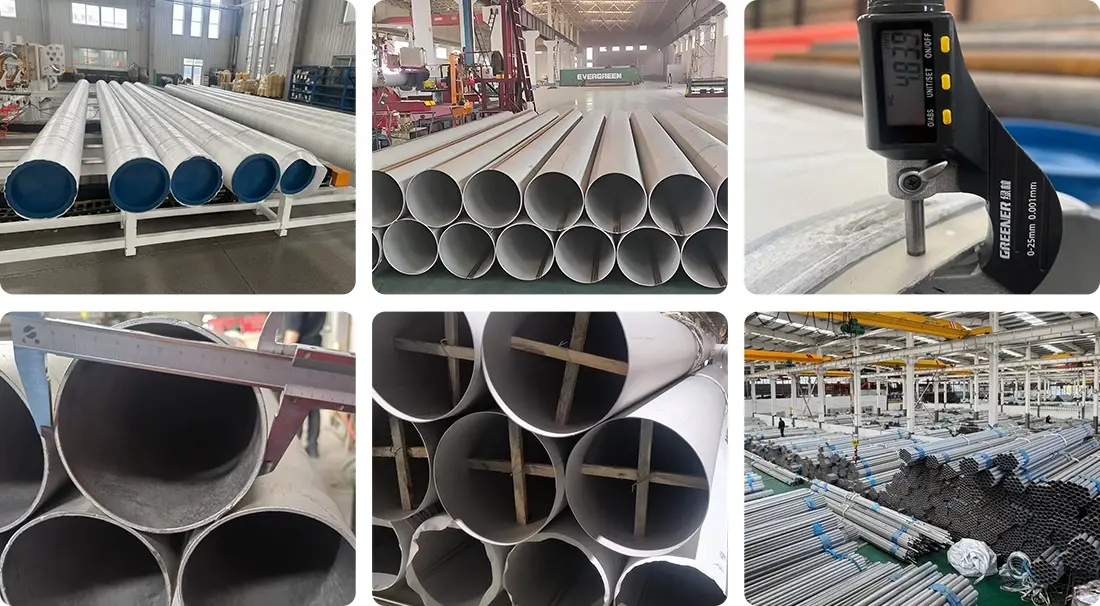
Dimensional Accuracy: Outer diameter and wall thickness tolerances are checked to ASTM/EN requirements using digital profilometer measurement. This accuracy provides correct mating on high pressure assemblies.
Custom Manufacturing Capabilities
We understand your projects require specific configurations. Our advanced processing facilities deliver:
- Precision Length Cutting: Custom lengths up to 12 meters for reduced field welding
- Specialized End Preparation: Beveled ends machined to your welding procedure specifications
- Threading Services: NPT and BSPT threading for mechanical connections
- Surface Enhancement: Mirror polishing, satin finishing, or sandblasted textures
- Custom Wall Schedules: From Schedule 10S to Schedule 80S for varying pressure requirements
Our engineering team provides technical support including material selection guidance, corrosion resistance analysis, and CAD drawing verification to optimize your piping system design.
Core Performance Advantages
Prevention of Sensitisation: The chromium carbides do not precipitate during welding and at high service temperature because of titanium stabilisation. You don't need expensive post-weld heat treatments and you still get excellent corrosion resistance.
Extended Service Life 316ti pipe has excellent creep strength and stress-rupture capabilities across the whole 425-815°C temperature range, whereas 316L loses mechanical strength above 450°C. Thereby longer equipment life cycles and lower maintenance cost.
Superior Chloride Resistance: 2-3% Mo provides superior resistance to pitting for use in saltwater and chloride polluted process streams. This improved durability is good for marine exhaust systems and offshore applications.
Weld Integrity: No post weld annealing needed. Titanium carbides are stable during fusion welding and maintain corrosion resistance in the heat affected zones. This streamlines manufacturing and decreases building schedules.
Structural Reliability: Minimum tensile strength of 515 MPa, and yield strength of 205 MPa to sustain pressure surges and heat cycling without deformation or failure.
Industrial Uses
Chemical Processing Plants: Heat exchangers containing hot sulfuric acid, reactors containing organic compounds, distillation columns where intergranular corrosion would be a safety hazard.
Petrochemical Refineries: High temperature piping for catalytic crackers, reformer tubes and pressure vessels contaminated with hydrogen sulphide and chlorides.
Marine Engineering: Exhaust gas systems for diesel engines, seawater cooling loops, and pipes for off-shore platforms needing simultaneous resistance to high temperatures and saltwater corrosion.
Pharmaceutical Manufacturing: High temperature sterilisation equipment, clean-in-place (CIP) systems and process vessels requiring material purity and resilience to corrosion.
Power Generation: Boiler tubes, superheater sections and steam pipes in thermal power plants subject to continual long-term exposure to high temperatures.
FAQ
Q:What structural stabilization chemistry prevents this product from experiencing crystalline boundary failure?
A:This pipe incorporates a strategic titanium stabilizer that binds with carbon elements, entirely preventing harmful chromium carbide precipitation and sensitization inside the 427°C to 816°C temperature zone. The titanium content is precisely calculated as 5 times the combined carbon and nitrogen content, ensuring complete carbon sequestration.
Q:Under what severe mechanical operating conditions is this titanium-stabilized 316ti line highly recommended?
A:It is optimized for extreme refinery pressure vessel links, high-pressure industrial manifolds, and engine components subject to continuous high-heat operations and volatile acidic media dynamics. Applications requiring sustained performance above 450°C particularly benefit from the enhanced creep resistance.
Q:What specific metallurgical standards verify that the stabilizing reaction has successfully completed?
A:Every batch undergoes rigorous microstructural analysis alongside mandatory intergranular corrosion validation tracking conforming strictly to the ASTM A262 Practice E engineering code. This testing simulates decades of service exposure to confirm grain boundary integrity.
Q:What custom length and schedule configuration options can be engineered for severe chemical blueprints?
A:We support extensive custom fabrication options, offering tailored wall profiles from Schedule 10S to Schedule 80S, customized long lengths up to 12 meters, and tailored pickling descaled finishes. Our engineering team reviews your P&ID drawings to recommend optimal specifications.
Q:What robust shipping protection is allocated to shield this 316ti lot from maritime salt humidity during transit?
A:The pipes are tightly bound into steel-strapped bundles wrapped completely within heavy waterproof weaving bags, fitted with protective end caps, and loaded into reinforced plywood frame cradles. This multi-layer packaging prevents surface oxidation and mechanical damage during international ocean freight.
Contact Us
Contact our technical team at info@hballtrust.com for material specifications, custom quotations, and engineering support. We deliver reliable solutions with the 316ti pipe backed by 15+ years of stainless steel expertise.