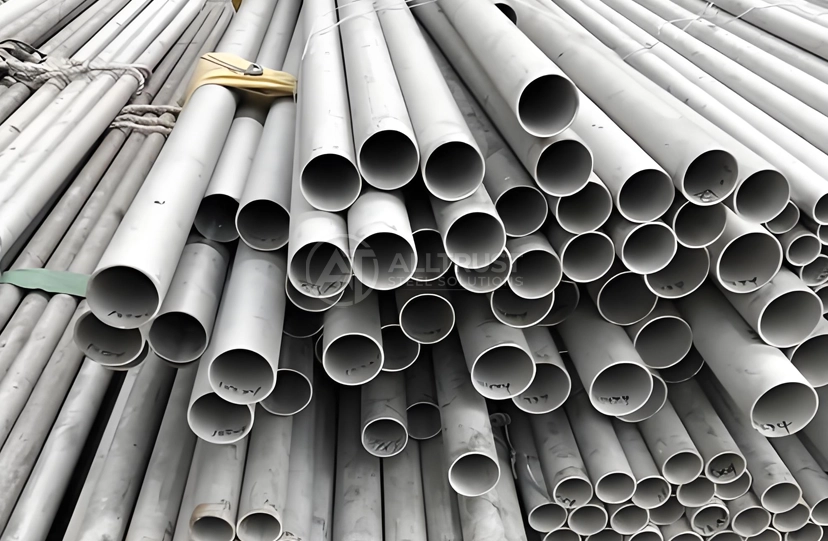
Why Choose TP304 Pipe for Commercial Water Treatment?
When engineers and purchasing managers look at different pipe materials for commercial water treatment systems, the material they choose has a direct effect on how reliable the system will be in the long run and how much it will cost to run. TP304 pipe, which is made of "18-8" austenitic stainless steel that is standardised by ASTM A312, is always the best choice. With 18% chromium and 8% nickel, it has great rust resistance, structural stability, and regulatory compliance in a wide range of settings, such as public water supply, industrial fluid treatment, and food-grade processing. The best material for engineers who can't afford to skimp on quality or durability is one that has been used in many projects around the world.
Understanding TP304 Pipe: Specifications and Properties
Before agreeing to a pipe material, it is very important to understand the technical background. The mechanical structure of TP304 (UNS S30400) shows why it is the most commonly used austenitic stainless steel in business and industry.
Chemical Composition and Mechanical Strength
The alloy has between 0.08% and 20.0% carbon, 18.0 to 20.0% chromium, and 8.0 to 10.5% nickel. Under normal conditions, this composition keeps a stable austenitic microstructure that doesn't become sensitive. It has a minimum tensile strength of 515 MPa (75 ksi) and a yield strength of 205 MPa (30 ksi), which is strong enough for the structural needs of pressurised water treatment circuits. It also stays tough even at very low temperatures and can handle oxidation up to 870°C (1,600°F).
Applicable Standards and Available Configurations
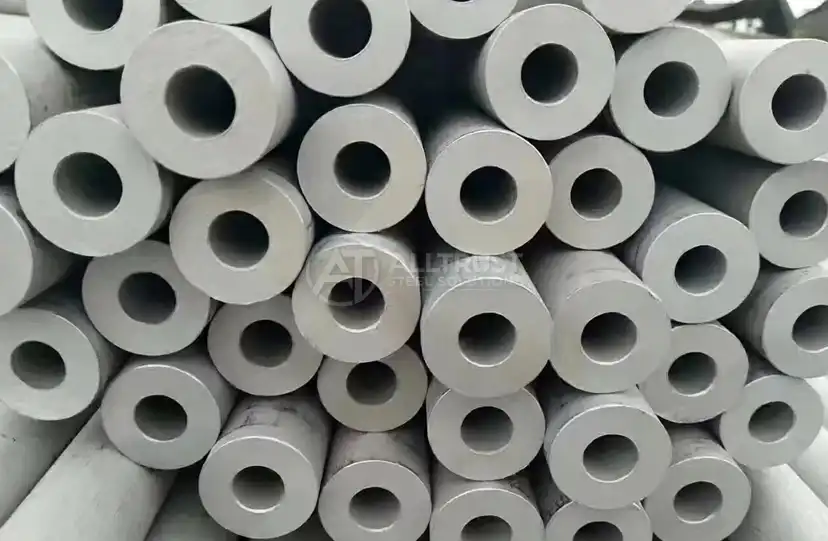
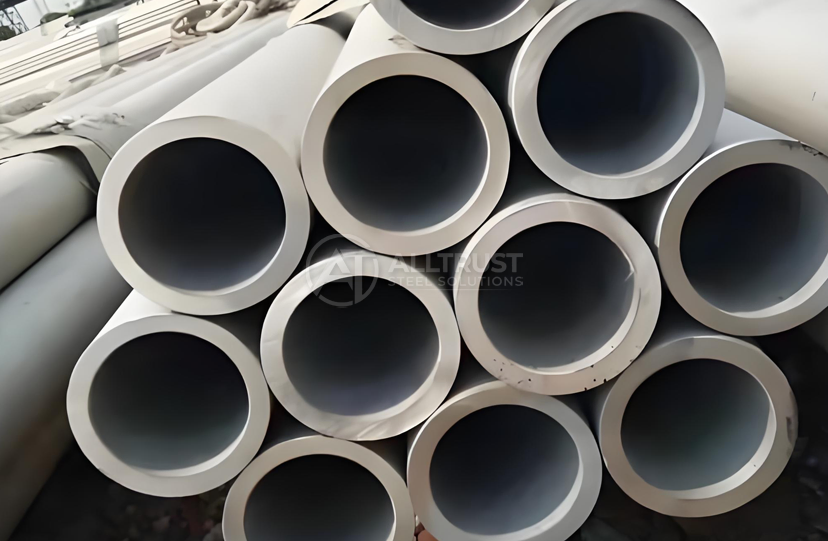
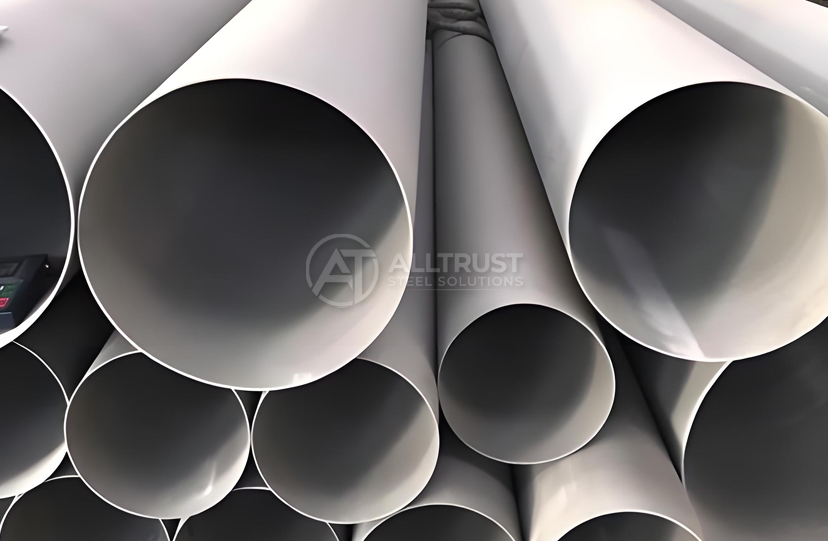
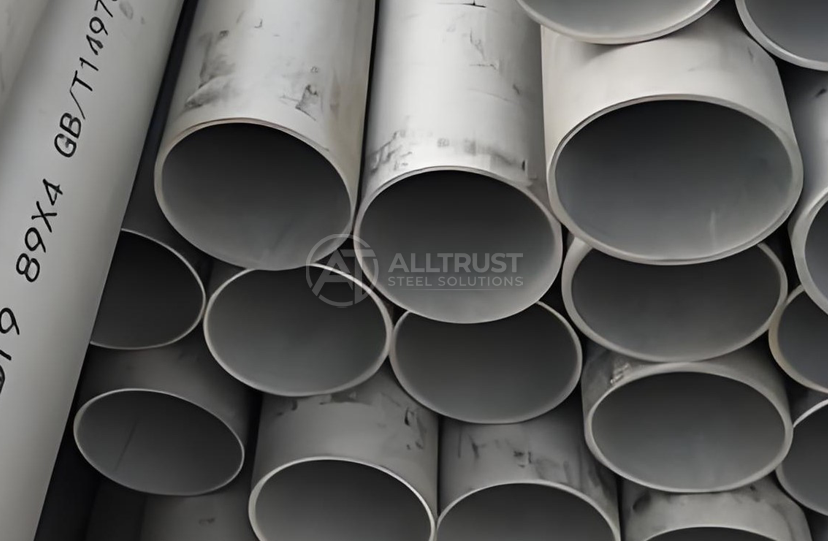
This type of material meets the requirements of ASTM A312, ASME SA312, ASTM A213, EN 10216-5, and ASTM A249. It can be used for both seamless and welded (ERW/EFW) pipe designs. The outside sizes that can be ordered run from 10.3 mm to 1,219 mm, and the wall thicknesses go from SCH 5S to SCH 160 and SCH XXS. During production, full solution annealing is used to get rid of any remaining internal stress and keep the grain structure stable. There are different surface finishes up to 600#, such as pickled and annealed, bright annealed (BA), No.1, No.4, 2B, satin, and mirror polished. These can be used in both industrial and sanitary settings.
Advantages of TP304 Pipe in Commercial Water Treatment
There is a lot of evidence that austenitic 304-grade stainless steel works better than other grades. A 2019 study in the journal Corrosion Science proved that chromium-nickel stainless steel pipes corroded more than 40 times less quickly than carbon steel pipes did in the same conditions of exposure to city water. This directly leads to measurable savings for procurement teams that are in charge of managing lifecycle costs.
Here are the main performance benefits that apply to water treatment:
- Resistance to corrosion in environments with changing pH: The passive chromium oxide layer keeps growing, shielding the pipe wall from mild acids, alkalis, and dissolved chloramines that are common in treated water streams. This self-repairing feature stops the walls from getting thinner over time, which happens with carbon steel systems that aren't sealed.
- Longer service life and less maintenance: Unlike PVC, which breaks down when exposed to UV light and changing temperatures, or carbon steel, which needs to be coated and inspected every so often, stainless steel piping systems in municipal water infrastructure usually last more than 25 years with little maintenance.
- Regulatory and certification compliance: TP304 pipe supports EN 10204 3.1 Mill Test Certificate (MTC) paperwork, which is needed for regulatory permission for many foreign water treatment projects and food preparation facilities. It also meets the standards of ISO 9001:2015 for quality management.
All of these benefits work together to keep a water treatment plant running smoothly and protect the total investment in capital over its entire operating lifecycle. The quality of both the materials and the paperwork makes compliance checks easier in export markets.
TP304 Pipe vs. Other Materials: Making the Right Choice
Choices about what materials to use have big effects on operations and finances. Key features that can be used to compare are shown in the table below:
| Material | Corrosion Resistance | Tensile Strength | Relative Cost | Best Application |
|---|---|---|---|---|
| TP304 | High (general water) | 515 MPa | Moderate | Municipal & industrial water |
| TP316 | Higher (chloride-rich) | 515 MPa | Higher | Seawater, brine |
| TP304L | High (weld-heavy) | 485 MPa | Moderate | Heavy-gauge fabrication |
| Carbon Steel | Low | 400–550 MPa | Low | Dry, non-corrosive service |
| PVC | Moderate | Very low | Very low | Low-pressure, ambient temp |
TP316 provides superior resistance in high-chloride environments like seawater desalination, but carries a meaningfully higher material cost. For standard municipal water treatment and industrial fluid handling where chloride concentrations remain moderate, TP304 delivers an optimal balance of performance and procurement economy. TP304L, with its reduced carbon content (0.03% max), suits applications involving extensive welding where carbide precipitation risk must be minimized, but offers slightly lower mechanical strength.
Carbon steel and PVC remain viable only in narrowly defined, non-corrosive, low-pressure service conditions. In any application involving treated water, chemical dosing loops, or temperature variation, their lifecycle cost disadvantages outweigh initial savings within two to five years of service.
Procurement Insights: Sourcing TP304 Pipes Efficiently
When procurement teams buy stainless steel pipe through a route that hasn't been checked out, they run the risk of material swap, which is the most common and expensive problem in this supply area. To be clear, TP304 pipe needs to have its Cr and Ni content checked by Positive Material Identification (PMI) analysis and come with an EN 10204 3.1 Mill Test Certificate that can be linked to a specific heat number.
When purchasing workers look at a TP304 pipe maker or seller, they should make sure of the following:
- MTC paperwork: Each package should have a 3.1 or 3.2 certificate from the mill where it came from, along with a heat number that can be used to connect the pipe's physical state to its chemical and mechanical test results from the lab.
- Protocols for non-destructive testing: On production batches, reliable providers test them with hydraulic pressure, eddy current pressure, and ultrasonic testing (UT). Before the item is shipped, these tests find any internal holes, broken weld seams, or changes in the wall thickness.
- Third-party inspection acceptance: Suppliers who accept proof from SGS, BV, TÜV, DNV, or ABS show that they are responsible. This is especially important for export orders, where the buyer can't check out the factory in person.
- Flexible MOQ and wait time: Orders in stock should be ready in 3–5 business days. Custom items that are standard take 15–20 days. Suppliers with stores near major ports that keep a moving inventory of 5,000 tonnes or more can meet buyers' immediate purchasing needs without making them commit too much capital.
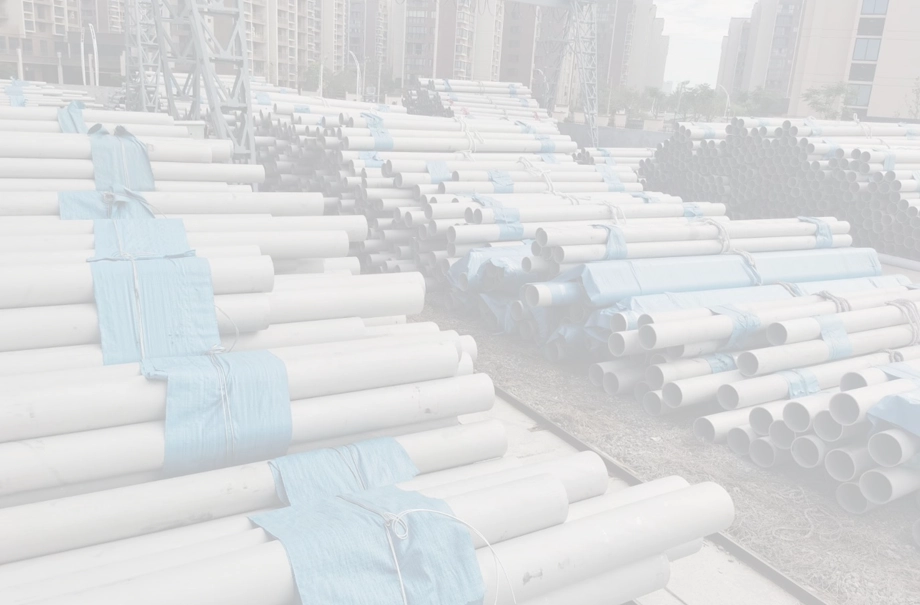
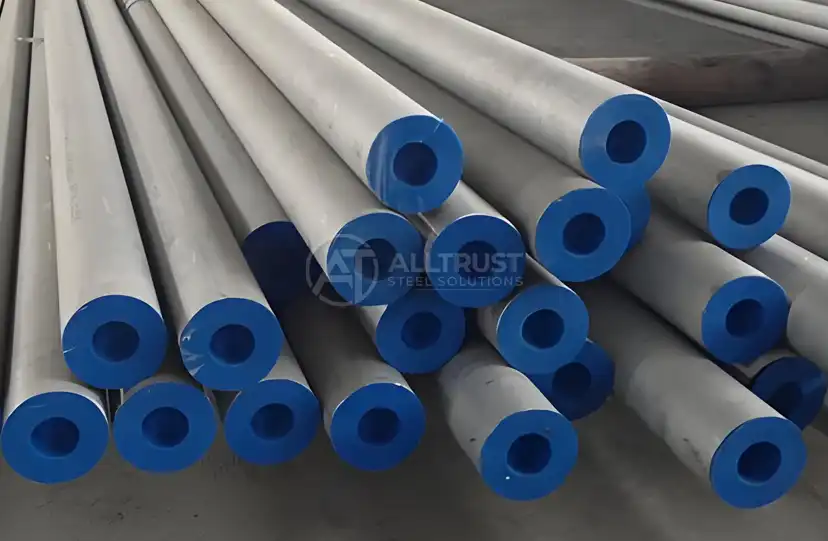
The quality of the packaging also needs your attention. Pipes should come with plastic end caps, individual protective sleeves, steel strapping, and either fumigation-free wooden cases or waterproof woven bags to keep the surface from rusting and the pipes from getting damaged during ocean freight.
Installing and Maintaining TP304 Pipes in Commercial Water Treatment Systems
Welding and Joining Best Practices
In water treatment applications, TIG welding (GTAW) is the best way to join 304-grade stainless steel. Using AWS ER308L filler wire and keeping the argon back-purging going during root pass welding keeps the inner hole surface from oxidising, which would lower its resistance to rust and raise the risk of pollution in water systems that people drink. During installation, don't touch carbon steel tools; iron gets embedded in the surface and starts pitting rust.
Routine Inspection and Corrosion Monitoring
Once a city water system is up and running, it is usually inspected visually every 12 months. If the water has high amounts of salt or a pH that changes below 6.0, eddy current screening done every 24 months can find early-stage cracking before it goes through the wall. As long as there are weld-heavy areas, ASTM A262 Practice E can be used to figure out how likely it is that intergranular rust will happen.
According to internal project records made public by the contractor, a water treatment plant in Southeast Asia that switched from coated carbon steel pipes to 304 stainless steel pipes saw a 60% drop in unplanned repairs over a five-year tracking period. It only took 3.2 years for the extra material cost to pay for itself.
Conclusion
When it comes to industrial water treatment settings, few other materials can match TP304 pipe's constant mix of resistance to rust, mechanical strength, regulatory compliance, and ease of purchase. Its proven performance and long history of successful projects around the world help people make confident specification decisions. It can be used for everything from building public infrastructure to processing food to moving fluids in factories. When accurate measurements, proper documentation, and on-time delivery are essential, TP304 stainless steel pipe is still the smart and proven choice.
FAQ
Does TP304 pipe comply with drinking water safety standards?
Yes. When produced to ASTM A312 and accompanied by an EN 10204 3.1 MTC, TP304 stainless steel pipe meets the material requirements for potable water systems in most international jurisdictions. Its non-reactive inner surface prevents metallic leaching into the water stream, supporting compliance with NSF/ANSI 61 and equivalent standards.
Is TP304 suitable for high-temperature water treatment service?
TP304 maintains structural integrity up to 870°C in oxidizing atmospheres and performs reliably in continuous service up to approximately 650°C. For standard commercial water treatment, which rarely exceeds 120°C, it is entirely appropriate. Where temperatures exceed this range in combination with elevated chloride concentrations, TP316 or TP321 may warrant consideration.
What factors affect delivery timelines for bulk orders?
Stock orders for standard schedules (SCH 10S, 40S, 80S) in common OD ranges typically ship within 3–5 business days from well-stocked suppliers. Custom dimensions, specialized finishes, or large-volume orders requiring production scheduling generally require 15–25 days. Third-party inspection adds 3–5 days depending on inspection agency scheduling and the volume of testing requested.
How do I verify that the supplied pipe is genuinely TP304 grade?
Request PMI (Positive Material Identification) test results alongside the MTC. A handheld XRF analyzer can confirm Cr and Ni content at the delivery site in under two minutes per sample. Cross-referencing the heat number on the pipe stencil against the MTC laboratory results provides complete chain-of-custody verification.
Partner with All Trust for Certified TP304 Pipe Supply
All Trust maintains over 5,000 tons of rolling inventory, ships stock orders within 3–5 days, and provides full EN 10204 3.1 MTC documentation with every consignment. As a dedicated TP304 pipe manufacturer and supplier, we accept SGS/BV/TÜV third-party inspection and support low MOQ orders. Contact our technical team today at info@hballtrust.com to request a certified quote and secure a reliable supply chain for your next water treatment project.
References
1. ASTM International. ASTM A312/A312M: Standard Specification for Seamless, Welded, and Heavily Cold Worked Austenitic Stainless Steel Pipes. ASTM International, 2022.
2. American Society of Mechanical Engineers. ASME B31.3: Process Piping Code. ASME, 2022.
3. Outokumpu Stainless. Corrosion Handbook: Stainless Steel in Water Treatment Applications. Outokumpu, 2021.
4. Sedriks, A. J. Corrosion of Stainless Steels, 2nd ed. John Wiley & Sons, 1996.
5. European Committee for Standardization. EN 10216-5: Seamless Steel Tubes for Pressure Purposes — Technical Delivery Conditions for Stainless Steel Tubes. CEN, 2021.
6. Materials Technology Institute. MTI Manual No. 13: Guidelines for the Selection of Stainless Steel for Water Treatment Equipment. MTI, 2018.