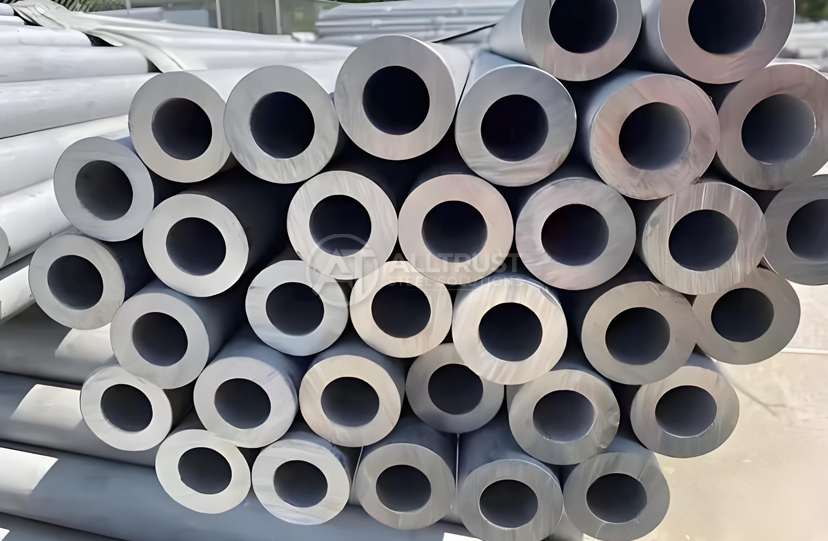
316Ti Pipe for High-Temperature Furnace Exhaust Systems
Standard grades of stainless steel start to fail quietly and expensively when furnace exhaust systems keep running at temperatures above 500°C for a long time. The grade TP316Ti (UNS S31635 / 1.4571), 316Ti pipe, solves this perfectly. By adding titanium as a stabilising element, it stores carbon forever as titanium carbides. This stops the loss of chromium that leads to intergranular rust at temperatures between 427°C and 816°C. For purchasing managers looking for pipes for chemical reactors, petroleum exhaust lines, or industrial furnace systems, knowing this grade's technical edge is the first thing they need to do to make a long-lasting, cost-effective choice.
Understanding 316Ti Pipe: Properties and Specifications
Metallurgical Composition and Mechanical Benchmarks
The chemistry used to make titanium-stabilized stainless steel pipe is planned. The titanium content is set between 0.50% and 0.70%, making sure that all the free carbon is bound before it can form chromium carbides at the edges of the grains. The alloy has between 16 and 18% chromium, 10 to 14 % nickel, and 2 to 3 % molybdenum. It has a minimum yield strength of 205 MPa and a tensile strength of 515 MPa. With a melting point range of 1370–1400°C and a density of 7.99 g/cm³, it can perform important structural jobs in settings with frequent temperature changes.
Applicable Standards and Available Dimensions
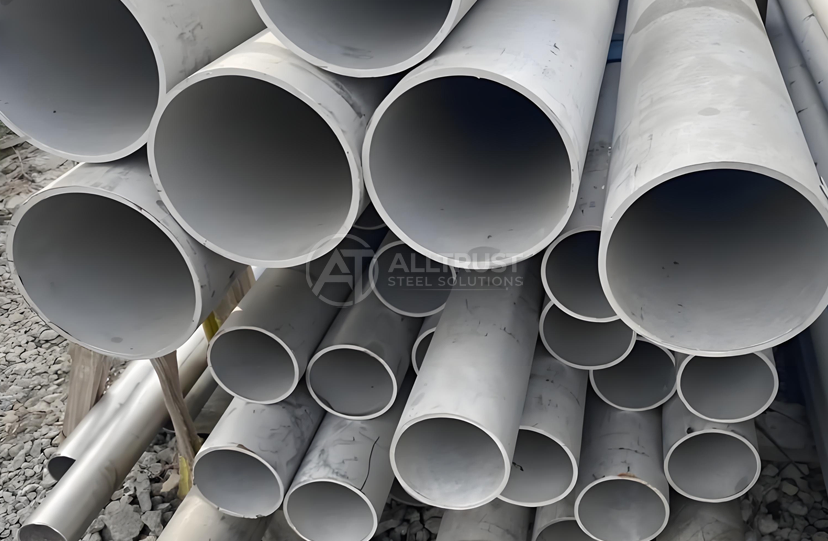
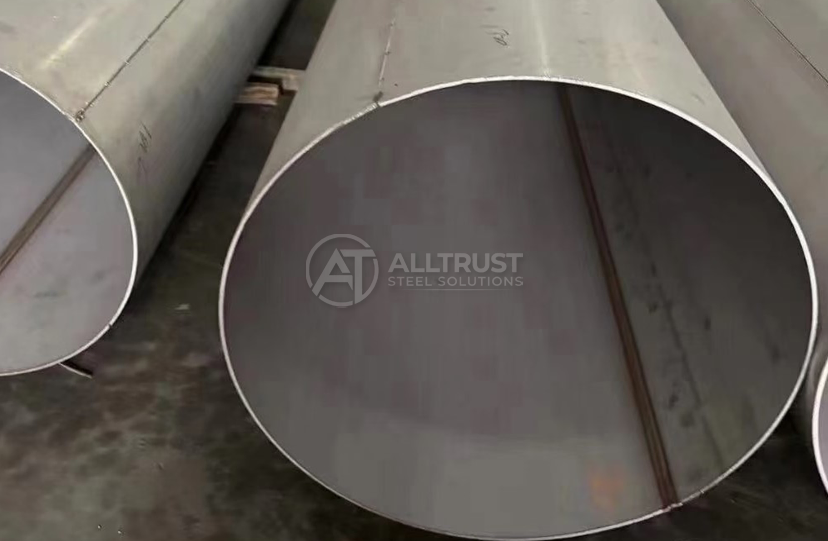
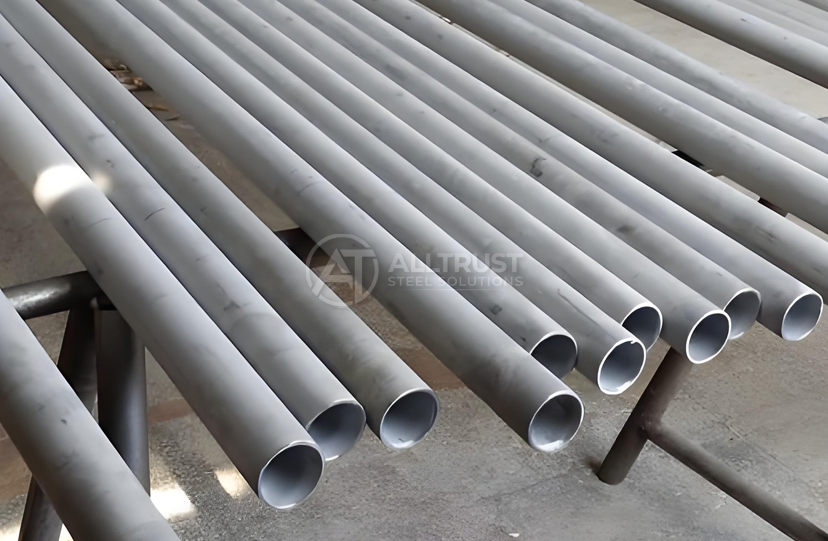
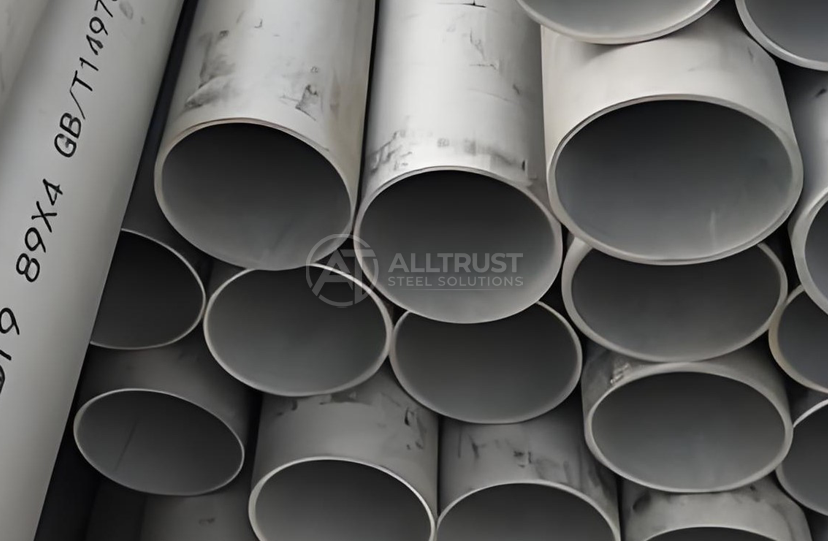
The TP316Ti steel pipe from Hebei All Trust Steel meets the requirements of ASTM A312, ASME SA312, ASTM A213, EN 10216-5, and ASTM A249. These are all widely recognised standards for high-temperature pressure service. Sizes range from NPS 1/8′′ to 30′′ (OD: 13.7 mm–609.6 mm), and wall thicknesses range from SCH 5S to SCH XXS (0.5 mm–50 mm). There are two types of production processes: seamless (hot-finished and cold-drawn) and welded (automatic longitudinal). This means that engineers can choose the best manufacturing method for their pressure class and budget.
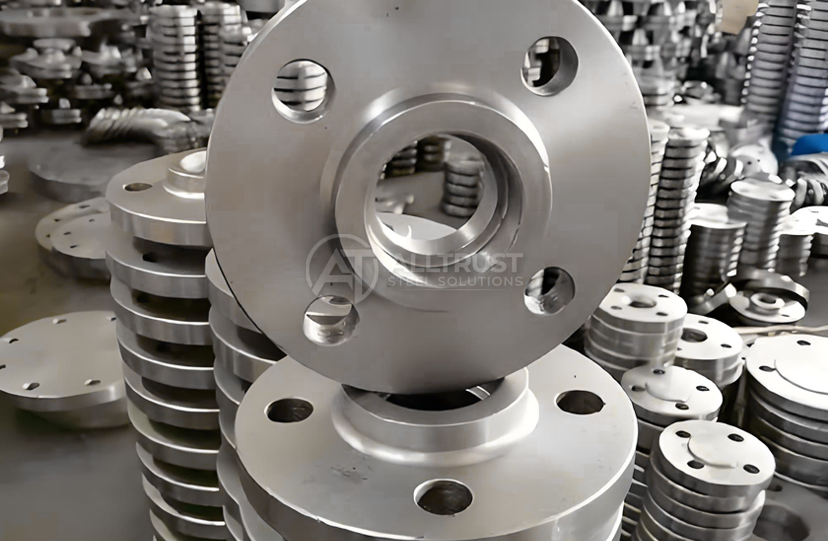
Solution annealed and pickled (SA&P), bright annealed (BA), smooth, and mirror polished are some of the surface techniques that can be used. End types include straight end, bevelled end, threaded (NPT, BSPT), and flanged designs, so they can be used for almost any pipe assembly need.
Why 316Ti Pipe Is Ideal for High-Temperature Furnace Exhaust Systems?
Three harmful things happen at the same time in furnace exhaust environments: high temperatures that don't go down, oxidising and sulphurous gas atmospheres, and thermal cycle stress, and 316ti pipe is designed to withstand these conditions. Standard 316L pipe is good at resisting corrosion at lower temperatures, but above 450°C, it can be damaged because carbon is controlled by dilution instead of stabilisation.
This is why the titanium-stabilized grade is better from a technical point of view in these situations:
- Enhanced resistance to sensitisation across the critical temperature range (427°C–816°C): The titanium carbide network created during the post-anneal stabilisation heat treatment stays thermally stable even when the furnace duty cycle is extended, stopping grain boundary attack that would otherwise spread as micro-cracking.
- Better stress rupture strength: ASTM data confirms that TP316Ti has significantly higher creep resistance than 316L at temperatures above 600°C. This means that parts in high-throughput furnace lines don't need to be replaced as often.
- Chloride resistance in mixed-atmosphere exhausts: The 2–3% molybdenum presence stops pitting and crevice corrosion in exhaust streams that still have chloride compounds in them, which is a problem that often happens in furnaces used for chemical processing and medicinal incineration.
These features work together to cut down on unexpected repair shutdowns and increase the useful life of assets in ways that cheaper options just can't match. As an example, a chemical equipment OEM that works with rotating kiln exhaust lines regularly reports 40–60% longer pipe repair intervals after moving from normal 316 to the titanium-stabilized grade.
Comparing 316Ti Pipe With Other Common Stainless Steel Alternatives
TP316Ti is often compared to types like 304, 316L, 321, and duplex 2205 by people who work in procurement. Each material has its place, but at high temperatures, the differences in performance become clear.
Grade 304 does not have any molybdenum or titanium stabilisation, unlike 316ti pipe. It works fine at room temperature, but it becomes sensitive very quickly above 425°C, which means it can't be used for long-term furnace exhaust service. Grade 316L keeps carbon levels below 0.03% to lower the chance of sensitisation. However, this method doesn't work well when the pipe is continuously heated to high temperatures and stays in the sensitisation range for hours or days at a time.
Grade 321 is the most functionally similar; it uses titanium stabilisation in the same way, but doesn't have molybdenum. In exhaust settings with chloride compounds or acidic condensates, the lack of molybdenum makes the material more likely to pit, but TP316Ti fixes this problem.
Duplex 2205 has a higher tensile strength, but its duplex microstructure becomes weaker above about 300°C, which means it can't be used for long periods of time at high temperatures. Even though carbon steel is cheap at first, it corrodes quickly in hot, oxidising exhaust gas and usually needs to be replaced every two to three years in furnace uses that are very tough.
The titanium-stabilized austenitic grade always gives a better return than the alternatives it replaces when you look at the total cost of ownership over ten years. This includes the cost of replacements, downtime, and inspection labour.
Procurement Guide: How to Source Quality 316Ti Pipes for Your Projects?
It takes more than just comparing price lists to find verified TP316Ti material. There is product on the market that is labelled as 316Ti but fails PMI verification for titanium content. This is a risk that purchasing managers can't ignore when furnace exhaust systems are involved.
A well-organized sourcing checklist helps keep both quality and budget in check:
- Ask for EN 10204 3.1 Mill Test Certificates: Each package should have an MTC that can be tracked by heat that confirms the chemical makeup, mechanical results, and heat treatment records. Certificates issued under EN 10204 3.2 that have a third-party countersignature add another level of security.
- Ask for the results of the ASTM A262 Practice E intergranular rust test: This test directly proves that stabilising titanium works in the heat that is given. Suppliers who can't provide this paperwork pose a major risk to tracking.
- Check that the wall thickness tolerance is correct. ASTM A312 allows a wall thickness under-error of -12.5%. Before committing to a bulk order, make sure that the supplier's dimensional inspection records, which should include data from a digital profilometer, are within this range.
- Accept inspection by a third party. Reliable sellers will let SGS, BV, TUV, DNV, or ABS check the goods at the point of origin. This protects buyers from other countries and gets rid of disputes after the goods arrive.
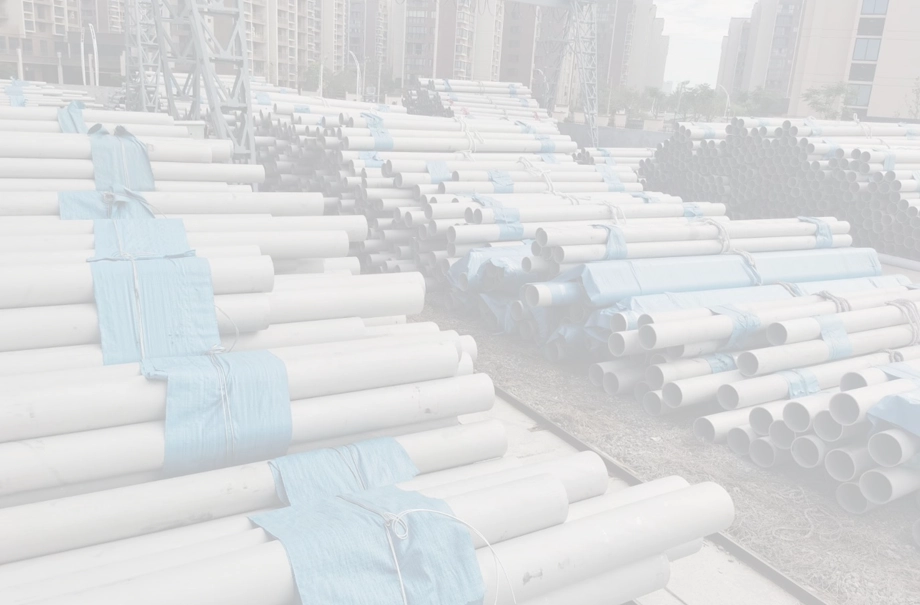
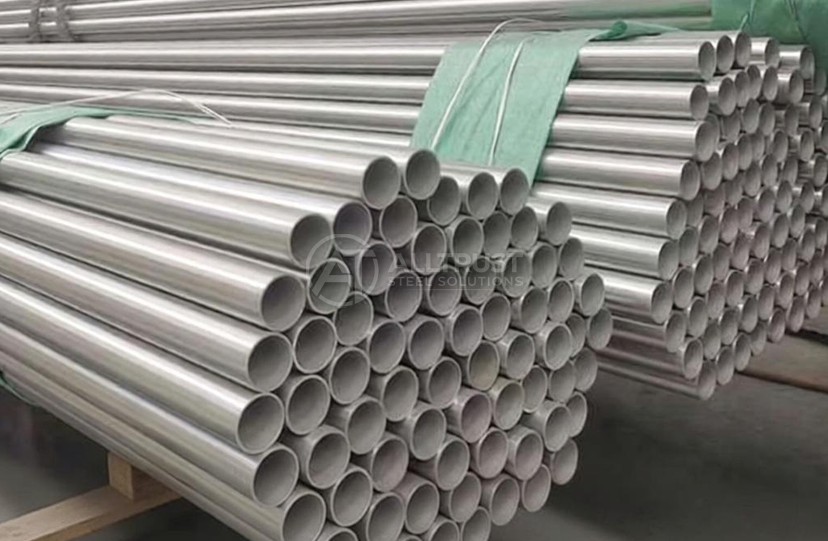
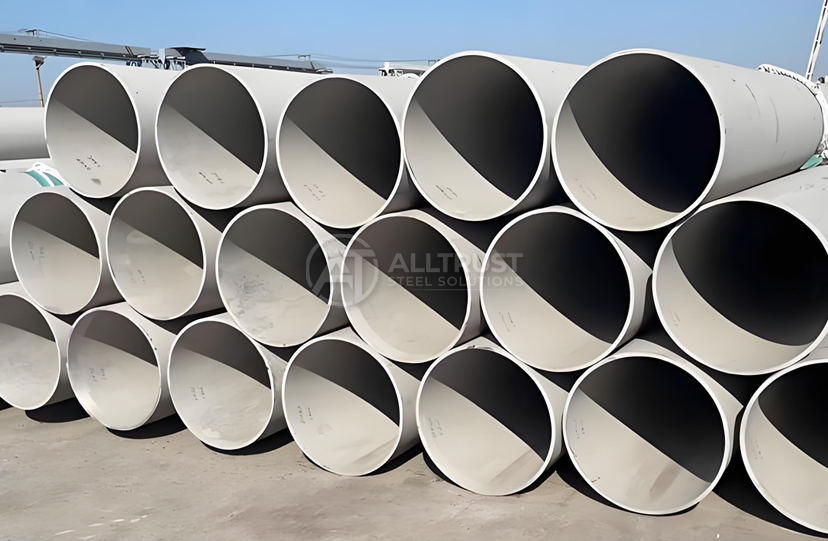
Hebei All Trust Steel ships go through the ports of Shanghai, Tianjin, Ningbo, Qingdao, and Shenzhen. Standard stock orders are sent out within 3–5 days, and orders with unique measurements are finished within 15–20 days. Hexagonal steel packages with strong steel bands and plastic end caps are used for packaging. These keep the pipe ends safe from damage and surface rust while they travel across the ocean. For extra safety, orders with sensitive surface finishes can come in wooden cases or waterproof woven bag wrapping.
Conclusion
Choosing the right pipe, like 316ti pipe for furnace exhaust service, is an important choice that will have long-lasting effects on how the furnace works. The TP316Ti (UNS S31635 / 1.4571), a titanium-stabilized molybdenum-bearing grade, targets the exact failure mode—intergranular sensitization—that leads to pipe decline too quickly in settings with long-term high temperatures. It gives buying teams technical trust and supply chain openness because it meets ASTM A312 standards, has all the necessary EN 10204 3.1 paperwork, has passed 100% PMI testing, and has been accepted by a third-party review. This grade is still the best choice when security, genuine materials, and confirmed arrival dates are more important than getting the cheapest unit price.
FAQ
What is the key difference between 316Ti and 316L for furnace exhaust use?
What is the main difference between 316Ti and 316L when it comes to using them for furnace exhaust?
316L controls carbon by diluting it to lower the chance of sensitisation, but this protection wears off after long-term contact with temperatures between 427°C and 816°C. TP316Ti binds carbon directly as stable titanium carbides. It keeps the integrity of the grain boundaries even after long thermal duty cycles, which is why it is the best choice for continuous high-temperature exhaust service.
Can 316Ti pipe handle continuous service above 800°C?
TP316Ti works successfully up to about 800°C in oxidising environments and can be used continuously. Periodic peaks above this level are manageable, but higher nickel alloys like 310S or Alloy 800H may need to be looked at for uses that need to be used for a long time above 900°C.
How do I verify that the pipe I receive is genuine TP316Ti material?
Ask for an EN 10204 3.1 MTC that can be traced back to its source and confirms that the titanium content meets the grade requirements (5¿(C+N) min to 0.70% max). You should also do a PMI (positive material identification) test when the goods arrive and, if necessary, an ASTM A262 Practice E intergranular rust test on sample coupons from the heat that they were exposed to.
What certifications should a reliable supplier provide?
To show that they are a reliable supplier, they should have EN 10204 3.1/3.2 Mill Test Certificates, ISO 9001:2015 certification, ASTM A262 Practice E test reports, PMI analysis records, and NDT documentation with results from hydrostatic, eddy current, or ultrasonic tests.
Partner with All Trust for Certified 316Ti Pipe Supply
The material in your furnace's vent system should work as promised every time it heats up or ships something. All Trust keeps a constant supply of checked TP316Ti stainless steel pipe that is fully documented with EN 10204 3.1 MTCs and can be inspected by SGS, BV, or TUV. As a reliable 316Ti pipe manufacturer and supplier, we offer low minimum order quantities, flexible lead times, and technical support that is tailored to your needs. Contact our team today at info@hballtrust.com or visit qxgc.aixdb.cn to request a certified quotation.
References
1. ASTM International. ASTM A312/A312M: Standard Specification for Seamless, Welded, and Heavily Cold Worked Austenitic Stainless Steel Pipes. ASTM International, 2022.
2. ASTM International. ASTM A262: Standard Practices for Detecting Susceptibility to Intergranular Attack in Austenitic Stainless Steels. ASTM International, 2021.
3. European Committee for Standardization. EN 10216-5: Seamless Steel Tubes for Pressure Purposes — Technical Delivery Conditions — Stainless Steel Tubes. CEN, 2021.
4. Davis, J.R. Stainless Steels. ASM International, 1994.
5. Lula, R.A. Stainless Steel: Properties and Applications in High-Temperature Environments. American Society for Metals, 1986.
6. Outokumpu Stainless. Outokumpu Corrosion Handbook: Stainless Steels and Their Properties. 11th ed., Outokumpu Oyj, 2015.