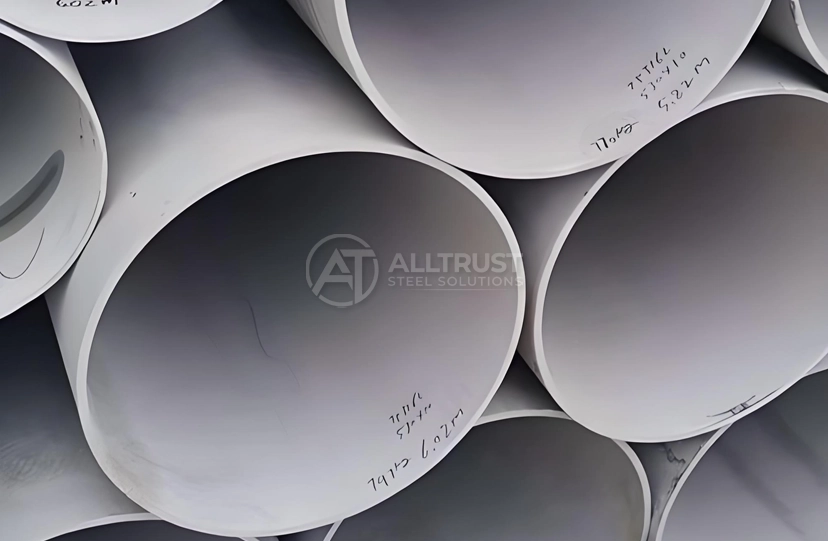
A269 Tubing for Precision Instrumentation and Control Panels
ASTM A269 stainless steel tubing is always the standard that engineers use when they need to define tubing for measurement loops, control panels, or hydraulic signal lines. A269 tubing is made of austenitic stainless steel and can be seamless or welded. It is suitable for general corrosive and temperature-variable service and has the tight size tolerances, smooth bore surface, and bendability that precision fluid systems need. Whether you are looking for TP304 or TP316L types for a heat exchanger assembly or an air control circuit, knowing what makes this standard special will help you make better purchases every time.
Understanding A269 Stainless Steel Tubing
What the ASTM A269 Specification Actually Governs
You can find nominal-wall seamless and soldered austenitic stainless steel tubes in the ASTM A269/ASME SA269 standard. It is made for general use in harsh environments and heat-cycle situations. The plan calls for much tighter tolerances for the outside diameter (OD) and wall thickness than most pipe plans call for. If you want the tubing to fit right inside compression ferrule fittings so that it doesn't leak when the fittings shake, this is an important difference.
A269 sets rules for TP304, TP304L, TP316, TP316L, TP321, and TP347 types of materials. Each grade has its own set of chemical limits. Like TP304, TP304 needs 18.0–20.0% Nickel (8–11%) and Chromium. It must have a minimum tensile strength of 515 MPa (75 ksi) and a minimum stretch of 35%. Because it is a very stretchy material, those who make sensor tubing can bend and flare these tubes without breaking them in the field.
Seamless vs. Welded: Choosing the Right Manufacturing Route
As269 says that cold-drawn seamless tube should have a uniform wall structure and not have a lengthwise weld joint. It is important to do this in tough chemical conditions and high-pressure hydraulic systems where the seams might not be strong enough. For bigger OD ranges, welded tubing is cheaper and still meets the needs for eddy current and hydraulic tests. It is made by automatic TIG or plasma welding and then full-tube heating. A maximum of 90 HRB is set by the norm. This keeps the tube material softer than the ferrule, which makes it possible for a strong bite seal that doesn't go bad.
Understanding A269 Stainless Steel Tubing
What the ASTM A269 Specification Actually Governs?
The standard ASTM A269/ASME SA269 includes nominal-wall seamless and welded austenitic stainless steel tubing that is meant for general service in toxic conditions and heat cycle situations, and A269 tubing is a key product under this specification. The specification calls for outside diameter (OD) and wall thickness tolerances that are much tighter than normal pipe plans. This is an important difference when tubing needs to fit properly inside compression ferrule fittings so that it doesn't leak when the fittings are vibrating.
The following material types are controlled by A269: TP304, TP304L, TP316, TP316L, TP321, and TP347. Chemical limits are set for each grade. For example, TP304 needs 18.0–20.0%. Chromium and 8–11 percent Nickel, a minimum tensile strength of 515 MPa (75 ksi), and a minimum stretch of 35%. Because the material has a high elongation value, people who make instrumentation tubing can bend and flare these tubes without cracking them in the field.
Seamless vs. Welded: Choosing the Right Manufacturing Route
Cold-drawn seamless tubing made according to AS269 has a uniform wall structure and no longitudinal weld seam. This is important in harsh chemical environments and high-pressure hydraulic systems where seam integrity could be a weak spot. Welded tubing, which is made by automatic TIG or plasma welding and then full-tube annealing, is cheaper in larger OD ranges and still meets the requirements for eddy current and hydrostatic testing. The standard sets a hardness limit of 90 HRB. This makes sure that the tube material stays softer than the ferrule, which allows for a solid bite-seal that doesn't gall.
Key Advantages and Industry Applications of A269 Tubing
When purchasing instrumentation-grade tubing, purchasing managers often compare the mechanical performance to the cleanliness of the surface and the resistance to corrosion over time. A269-compliant tubing is the best choice in many industries because it meets the following performance standards:
- The minimum extension requirement of 35% means that tubes can bend easily around tight circles without wall thinning or ovality, which is necessary for U-bend heat exchanger systems and coiled sensor runs.
- Surface integrity after bright annealing (BA): Bright annealing in a hydrogen-protected atmosphere gets rid of surface oxides without using pickling chemicals. This leaves a Ra value low enough to meet the needs of both clean-bore gas chromatography sampling lines and fluid transfer requirements.
- Precision OD limits allow positive ferrule contact, as shown by air-under-water leak tests and hydraulic pressure proof above 1,000 psi in standard instrument tube sizes. This means there is zero leakage under cycle loads.
- Large range of dimensions: OD ranges from 1/16′′ (1.59 mm) to 5′′ (127 mm), and wall thicknesses range from 0.010′′ to 0.200′′. Can accommodate everything from tiny sensor capillary lines to connections on the shell side of the condenser.
These qualities of A269 tubing directly lead to lower costs for rework on production lines and fewer failures while in use in chemical labs, remote platforms, and HVAC control networks. OEM manufacturers who switched from copper refrigerant lines to TP316L stainless tubing under A269 say that the corrosion resistance is better in coastal and high-humidity installations. It's also easier to meet the requirements of end-customer factory audits that need proof of material traceability.
Comparing A269 Tubing with Alternative Stainless Steel Tubing Grades
A269 vs. A213: Which Standard Fits Your Application?
ASTM A213 covers tube that is designed to be used in boilers, superheaters, and heat exchangers. It requires figuring out the minimum wall thickness based on the design pressure and calls for a wider range of mechanical tests that are meant to check for high-temperature creep resistance. A269, on the other hand, specifies average-wall tubing for general use and puts more weight on OD tolerances and surface finish—properties that are much more important in instrumentation and control panels than following the design code for pressure vessels.
A269 vs. A270 and A312: Scope Differences at a Glance
A270 talks about sterile welding tubes for the food, dairy, and pharmaceutical businesses. The inner surface must have a clean weld bead. A312 covers pipe, which has a thicker wall and wall limits based on schedules that make it unsuitable for assembly with compression fittings. When you need precise fluid-signal lines or instrumentation pipes for your project, A269 is still the most functionally matched standard out of these three. It combines the corrosion-resistant metal chemistry with the exact measurements that instrument fittings need.
TP316L needs to be mentioned when buying A269 tubing that will be exposed to chloride-containing media or salt spray from the coast. Its low carbon content (0.030% max) keeps carbides from forming during welding, and the 2.0–3.0% molybdenum adds resistance to pitting that TP304 can't match in those conditions.
How to Select and Procure A269 Stainless Steel Tubing?
It takes more than matching a grade designation on a datasheet to find the right supplier. If you want to buy A269 tubing from a reputable company, they should give you EN 10204 3.1 Mill Test Certificates (MTC) with confirmed heat chemistry, PMI (Positive Material Identification) analysis when you ask for it, and third-party inspection acceptance from companies like SGS, BV, TUV, or DNV. These papers protect the people in charge of buying from OEMs during plant checks by end customers and customs clearance.
Customisation based on dimensions is just as important. Straight lengths that stay the same, like 6 m or 12 m, are used on assembly lines that need regular cuts. Coiled tubes on wooden spools cut down on the number of field splices needed for long instrument runs and reduce the risk of damage during shipping that comes with coils that aren't properly packed. For test orders or batches for design validation, having a low minimum order quantity (MOQ) and free samples available takes away the hurdle between engineering approval and volume commitment.
The application should guide the choice of surface finish. The BA finish is good for clean fluid service and instruments that need to be very pure. Mechanical cleaning with 180, 240, 320, or 400 grit meets some hygiene and appearance needs. The solution-annealed and pickled (AP) finish can be used on structural and heat exchanger parts where corrosion resistance is more important than how they look.
Conclusion
A269 tubing stainless steel instrumentation tubing fills a specific need in the industrial supply chain. It is the link between pressure-vessel pipe standards and hygienic sanitary tubing, providing the precise measurements, clean surfaces, and alloy adaptability that control panels, heat exchangers, and fluid-signal systems really need. Picking the right TP304 or TP316L grade, production method (seamless or welded), and surface finish (BA or pickled) depends on how corrosive the material is, how clean it needs to be, and the fitting system your application uses. The most common procurement risks can be avoided before they even reach the assembly floor by working with a supplier that keeps full material traceability records, independent testing records, and flexible order volumes.
FAQ
What environments are best suited to ASTM A269 tubing?
A269 tubing works well in heat exchanger bundles, pneumatic and hydraulic instrumentation circuits, corrosive chemical process lines, and clean-fluid pharmaceutical transfer lines. TP316L is best used in places where high temperatures or high salt levels make stress corrosion cracks more likely.
Does welded A269 tubing match seamless tubing in pressure performance?
Welded A269 tubing goes through the same eddy current and hydraulic tests as seamless product. For general work, the standard doesn't say anything different about the rated pressure for the two types. For applications with very high pressure or cyclic fatigue, seamless is still the safest choice for engineers.
Why is the hardness limit of 90 HRB significant for procurement?
The ceiling makes sure that the tube material is softer than the stainless or carbon steel ferrules that are used in compression fittings. This makes sure that the ferrule bites cleanly into the tube wall during assembly, sealing it without scoring or galling.
Can A269 tubing be supplied in coil form for long instrumentation runs?
Yes. Coiled instrumentation tubing wound onto wooden spools lets you run longer lengths without stopping, which lowers the risk of field-splice points and pressure drop. When spools are properly packed, they don't bend too much during ship freight.
What certifications should a qualified A269 tubing supplier hold?
Check that the product meets at least EN 10204 3.1 / 3.2 MTC, ISO 9001:2015, the CE mark, and PED regulations. It should also be able to be inspected by a third party from SGS, BV, TUV, DNV, or ABS to meet the needs of the end customer's audit.
Request a Quote from All Trust — Your Trusted A269 Tubing Supplier
Get a Quote from All Trust, Your Reliable A269 Tubing Supplier. They keep over 5,000 tons of rolling stock in TP304, TP304L, TP316, and TP316L grades. They offer low MOQ options, fast stock delivery in 3–5 days, and EN 10204 3.1 certified Mill Test Certificates on every order. Contact our technical team at info@hballtrust.com to request a custom sample, dimensional quotation, or third-party inspection arrangement today.
References
1. ASTM International. ASTM A269/A269M: Standard Specification for Seamless and Welded Austenitic Stainless Steel Tubing for General Service. ASTM International, 2022.
2. ASME. ASME SA-269: Seamless and Welded Austenitic Stainless Steel Tubing for General Service. ASME Boiler and Pressure Vessel Code, Section II, Part A, 2021.
3. Sedriks, A. J. Corrosion of Stainless Steels. 2nd ed. John Wiley & Sons, 1996.
4. Llewellyn, D. T., and R. C. Hudd. Steels: Metallurgy and Applications. 3rd ed. Butterworth-Heinemann, 1998.
5. Chemical Engineering Progress. "Material Selection for Instrumentation Tubing in Corrosive Service." American Institute of Chemical Engineers, 2019.
6. Bhadeshia, H. K. D. H., and R. W. K. Honeycombe. Steels: Microstructure and Properties. 4th ed. Butterworth-Heinemann, 2017.