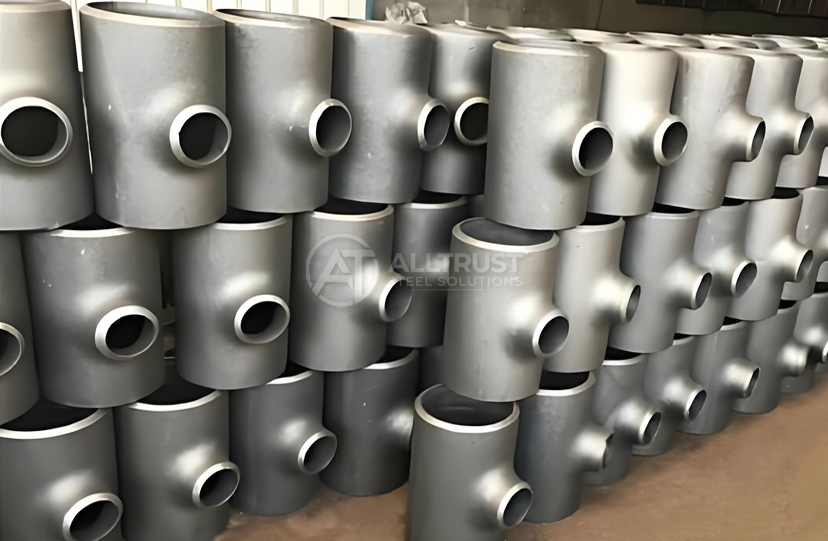
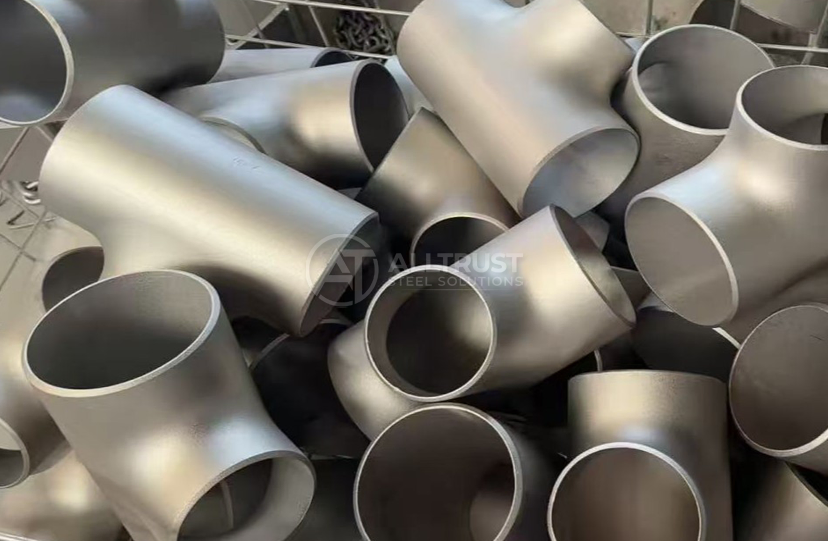
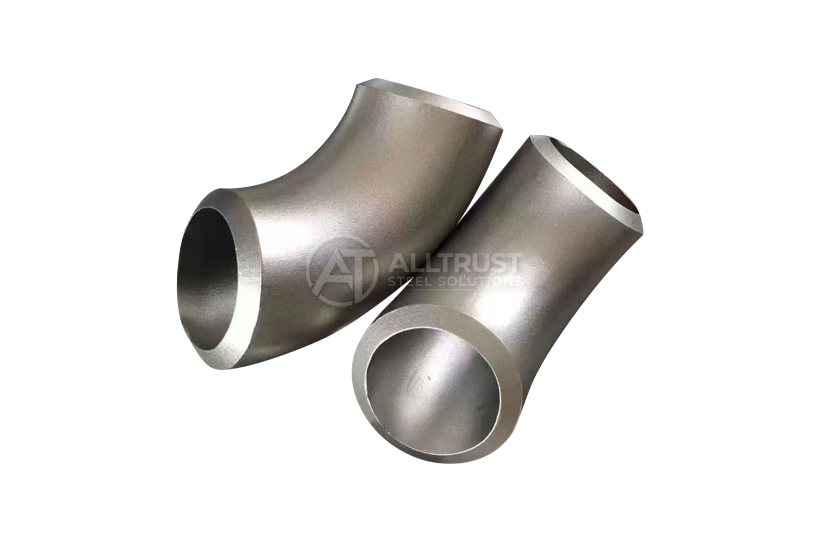
ASTM A403 WP304 WP304L Reducing Tee
2. Standard: ASTM A403 / ASME SA403, standard specification for wrought austenitic stainless steel piping fittings
3. Process: Precision high-pressure hydraulic forming or warm extrusion from pipes, securing a seamless step-down joint
4. Size Range: Reducing three-way configurations with customized main and branch diameter combinations per ASME B16.9
5. Heat Treatment: Full furnace solution tempering followed by rapid uniform cooling to optimize physical structural flexibility
6. Surface Finish: Clean uniform pickled matte finish, sandblasted satin profile, or chemically passivated clean profile
7. Application: Food and beverage distribution loops, general chemical pipelines, municipal plumbing, and low-pressure headers
8. Service Advantage: Sourced from tier-one raw materials, flexible small-batch custom production, and dynamic NDT validation
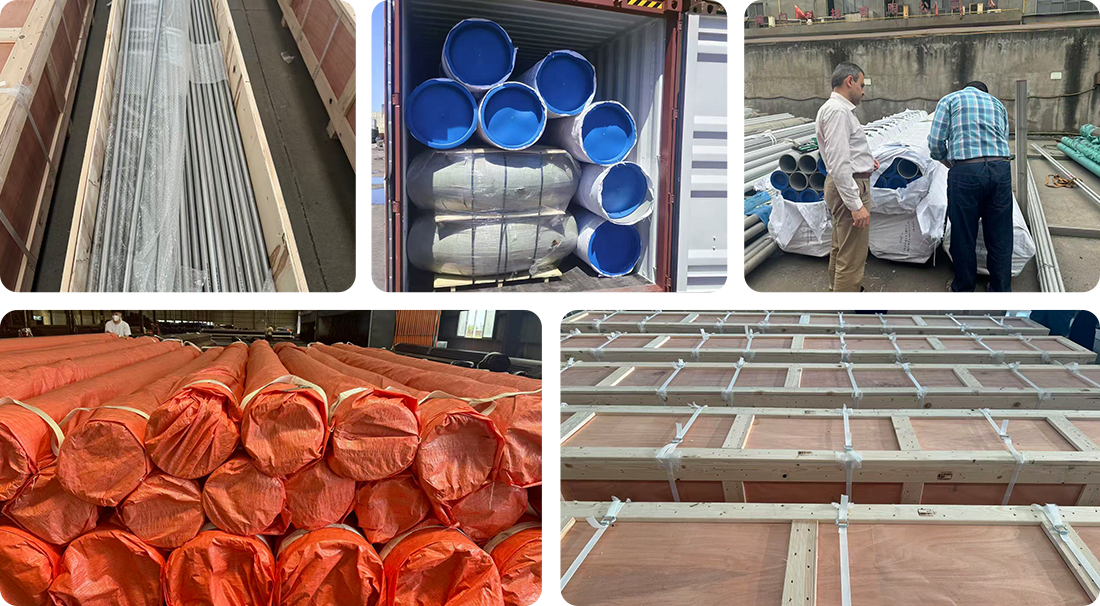
9. Packaging: Each reducing tee carefully individual-wrapped and securely packed into heavy-duty seaworthy wooden boxes
10. Key Advantage: Dual certification provides excellent mechanical load integrity while preventing post-weld localized decay
ASTM A403 WP304 WP304L Reducing Tee: Premium Stainless Steel Branch Fittings for Industrial Piping Systems
Hebei All Trust Steel Co., Ltd manufactures professional-grade ASTM A403 WP304 WP304L Reducing Tee fittings engineered for reliable performance in demanding industrial applications. These dual certified wrought austenitic stainless steel fittings provide seamless three-way connections with regulated diameter transitions resulting in mechanical strength of WP304 and better weld-zone corrosion resistance of WP304L.
Our lowering tees are precision hydraulic formed and 100% hydraulic tested to provide excellent structural integrity throughout installations with branch reductions up to 48 inches. Manufactured to ASME B16.9 dimensional tolerances and full EN 10204 3.1 material traceability, these fittings are trusted solutions for chemical processing, food and beverage distribution, and municipal fluid handling systems across the globe.
What Is an ASTM A403 WP304 WP304L Reducing Tee?
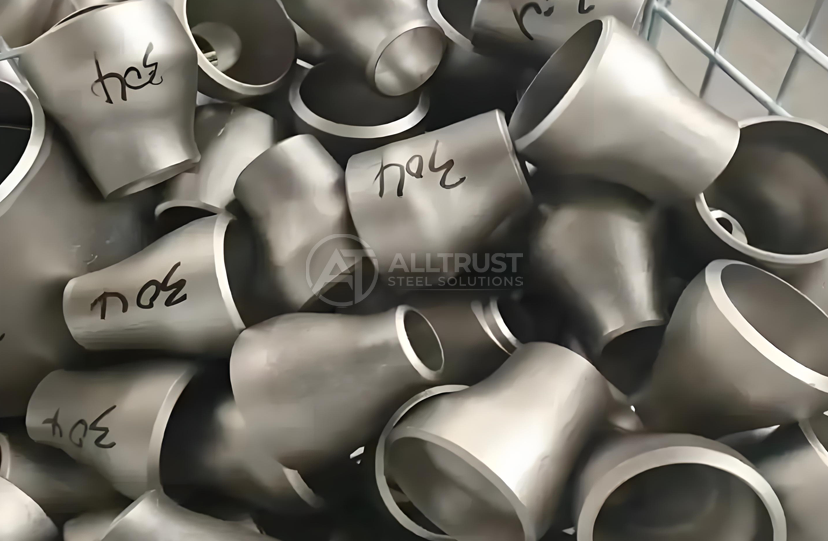
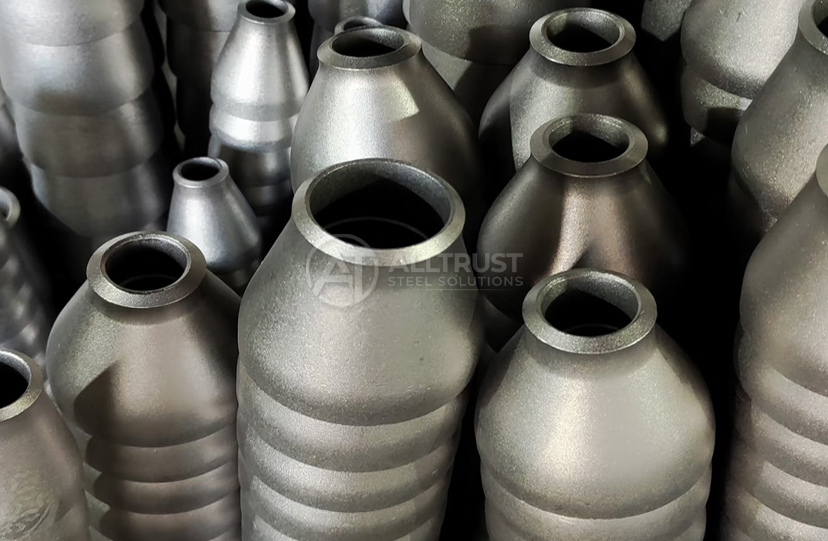
The prdocut is a high-performance pipe fitting of a wrought austenitic stainless steel for connecting three pipes of various sizes. This specialised structure enables for regulated redirection of fluid flow while accommodating pipe size changes at the branch junction.
The"WP" indication means that the fittings are wrought pipe fittings of top virgin stainless steel materials. The dual 304/304L certification gives you the best of both worlds: excellent mechanical strength and excellent resistance to intergranular corrosion in the as-welded state.
The 304L type has a maximum carbon level of 0.03% and prevents carbide precipitation during welding. You may install them with confidence with no post-weld heat treatment needs, thus decreasing installation time and expense on your projects.
The decreasing design tackles key issues such fluid turbulence during size changes, high-pressure leakage dangers and limited space in small plant designs. It incorporates the diameter reduction directly into the three-way connection eliminating the need for separate reducer fittings and reducing possible sources of failure.
Technical Specifications
| Parameter | Details |
|---|---|
| Standard | ASTM A403 / ASME SA403 / ASME B16.9 / EN 10253-4 |
| Product Type | Wrought Stainless Steel Reducing Tee / Branch Reducer Fitting |
| Material Grade | WP304 / WP304L (Dual Certified / UNS S30400 / S30403) |
| Manufacturing Process | Cold Extrusion Forming / Press Forging / CNC End Machining |
| Size Range | Main Pipe: 1/2" – 48" / Branch: Customized Reducing Dimensions |
| Wall Thickness | SCH 5S / SCH 10S / SCH 40S / SCH 80S / SCH 160 / SCH XXS |
| Heat Treatment | Solution Annealing + Rapid Water Quenching |
| Surface Finish | Pickled & Passivated / Shot Blasted / Mechanically Polished |
| End Type | Beveled Ends (BE) per ASME B16.25 |
| Testing | UT / PT / RT / PMI / Dimensional / Hardness / Tensile Testing |
| Inspection Support | SGS / BV / TUV / DNV / ABS Third-Party Verification |
| Certificates | EN 10204 3.1/3.2 MTC / ISO 9001:2015 / CE / PED |
| Packaging | Individual Protective Sleeves / Plywood Crates / Wooden Boxes |
| Applications | Chemical Processing / Food & Beverage / Municipal Systems / Refineries |
Key Advantages of Our ASTM A403 WP304 WP304L Reducing Tee
Superior Material Performance
Our ASTM A403 WP304 WP304L Reducing Tee fittings are manufactured from dual-certified premium austenitic stainless steel with 18% chromium and 8% nickel. 304L has low carbon chemistry (maximum carbon is 0.030%) for excellent weldability and no possibility of sensitisation.
You get the combination of minimum tensile strength 515 MPa and great formability. These fittings retain structural integrity throughout temperature ranges from cryogenic -196°C applications to extreme service temperatures up to 870°C.
The regulated chemical composition gives excellent resistance to acidic conditions and to chloride-containing solutions. Your installations last dependably for the long duration in corrosive circumstances when typical carbon steel fittings break prematurely.
Precision Manufacturing Excellence
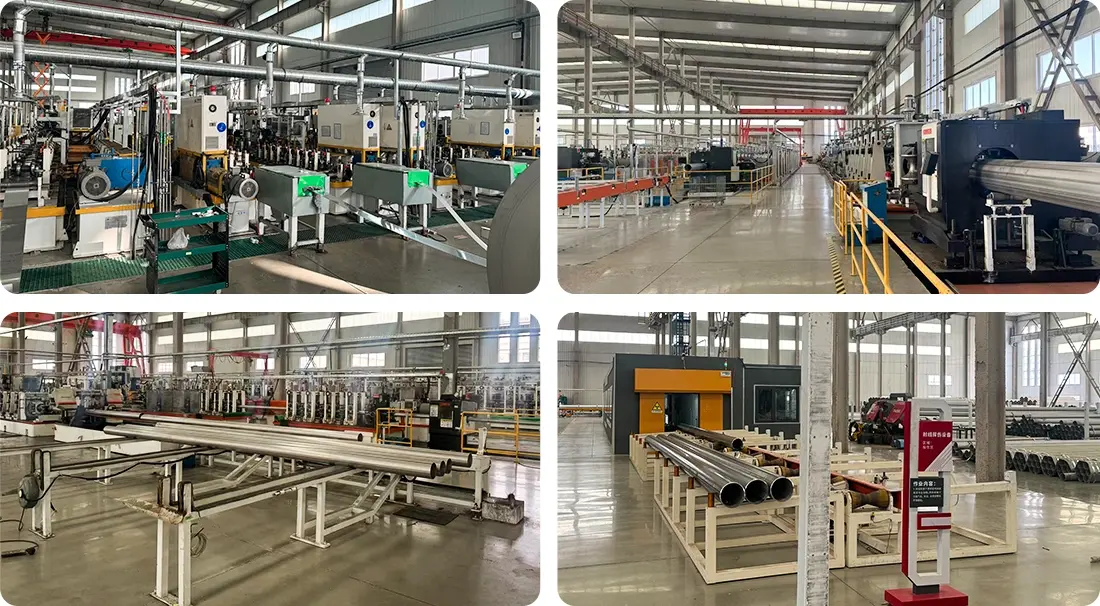
We employ advanced press forging and cold extrusion technologies to create seamless branch transitions. Our CNC end-facing equipment guarantees precise dimensional accuracy matching ASME B16.9 tolerances.
Special attention to wall thickness optimization at the crotch and branch neck areas counteracts stress concentration. This engineering approach ensures your system withstands fluid pressure fluctuations and mechanical loads without deformation.
All reducing tees should be fully solution annealed and rapidly water quenched. This heat treatment maximises corrosion resistance and optimises the austenitic microstructure for steady long term performance.
Stringent Quality Assurance
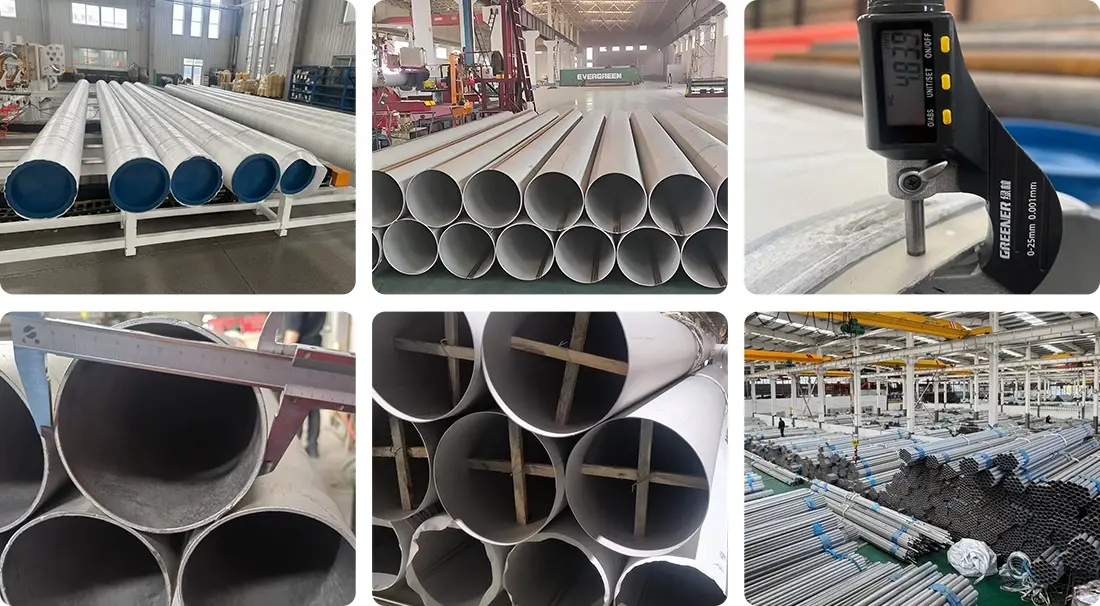
Our four-step quality control approach starts with spectrographic examination of raw materials. The chromium, nickel, molybdenum and carbon content are checked to ensure it conforms to the ASTM A403 criteria.
Production monitoring includes real-time dimensional inspection and wall thickness verification. Independent testing protocols include ultrasonic examination, liquid penetrant inspection, and radiographic testing for welded configurations.
You receive complete documentation including EN 10204 3.1 Mill Test Certificates with chemical analysis, mechanical properties, and heat treatment records. Third-party inspection from SGS, TUV, or BV is fully supported for project compliance requirements.
Flexible Customization Capability
Our engineering team supports extensive configuration options for your specific pipeline requirements. We manufacture main pipe sizes up to 48 inches with customized branch reductions across all standard wall thickness schedules.
Laser marking provides permanent batch traceability directly on the fitting body. Custom bevel angles, specialized surface finishes, and unique dimensional combinations are readily accommodated for complex projects.
Small-batch production flexibility means you're not forced into excessive minimum order quantities. Whether you need prototype quantities or full-scale production volumes, we adapt our manufacturing schedule to your timeline.
Streamlined Installation Benefits
The integrated reducing design eliminates separate reducer fittings in your piping system. You reduce total joint count, minimize welding requirements, and optimize space utilization in congested plant areas.
Beveled ends prepared per ASME B16.25 ensure consistent weld preparation. The low-carbon 304L chemistry allows direct welding without mandatory post-weld heat treatment, significantly reducing your installation labor costs.
Comprehensive dimensional conformance means predictable fit-up with standard piping components. You avoid field modifications and rework that delay project schedules and increase costs.
Quality Control Procedures
Material Verification Process
Our quality system begins with vendor audits of ISO-certified steel mills. Incoming materials undergo spectrographic analysis to verify alloy composition before production authorization.
Positive Material Identification (PMI) testing confirms chromium, nickel, and carbon content meets dual-certification requirements. Complete heat number traceability links every finished fitting to source material documentation.
Production Monitoring
Real-time dimensional inspection during forming operations ensures conformance to ASME B16.9 tolerances. Wall thickness measurements at the branch junction verify adequate material distribution in high-stress zones.
Branch area hardness testing confirms proper heat treatment effectiveness. Mechanical deformation trials including flattening and flaring tests validate structural integrity under severe loading conditions.
Final Inspection Protocol
Every ASTM A403 WP304 WP304L Reducing Tee receives visual examination for surface defects, dimensional verification of all critical parameters, and packaging inspection before shipment authorization.
Hydrostatic testing at 100% validates pressure containment capability. You receive photographic documentation, complete MTR certificates, and shipping documentation supporting customs clearance and project acceptance requirements.
Application Industries
Chemical Processing Systems
Dependable in corrosive chemical conditions are our reducing tees. This dual-certified material handles harsh acids, alkaline solutions and organic solvents in industrial pipe systems.
Food and Beverage Manufacturing
Austenitic microstructure and smooth pickled surface finish suit hygienic standards for food grade applications. Supports hygienic standards in dairy, brewing and food processing plants with easy cleanability and resistance to bacterial colonisation.
Municipal Water Systems
These fittings provide excellent resistance to chlorides and low danger of contamination, making them perfect for potable water distribution. The strong mechanical qualities can resist pressure spikes in large diameter municipal mains and distribution networks.
Production of Drugs
The ability to generate mirror-polished surfaces and full material traceability helps to satisfy validation requirements in pharmaceutical clean utilities. Service life is not compromised by repeated steam sterilisation cycles in essential applications.
FAQ
Q:What functional flow-control advantage does the specialized architecture of this Reducing Tee provide?
A:This reducing tee permits fluid line reductions directly at the three-way branching junction, eliminating the need for separate fittings. You reduce structural joint count and optimize space in tight plant layouts while maintaining controlled flow transitions.
Q:How does your factory reinforce the high-stress branch zone during the cold extrusion or forging process?
A:We implement precise wall-thickness optimization at the crotch and branch neck areas during press forging. This engineering approach counteracts fluid stress concentration and guarantees absolute structural reliability in your demanding applications.
Q:What mechanical deformation testing is contractually performed to ensure the structural safety of this branch reducer?
A:Representative branch area coupons undergo severe mechanical flattening trials, cross-sectional flare expansions, and localized hardness profile mapping. Positive Material Identification (PMI) validation confirms alloy composition at critical stress zones.
Q:Can this reducing tee be configured with varied main-to-branch dimensional ratios for specific blueprints?
A:Yes, we support extensive configuration flexibility. You can specify customized big-end main pipe inputs with reducing branch diameters across all standard wall thickness pipe schedules to match your unique system requirements.
Q:What is the difference between WP304 and WP304L in a reducing tee?
A:WP304L contains maximum 0.03% carbon compared to 0.08% in WP304. This lower carbon content prevents sensitization during welding, making it superior for assemblies that cannot undergo post-weld annealing. Dual certification provides both grades' benefits simultaneously.
Q:What independent third-party inspection certifications are accepted for this dual-certified reducing tee?
A:Our manufacturing facility maintains ISO 9001:2015 certification and carries CE/PED compliance. We fully support independent witness inspections from certified bureaus including SGS, TUV, BV, DNV, and ABS throughout production and testing phases.
Contact Us
Ready to specify high-performance reducing tees for your next project with the ASTM A403 WP304 WP304L Reducing Tee? Contact us at info@hballtrust.com for detailed quotations and custom solutions tailored to your exact requirements.