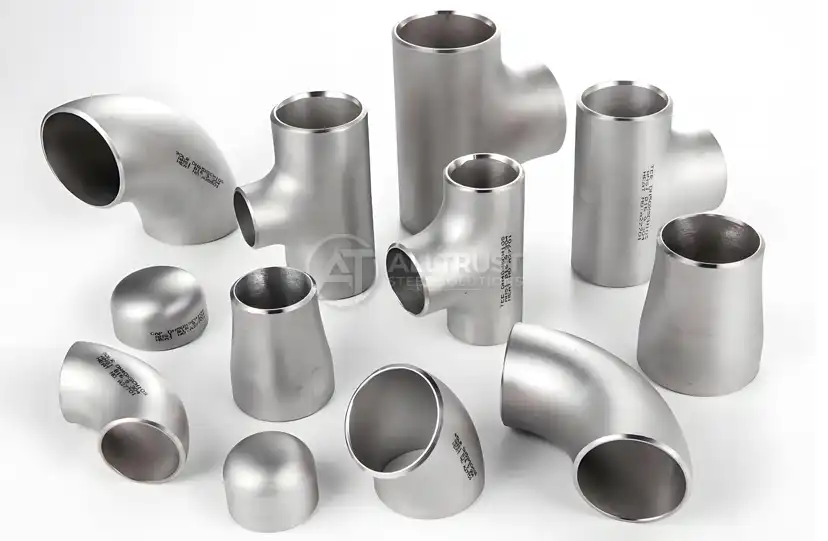
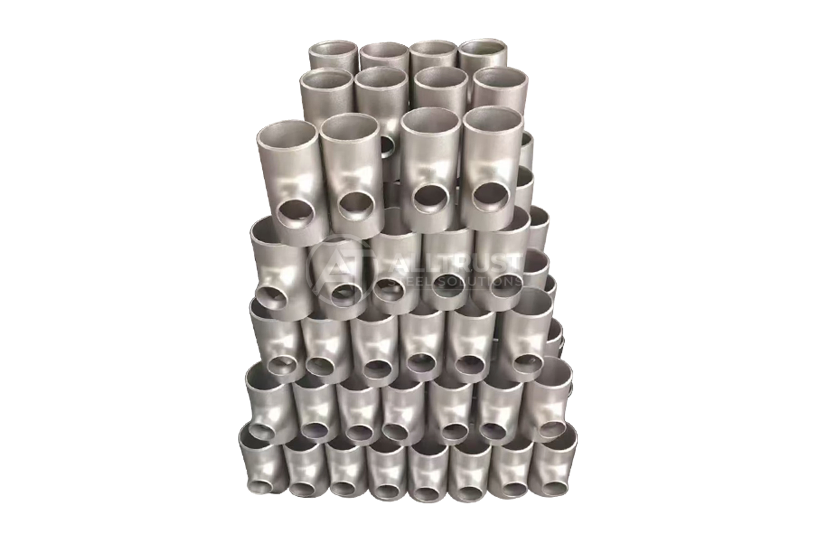
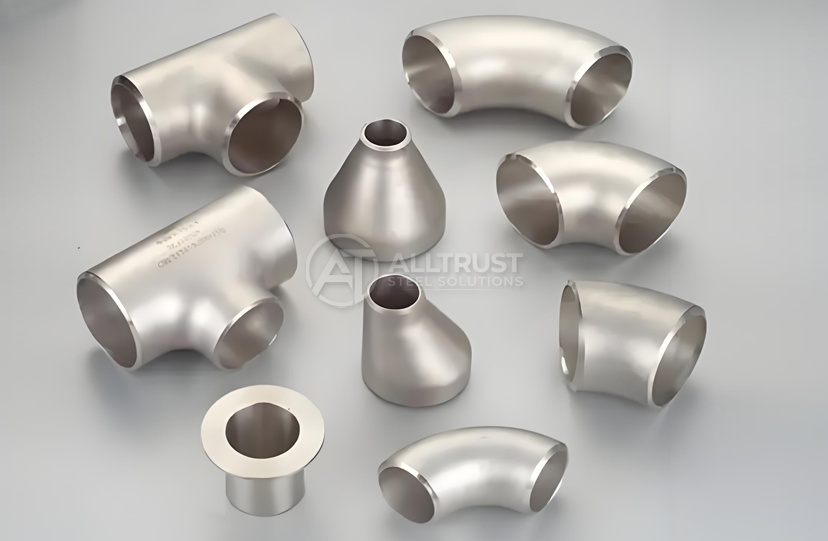
ASTM A403 WP316 WP316L Reducing Tee
2. Standard: ASTM A403 / ASME SA403, governing high-performance nominal-wall fittings for severe corrosive industries
3. Process: High-precision mandrel forging or hydraulic branch extrusion, ensuring zero directional material micro-flaws
4. Size Range: Diverse main run and reduced branch configurations available, matching standard and heavy wall profiles
5. Heat Treatment: Homogeneous solution annealing above 1040°C followed by forced rapid water quenching to lock structure
6. Surface Finish: Solution annealed and pickled (SA&P), descaled industrial matte, or passivated clean surface profile
7. Application: Chemical process piping loops, offshore marine manifolds, coastal wastewater networks, and refinery systems
8. Service Advantage: 100% PMI verified, support for multi-class radiography testing (RT), full technical MTC 3.1 provided
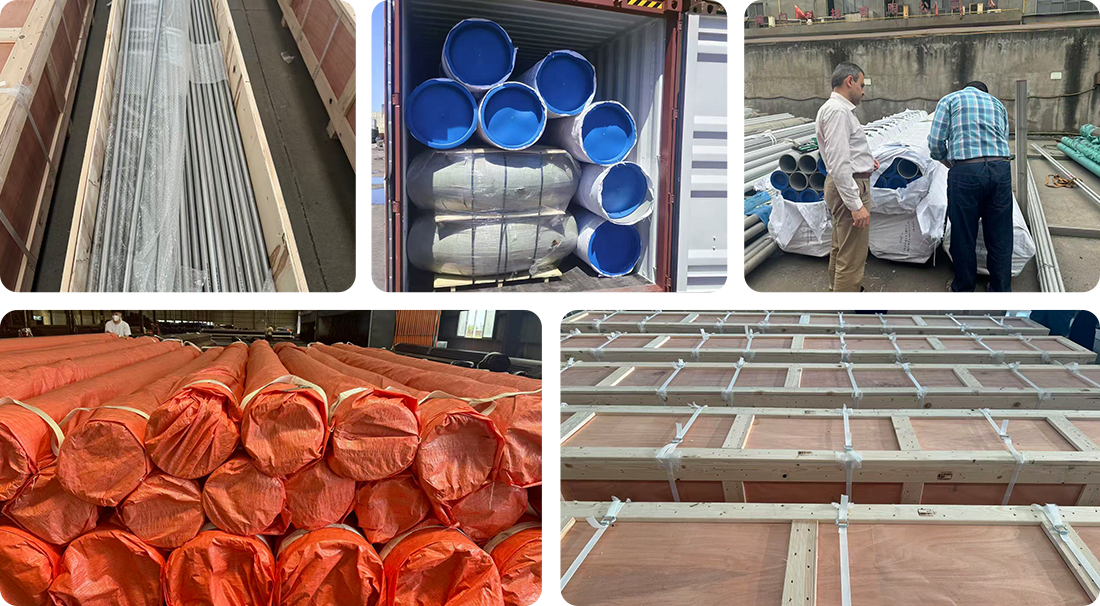
9. Packaging: Securely nested in individual plastic bubbles and packed into robust reinforced export plywood crates
10. Key Advantage: Combines supreme branch fluid flow regulation with ultimate resistance to chloride-induced pitting mechanisms
ASTM A403 WP316 WP316L Reducing Tee – Forged Stainless Steel Branch Fitting for Superior Corrosion Resistance
HEBEI ALL TRUST STEEL CO., LTD manufactures premium ASTM A403 WP316 WP316L Reducing Tee fittings engineered for demanding corrosive pipeline applications.
Each fitting is precision forged from dual-certified molybdenum-bearing austenitic stainless steel grades (UNS S31600/S31603) and 100% PMI verified. Our reduction tees are manufactured strictly according to ASME SA403 and ASME B16.9 specifications, with a manufacturing capacity of more than 15,000 tonnes per year, offering outstanding pitting resistance, no directional micro-flaws and comprehensive MTC 3.1 documentation. Sizes available from 1/2"to 48" with customised branch reductions. Solution annealed over 1040C and fully non-destructive tested including RT, PT and UT. Leak-proof performance in chemical processes, offshore platforms and marine pipe systems.
Why Choose Our ASTM A403 WP316 WP316L Reducing Tee
The device is the ideal branch fitting option for reducing pipeline diameter under the most intense corrosive circumstances. The fitting is manufactured from wrought austenitic stainless steel with 2-3% molybdenum and is designed to help solve some of the industry’s biggest problems including pitting in maritime settings caused by chloride, intergranular corrosion around the weld zone and structural integrity with varying pressure cycles.
Our reducing tees combine the high strength qualities of WP316 (maximum carbon .08%) with the excellent weldability of WP316L (maximum carbon .03%) This double certification avoids complexity of material inventory and provides resistance to carbide precipitation in welding operations. Each component is solution annealed and immediately quenched in water, fixing the austenitic microstructure for optimal corrosion resistance.
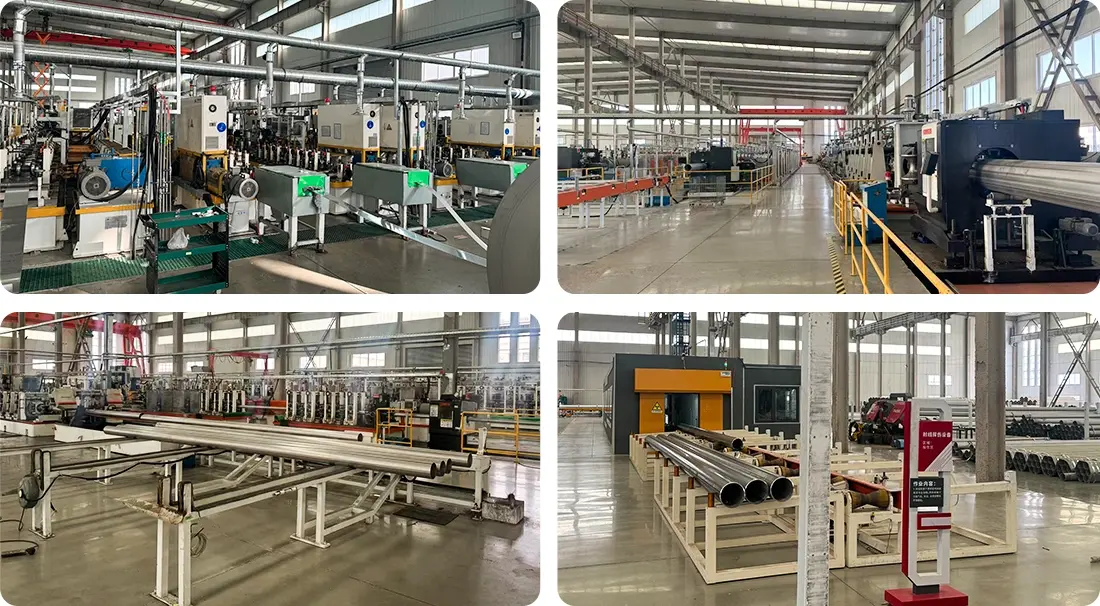
HEBEI ALL TRUST STEEL employs advanced press forging bulging technology and CNC end-facing precision machining. This ensures optimal wall thickness distribution at critical branch neck areas, counteracting dynamic fluid stress concentration. With 100% hydraulic testing and complete dimensional verification per ASME B16.9 tolerances, you receive fittings ready for immediate field installation.
Technical Specifications
| Parameter | Details |
|---|---|
| Manufacturing Standard | ASTM A403 / ASME SA403 / ASME B16.9 / EN 10253-4 |
| Material Grade | WP316 / WP316L (Dual Certified, UNS S31600/S31603) |
| Chemical Composition | 16-18% Cr, 10-14% Ni, 2-3% Mo, ≤0.030% C (316L) |
| Mechanical Properties | Tensile Strength ≥485 MPa, Yield Strength 170-205 MPa |
| Size Range | Main Pipe: 1/2" to 48" / Branch: Customized Reduction Ratios |
| Wall Thickness | SCH 5S, 10S, 40S, 80S, 160, XXS (Matched Schedules) |
| Manufacturing Process | Hydraulic Branch Extrusion / Mandrel Forging / CNC Sizing |
| Heat Treatment | Solution Annealing ≥1040°C + Rapid Water Quenching |
| Surface Finish | SA&P (Solution Annealed & Pickled) / Passivated / Brushed |
| End Preparation | Beveled Ends (BE) per ASME B16.25 Standards |
| Testing | 100% PMI / Liquid Penetrant (PT) / Ultrasonic (UT) / RT Available |
| Quality Certificates | EN 10204 3.1/3.2 MTC, ISO 9001:2015, PED Compliance |
| Temperature Range | Service from -196°C (cryogenic) to +500°C continuous |
| Packaging | Individual Foam Sleeves / Reinforced Plywood Crates |
Core Product Advantages
Material & Functional Superiority
The product's extra-low carbon molybdenum chemistry provides good protection against localised pitting and crevice corrosion. The molybdenum concentration of 2-3% offers better resistance in chloride-rich conditions than conventional 304 grade fittings. This makes our reducing tees the best choice for coastal desalination facilities, offshore drilling platforms, pharmaceutical filtered water systems and other applications where salt spray and high purity standards go together.
No need to keep different material grades, therefore WP316/316L dual certification advantages your plumbing system The low-carbon version, 316L, is resistant to sensitisation during welding and retains complete corrosion resistance in the heat-affected zone without further heat treatment.
Production Quality & Testing Rigor
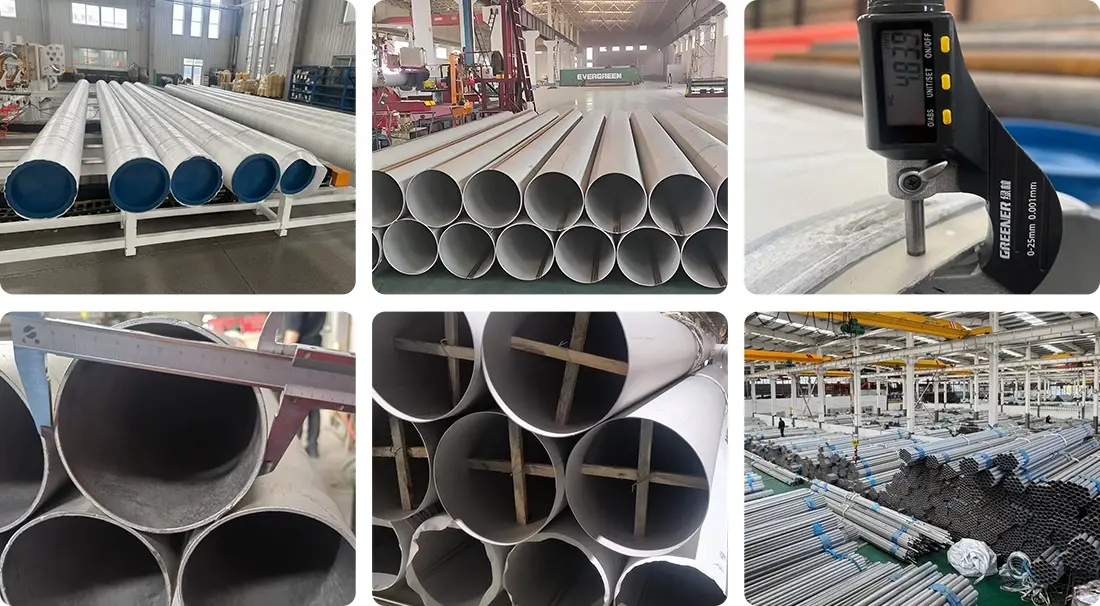
Every reducing tee undergoes our strict four-phase quality control process. Raw material verification includes spectrographic analysis confirming chromium, nickel, and molybdenum content with complete heat number traceability. During production, we monitor wall thickness distribution across the branch crotch area using precision ultrasonic gauges.
Before shipment, all fittings pass through 100% online eddy current diagnostic scanning. Branch area hardness profile testing verifies uniform heat treatment. Liquid penetrant testing (PT) detects any surface discontinuities. For critical applications, radiographic testing (RT) is available to inspect internal weld quality on welded-construction reducing tees.
You receive comprehensive EN 10204 3.1 Mill Test Certificates documenting chemical composition, mechanical properties, heat treatment parameters, and test results—ensuring full compliance with project specifications and customs requirements.
Versatile Customization & Dimensional Flexibility
Our ASTM A403 WP316 WP316L Reducing Tee inventory spans main pipe diameters from 1/2" to 48", with customized reducing branch configurations matching your exact system layout requirements. Whether you need a 6" × 4" × 6" tee or a heavy-wall 24" × 12" × 24" SCH 80S configuration, our engineering team provides CAD drawing verification and stress calculation support.
We support varied wall schedule matching between main run and branch outlet—critical for maintaining pressure ratings across pipeline transitions. With over 5,000 tons of rolling stainless steel inventory and partnerships with 15+ certified mills, we accommodate mixed container loading with other pipe fittings, flanges, and valves to optimize your procurement costs.
Custom processing services include precision beveling, special length requirements, passivation treatment, and even color PVD coating for identification purposes in multi-system facilities.
Industrial Applications
The product is so versatile in its use that it is an essential component in a number of critical industries:
Offshore Oil & Gas Platforms: In seawater cooling systems and topside pipe networks where the molybdenum presence reduces localised pitting from salt spray exposure and high salinity brine contact. The fitting is structurally sound against vibration generated by waves and temperature cycling from -20°C to +150°C.
Chemical Processing Plants: Critical for sulfuric acid, phosphoric acid and organic solvent handling systems. The solution-annealed state exhibits the highest resistance to intergranular corrosion as measured by ASTM A262 Practice E testing. Flow control and relief of pressure in the reactor feed lines and distillation column auxiliaries are achieved via branch reductions.
Pharmaceutical & Biotechnology: Widely used in distribution loops and pipelines for high purity water (WFI) for active pharmaceutical ingredient (API) manufacturing. The 316L low-carbon profile allows for clean welds with less heat-tint, limiting sites for microbial development and making system sanitization treatments easier.
Marine Piping Systems: Installed aboard ships to serve as ballast water treatment, fire suppression networks, and potable water distribution. The fitting’s cryogenic toughness down to -196°C makes it suitable for LNG carrier applications, and its 485 MPa tensile strength can deal with surge pressures in propulsion cooling circuits.
Desalination Plants: Critical at branch crossings in reverse osmosis skid pipework and brine concentrate discharge lines, where chloride concentrations surpass 35,000 ppm and molybdenum content ensures long term dependability without expensive maintenance shutdowns.
FAQ
Q:Why is this marine-grade product technically preferred at high-corrosion pipe intersections?
A. This reducing tee has both important molybdenum alloy content and an ultra-low carbon threshold for superior long-term chemical protection against localised pitting and intergranular crevice failures on branching line reductions. The microstructure is austenitic and stays stable during temperature variations, therefore avoiding phase transformations that might damage corrosion barriers.
Q:How does your factory reinforce the high-stress branch neck area during the cold extrusion or forging process?
A:We implement precise wall-thickness distribution optimization at the crotch and branch neck areas during press forging, which counteracts dynamic fluid stress concentration and guarantees absolute structural reliability. Multi-axis CNC machining ensures uniform metal flow patterns, eliminating weak points that could initiate fatigue cracks.
Q:What precise non-destructive diagnostics verify that each port and reducing branch area is entirely sound?
A:The entire batch undergoes 100% mandatory non-destructive testing, passing through liquid penetrant checking (PT), branch area hardness profile mapping, and automated volumetric ultrasonic flaw detection (UT). For welded-construction fittings designated WP-WX, we provide radiographic testing reports confirming zero internal porosity or slag inclusions.
Q:Can this reducing tee be configured with varied main-to-branch dimensional ratios for specific plant layouts?
A:Yes, we support extensive configuration flexibility, allowing customized big-end main pipe inputs with customized reducing branch diameters across all standard wall thickness pipe schedules up to 48 inches. Our engineering team reviews your P&ID drawings to recommend optimal reduction ratios that minimize turbulence and pressure drop while maintaining ASME B31.3 code compliance.
Q:What robust packaging protocols protect this low-carbon reducing tee lot from transit humidity during maritime freight?
A:Components are cellophane wrapped individually, packed tightly with soft fiber edge shielding inside secure plywood crates with plastic pipe end protectors to secure flawless delivery. For overseas shipments, we apply VCI (Vapor Corrosion Inhibitor) bags and desiccant packets, with fumigation-free wooden case construction meeting ISPM-15 international phytosanitary standards.
Contact Us
Request your detailed quotation and MTC samples today for the ASTM A403 WP316 WP316L Reducing Tee. Contact our technical team at info@hballtrust.com to discuss your specific branch fitting requirements and receive expert material selection guidance.