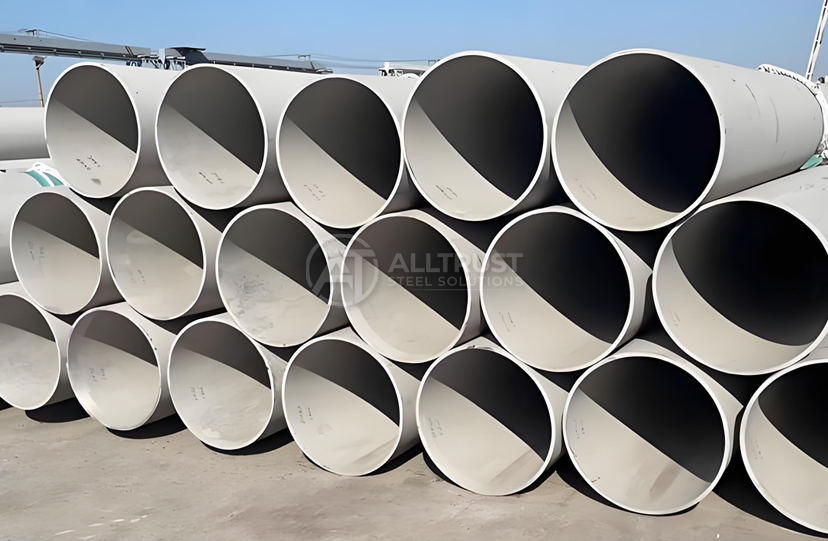
astm a358 class 2 pipe
2. Standard: ASTM A358 / ASME SA358 Class 2, engineered for high-volume industrial pipeline networks
3. Process: Electric Fusion Welded (EFW) featuring double-sided automated straight seams from premium steel plates
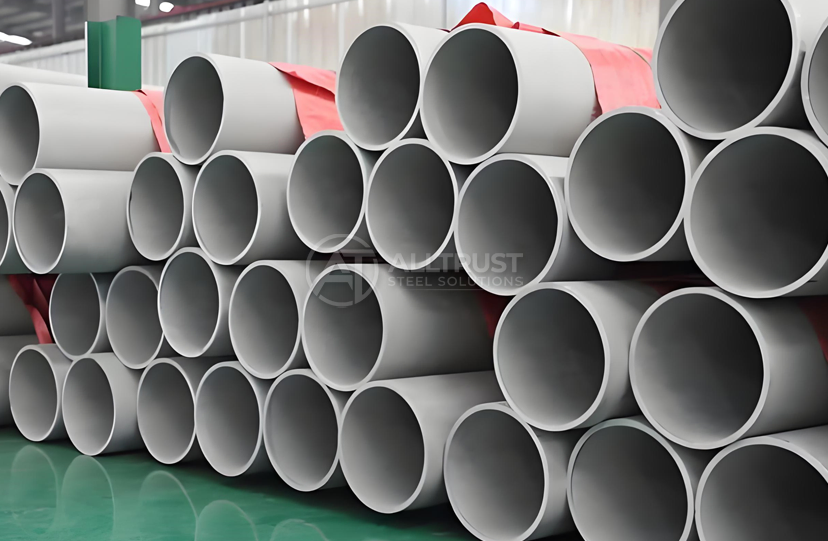
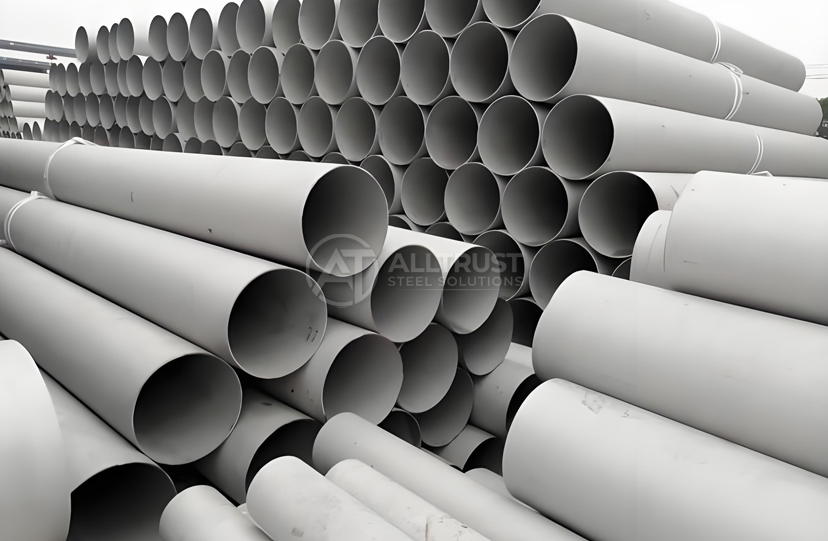
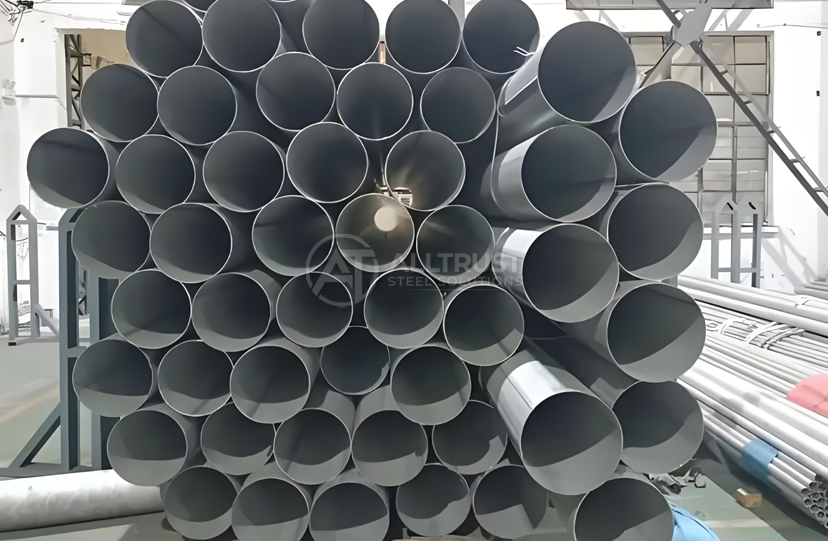
4. Size Range: Large scale sizes from Nominal Pipe Size (NPS) 8" up to 60" with flexible custom wall schedules
5. Heat Treatment: Full-body post-weld solution annealing to ensure complete microstructure and grain normalization
6. Surface Finish: Clean solution annealed and pickled (SA&P), descaled matte, or passivated clean industrial finish
7. Application: Major municipal wastewater networks, chemical process lines, plant cooling loops, and oil refinery mains
8. Service Advantage: Radiographic examination (RT) compliant with Class 2 codes, full chemical heat traceability provided
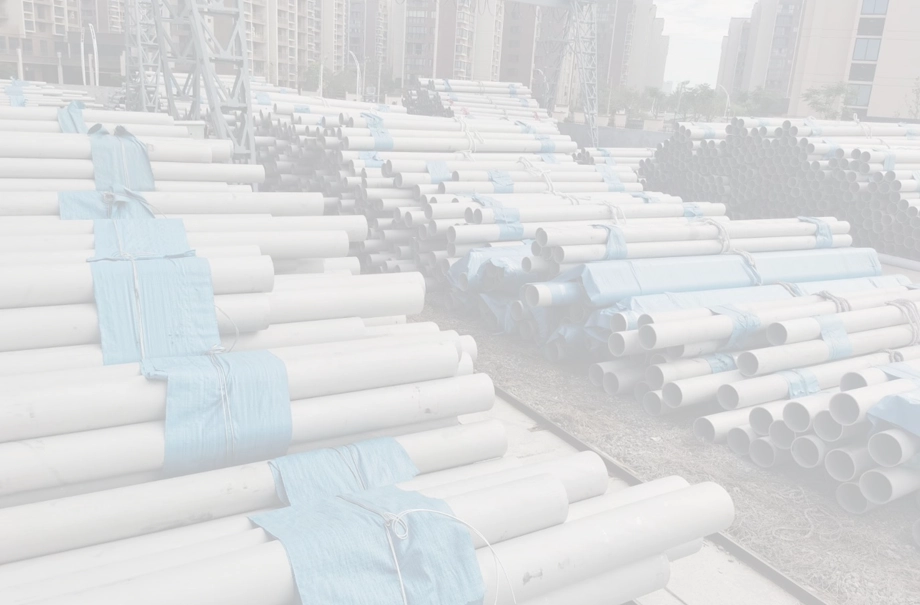
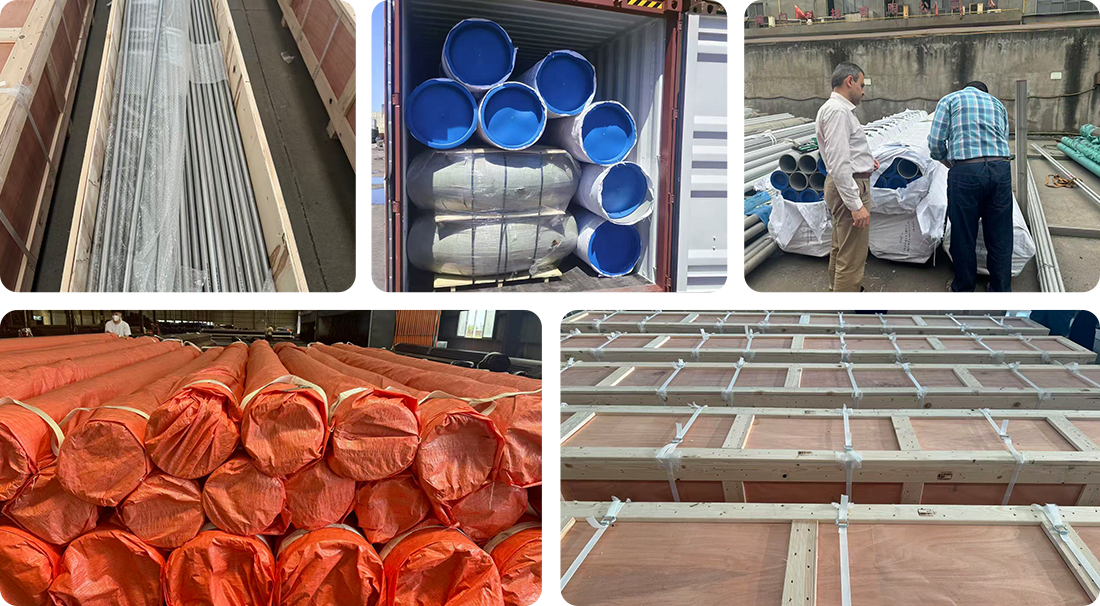
9. Packaging: Secure sea-freight packing with heavy plastic end-caps, bundled or loaded with high-strength lifting slings
10. Key Advantage: Class 2 specification allows no radiography check for optimal project economy, serving as a top cost-saving pipe
ASTM A358 Class 2 Pipe – Large Diameter Electric Fusion Welded Stainless Steel Piping Solutions for High-Volume Industrial Applications
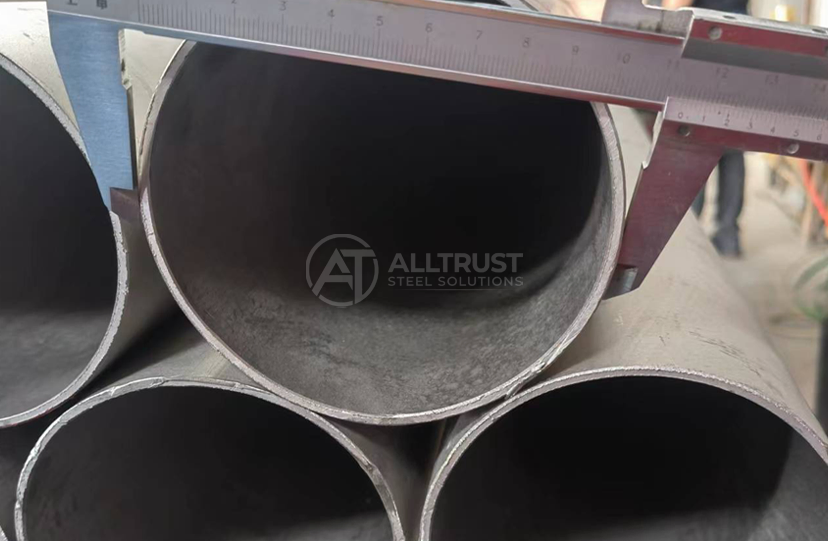
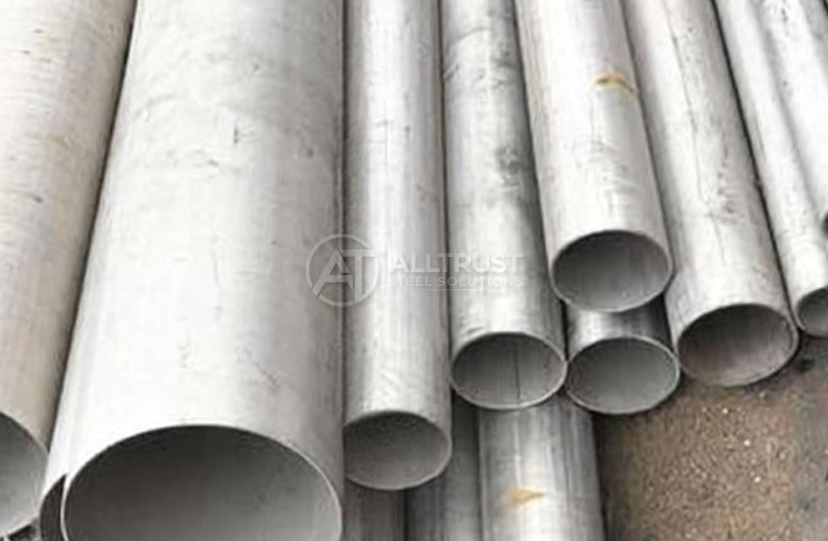
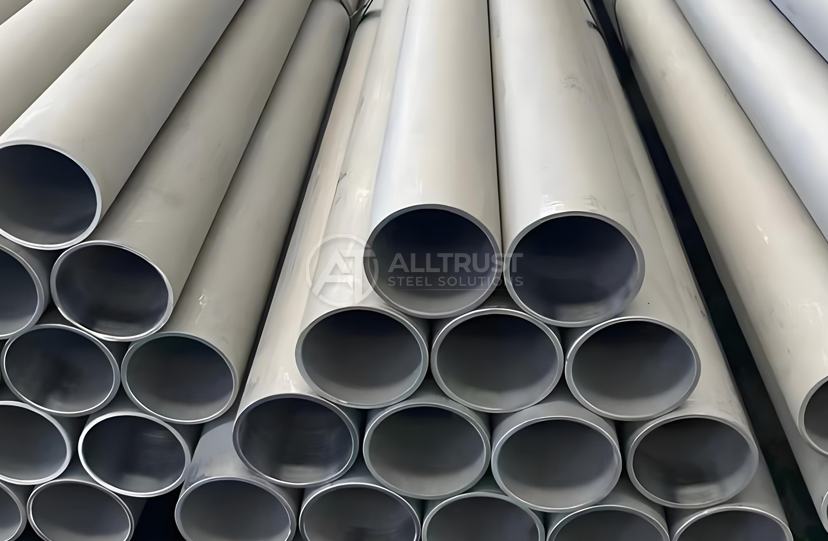
Hebei All Trust Steel Co., Ltd manufactures premium astm a358 class 2 pipe engineered specifically for high-volume industrial fluid transport where full radiography is not contractually required. Our electric fusion welded (EFW) stainless steel pipes are produced using double-sided automated welding with filler metal across all passes, delivering robust mechanical integrity in large diameters from NPS 8" to 60". All our Class 2 pipes have full solution annealing and pickled surface treatment, and the yearly production capacity is above 15,000 tons, and the hydraulic test rate is 100%. Every pipe is subjected to 100% eddy current testing, guided-bend weld inspection and Positive Material Identification (PMI) analysis. It meets ASTM A358/ASME SA358 standards and offers significant cost savings for municipal wastewater systems, chemical processing plants and major refinery pipelines.
What Makes ASTM A358 Class 2 Pipe the Preferred Choice for Large-Scale Pipeline Networks?
This product is a precision manufactured solution for industrial situations needing large diameter stainless steel plumbing, without the extra price of comprehensive radiographic evaluation.
The Class 2 designation specifically permits the elimination of X-ray inspection, making it highly economical for general-purpose pressure containment.
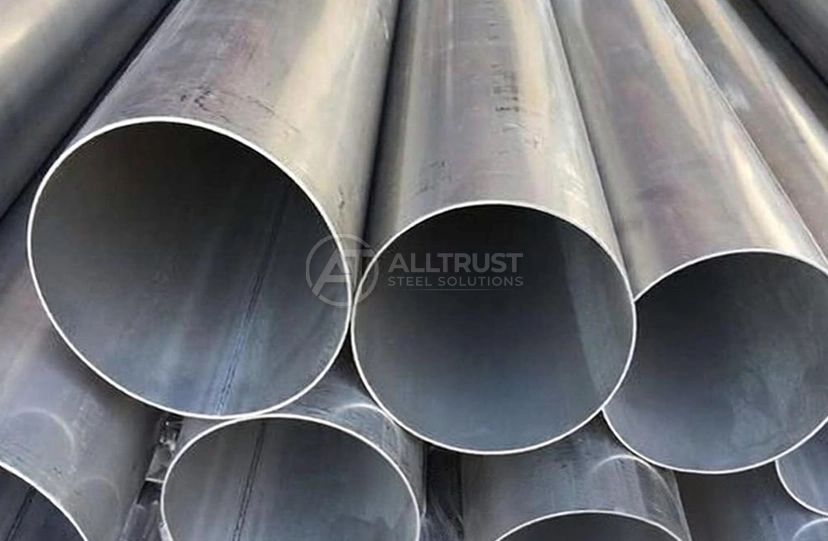
This pipe category utilizes electric fusion welding (EFW) technology. Flat stainless steel plates are precision-rolled and joined through automated longitudinal seam welding. Filler metal is added in every welding pass to ensure consistent mechanical properties throughout the joint.
Your project benefits from several structural advantages. The mandatory solution annealing heat treatment eliminates chromium carbide precipitation along weld zones. This process restores corrosion resistance to levels matching the base metal composition. The result is uniform resistance against industrial chemicals and high-temperature fluids.
Class 2 pipes maintain a joint efficiency factor of 0.85 according to industry pressure vessel codes. While Class 1 pipes achieve 1.0 joint efficiency through 100% radiography, the 0.85 factor still permits robust pressure ratings suitable for most industrial fluid transport applications.
Technical Specifications of Our Product Line
| Parameter | Specification Details |
|---|---|
| Manufacturing Standard | ASTM A358 Class 2 / ASME SA358 Class 2 / EN 10217-7 |
| Pipe Classification | Electric-Fusion-Welded (EFW) Stainless Steel Pipe (No Radiography Required) |
| Material Grades | TP304, TP304L, TP316, TP316L, TP321, TP347, TP310S |
| Welding Method | Double-Welded Longitudinal Seam with Filler Metal in All Passes |
| Outer Diameter Range | 8" – 60" (219.1 mm – 1524 mm) / Custom sizes up to 100" available |
| Wall Thickness Options | SCH 5S / SCH 10S / SCH 40S / SCH 80S (2.0 mm – 50 mm) |
| Standard Lengths | 5.8 m / 6 m / 11.8 m / 12 m / Custom cut-to-length available |
| Heat Treatment | Solution Annealed & Pickled (SA&P) / Full-body post-weld annealing |
| Surface Finish | Descaled matte finish / Passivated industrial surface / Polished optional |
| End Configuration | Plain End (PE) / Beveled End (BE) / Threaded (NPT/BSPT) / Flanged optional |
| Non-Destructive Testing | 100% Hydrostatic Pressure Test / Eddy Current Test (ET) / Dye Penetrant Test (PT) |
| Mechanical Testing | Transverse Tension Test / Guided-Bend Weld Test / Flattening Test / Hardness Test |
| Chemical Verification | PMI (Positive Material Identification) / Full spectrographic analysis |
| Quality Certificates | EN 10204 3.1 & 3.2 Mill Test Certificates (MTC) / ISO 9001:2015 |
| Third-Party Inspection | SGS / BV / TUV / DNV / ABS inspection supported |
| Packaging Standard | Heavy-duty plywood crates / Steel framework cradles / Waterproof fiber wrapping / Plastic end caps |
Why Choose Our Product for Your Industrial Infrastructure?
Cost-Effective Engineering Without Compromising Integrity
Your procurement budget benefits directly from the Class 2 specification. By eliminating mandatory radiography, you reduce testing costs by approximately 15-25% compared to Class 1 alternatives. This advantage becomes particularly significant when installing kilometers of large-diameter piping in wastewater treatment plants or chemical processing facilities.
Our manufacturing process maintains strict quality protocols even without X-ray verification. Every pipe undergoes mandatory hydrostatic pressure testing at levels exceeding normal operating conditions. Automated eddy current scanning detects any subsurface discontinuities along the entire weld seam length.
Superior Corrosion Resistance Through Controlled Heat Treatment
Solution annealing technique is not an option in our manufacturing process. After welding, the pipes are heated to temperatures of 1040°C to 1120°C depending on the grade of pipe. This heat treatment removes any chromium carbides generated during the welding.
It is then rapidly quenched to stabilise the microstructure in an austenitic phase. The astm a358 class 2 pipe offers uniform corrosion resistance in the parent metal and fusion zone. This homogeneity is essential for the conveyance of hostile media such as sulfuric acid dilutions or chloride containing waste waters .
Large Diameter Capability for High-Capacity Flow Systems
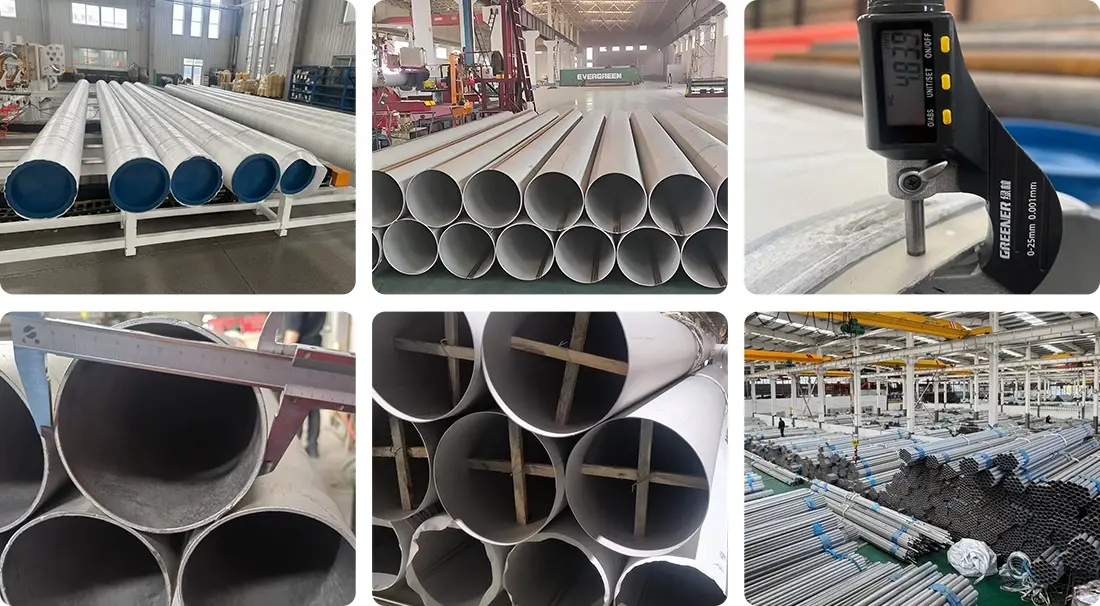
Seamless stainless steel pipes become prohibitively expensive and technically challenging above 16-inch diameters. Our EFW manufacturing method allows us to produce pipes up to 60 inches in outer diameter while maintaining controlled wall thickness tolerances of ±10%.
This capability directly addresses your need for high-volume fluid transport. A single 48-inch diameter pipe can replace multiple smaller lines, reducing installation complexity, valve requirements, and total system pressure drop.
Flexible Customization for Project-Specific Requirements
We realise that the measurements shown in our standard catalogue are seldom precise as those shown on your technical drawings. We can cut exactly to the length you need with a tolerance of ±5mm. Laser branding puts your project identification codes, heat numbers and specification data right on the pipe body.
End preparation options offered include precise bevelling for butt weld joints, roll grooving for mechanical coupling systems and NPT threading for threaded connections. Each modification is made under controlled circumstances to avoid work-hardening or surface contamination.
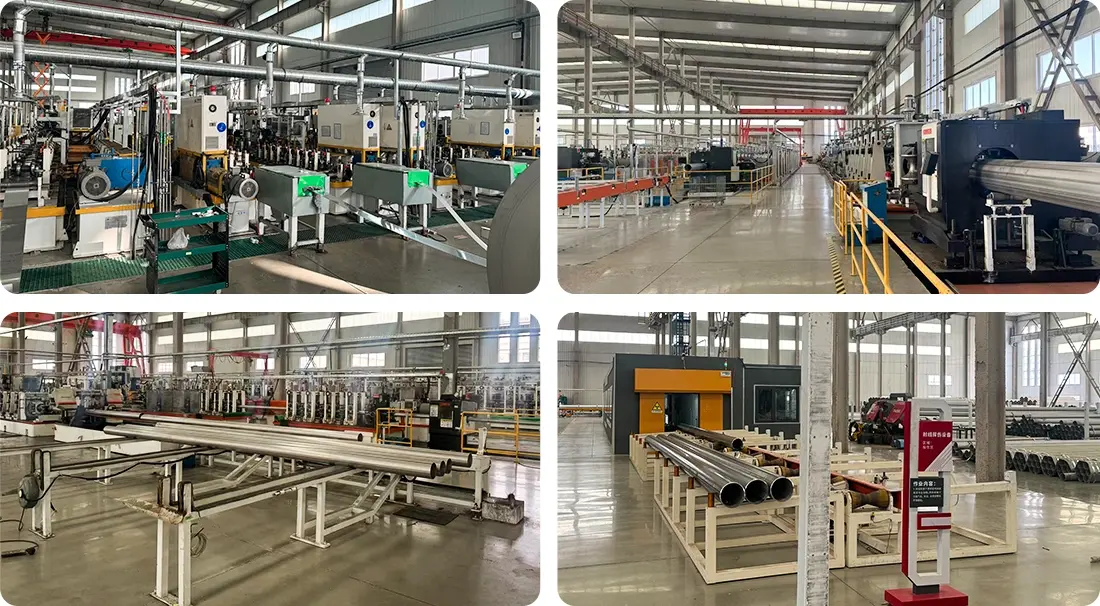
Full Quality Control Guaranteeing Dependability in Critical Service
4-Step Verification Process
Stage 1: Check Raw Material
All steel plates are PMI tested before coming into manufacturing. Chromium concentration (usually 18-20% for 304 grades), nickel content (8-10.5%), and trace elements like as molybdenum and nitrogen are checked using spectrometers. Material certifications from ISO-certified steel mills provide full heat traceability.
Stage 2: In-Process Monitoring of Welding
The welding parameters are recorded automatically and constantly throughout production. Our systems monitor amperage, voltage, travel speed and shielding gas flow rates. Any deviation is met with prompt action by the operator. A post weld visual assessment checks bead consistency, penetration depth and surface appearance.
Stage 3: Destructive Sample Testing
From each production batch, representative samples undergo transverse guided-bend tests. The welded section is bent around a mandrel to verify ductility and fusion quality. Additional samples are subjected to flattening tests and flare expansion tests to confirm mechanical performance.
Stage 4: Final Non-Destructive Examination
Finished pipes are then sent via automated eddy current testing equipment that inspects 100% of the weld seam. Liquid penetrant testing is used to detect surface breaking problems. All pipes are subjected to a necessary hydrostatic test to ensure a leak-proof integrity, where pressure is applied to 1.5 times the design pressure.
Industrial Applications Where ASTM A358 Class 2 Pipe Performs Best
Municipal Water & Wastewater Infrastructure
Piping for your city's water treatment plants has to be corrosion-resistant to chlorine exposure, pH changes, and intermittent hydraulic surges. Our pipes perform well in raw water intake lines, treated water distribution headers and sewage collecting mains. The larger diameters minimise pumping energy costs by reducing friction losses.
Chemical Processing & Petrochemical Plants
Refineries and chemical facilities handle many fluids. These include caustic solutions, organic solvents, and petroleum fractions. Solution-annealed microstructure is resistant to stress corrosion cracking even in chloride-rich environment. Class 2 pipe is specified by process engineers for cooling water systems, product transfer lines, and effluent discharge networks.
Power Generation Facilities
Both conventional and renewable energy plants rely on stainless steel piping for condensate systems, feedwater lines, and cooling loops. The 316L grade option provides enhanced resistance to pitting in brackish cooling water. Our pipes maintain dimensional stability through repeated thermal cycling between ambient and elevated operating temperatures.
Secure Export Packaging and Global Logistics Support
Your international shipments receive protection through our multi-layer packaging system. Plastic end caps seal both pipe ends against moisture and debris ingress. Individual pipes are wrapped in protective film, then bundled using heavy-duty steel strapping.
The large diameter pipes are carried in specially-fabricated wooden cradles with padding within. The cradles are designed to equally distribute the weight and prevent them from rolling over during transit. We optimise loading patterns for containerised cargoes, to maximise space utilisation and to ensure safe weight distribution.
Our logistics staff handles shipments via major Chinese ports, such as Shanghai, Ningbo, Tianjin and Qingdao. We accept FOB, CFR, CIF, DDP trading terms according to your purchase needs. The full paperwork packs contain commercial invoices, packing lists, EN 10204 3.1 mill test certificates and certificates of origin.
FAQ
Q:Why does this product offer a significant cost advantage for specific pipeline systems?
A:Class 2 specifications provide reliable pressure containment for general-purpose industrial fluids where complete radiography is not contractually mandated, offering a highly economical layout for high-volume networks. The elimination of X-ray inspection reduces both testing costs and project timeline delays, while maintaining structural integrity through comprehensive hydrostatic and eddy current verification.
Q:What quality control steps ensure that the joint fusion matches the required pressure vessel parameters?
A:The automated filler-metal longitudinal joints are welded via strict multi-pass automated lines, followed by mandatory hydrostatic leakage pressure validation and online eddy current diagnostic scanning. Every weld parameter is electronically recorded, and computerized monitoring systems immediately flag any deviation from programmed specifications, ensuring consistent quality across all production batches.
Q:What destructive quality verification benchmarks must this class 2 product line successfully pass?
A:Representative batch coupons are subjected to mechanical destructive flattening trials, cross-sectional flare expansions, and precise Positive Material Identification (PMI) chemical grade verification. Transverse guided-bend tests confirm ductility, while intergranular corrosion testing per ASTM A262 validates the effectiveness of the solution annealing heat treatment.
Q:Can this class 2 pipe series be customized with specialized end configurations for swift field connection?
A: Yes. We can supply finely machined threaded ends to NPT or BSPT taper standards, roll-grooved end preparations for mechanical couplings, and ANSI butt-weld bevels. We CNC machine to ASME B1.20.1 tolerances on threads and bevelling operations achieve 37.5 degree angles for the best weld joint preparation.
Q:How are these class 2 pipes packaged to prevent internal corrosion or debris accumulation during transit?
A:Every pipe is thoroughly passivated, bundled with protective strapping slings, wrapped inside heavy waterproof weaving bags, and tightly sealed with hard plastic dust caps. For overseas shipments, we employ fumigation-free wooden cradles and steel framework supports that prevent pipe deformation during container loading and ocean transport.
Contact Us
Ready to specify the right astm a358 class 2 pipe configuration for your project? Our engineering specialists provide material selection guidance, corrosion resistance analysis, and pressure rating calculations. Request your detailed quotation by contacting us at info@hballtrust.com today.