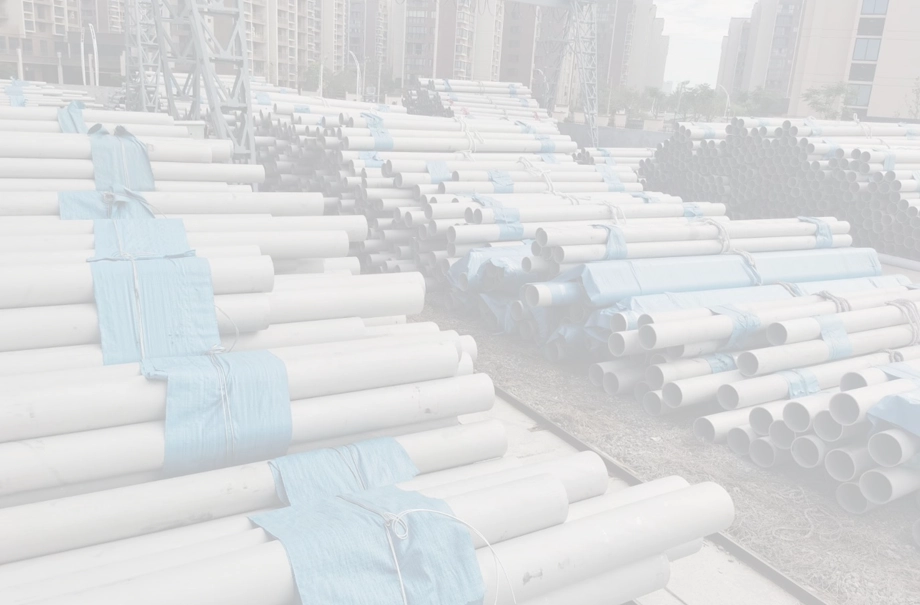
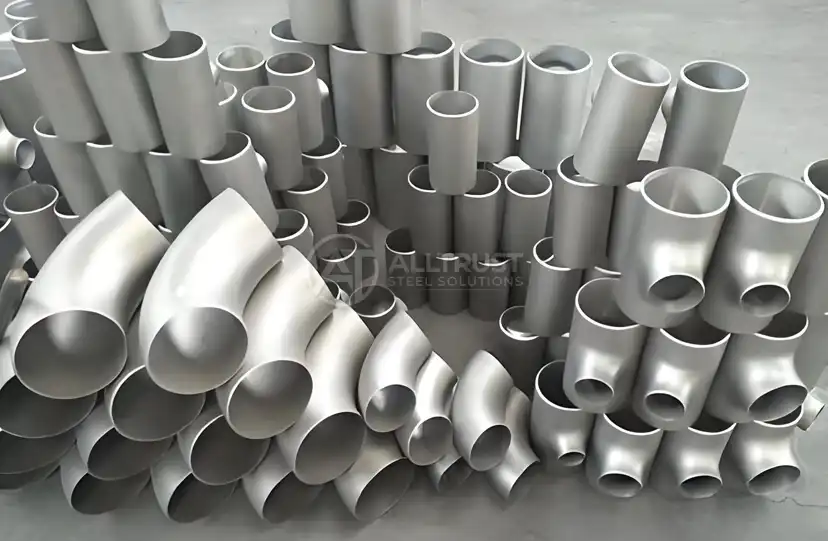
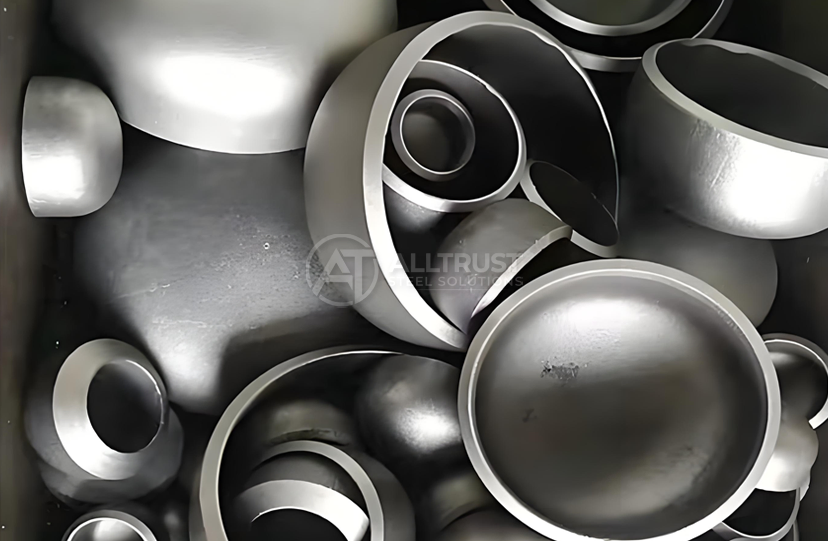
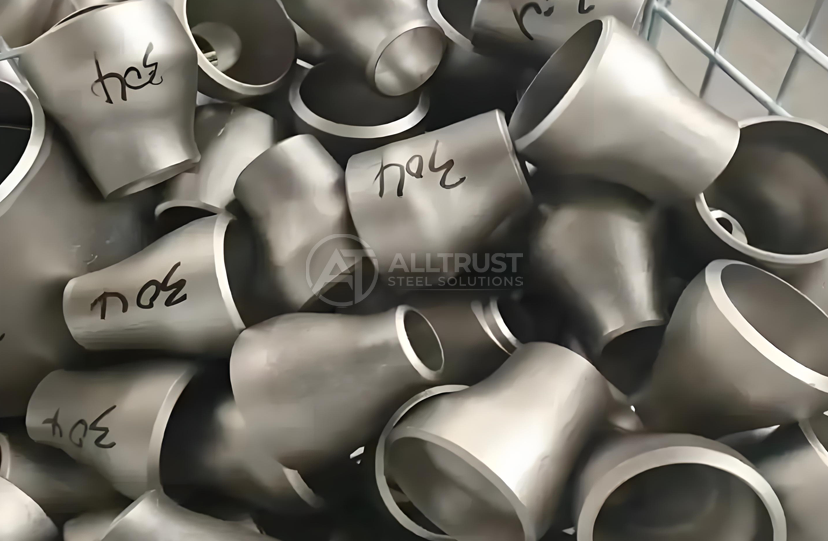
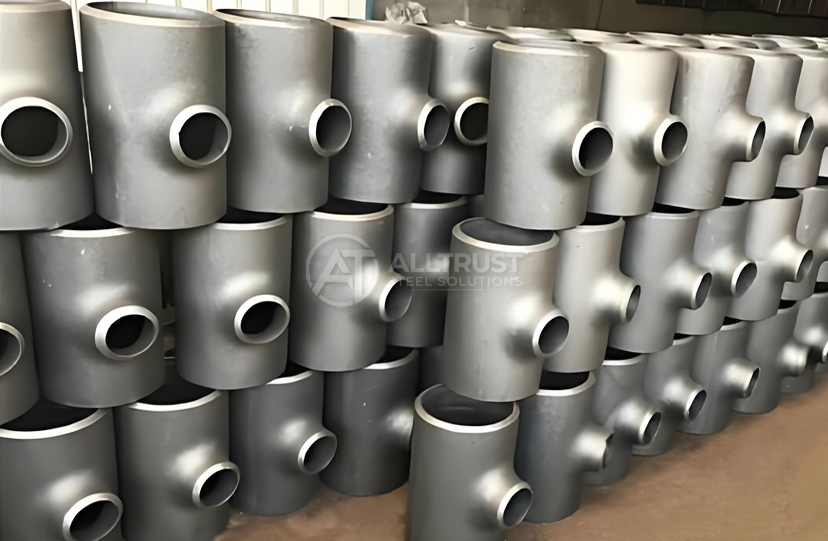
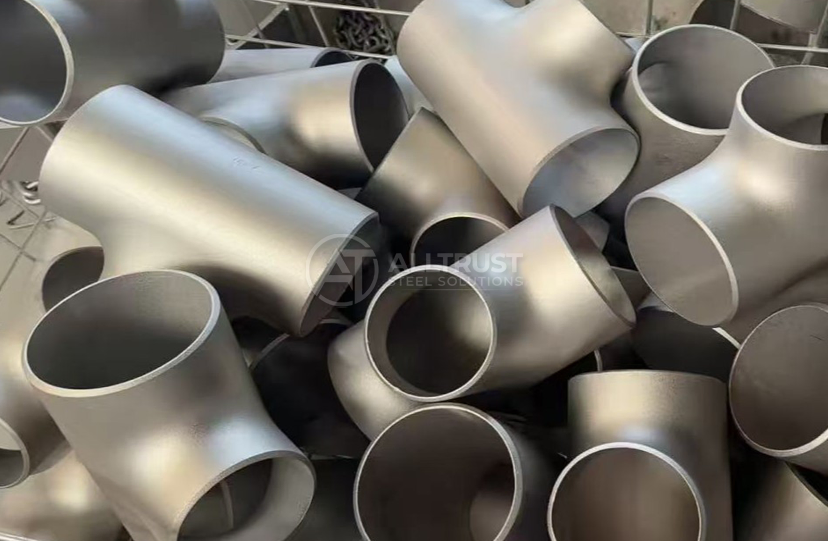
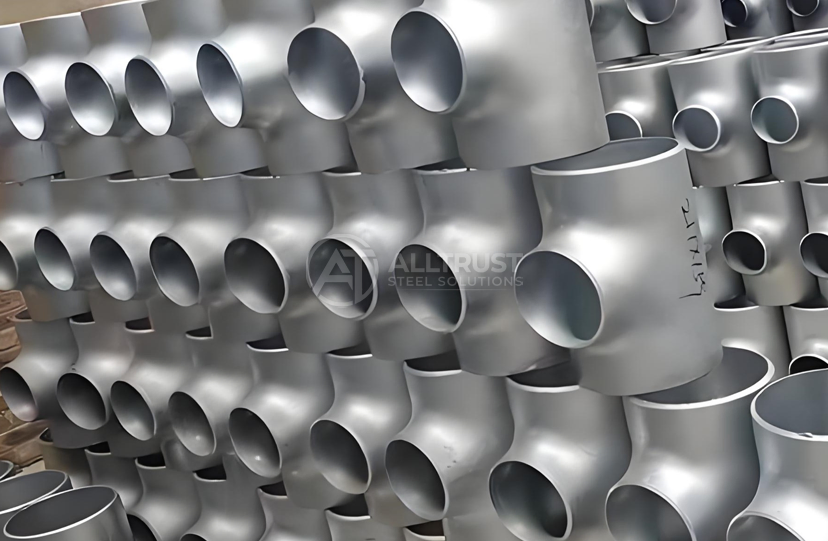
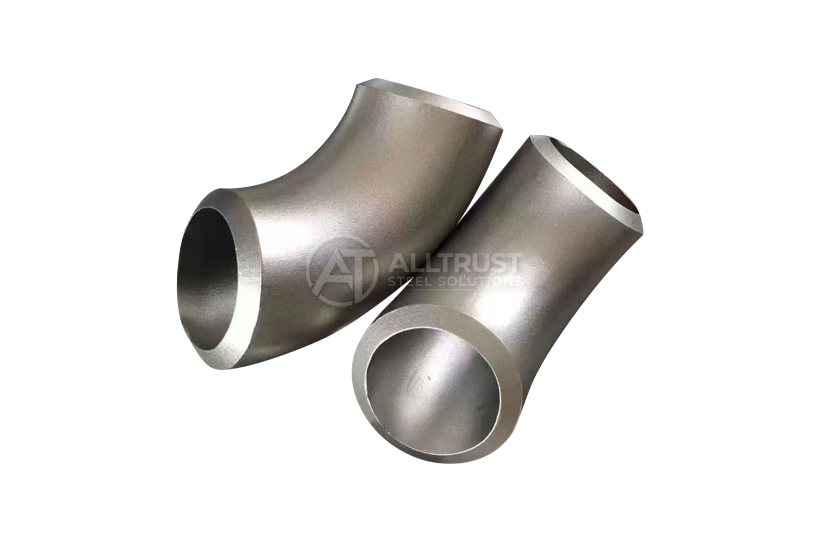
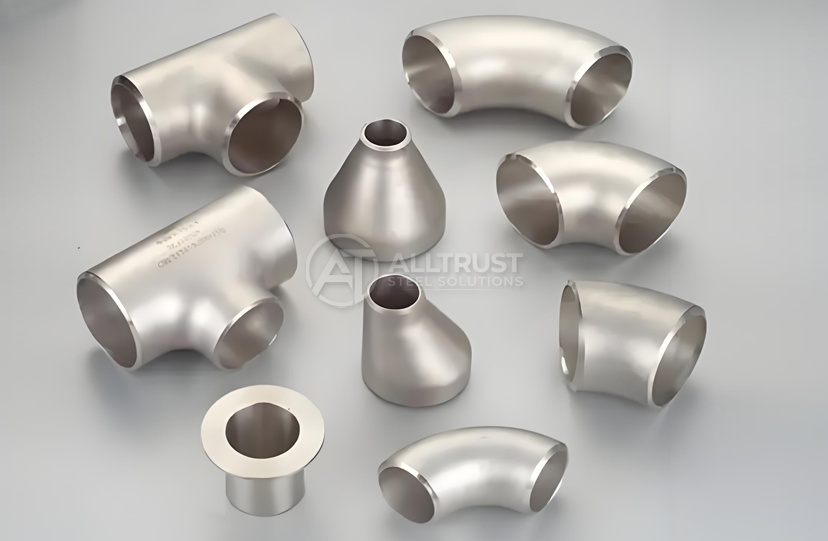
304L stainless pipe fittings
2. Standard: ASTM A403 / ASME SA403, the globally trusted benchmark for pressure pipeline connection fittings
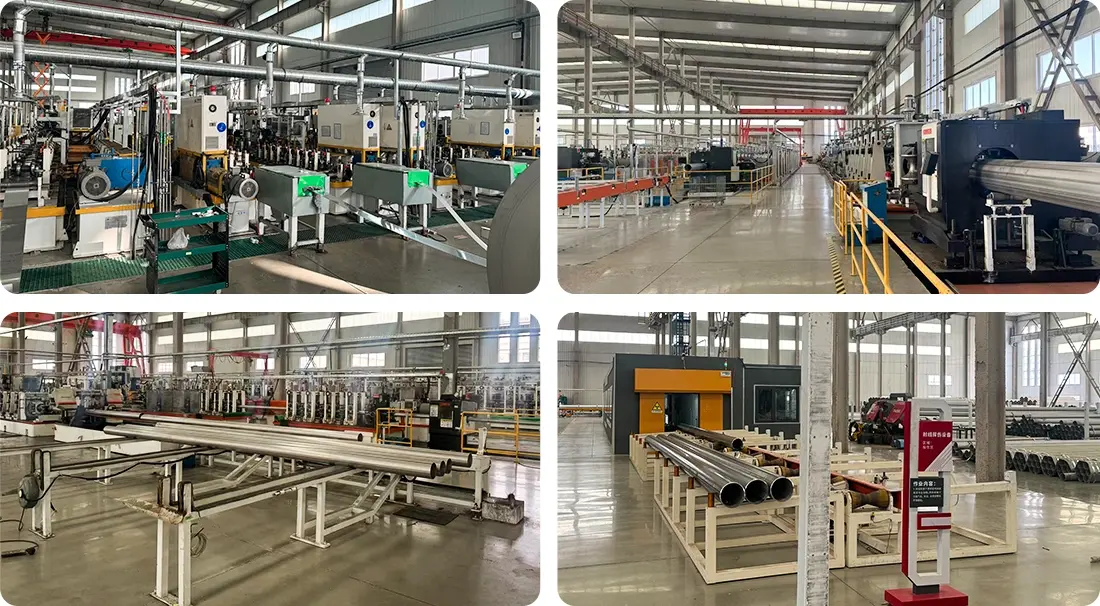
3. Process: High-efficiency automated hydraulic pressing or rolling, with strictly calibrated bevel dimensions for field welding
4. Size Range: Broad dimensional matrix of 90/45-degree elbows, equal/reducing tees, concentric/eccentric reducers
5. Heat Treatment: Post-forming solution annealing and rapid water quenching to maximize grain refinement matrix stability
6. Surface Finish: Solution annealed and pickled (SA&P), descaled industrial matte, or chemically passivated clean profile
7. Application: Chemical process piping loops, industrial wastewater drainage, municipal plumbing utilities, and refinery loops
8. Service Advantage: Sourced from tier-one steel billets, dynamic non-destructive testing (NDT), full material heat traceability
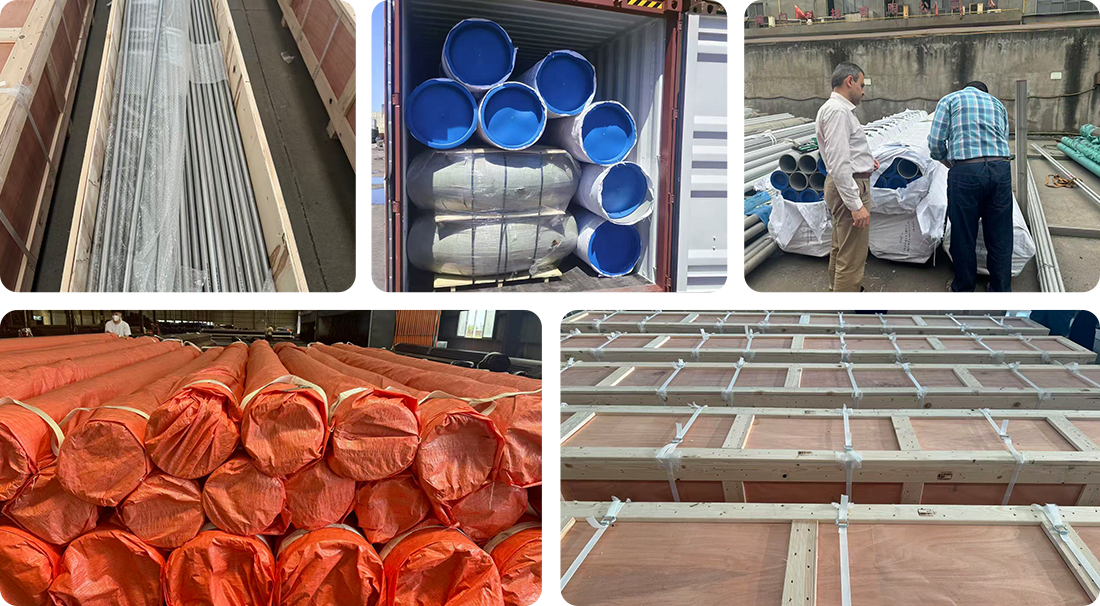
9. Packaging: Securely nested in reinforced export plywood cases with thick waterproof canvas outer wrapping
10. Key Advantage: Restricts harmful carbide precipitation during field welding to maintain absolute joint security without post-weld annealing
304L Stainless Pipe Fittings – Industrial-Grade Butt-Welding Solutions for Corrosion-Resistant Piping Systems
HEBEI ALL TRUST STEEL CO., LTD specializes in manufacturing precision-engineered 304L stainless pipe fittings that deliver superior weldability and corrosion resistance for critical industrial applications. Our fittings are manufactured to strict ASTM A403/ASME SA403 standards and have an annual manufacturing capacity of 15,000 tonnes with 100% hydraulic test on every piece. These materials have an ultra-low carbon content (≤0.03%) which prevents sensitisation during welding and eliminates the need for expensive post-weld heat treatment. We have a wide range of 90/45 degree elbows, equal/reducing tees and concentric/eccentric reducers from 1/2"to 48"NPS with EN 10204 3.1 Mill Test Certificates and full heat traceability.
What Makes 304L Stainless Pipe Fittings Essential for Your Operations
The goods are the last step in a sophisticated solution to the problems of intergranular corrosion in welded pipe systems. These fittings use a special extra-low carbon grade chemistry (unlike the typical 304 grade components) to minimise the formation of chromium carbides on grain boundaries during thermal joining operations.
This metallurgical advantage is important in chemical processing systems. Your welded connections are structurally sound, no costly post-weld annealing processes needed.
The 18-20% chromium and 8-12% nickel content provide good resistance to oxidising acids and organic chemicals. You get consistent performance in food processing industries, pharmaceutical facilities and municipal water treatment systems.
We produce via a combination of automated hydraulic pressing and precise solution annealing. All fittings are rapidly quenched in water to provide optimal grain refinement and matrix stability.
Products such as dairy processing equipment and cryogenic LNG transport systems retain their ductility from -196°C to 800°C. You get flexible parts for different temperature working situations.
Technical Specifications Overview
| Parameter | Details |
|---|---|
| Material Grade | WP304L (UNS S30403 / 1.4306) |
| Manufacturing Standards | ASTM A403, ASME SA403, EN 10253-3/4 |
| Component Types | 90/45° Elbows, Equal/Reducing Tees, Concentric/Eccentric Reducers, Caps, Stub Ends |
| Size Range | 1/2" to 48" NPS (Butt-Welding Configurations) |
| Wall Thickness | SCH 5S, 10S, 40S, 80S, 160, XXS |
| Carbon Content | ≤0.03% (Extra-Low Carbon) |
| Chromium Content | 18-20% |
| Nickel Content | 8-12% |
| Tensile Strength | Minimum 485 MPa (70 ksi) |
| Yield Strength | Minimum 170 MPa (25 ksi) |
| Heat Treatment | Solution Annealing + Rapid Water Quenching |
| Surface Finish | Solution Annealed & Pickled (SA&P), Shot Blasted, Mechanically Polished |
| Testing Methods | Ultrasonic Test (UT), Eddy Current, Radiographic Test (RT), Liquid Penetrant Test (PT) |
| Quality Certificates | EN 10204 3.1/3.2 MTC, ISO 9001:2015, CE, PED |
| Packaging | Foam Wrapped, Plywood Crates with Waterproof Canvas |
Superior Weldability Without Post-Weld Treatment
Traditional 304 fittings face a critical vulnerability during welding operations. When exposed to temperatures between 450-850°C, carbon migrates to grain boundaries and forms chromium carbides.
This sensitization process depletes chromium from surrounding areas, creating paths for intergranular corrosion. Your piping system becomes susceptible to failure at welded joints.
304L stainless pipe fittings eliminate this risk through controlled carbon reduction. By restricting carbon to 0.03% maximum, these components prevent carbide precipitation entirely.
You may do field welding operations without having to schedule post-weld heat treatment cycles. It may cut project timeframes by as much as 35% and minimise labour expenses.
Our precision program-controlled solution treatments dissolve all alloying constituents evenly into a stable crystalline matrix. Rapid consistent water quenching of each fitting preserves this optimised microstructure.
The result? You gain welded joints that match the corrosion resistance of the base material itself.
Comprehensive Quality Validation Process
Quality assurance starts with raw material selection. We use only tier-one steel billets sourced from ISO-certified mills and check the chemical composition by spectrographic analysis before manufacture.
Every batch undergoes stringent automated on-line eddy current diagnostic mapping throughout the production process. This non-destructive testing finds subsurface faults that are unseen to ocular examination.
Our testing procedures consist of:
Material Verification: Positive Material Identification (PMI) is performed using XRF analysis to verify carbon content below.03%. Every shipment comes with certified evidence of alloy chemistry.
Corrosion Resistance Test: ASTM A262 Practice E Intergranular corrosion testing to confirm resistance to sensitisation. We test the grain boundaries of sample fittings by boiling them in nitric acid.
Mechanical Property Validation: Tensile strength testing, hardness verification and elongation testing verify that components fulfil minimal performance standards.
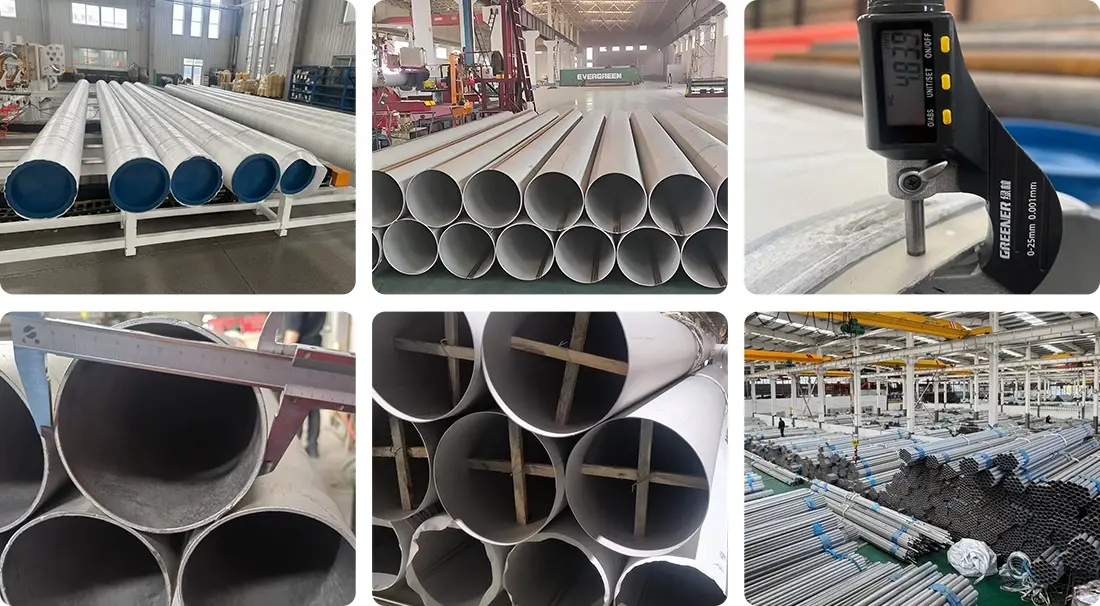
Dimensional Accuracy: Calliper measurements confirm wall thickness tolerances and bevel angles meet ASME B16.9 requirements. Your fittings guaranty precise fit up in field assembly.
Each shipment is supplied with EN 10204 3.1 Mill Test Certificates showing specific chemical ladle heat figures, elongation percentages and physical tensile load values. You keep complete material traceability for project documentation needs.
Performance Benefits for Specific Applications
Chemical and Petrochemical Processing: Heavy-gauge welding causes large heat-affected zones in acid production and storage facilities. Our 304L stainless pipe fittings prevent localized corrosion in these critical areas, extending system service life.
Food and Beverage Industry: High-pressure steam cleaning lines and organic acid processing need sanitary surfaces. Our fittings are finished to a smooth surface resistant to bacterial development and strong cleaning chemicals.
Pharmaceutical Manufacturing: Components used in sterile processing conditions must be able to endure repeated chemical sterilisation cycles. You like fittings that preserve their integrity with frequent exposure to sanitising solutions.
Municipal Water Treatment: Corrosion resistant for wastewater handling networks and chlorinated water systems without magnetic interference. These demanding applications need long term dependability from our non-magnetic austenitic fittings.
Cryogenic and LNG Infrastructure Liquefied gas transportation systems operate at very low temperatures where material brittleness may cause catastrophic failures. These fittings are ductile at -196°C, eliminating cold-temperature cracks that damage carbon steel equivalents.
Flexible Customization Capabilities
Standard catalog dimensions don't always match project requirements. Our advanced machining capabilities support application-specific modifications.
You can specify ANSI-standard tapered bevels for butt-welding assemblies, roll-grooved end preparations for mechanical coupling systems, or flanged end configurations for bolted connections.
Custom batch identifier stenciling allows clear component tracking across large construction sites. We apply permanent markings using low-stress stamping methods that don't compromise material properties.
Packaging configurations adapt to your logistics needs. Individual foam wrapping protects surface finishes, while reinforced plywood crates prevent transportation damage during international shipping.
Our team provides CAD drawing verification and stress calculation support. You receive engineering assistance throughout the specification and procurement process.
FAQ
Q:What key performance parameters prevent these products from experiencing weld zone degradation?
A:Utilizing a refined low-carbon chemistry, these fittings effectively suppress chromium carbide precipitation along grain boundaries during field thermal welding assemblies, protecting structural joint safety in damp environments.
Q:What advanced heat treatment processes secure the microstructural uniformity of this low-carbon fitting batch?
A:Every production batch undergoes precision program-controlled solution heat treatments followed by rapid uniform water-quenching lines to dissolve all alloying elements uniformly into a fully stable crystalline matrix.
Q:What precise inspection procedures verify the structural consistency and safety lines of this low-carbon batch?
A:The entire batch undergoes strict automated online eddy current diagnostic mapping, liquid penetrant testing (PT), and precise Positive Material Identification (PMI) chemical grade verification.
Q:Can this low-carbon pipe fitting series be customized with standard end configurations for different engineering setups?
A:Yes, we offer flexible machining selections including ANSI-standard tapered bevels for butt-welding, roll-grooved end preparations for mechanical coupling rings, or flanged end adjustments.
Q:What material documentation is provided to verify the precise material traceability of this low-carbon grade?
A:Each shipment is accompanied by an EN 10204 3.1 Mill Test Certificate (MTC) detailing the exact chemical ladle heat numbers, elongation percentages, and physical tensile load values.
Contact Us
Ready to Enhance Your Piping System Reliability with 304L stainless pipe fittings? Contact our technical team at info@hballtrust.com to discuss your specific application requirements and receive customized solutions for your next project.